Reduced Engine Power Message: Causes and What to Do
A reduced engine power message means your vehicle’s computer has detected a fault and is limiting power to protect the engine, transmission or emissions parts. You can usually still drive, slowly, but the car should be diagnosed soon. The cause is often a throttle, sensor or cooling problem, and it can be found with a proper scan and inspection. Here is what the warning means, what usually triggers it, and what to do in the first few minutes and the first few days.
TL;DR
- The message is a protective response, often called limp mode. The computer cuts power and speed because it has found a fault somewhere in the powertrain.
- Common triggers include throttle body or throttle position sensor faults, airflow and boost-related sensor codes, overheating, and a clogged diesel exhaust filter.
- Get off the road safely, and plan to have the vehicle diagnosed as soon as possible. Restarting may clear the message, but it does not fix the cause.
- A trouble code scan is the starting point. Replacing parts by guesswork is how people spend money and still see the warning.
- If you drive in the Lynnwood area, we diagnose and repair these faults on all makes, including hybrid and European models.
Table of Contents
- What a reduced engine power message actually means
- Is it safe to keep driving?
- Common causes of reduced engine power and limp mode
- Can low oil cause reduced engine power?
- Hybrids and newer vehicles
- Will resetting the message fix it?
- What to do, step by step
- How a shop diagnoses a reduced power fault
- Perspective: why we start with the scan
- Get it diagnosed in Lynnwood
- FAQ
- Sources
What a reduced engine power message actually means
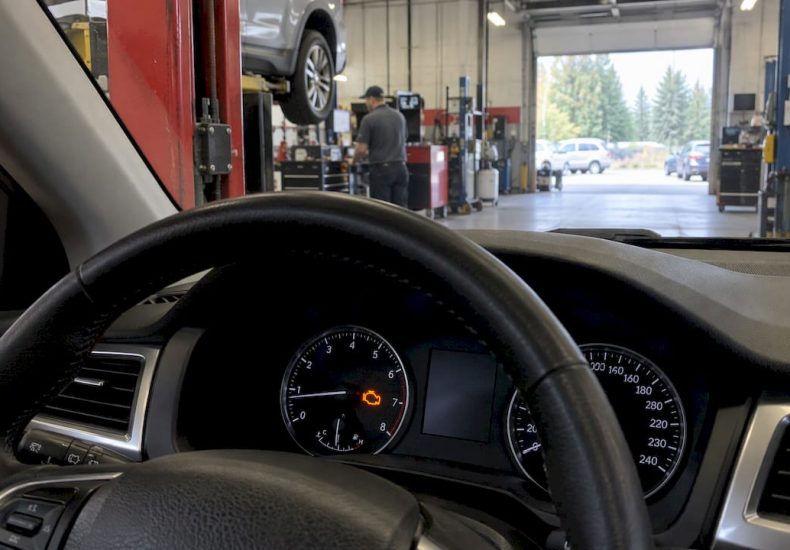
Modern engines are run by a computer that watches dozens of sensors. When a reading falls outside what the computer expects, or two readings contradict each other, it can limit what the engine is allowed to do. Mechanics call this limp mode or fail-safe mode. The dashboard wording varies by brand: “Reduced Engine Power,” “Engine Power Reduced,” “Powertrain Malfunction,” or “Power Reduced, See Dealer.”
Manufacturers describe it the same way. Ford’s owner guide to its warning lights defines Powertrain Malfunction/Reduced Power as the detection of a fault in the powertrain, all-wheel-drive or four-wheel-drive system, and tells the owner to have the system inspected. A Toyota document filed with NHTSA describes fail-safe mode as the vehicle protecting itself: when the diagnostic system sees a possible malfunction, the control system may reduce power to limit damage to components. The vehicle may remain drivable at reduced power and speed, but Toyota directs owners to have it diagnosed and repaired right away.
What you will feel from the driver’s seat
The GMC Acadia owner’s manual says reduced engine power affects the vehicle’s ability to accelerate, so speed and acceleration may be limited even though the vehicle can still be driven at reduced speed. In practice drivers describe:
- Sluggish acceleration, or a pedal that seems to do very little
- A transmission that feels stuck in a low gear
- A hard ceiling on speed
- Rough running or shaking
- A check engine light or other warning lights alongside the message
The symptoms can come and go. That is part of why people ignore the first appearance, and it is also why the next section matters.
Is it safe to keep driving?
Short answer: drive only as far as you need to reach a safe place or a shop, and do not treat it as a one-time glitch.
The low speed is itself a hazard on a freeway or at a merge. If the message appears at highway speed, turn on your hazard lights if you are slowing sharply, move to the right, and exit or pull onto a shoulder only when it is safe. On surface streets, find a parking lot and take a minute to think.
The GMC manual advises that if the message stays on, the vehicle should be serviced as soon as possible. It also warns that even when performance seems normal at first, power may be reduced again the next time you drive. In other words, a car that feels fine after a restart has not been repaired.
Stop driving and call for a tow rather than limping further if you see any of these along with the message:
- The temperature gauge in the red zone or a coolant warning
- An oil pressure warning
- Smoke, burning smells or grinding noises
- A flashing check engine light, which signals active misfires
- A vehicle that will barely move or stalls repeatedly
Our guide to the check engine sign in your car explains how to read the steady and flashing versions of that light.
Common causes of reduced engine power and limp mode
There is no single cause. Manufacturers’ own service documents show how varied the triggers are. The most common groups follow.
Throttle body and throttle position sensor faults
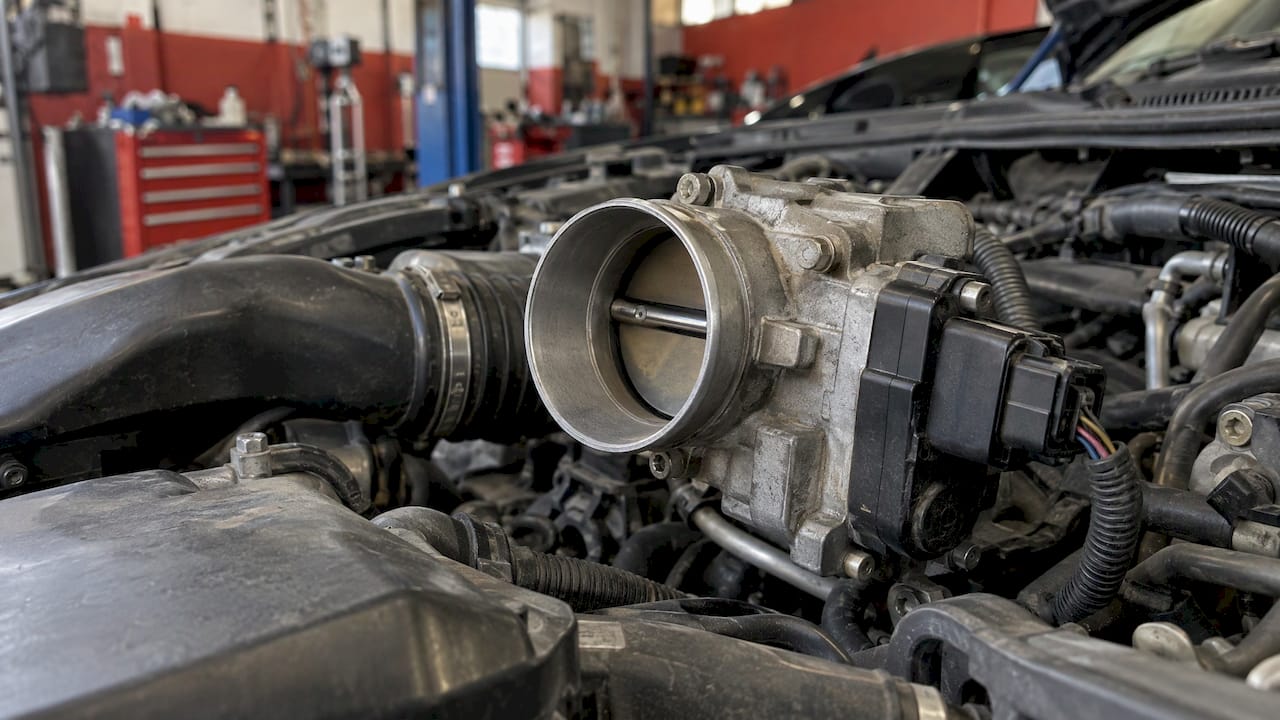
Modern cars have no direct cable from the pedal to the throttle. A sensor reads your pedal, the computer decides how far to open the throttle, and another sensor confirms the result. If those readings disagree, power is cut. A General Motors service bulletin for certain 2008 to 2012 vehicles documents that a throttle position sensor condition could cause rough running, an engine reduced power message and lower power, with dealers told to replace the throttle body or fit a sensor kit depending on the part supplier. This is why throttle problems top most lists of causes.
Airflow, boost and fuel-air sensor codes
The computer needs to know how much air is entering the engine. For 2023 to 2026 Chevrolet Equinox and GMC Terrain models with the 1.5L engine, GM’s preliminary information lists reduced power with trouble codes P0237, P0101, P1101, P0234 or P0299. Those codes point at the airflow and turbocharger boost circuits. A related GM bulletin on certain 2019 Equinox vehicles describes a charge air cooler outlet that can disconnect from the throttle body and trigger reduced power, with a retainer kit as the fix. A loose or cracked intake hose can do much the same on many turbocharged engines.
A pattern to notice: these are specific bulletins for specific models, not a rule for every vehicle. Your own trouble codes tell you which circuit is involved, and that is why the scan comes first.
Overheating and coolant protection
The same message can mean the engine is too hot. The GMC manual states that the message can appear when the cooling system becomes too hot and the engine enters coolant-protection mode. If the temperature gauge is climbing, do not keep driving to see what happens. Our articles on why engines overheat and the 60-second fan test for overheating at idle walk through what to check.
Diesel exhaust filter that is full
On diesel trucks the cause can sit in the exhaust. Ram’s owner information for the 2022 2500/3500 explains that the message “Exhaust Filter Full, Power Reduced, See Dealer” means the engine computer has derated the engine, and that service is needed to avoid extensive damage to the after-treatment system.
Fuel delivery, electrical and transmission faults
Other things we see on the diagnostic side include weak fuel pressure, failing ignition parts, a poor battery or charging system, wiring problems at sensors, and transmission faults. Some owners also report that a failing alternator or weak battery sets off the message along with steering assist warnings, but that comes from general troubleshooting experience rather than a standard rule, so confirm with a test before replacing anything. If power drops specifically when you accelerate, our post on starting with live fuel pressure explains the check, and the guide to why a car hesitates during acceleration covers the related symptoms.
Can low oil cause reduced engine power?
It can contribute, and it is one of the most important things to rule out. Low oil pressure can stop oil from lubricating engine parts, and AAA’s maintenance guidance notes that reduced horsepower may go unnoticed until damage has already occurred. Whether a given vehicle shows the specific message for low oil depends on the make and its programming, but the safe habit is the same everywhere.
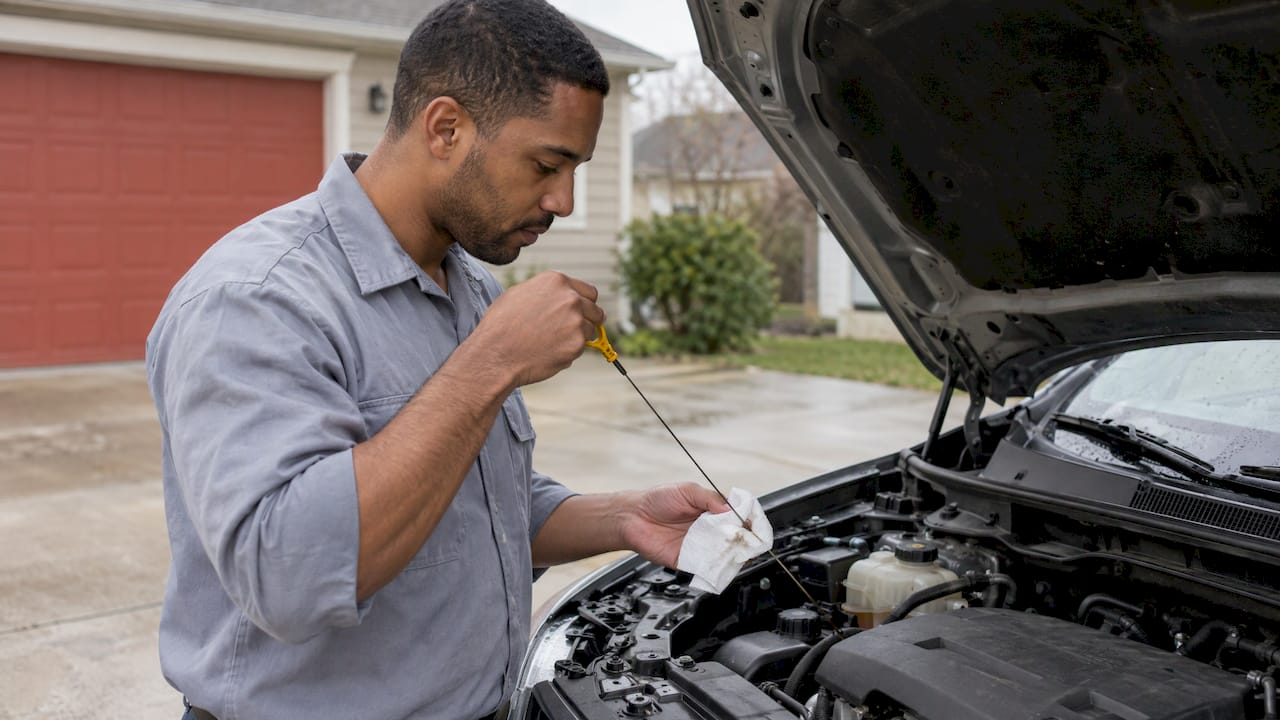
If the oil light is on, stop and shut off the engine. If it is not, check the dipstick when the engine is cool and parked on level ground. If you are low, you may have a leak or the car may be burning oil. Our guides on why a car burns oil and why a car leaks oil help you tell the two apart. A fresh oil change is cheap compared with what running low can cost you.
Hybrids and newer vehicles
Hybrid and electric-assist vehicles add more systems that can reduce power: high-voltage components, inverters, and extra cooling loops. A fault there can bring the same message, and the repair needs the right procedures and equipment. For a broader look at how fail-safe protection works on newer powertrains and what to do next, this overview of luxury EV and hybrid repair is a good companion read. We work on hybrid and European vehicles as well as Toyota, Honda, Subaru and domestic models.
Will resetting the message fix it?
Sometimes the message goes away, and that is where owners get into trouble. For certain 2022 to 2023 F-150 and 2023 Expedition and Navigator vehicles, a Ford bulletin says a startup reduced-power condition could be cleared by turning the vehicle off, leaving it in Key OFF for at least 30 seconds, and restarting. That was a specific software and startup situation on specific vehicles, not a general cure.
The same logic applies to a Chevy Equinox or any other model. A restart, or disconnecting a battery, may clear the message and the stored trouble code can still be there, or it will return once the fault is detected again. Clearing codes also erases information a technician can use. If you want to try a restart to get safely home, that is reasonable. Then book a diagnosis rather than relying on the car behaving.
What to do, step by step
- Get to a safe spot. Slow down gradually, signal, and pull off the road.
- Look at the dash. Note which other lights are on, especially temperature, oil, battery and check engine, and whether the check engine light is steady or flashing.
- Check obvious items. Is the gas cap tight? Is the oil level okay? Is the coolant reservoir not empty (only check when the engine is cool)?
- Turn the engine off, wait, and restart. If the message clears and the car drives normally, treat it as a warning, not a repair.
- Write down what happened. Speed, load, weather, whether it was a cold start, and whether the car hesitated first. These details speed up the diagnosis.
- Arrange a diagnosis. Drive gently and directly to a shop. If any of the stop-driving signs from earlier appear, tow instead.
How a shop diagnoses a reduced power fault
A good diagnosis is a process, not a part swap.
- Scan for codes. Professional-grade OBD-II diagnostics read stored and pending codes plus live data from the sensors. Related codes often tell the real story: a throttle code with a wiring code points elsewhere than a throttle code alone.
- Check freeze-frame data. It records engine speed, load and temperature at the moment the fault was set.
- Test, do not guess. Verify sensor voltages, inspect connectors and intake hoses, test fuel pressure, check the charging system and cooling system.
- Look for service bulletins. Manufacturers publish known issues for specific models, as the documents above show.
- Confirm the repair. Clear the codes, road test under the conditions that triggered the fault, and recheck for returning codes.
The cost depends on the cause: a loose hose is a very different bill from a throttle body or a turbo-related repair. That is why paying for the diagnosis first usually saves money over replacing the most popular suspect.
Perspective: why we start with the scan
We see this message come in with a wide range of vehicles, and the most common mistake is the same each time: someone replaces a throttle body or a sensor because an online post named it, and the message returns. The warning is the car’s summary of a problem, not the problem itself.
Our approach is simple. We read the codes and live data first, inspect the related hoses, wiring and cooling parts, and explain what we found before any repair starts. Our ASE-certified technicians work on all makes, including hybrid and European models, and we give upfront pricing so you know the cost before work begins.
If you are in the Lynnwood area and the message appears, do not wait for the next drive to be the one that goes badly. Bring it in. Same-day appointments are often available, and our work carries a 24-month / 24,000-mile warranty.
Shingi
Get it diagnosed in Lynnwood
Tom’s B & M Auto has served Lynnwood drivers since 1985. If your vehicle shows a reduced engine power message, we start with a full scan and inspection, then explain what is going on and what it will cost before we repair anything. Our check engine light and engine repair services cover diagnostics for all makes, and our Lynnwood engine repair page describes what we handle in the shop.
Published starting prices on our site include oil changes from $100, brake repair from $280 per axle, and AC repair from $150. Diagnostic and engine work is quoted after we know the cause. Military members, seniors and first responders can ask about our discounts.
FAQ
What does reduced engine power do?
It limits how much power and speed the engine can deliver so the computer can protect the engine, transmission or emissions system. You may notice slow acceleration, a speed cap, or a transmission that seems stuck in a low gear. The vehicle can often still be driven at reduced speed, but it should be serviced soon.
What sensor causes reduced engine power?
The throttle position sensor and related throttle body are among the most documented triggers, along with airflow and boost sensors. GM’s service documents list specific codes such as P0101 and P0299 on certain engines. Your trouble codes will show which circuit is at fault on your vehicle.
Can I reset the message myself?
Turning the vehicle off for at least 30 seconds and restarting can clear the message in some cases, as one Ford bulletin describes for certain trucks. That does not repair the fault, and it may come back. Treat a cleared message as a reason to schedule a diagnosis, not as a fix.
Can low oil cause reduced power?
Yes, low oil can lead to lost lubrication and engine damage, and lost power may not be noticed until damage has happened. If the oil light is on, stop and shut off the engine. If not, check the dipstick, then have any consumption or leak diagnosed.
How soon should I get it checked?
As soon as you can do so safely. Manufacturers advise prompt service, and the problem can return on the next drive. If you see overheating, an oil pressure warning, smoke, or a flashing check engine light, have the vehicle towed instead of driving it.
Sources
- Ford Vehicle Health Alerts Visual Reference Guide
- Toyota fail-safe mode document, NHTSA
- GMC Acadia engine power messages
- GM service bulletin on throttle position sensor, NHTSA
- GM preliminary information on 1.5L reduced power codes, NHTSA
- GM service bulletin on charge air cooler outlet, NHTSA
- Ram 2500/3500 diesel particulate filter messages
- AAA answers to common oil change questions
- Ford bulletin on startup reduced-power condition, NHTSA
- Luxury EV and hybrid repair overview
Recommended
- Drivers: Start With Live Fuel Pressure If Power Drops Accelerating
- Check Engine Sign in Car: What to Do Right Now
- Service Engine Soon: What It Means and What to Do
- What Is Engine Misfiring? Causes, Signs, and Fixes
Leave a Reply