
Why Your Car Leaks Oil: Causes, Risks, and Fixes
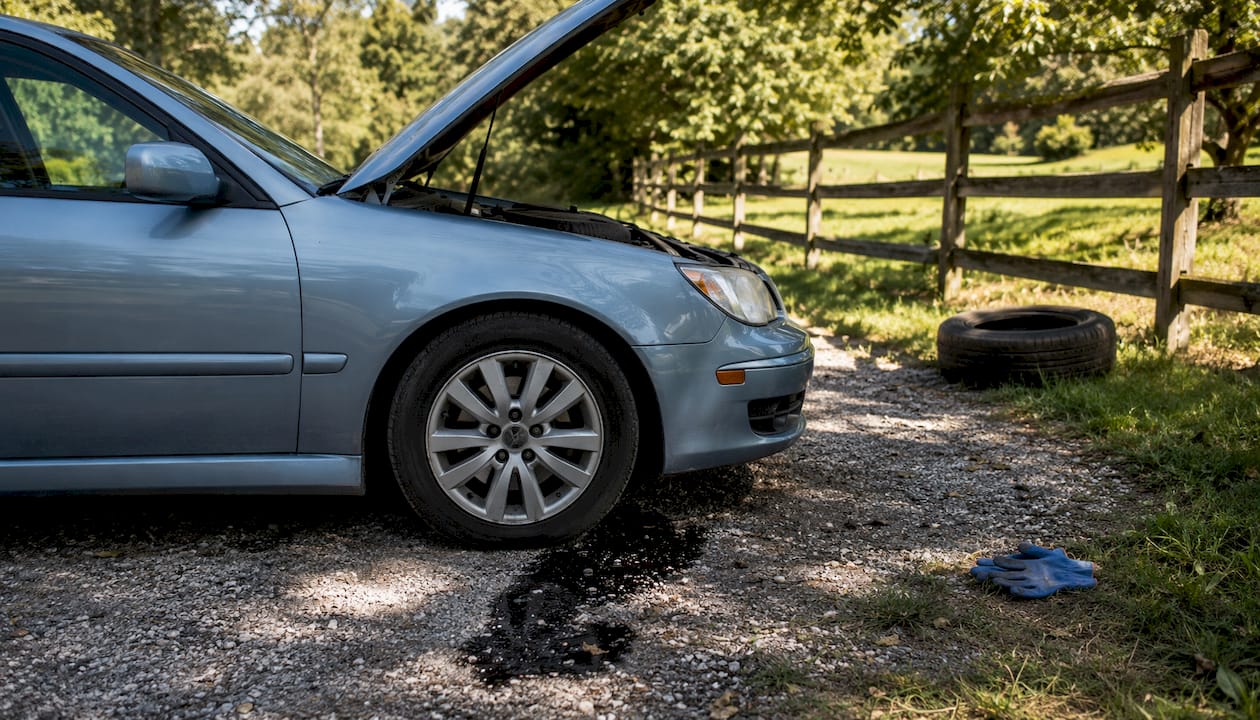
Your car leaks oil because a seal, gasket, or component meant to contain pressurized engine oil has worn out, cracked, or been installed incorrectly. The most common culprits are the valve cover gasket, oil pan gasket, oil filter, drain plug, and front or rear crankshaft seals. Heat and pressure cycles gradually harden rubber and cork materials until they can no longer hold a tight seal, and oil finds the path of least resistance out.
Key parts involved in most leaks:
- Valve cover gasket — sits at the top of the engine; oil drips down the sides when it fails
- Oil pan gasket — seals the bottom of the engine; seepage collects at the lowest point
- Oil filter — leaks immediately after an oil change if loose, cross-threaded, or double-gasketed
- Drain plug and washer — a worn crush washer or stripped threads cause a steady drip underneath
- Front and rear crankshaft seals — oil appears near the front or very back of the engine
- PCV valve — when clogged, crankcase pressure builds and forces oil past multiple seals at once
Why your car leaks oil: the most common causes
Engine oil leaks nearly always trace back to one of seven failure points. Understanding each one helps you narrow down where to look before a mechanic ever touches the car.
- Degraded valve cover and oil pan gaskets. Heat makes rubber and cork brittle over time. Skipping oil changes accelerates this because old, acidic oil attacks gasket material directly.
- Worn crankshaft and camshaft seals. These rubber lip seals handle constant friction around rotating shafts. They harden and shrink with age, and replacing them often requires removing the transmission or timing belt.
- Damaged or improperly installed oil filter. A cross-threaded filter, one that’s not tight enough, or the “double gasket” problem will leak immediately after a service.
- Loose or stripped drain plug. The drain plug is removed at every oil change. A worn crush washer or over-tightened plug with stripped threads produces a persistent drip at the very bottom of the oil pan.
- Cracked oil pan. Road debris, potholes, and speed bumps can crack or puncture the pan. The damage is sometimes immediate and severe.
- Clogged PCV valve. When the Positive Crankcase Ventilation valve clogs, pressure builds inside the engine and pushes oil out through every weak seal simultaneously. Multiple leaks appearing at the same time often point here.
- Engine sludge from poor maintenance. Old oil breaks down into a thick, tar-like sludge that clogs passages, raises internal pressure, and accelerates gasket failure.
How to spot an oil leak: symptoms and safety risks
A few drops on the driveway can feel minor. It usually isn’t. Here’s what to watch for:
- Oil spots or puddles under the car after parking, ranging from a few drops to a dinner-plate-sized puddle
- Burning oil smell after driving, especially when you stop. This happens when oil drips onto hot exhaust components.
- Blue or gray smoke from the engine bay or tailpipe. Smoke from the engine bay usually means oil is hitting the exhaust; blue smoke from the tailpipe means oil is burning inside the cylinders.
- Low oil warning light on the dashboard, or an oil pressure warning
- Visible oil residue on the outside of the engine block, around spark plug wells, or near the firewall
Fire hazard: Exhaust manifolds and pipes regularly reach very high temperatures at operating temperature. Oil dripping onto those surfaces vaporizes instantly and can ignite. A slow valve cover gasket leak directly above an exhaust manifold is not a “monitor it” situation.
A slow seep that barely moves the dipstick is different from a steady drip that drops your oil level overnight. The first can be scheduled; the second needs attention now. Running an engine low on oil risks seizure from oil starvation, a repair that can cost thousands.
What to do when you find an oil leak
A systematic approach saves you from replacing the wrong part.
- Check your oil level first. Pull the dipstick. If you’re at or below the minimum mark, add oil before driving anywhere.
- Find the highest wet spot, not just the drip. Oil runs downward before it falls. The puddle on the ground is almost always below and behind the actual source.
- Clean the engine with degreaser, then recheck. Degreasing the engine before inspection separates active leaks from old residue. A 10-minute drive after cleaning shows you exactly where fresh oil appears.
- Use cardboard overnight. Slide a large sheet under the parked car. Where the fresh drips land tells you which zone to inspect: front, center, or rear.
- Check the oil filter and drain plug first if the leak started right after an oil change. A loose filter or forgotten old gasket is the most common cause of a sudden post-service leak.
- Do not over-tighten. Over-tightening drain plugs or filters strips threads and crushes gaskets, turning a minor drip into a costly repair. Snug plus a quarter turn is the standard for most filters.
- Get an ASE-certified technician involved for anything beyond a filter or drain plug. ASE-certified mechanics use dye testing and pressure checks to pinpoint leaks that look like they’re coming from one place but originate somewhere else entirely.
Pro Tip: Before installing a new oil filter, always peel the old gasket off the engine block and confirm it came away with the old filter. The “double gasket” — old gasket left behind, new one installed on top — causes immediate, high-volume oil loss and is one of the most common post-oil-change mistakes.
On stop-leak additives: they temporarily swell old rubber seals and can slow a minor seep. They cannot fix a cracked gasket, a stripped drain plug, or any structural failure. Use them only as a bridge to a real repair, never as a substitute.
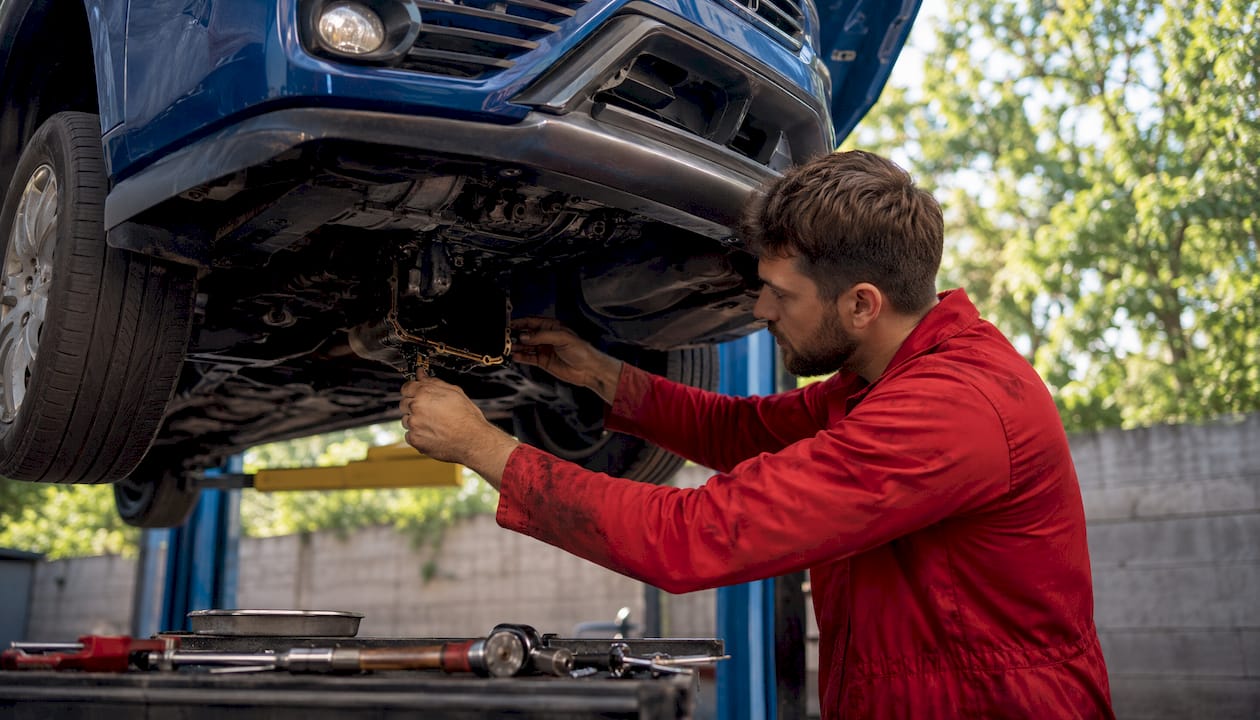
Temporary measures to slow a leak before you get it fixed
If a shop appointment is a few days out, these steps reduce the risk of damage in the meantime.
- Top off the oil daily. Check the dipstick every morning and keep the level in the safe range. Running even a quart low under hard driving conditions accelerates wear.
- Avoid highway speeds and hard acceleration if the leak is active. Higher RPMs raise oil pressure and push more oil through any gap.
- Park on cardboard or an oil drip pad to monitor the rate. A slow seep that leaves a few drops overnight is manageable; a growing puddle means stop driving.
- Do not ignore a burning smell. If you smell hot oil while driving, pull over and check the level. Oil on a hot exhaust is a fire risk, not just an inconvenience.
What happens if you ignore an oil leak
Ignoring a leak rarely ends with just a bigger leak. The consequences stack up fast.
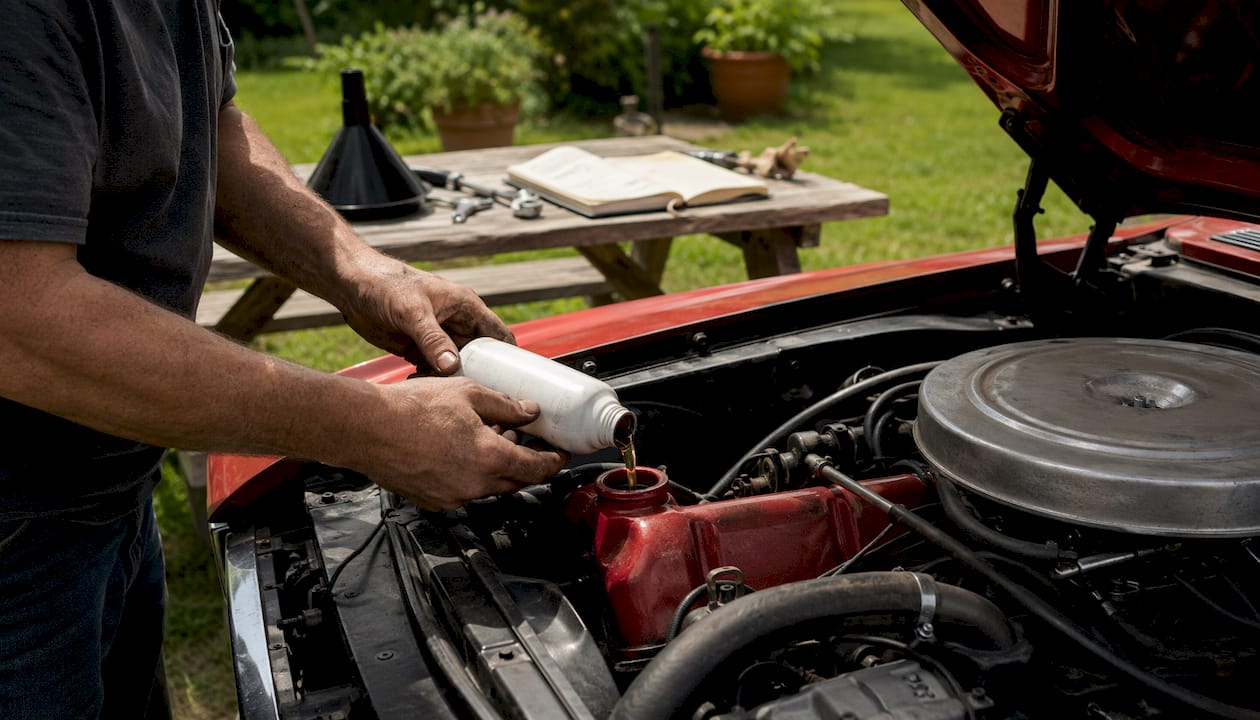
An engine running low on oil loses the lubrication film between metal parts. Friction generates heat, metal contacts metal, and bearing surfaces wear rapidly. Left long enough, this leads to engine seizure, where internal components weld themselves together. That repair starts at several thousand dollars and often exceeds the value of an older vehicle.
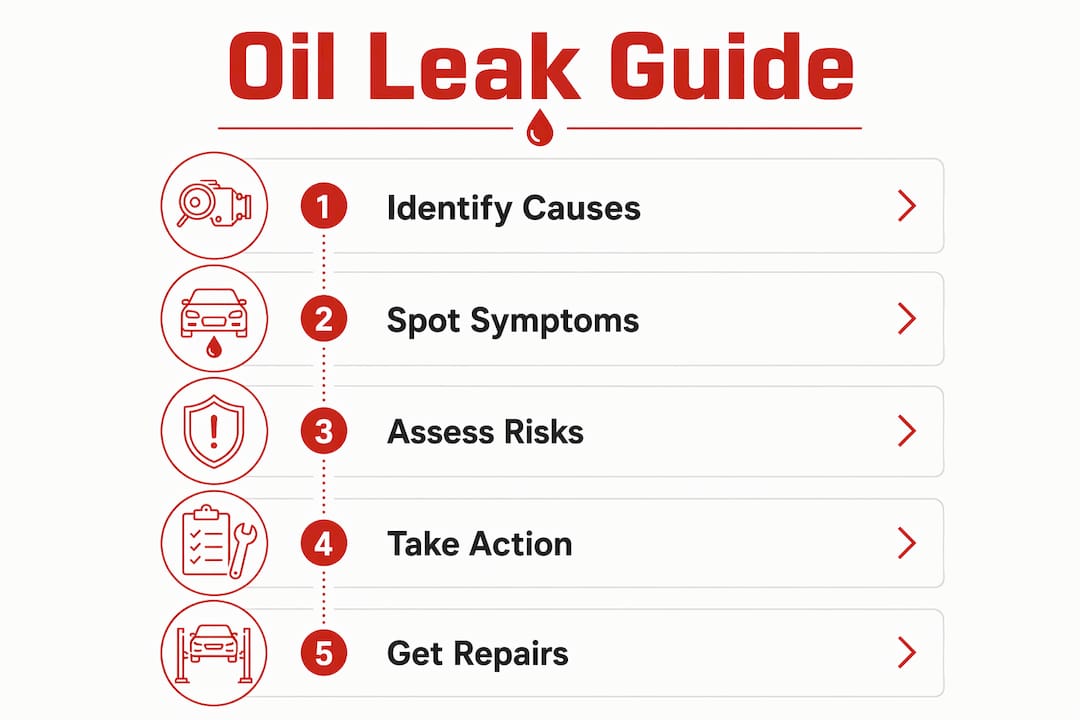
Beyond the engine itself, oil contaminating a serpentine belt causes slipping and premature failure. On engines with timing belts, oil from a leaking front crankshaft or camshaft seal can saturate and destroy the belt, turning a straightforward seal job into a full timing belt replacement. The high-mileage vehicle maintenance principle applies directly here: catching a $150 valve cover gasket early is always cheaper than the chain of failures that follows ignoring it.
Get your oil leak diagnosed at Tom’s B & M Auto

Tom’s B & M Auto has served Lynnwood and the surrounding area since 1985. ASE-certified technicians use professional-grade OBD-II diagnostics to find exactly where your engine is losing oil, whether it’s a simple filter gasket or a rear main seal. All makes are welcome, including Toyota, Honda, Subaru, European, and hybrid vehicles. Every repair comes with a 24-month / 24,000-mile warranty.
Same-day appointments are often available. Current specials include $50 off any repair over $300 and financing options for larger jobs. Book your inspection at bandmautocare.com.
Key Takeaways
Most car oil leaks come from worn or damaged gaskets and seals that fail under heat and pressure, and catching them early prevents engine seizure and fire risk.
| Point | Details |
|---|---|
| Top leak sources | Valve cover gasket, oil pan gasket, oil filter, drain plug, and crankshaft seals cause the large majority of leaks. |
| Fire risk is real | Exhaust parts reach very high temperatures; oil dripping onto them can ignite. |
| Drips mislead you | Oil runs downward before falling, so the puddle is almost always below and behind the actual source. |
| DIY mistake to avoid | Over-tightening drain plugs strips threads; the double-gasket error after an oil change causes immediate high-volume loss. |
| Stop-leak additives | They temporarily slow minor seeps in old rubber seals but cannot fix cracked gaskets or structural failures. |
Recommended
- Why Exhaust Rattles: Causes, Fixes, and Costs – Tom’s B & M Auto Blog
- Why Transmission Slips: Causes, Symptoms, and Fixes – Tom’s B & M Auto Blog
- High Mileage Vehicle Maintenance Tips That Work – Tom’s B & M Auto Blog
- Why Brakes Squeak: Causes, Fixes, and Warning Signs – Tom’s B & M Auto Blog
Leave a Reply