
Exhaust Leak Symptoms: Headaches Can Signal Carbon Monoxide Exposure
If you smell exhaust inside the cabin, hear loud ticking, hissing, or rumbling from under the car, or feel dizzy or headachy while driving, pull over, turn off the engine, and get fresh air right away. These are the most urgent exhaust leak symptoms, and they can point to carbon monoxide entering the cabin. Once you’re safe, the signs below help you figure out where the leak is and what it will take to fix it.
TL;DR:
- A ticking idle can point to a manifold leak near the cabin air intake, a location linked to carbon monoxide intrusion risk; arrange a tow.
- If headaches, dizziness, or nausea improve after leaving the car, suspect carbon monoxide exposure; call emergency services for confusion, fainting, or severe symptoms.
- A muffler or tailpipe leak poses lower immediate carbon monoxide risk, but drive briefly to a shop with windows open only if nobody feels unwell.
- Ask for an itemized estimate after leak testing: a joint may need a clamp or weld, while a rusted muffler typically needs replacement.
Table of Contents
- 1. What symptoms should you watch for?
- 2. How leak location changes what you hear, smell, and how dangerous it is
- 3. Immediate safety steps if you smell exhaust or feel sick
- 4. How a mechanic will diagnose the leak and what repairs typically involve
- 5. Why prompt inspection matters, from our shop’s experience
- 4. What this topic gets wrong, and what actually deserves your attention
- Get your exhaust checked before a small leak becomes a bigger repair
- FAQ
- Sources
1. What symptoms should you watch for?
An exhaust leak rarely announces itself with just one clue. It usually shows up as a combination of sound, smell, and how the car drives.
- Noise changes first: a ticking sound at idle often points to a manifold leak, a hissing noise under acceleration suggests a pipe or joint leak, and a deep rumble or drone usually means the muffler or tailpipe area is compromised.
- Smell in the cabin: any exhaust odor inside the car is a warning sign, since carbon monoxide itself has no smell or color but can accompany the exhaust gases you do notice, according to EPA guidance on carbon monoxide poisoning.
- Reduced fuel economy: a leak upstream of the oxygen sensor can throw off the reading the engine computer uses to set the fuel mixture, pushing it richer and burning more gas than normal, as explained in this breakdown of exhaust leak symptoms.
- Loss of power: escaping exhaust gas disrupts backpressure the engine needs to perform, so acceleration can feel sluggish, especially under load.
- Vibrations: a leak near the manifold or a loose heat shield can send noticeable buzzing or shaking through the pedals, steering wheel, or seat.
- Check engine light: codes like P0171 or P0174 (system too lean) and P0420 or P0430 (catalytic converter efficiency) often show up alongside leaks, though they’re not proof of a leak by themselves.
- Visible soot or burn marks: black soot, discoloration, or a loose clamp near a pipe joint is a quick visual confirmation worth checking before you head to a shop.
Headaches, dizziness, or nausea that ease up once you leave the vehicle are a pattern the CDC ties directly to carbon monoxide exposure. That link between symptoms and the vehicle itself is the clearest signal something needs attention now, not later.
2. How leak location changes what you hear, smell, and how dangerous it is
Where the leak sits on the exhaust system changes both the symptoms you’ll notice and how urgent the problem is. A leak right at the engine behaves very differently from one near the tailpipe.
Leaks near the exhaust manifold sit closest to the cabin’s air intake path, which EPA testing on vehicle carbon monoxide intrusion identifies as one of the locations most linked to elevated interior CO levels. A mid-pipe or joint leak tends to hiss under acceleration and leave soot at the joint, with somewhat lower but still real risk. Muffler and tailpipe leaks are the least immediately dangerous for CO intrusion but still signal a system that needs repair.
| Leak location | Primary symptoms | Danger level | Common causes |
|---|---|---|---|
| Manifold/front | Ticking at idle, strong odor risk | High, avoid driving | Cracked gasket, warped flange |
| Mid-pipe/joint | Hissing under acceleration, soot at joint | Moderate | Loose clamp, corroded seam |
| Muffler/tailpipe | Deep rumble or drone | Lower immediate CO risk, still needs repair | Rust-through, damaged muffler |
A rattling or vibrating exhaust often has its own separate causes worth understanding, covered in our piece on why exhaust rattles.
3. Immediate safety steps if you smell exhaust or feel sick
The moment you notice a strong exhaust smell inside the car or anyone feels unwell, treat it as urgent rather than waiting to see if it passes.
- Roll down the windows immediately to ventilate the cabin.
- Pull over safely and turn off the engine as soon as you can.
- Get everyone out of the vehicle and into fresh air.
- If anyone shows confusion, loss of consciousness, or a severe headache or dizziness, call emergency services right away.
- If symptoms are mild and the smell seems limited to the rear of the car, a short drive to a shop with windows open may be reasonable, but towing is the safer call whenever you’re unsure.
- When arranging a tow, tell the operator or shop exactly what you noticed: where the smell was strongest, what noises you heard, and whether anyone felt sick.
Pro Tip: Note the mileage and time of day symptoms started. That detail helps a technician narrow down the leak location faster.
4. How a mechanic will diagnose the leak and what repairs typically involve
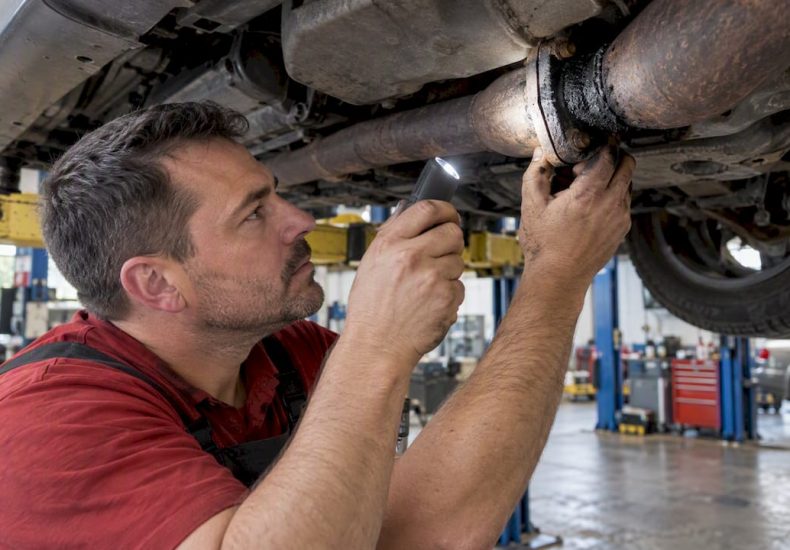
A proper diagnosis starts with a visual inspection: a technician looks for soot trails, burn marks, loose clamps, and corroded sections along the full length of the exhaust. From there, shops often run a smoke or pressure test to pinpoint exactly where gas is escaping, and pull codes with an OBD-II scanner to see if a lean condition or converter efficiency issue lines up with what they’re seeing underneath the car.
Repairs range quite a bit depending on what’s found:
- A cracked manifold gasket usually means gasket replacement, which involves more labor since the manifold often has to come off.
- A pipe or joint leak can sometimes be welded or clamped, a comparatively quick fix.
- A rusted-through muffler typically calls for full muffler replacement.
- Catalytic converter damage tied to an upstream leak is usually the most expensive repair in the group.
Cost depends on where the leak sits, how accessible the part is, whether rusted bolts complicate removal, and your specific make and model. Ask for an itemized estimate before any work starts, request details on the warranty backing the repair, such as our exhaust repair work covered by a 24-month/24,000-mile warranty, and take photos of any visible soot or burn marks so you have a record before the car goes on the lift. For anyone comfortable pulling live data themselves first, this guide to diagnosing a check engine light walks through reading codes without guessing at parts.
5. Why prompt inspection matters, from our shop’s experience
Our ASE-certified technicians rely on professional-grade OBD-II diagnostics and upfront pricing on every job, backed by a 24-month/24,000-mile warranty, as detailed on Tom’s B & M Auto.
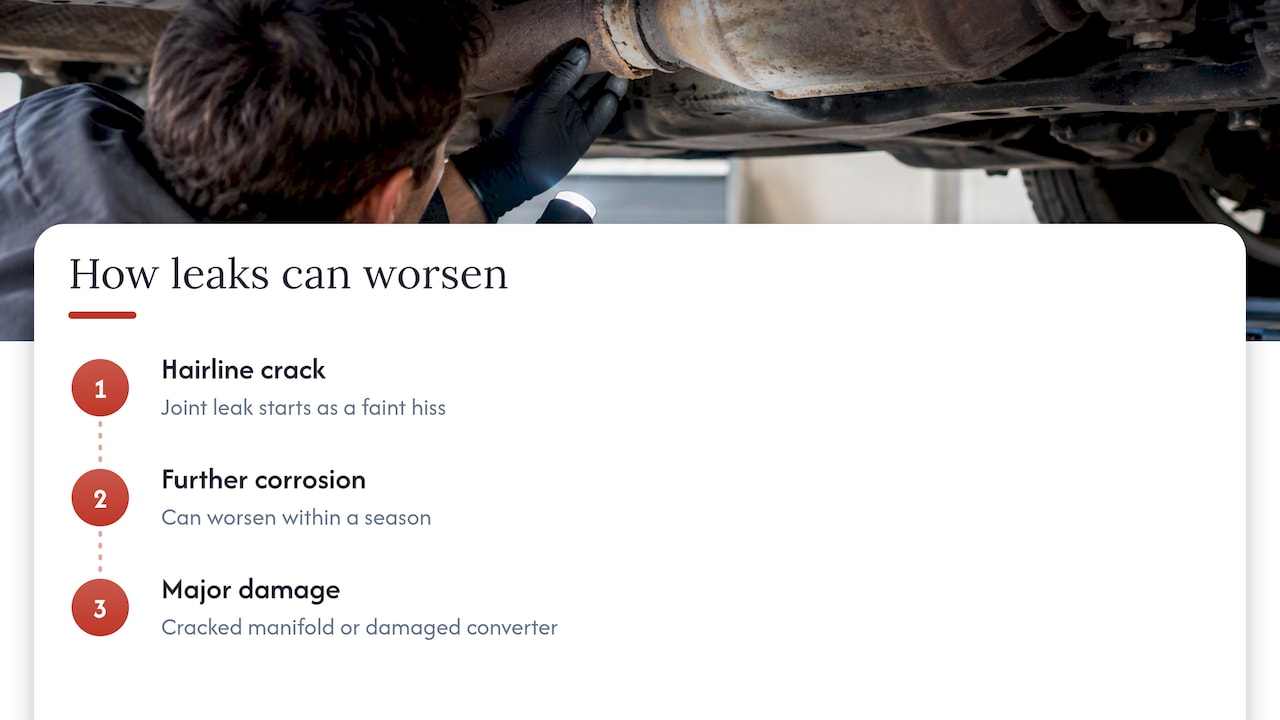
In our experience, a small exhaust leak rarely stays small. A hairline crack at a joint that starts as a faint hiss can corrode further within a season, especially through wet Pacific Northwest winters, and turn into a cracked manifold or a damaged converter. We’ve also written about related warning signs, like unusual engine smells, that often show up alongside exhaust issues and help confirm what’s going on before a car even reaches the bay.
4. What this topic gets wrong, and what actually deserves your attention
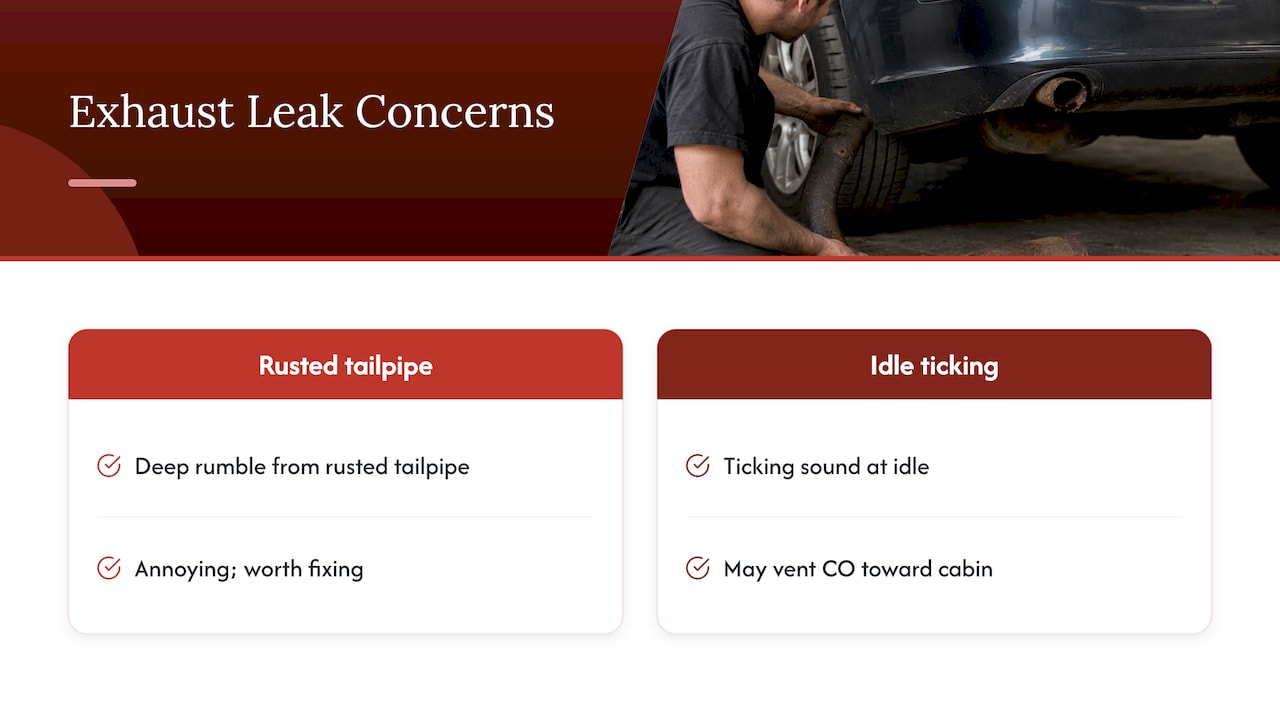
Most advice on exhaust leaks treats every symptom as equally urgent, which isn’t accurate and isn’t helpful. A deep rumble from a rusted tailpipe is annoying and worth fixing, but it’s a different category of problem than a ticking sound at idle that might be venting carbon monoxide toward the cabin.
The conventional advice to “get it checked when you can” undersells how fast a manifold leak’s risk profile changes. The CDC’s guidance on flu-like CO symptoms matters here precisely because those symptoms are easy to dismiss as fatigue or a cold, especially on a long drive.
What readers should prioritize first is pattern recognition: does a headache or dizziness ease up once you step out of the car. That single observation tells you more about urgency than the loudness of the noise ever will. Treat location and symptom pattern as your triage system, not just volume.
— Shingi
Get your exhaust checked before a small leak becomes a bigger repair
We handle exhaust diagnostics and repairs with ASE-certified technicians, upfront pricing, and a warranty on the work, so you know what you’re paying for before anything gets started.

When you bring the car in or call ahead, it helps to have a few details ready:
- When the noise or smell happens (idle, acceleration, cold start)
- Whether anyone felt dizzy, headachy, or nauseous while driving
- Any check engine light codes already pulled
Book a visit through our exhaust repair page or reach out through Tom’s B & M Auto to get on the schedule.
FAQ
How much is it to fix an exhaust leak?
Cost depends on the leak’s location and your vehicle, since a pipe joint repair is typically far less involved than manifold gasket or catalytic converter work. We provide itemized estimates after inspection so you know the scope before any work begins; ask about our exhaust repair service for a quote specific to your car.
Can I still drive a car with an exhaust leak?
It depends on the leak’s location and your symptoms. A manifold leak near the cabin carries higher carbon monoxide risk and is safer to have towed, while a minor muffler or tailpipe leak with no smell or symptoms inside the car may allow a short, cautious drive with windows open to a shop.
Is an exhaust leak worth fixing?
Yes. Beyond the safety risk from carbon monoxide, an unaddressed leak tends to worsen fuel economy, strain the catalytic converter, and can affect emissions testing in areas that require it.
How can I fix an exhaust leak?
Fixing an exhaust leak means identifying the exact leak point first, through a visual check for soot or burn marks and a smoke or pressure test, then repairing or replacing the affected gasket, pipe section, or muffler. Minor joint leaks sometimes allow a clamp or weld repair, while manifold or converter damage usually requires replacement parts and more labor.
Sources
- Protect Your Family and Yourself from Carbon Monoxide Poisoning | US EPA
- Carbon Monoxide Poisoning Basics | Carbon Monoxide Poisoning | CDC
- Carbon monoxide intrusion in sustained-use vehicles (EPA technical report)
- Symptoms of an Exhaust Leak: 8 Warning Signs | TheCarBuzz
Recommended
- What Your Car’s Exhaust Smoke Color Is Telling You
- Engine Smells: What Every Driver Needs to Know
- Why Exhaust Rattles: Causes, Fixes, and Costs
Leave a Reply