
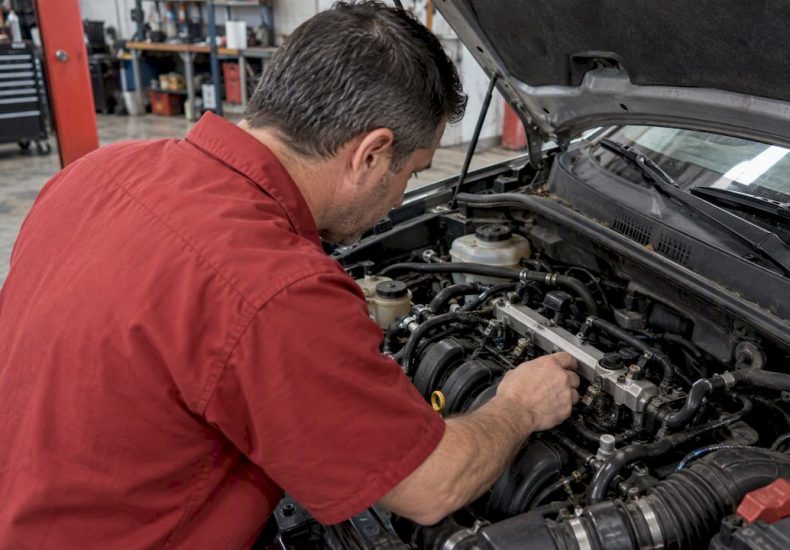
Gas Smell in Your Car: When to Stop and What Mechanics Test
A persistent gasoline smell usually points to one of a few things: an EVAP system leak, a loose or damaged gas cap, a liquid fuel leak, or exhaust backflow mimicking a fuel odor. If the smell is strong, pull over, shut off the engine, and get everyone out. The sections below help you narrow down the cause, run a few safe checks, and know when it’s time to call a mechanic.
TL;DR:
- After stopping, do not restart the engine, smoke, or use electronics near the car; if you see a puddle, call for a tow.
- Check that the cap clicks and inspect its seal; an inexpensive cap or hose can resolve some EVAP leaks for $5 to $15.
- Note whether the odor peaks after fueling, with a hot engine, at idle, or while driving; those conditions help a mechanic narrow the cause.
- An OBD II scan can reveal EVAP codes such as P0440, P0442, or P0455, which point to a vapor leak.
Table of Contents
- 1. Common Causes of a Gasoline Smell in Your Car
- 2. Is It Dangerous to Breathe In Gasoline Fumes?
- 3. What to Do the Moment You Smell Gas
- 4. Safe DIY Checks to Narrow Down the Source
- 5. What a Mechanic Checks During Diagnosis
- 6. Preventive Maintenance That Reduces Future Gas Smells
- 7. How Our Shop Diagnoses and Fixes Fuel Odors
- A Mechanic’s Take on Gas Smells and Why Speed Matters
- Book a Diagnostic With Tom’s B & M Auto
- FAQ
- Sources
1. Common Causes of a Gasoline Smell in Your Car
A loose or damaged gas cap is the simplest explanation. The cap seals fuel vapor inside the tank, and a crack or a cap that isn’t clicked into place lets vapor escape, especially on warm days when fuel evaporates faster.
The EVAP system is the next usual suspect. It is built to trap fuel vapor rather than let it vent into the air, using a charcoal canister, a purge valve, and a network of hoses. A cracked hose or a stuck purge valve lets vapor leak out, and EVAP leaks often fix for $5 to $15 when the problem is a cheap part, like the cap or a small hose.
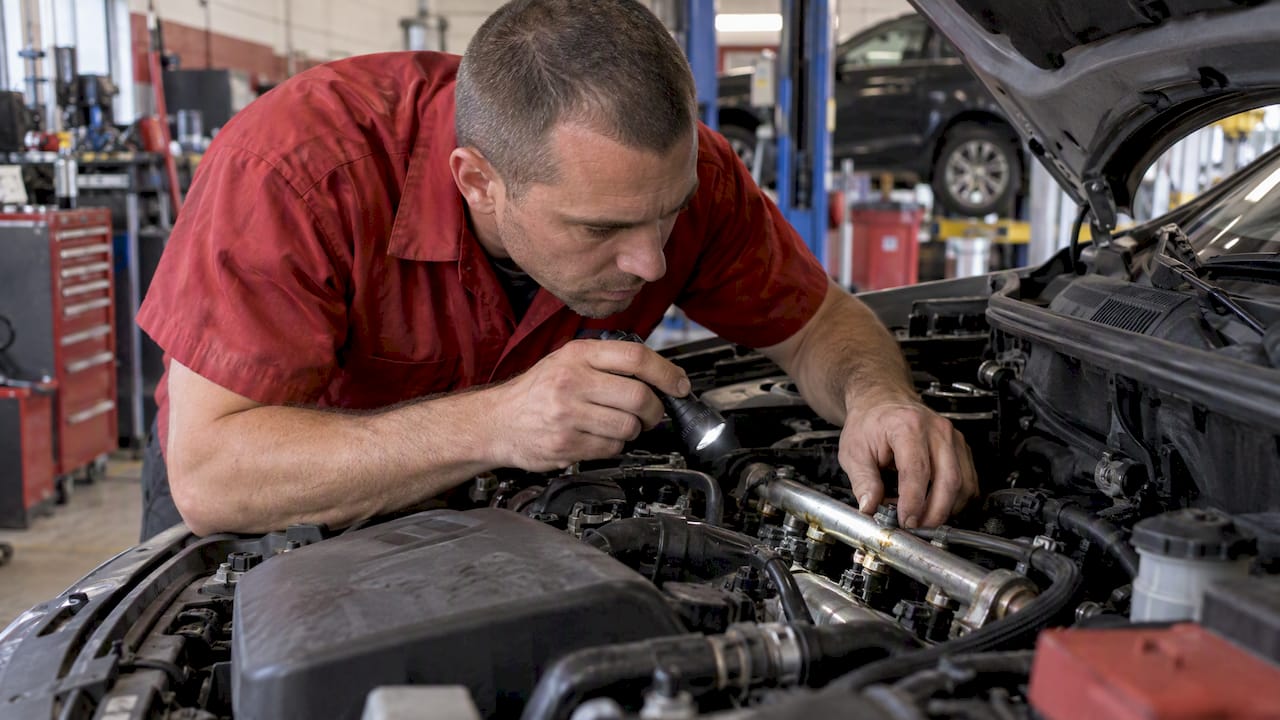
Fuel injector and fuel rail leaks tend to smell strongest under the hood, sometimes with visible wet spots on the engine. Fuel line or tank leaks are more serious: they show up as puddles under the car and carry real fire risk because they involve liquid gasoline rather than vapor.
Lower-severity causes include a tank that was overfilled at the pump, a small fuel spill that hasn’t evaporated yet, or old and contaminated gas. AAA notes that bad or contaminated fuel can also cause odors and drivability trouble.
Exhaust leaks and an engine running rich can both produce a fuel-like odor without any actual leak in the fuel system, which is one reason smell alone is not always enough to diagnose the problem.
- Loose or cracked gas cap: lets fuel vapor escape, usually a quick fix.
- EVAP hose or purge valve fault: vapor leak, often inexpensive to repair.
- Fuel injector or rail leak: smell concentrated in the engine bay.
- Fuel line or tank leak: puddles under the car, high fire risk.
- Overfilled tank or old fuel: lower severity but still worth checking.
- Exhaust leak or rich-running engine: can smell like fuel without a true leak.
2. Is It Dangerous to Breathe In Gasoline Fumes?
Gasoline vapor is highly flammable, and it takes very little, a spark from static electricity, a hot exhaust component, or a cigarette, to ignite it. That’s the main reason any strong gas smell deserves immediate caution rather than a shrug.
Gasoline vapor contains benzene, toluene, and xylene, and EPA’s health effects assessment links these constituents to acute respiratory and central nervous system effects from inhalation. Short exposure in a well-ventilated space is typically low risk, but a sealed cabin filling with vapor is a different situation entirely.
Exhaust leaks raise the stakes further. Cars but are dangerous in their own right because they can let carbon monoxide into the cabin, a gas you can’t smell or see.
Treat any gasoline odor that’s strong, sudden, or noticeable inside the cabin as high severity until you’ve ruled out the worst possibilities.
3. What to Do the Moment You Smell Gas
- Pull over to a safe spot, shut off the engine, and get everyone out of the vehicle and a safe distance away.
- Don’t restart the engine, smoke, or use a phone or other electronics near the car until you know the source.
- From a safe distance, look for visible leaks, puddles, or wet spots, but don’t crawl under a car that’s still hot.
- If the smell is strong or you see a puddle, call for towing or roadside assistance rather than driving it yourself.
4. Safe DIY Checks to Narrow Down the Source
Before calling a shop, a few simple checks can help a technician get to the answer faster.
- Check that the gas cap is tightened all the way and inspect its rubber seal for cracks; a worn cap is a cheap and common fix.
- Notice where the smell is strongest: near the rear of the car, in the engine bay, or inside the cabin itself, since location points toward different systems.
- Look under the car for puddles or a rainbow sheen on the pavement. If you find one, don’t start the engine.
- If you have access to an OBD-II scanner, check for EVAP-related codes like P0440, P0442, or P0455, which point to a vapor leak somewhere in the system.
Pro Tip: Write down when the smell is strongest, hot engine, right after fueling, idling versus driving, since that detail alone can help a mechanic narrow the cause before they even lift the hood.
Leave fuel line repairs, injector work, and anything involving open flames or sparks to a professional. These aren’t jobs to improvise.
5. What a Mechanic Checks During Diagnosis
Shops typically start with the cheapest, fastest checks before moving to anything that requires disassembly.
- An OBD-II scan reads stored trouble codes and fuel-trim data, which is usually the fastest way to point toward an EVAP or fuel-system fault.
- An EVAP smoke test introduces visible smoke into the sealed vapor system; escaping smoke shows exactly where a leak is, even a hairline crack that a visual check would miss.
- A fuel-pressure test and injector inspection catch liquid leaks that a smoke test won’t, since smoke tests are built for vapor leaks while pressure testing confirms leaks under the hood.
- A visual inspection of the fuel lines, tank, mounting straps, and filler neck rounds out the process, especially after checking for rust or road damage.
Diagnostic time typically runs from thirty minutes for a code scan to a couple of hours when a full smoke test and pressure check are both needed.
6. Preventive Maintenance That Reduces Future Gas Smells
- Replace a gas cap that’s cracked or worn, and get in the habit of tightening it until it clicks after every fill-up.
- Ask your shop to check fuel hoses, EVAP hoses, and the filler neck during routine maintenance visits rather than waiting for a smell to show up.
- Avoid overfilling the tank past the pump’s automatic shutoff, and store any backup fuel containers away from the vehicle.
- Buy fuel from stations you trust, and skip pumping if the fuel looks or smells off.
- Don’t ignore a check-engine light tied to EVAP or fuel-system codes. A small leak caught early is almost always cheaper than one left to spread.
7. How Our Shop Diagnoses and Fixes Fuel Odors
Our team has worked on vehicles for many years, and our technicians rely on professional-grade OBD-II diagnostics to track down fuel odors accurately rather than guessing. Common fixes include gas cap and EVAP hose replacement, purge valve service, smoke testing, and fuel-line or injector repair, often backed by a warranty. Bring any notes on when the smell shows up and any codes you’ve pulled.
A Mechanic’s Take on Gas Smells and Why Speed Matters
A gas smell is one of the few car problems where waiting a week to “see if it gets worse” is genuinely a bad idea. Fuel system faults rarely heal themselves, and a small EVAP leak today can be a fuel-line problem next month. Document what you notice, and call for help before it escalates.
— Shingi
Book a Diagnostic With Tom’s B & M Auto
If you’ve pulled over, checked the cap, and you’re still smelling gas, we can take it from there. We run a full OBD-II scan and EVAP smoke test to find the exact source, then handle the repair with quality parts and a warranty on the work.
- Diagnostic scan and EVAP smoke test to pinpoint vapor leaks.
- Fuel-line and injector repair for liquid leaks.
- Exhaust system repair when backflow is mimicking a fuel smell.
Bring your symptom notes and any OBD-II codes you’ve pulled, and we’ll take it from there. Book an appointment through our Check Engine Light diagnostic service to get started.
FAQ
Is it safe to drive a car that smells like gas?
No, it’s not safe to keep driving if the smell is strong or noticeable inside the cabin. Pull over, shut off the engine, and have the vehicle inspected before driving further, since the cause could be a fire hazard or a carbon monoxide risk.
Why does my car smell like gas but no leak?
A visible leak isn’t always present even when the smell is real. EVAP vapor leaks, a loose gas cap, or an exhaust leak mimicking a fuel odor can all produce a strong smell with no puddle underneath, which is why an EVAP smoke test is often needed to find the source.
How do I fix a gas smell inside my car?
Start by checking and tightening the gas cap, since a loose or cracked one is a common and cheap cause. If that doesn’t resolve it, a shop will run an OBD-II scan and smoke test to find EVAP or fuel-system leaks and repair the specific part involved.
Does a gas smell eventually go away on its own?
A minor, one-time smell from a small spill or a slightly overfilled tank often fades within a day as the fuel evaporates. A recurring or persistent smell usually means an ongoing leak or EVAP fault that won’t resolve without repair.
How can I tell if the smell is exhaust rather than gasoline?
Exhaust smells tend to be sharper and more acrid, while gasoline has a sweeter, more chemical scent, but the two are easy to confuse. A mechanic can confirm which one you’re dealing with through a visual inspection and a check-engine code scan, and a same-day exhaust leak check can rule out exhaust backflow specifically.
Sources
- Evaluation of the Health Effects from Exposure to Gasoline and Gasoline Vapors : Final Report
- Cars
- Gas smell: Causes, Repair Cost & Is It Safe To Drive? | AutOwner
- Fuel issues: 8 symptoms of bad gas in a car to look for | AAA
Recommended
- Engine Smells: What Every Driver Needs to Know
- EVAP Smoke Test: Start With the Gas Cap, When to Call the Shop
- What Your Car’s Exhaust Smoke Color Is Telling You
- Check Engine Sign in Car: What to Do Right Now
Leave a Reply