
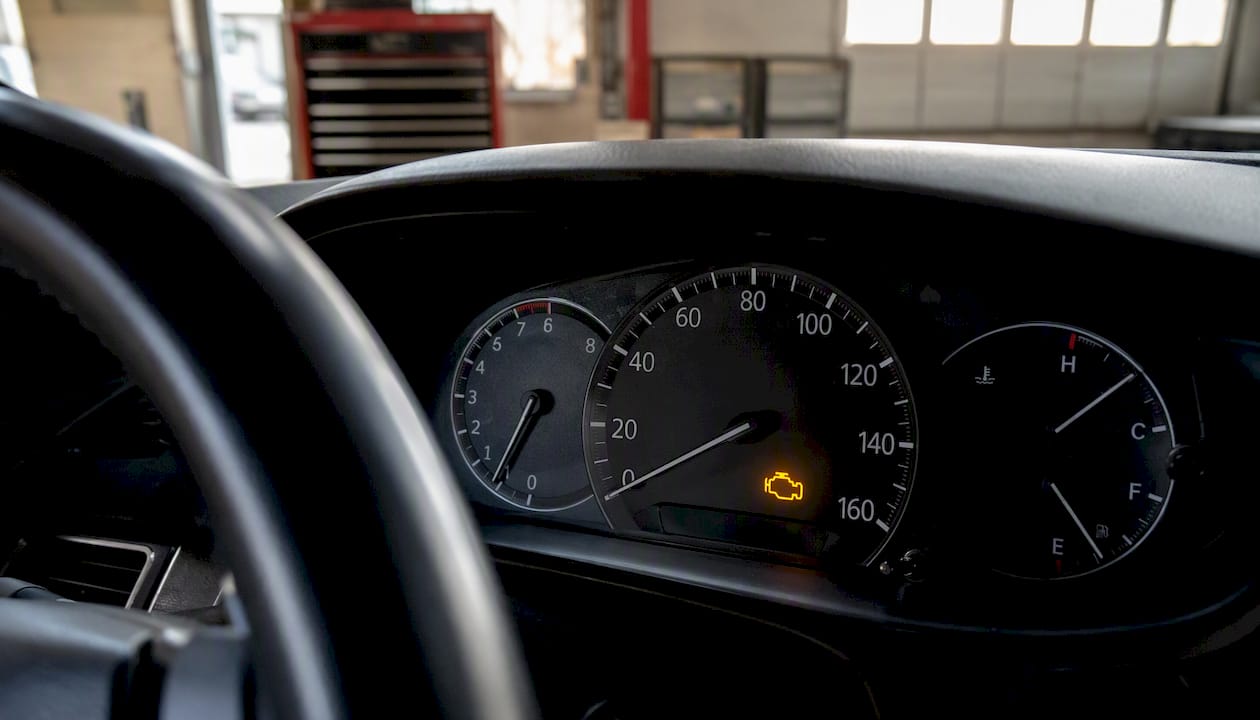
Check Engine Sign in Car: What to Do Right Now
The check engine sign in your car means the engine control unit (ECU) has detected an out-of-range condition and stored a Diagnostic Trouble Code (DTC). That amber or red symbol is diagnostic data, not a death sentence. Your first job is to judge severity, not panic.
Quick triage:
- Note whether the light is steady (non-emergency, check soon) or flashing (urgent, reduce load immediately)
- Check your other gauges: temperature, oil pressure, battery voltage
- If you refueled recently, tighten the gas cap and monitor
- Avoid towing, highway speeds, or heavy acceleration until you know the cause
- Get the codes read at a shop or with your own OBD2 reader as soon as practical
The EPA and ASE (Automotive Service Excellence) both treat the check engine light as a regulated emissions and safety monitoring system. A flashing light or a red warning is urgent. A steady amber light gives you a short window to act, but “act soon” still means within days, not weeks.
Table of Contents
- What the check engine sign in your car actually means
- How to read urgency from the light’s behavior
- The most common causes behind a check engine light
- What to do the moment the light comes on
- How a professional diagnoses a stored trouble code
- DIY checks you can safely run before visiting a shop
- Signs that mean you should stop driving immediately
- What a good repair shop does from check-in to repair
- Key Takeaways
- The check engine light deserves more respect than it gets
- Tom’s B & M Auto handles check engine diagnostics the right way
- Useful sources for drivers who want to go deeper
What the check engine sign in your car actually means
The check engine light has an official name: the Malfunction Indicator Lamp, or MIL. It is part of the OBD-II (On-Board Diagnostics, second generation) system that became standard on all U.S. passenger vehicles built after 1996. The ECU continuously monitors dozens of sensors across the engine, transmission, and emissions systems. When a reading falls outside the manufacturer’s acceptable range, the ECU logs a DTC and switches on the MIL.
A DTC is a five-character code: one letter followed by four digits. The letter tells you the system (P = powertrain, B = body, C = chassis, U = network). The first digit tells you whether it is a generic OBD-II code (0) or a manufacturer-specific one (1). So P0300 means a generic powertrain random misfire, while P0420 points to catalytic converter efficiency below threshold. OBD-II stores DTCs alongside freeze-frame data, a snapshot of sensor values at the exact moment the fault was detected. That snapshot is gold for a technician.
Here is the part most drivers miss: a code points to a system or circuit, not always the exact failed part. P0171 (system too lean, bank 1) could mean a vacuum leak, a dirty MAF sensor, a failing O2 sensor, low fuel pressure, or a clogged injector. Reading the code is the starting point. Confirming the root cause takes live data and targeted testing.
Many check engine codes are emissions-related, tied directly to EPA emissions-control standards that govern EVAP systems, oxygen sensors, and catalytic converter efficiency. That regulatory connection is why the light is legally required equipment on every modern vehicle sold in the U.S.
How to read urgency from the light’s behavior
The one rule that matters most: a flashing check engine light is urgent. A steady one is not an emergency, but it is not ignorable either.
Here is how to sort the three scenarios you will actually face:
-
Steady amber light, no other symptoms. The ECU logged a fault, but the vehicle is running normally. You can drive to a shop within the next day or two. Avoid adding stress (towing, mountain passes, track days) until you know the cause.
-
Steady light with performance symptoms (rough idle, power loss, unusual smell, hesitation). The fault is affecting drivability. Reduce load, skip the highway, and get to a shop the same day. Do not ignore a rough idle combined with a lit MIL.
-
Flashing light. A flashing check engine light typically signals an active engine misfire that can destroy a catalytic converter within minutes of continued driving. Reduce speed, pull off the highway, and get the car diagnosed immediately. Driving on with a flashing light is one of the most expensive mistakes a driver can make.
One important distinction: the oil pressure warning (the oil can icon) is a separate dashboard warning light. Low oil pressure triggers that specific indicator and demands immediate action to prevent engine seizure. If you see the oil can light, pull over safely and shut the engine off. Do not confuse it with the MIL.
Some vehicles also enter limp-home mode when the ECU detects a severe fault. The transmission may lock into a single gear, throttle response becomes sluggish, and top speed is limited. That is the car protecting itself. Respect it.
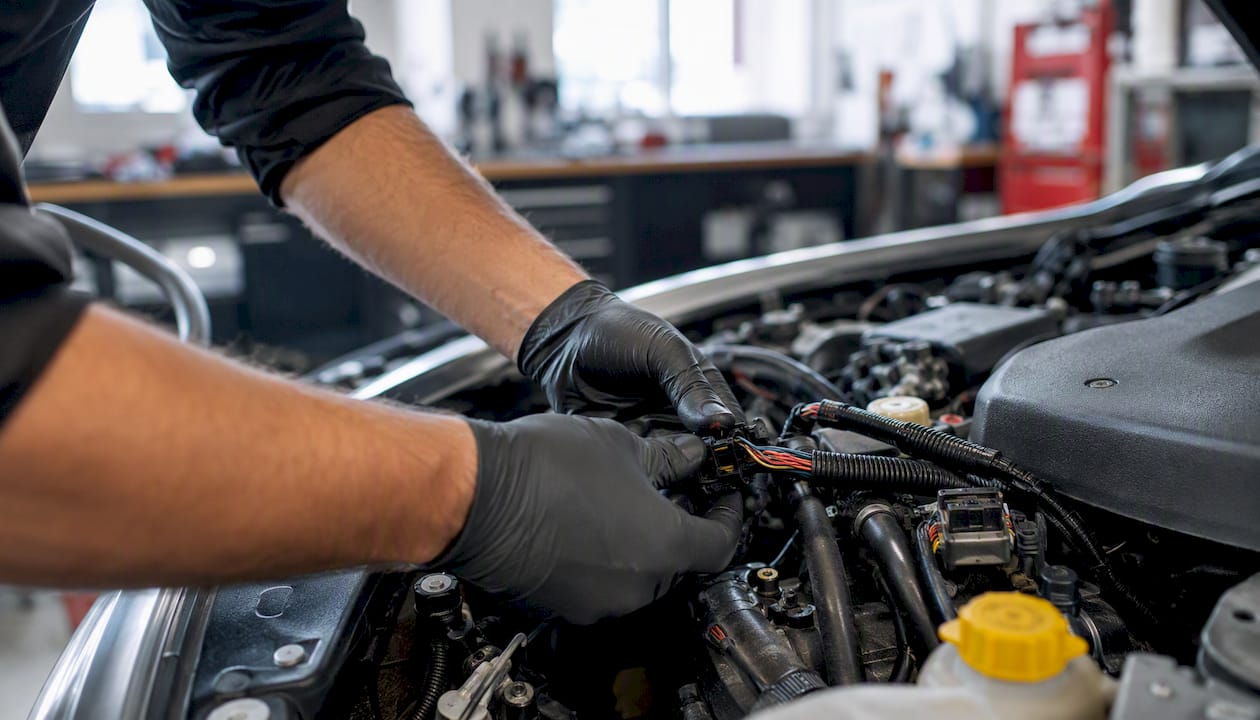
Pro Tip: Take a photo of your dashboard the moment the light appears. The combination of warning lights, gauge readings, and any symptoms you notice gives a technician far more to work with than “the light just came on.”
The most common causes behind a check engine light
Common triggers range from a loose gas cap to a failing catalytic converter, and the repair cost spread is just as wide.
The table below covers the causes that account for the majority of check engine diagnoses.
| Cause | Typical DTC(s) | Common Symptoms | DIY Difficulty | Ballpark Repair Cost |
|---|---|---|---|---|
| Loose or faulty gas cap | P0440, P0455, P0457 | No symptoms, or slight fuel smell | Easy | $0–$25 (cap replacement) |
| Oxygen (O2) sensor failure | P0135–P0161 | Poor fuel economy, rough idle | Moderate | $150 |
| MAF sensor (dirty or failed) | P0101–P0103 | Rough idle, hesitation, poor MPG | Easy (cleaning) | $0–$150 |
| Spark plugs / ignition coils | P0300–P0305 (misfire) | Rough idle, hesitation, power loss | Moderate | $100–$250 |
| Catalytic converter efficiency | P0420, P0430 | Reduced power, sulfur smell | Difficult | $800–$2,500+ |
| EVAP system leak | P0440–P0457 | Fuel smell, no drivability issue | Moderate | $50–$600 |
| Thermostat / coolant temp sensor | P0117–P0125 | Slow warm-up, poor fuel economy | Moderate | $100–$250 |
| EGR valve (clogged or failed) | P0401–P0406 | Rough idle, hesitation at low RPM | Moderate | $150–$350 |
A few things worth flagging:
- Gas cap issues are the single most common reason a check engine light appears after a fill-up. Tighten it until it clicks. The light may not go out immediately because the ECU needs several drive cycles to verify the EVAP system is sealed before clearing the code.
- MAF sensor cleaning with CRC MAF Sensor Cleaner is a legitimate first step before replacing the sensor. A dirty MAF is not a failed MAF.
- Catalytic converter codes (P0420/P0430) are frequently misdiagnosed. The cat may be fine while an upstream O2 sensor or exhaust leak is the real culprit. Confirm before replacing.
- EVAP codes are emissions-related and tied to EPA emissions-control requirements. They rarely affect drivability but will cause a smog check failure.
What to do the moment the light comes on
Assess first, then act. Here is the ordered sequence:
- Drive to a shop or scan the codes yourself. Early diagnosis is almost always less expensive than waiting. A fault that costs $150 to fix today can cascade into a $1,500 repair if ignored for two months.
When to call a tow instead of driving: flashing light with power loss, any smoke, overheating gauge in the red, or oil pressure warning. In those cases, the risk of driving even a few miles outweighs the tow cost.
Pro Tip: If you must drive with a steady check engine light, keep trips short and local. Highway driving at sustained high RPM puts more stress on a compromised system and can turn a minor fault into a major one.
How a professional diagnoses a stored trouble code
Reading the code is step one of a multi-step process as part of professional engine diagnostic services. Here is what a competent technician actually does, and roughly how long each step takes.
| Diagnostic Step | What It Reveals | Typical Time | Typical Cost |
|---|---|---|---|
| DTC and freeze-frame read | Which system flagged, conditions at fault time | 10 min | Often included in diagnostic fee |
| Live PID review (fuel trims, O2 waveforms, MAF g/s) | Whether the fault is active, intermittent, or resolved | 15–30 min | Part of diagnostic fee |
| Visual inspection (wiring, hoses, connectors) | Obvious physical damage, loose connections | 15 min | Part of diagnostic fee |
| Component testing (pressure, resistance, scope) | Confirms or rules out specific parts | 30–60 min | $75 diagnostic fee total |
| TSB and service info review | Known manufacturer fixes for this code/vehicle | 10 min | Included |
| Repair and post-repair verification | Confirms fault is resolved, monitors clear | Varies | Labor + parts |
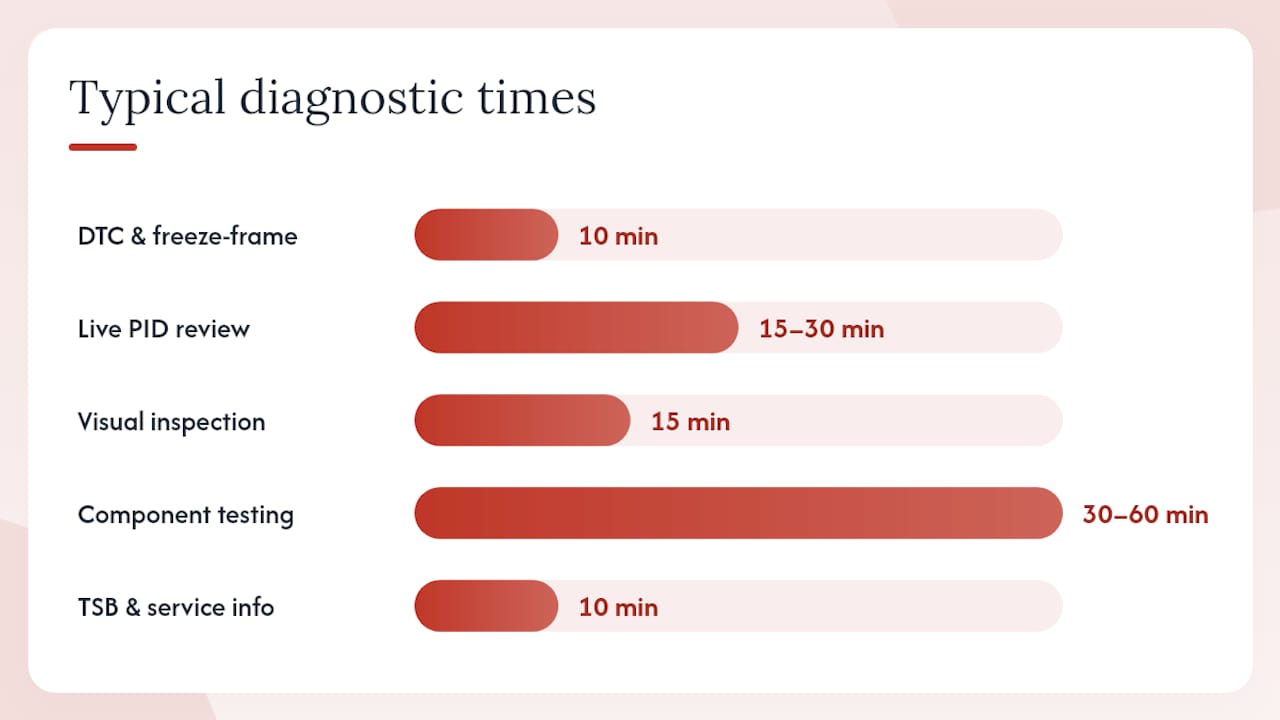
A structured diagnostic workflow reads codes, checks live PIDs like fuel trim and O2 sensor behavior, performs wiring and component tests, and confirms the fault before any part is replaced. Shops that skip straight from code to part replacement are guessing, not diagnosing.
TSBs (Technical Service Bulletins) are manufacturer-issued notices about known problems and their fixes. A shop with access to current service information will check these before recommending a repair. This matters because some codes have well-documented software or calibration fixes that cost far less than a parts replacement.
ASE certification is the minimum qualification to look for in a technician. ASE-certified techs have passed standardized exams across specific repair categories (engine performance, electrical, brakes, etc.) and must recertify periodically. It is not a guarantee of perfection, but it is a meaningful baseline.
Delaying diagnosis commonly escalates the problem. A misfiring cylinder that costs $200 to fix with fresh spark plugs and a coil can become a $1,200 catalytic converter replacement if driven another 3,000 miles.
DIY checks you can safely run before visiting a shop
You can do more than you think without any special tools. Start with visual checks, then connect an OBD2 scanner to read codes and freeze-frame data before replacing any parts.
Safe DIY checklist:
- Locate the OBD2 port — It is almost always under the dashboard on the driver’s side, within 18 inches of the steering column.
The critical mistake most DIYers make: they read a code, buy the part the code names, install it, and the light comes back. Confirming a fault with live data before replacing parts prevents wasted money and repeat trips. A P0141 (O2 sensor heater circuit) might mean a bad sensor, or it might mean a blown fuse or a broken wire. The code alone does not tell you which.
Clearing codes without fixing the underlying cause just resets the readiness monitors. The light will return within one to three drive cycles if the fault is still present. Drive cycles matter: the ECU runs specific self-tests only under certain speed, temperature, and load conditions, which is why a gas-cap fix may take several drive cycles before the EVAP monitor completes and the light goes out.
Pro Tip: If you plan to DIY regularly, a mid-range scanner like the Autel AL319 or BlueDriver gives you live PID data, not just codes. That extra layer is what separates a confident DIY fix from a parts-swapping gamble.
Signs that mean you should stop driving immediately
Most check engine situations allow you to drive carefully to a shop. A few do not.
Here is why each of those is serious. A severe misfire dumps raw, unburned fuel into the exhaust stream. The catalytic converter, which operates at temperatures above 1,200°F, can be destroyed in minutes by that fuel load. Replacing a catalytic converter on many modern vehicles costs $800–$2,500 or more. A tow costs a fraction of that.
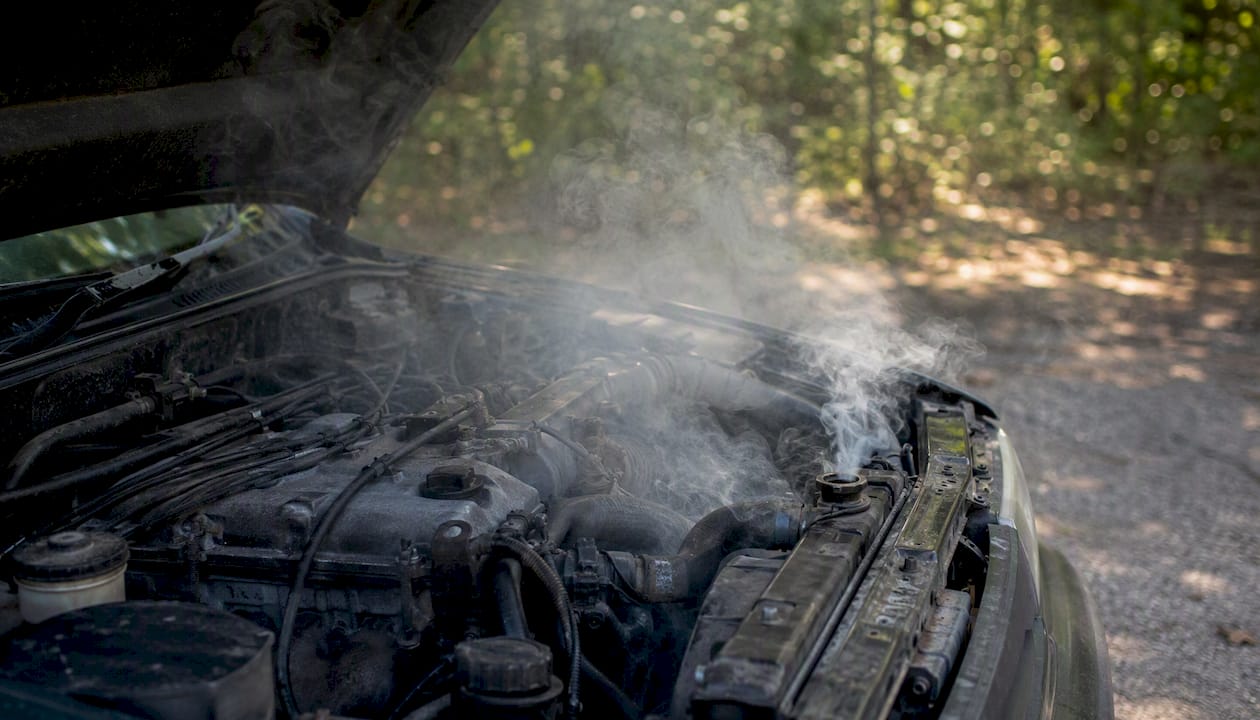
Overheating and low oil pressure are in a different category entirely. Both can cause engine seizure, where internal metal components weld themselves together from heat and friction. An engine that seizes is typically a total loss or a $4,000–$8,000 rebuild. The oil pressure warning light is a separate indicator from the MIL and demands an immediate, safe stop.
If you need to wait for a tow, turn the engine off, move the vehicle as far from traffic as safely possible, and turn on your hazard lights. Do not restart the engine to “check if it’s better.” If the problem caused the warning, running it again compounds the damage.
What a good repair shop does from check-in to repair
A trustworthy shop does not just read a code and hand you a parts estimate. Here is the workflow you should expect, and the questions worth asking.
Typical shop workflow:
- Check-in and symptom documentation. The service advisor records your description, mileage, and any recent repairs. This context matters.
- DTC scan and freeze-frame review. The tech reads all stored and pending codes, not just the first one. Multiple codes often tell a story.
- Live data and targeted testing. Fuel trims, O2 sensor waveforms, MAF readings, and component tests confirm whether the code reflects a real failure or a transient condition.
- Digital vehicle inspection. Many shops photograph findings so you can see exactly what the tech sees. This transparency is a trust signal.
- Written estimate before any work begins. No surprises. A reputable shop will not proceed without your approval.
- Post-repair verification. After the fix, the tech clears codes, performs a test drive, and confirms the monitors have reset before returning the vehicle.
Questions worth asking your technician:
- Which codes were stored, and were any pending (not yet confirmed)?
- What did the freeze-frame data show?
- Did you confirm the fault with live data or component testing, or is this a code-based recommendation?
- What is the warranty on this repair?
- Is there a TSB for this code on my vehicle?
Tom’s B & M Auto has been diagnosing check engine lights in the Lynnwood area since 1985, with ASE-certified technicians and professional-grade OBD-II diagnostic equipment. Every repair comes with a 24-month/24,000-mile warranty, and written estimates are provided before any work starts. For drivers in Kenmore, Edmonds, Mountlake Terrace, or Shoreline, same-day appointments are often available. You can review the check engine light service in Kenmore or find more detail on engine misfire diagnosis if your symptoms point that direction.
Key Takeaways
The single most important thing to remember: a flashing check engine light is an emergency requiring immediate action, while a steady light means get it diagnosed within days, not weeks.
| Point | Details |
|---|---|
| Flashing vs. steady | Flashing means stop high-load driving now; steady means schedule a diagnosis within a day or two. |
| First DIY steps | Tighten the gas cap, check oil and coolant, inspect vacuum hoses, then scan codes before replacing any parts. |
| Drive vs. tow decision | Tow if you see smoke, overheating, oil pressure warning, or a flashing light with power loss. |
| Get codes read promptly | Early diagnosis is almost always less expensive; delaying a sensor fault can escalate into a catalytic converter or engine repair. |
| Tom’s B & M Auto | ASE-certified diagnostics, 24-month/24,000-mile warranty, and same-day appointments often available in Lynnwood, WA. |
The check engine light deserves more respect than it gets
Most drivers treat the check engine light as background noise, something to deal with “eventually.” That instinct is understandable. The light has a reputation for crying wolf, and plenty of drivers have ignored it for months without anything dramatic happening.
But that reputation obscures a real pattern. The cases where ignoring the light is harmless (a loose gas cap, a minor EVAP leak) are genuinely common. The cases where ignoring it is catastrophic (an active misfire destroying a catalytic converter, a coolant leak that becomes an overheated engine) are less common but far more expensive. The problem is you cannot tell which situation you are in without reading the codes.
What frustrates me about most check engine advice is that it either dismisses the light entirely (“probably just the gas cap”) or catastrophizes it (“get off the road immediately”). Neither is useful. The honest answer is that the light is a data flag, and the data is almost always accessible within 15 minutes with a $25 Bluetooth scanner or a free stop at a shop. There is no good reason to drive around guessing.
The other thing worth saying: a code is not a repair order. P0420 does not mean “replace the catalytic converter.” It means the ECU measured catalytic efficiency below threshold. That could be the converter, an O2 sensor, an exhaust leak, or even a coolant intrusion issue. Shops that skip the confirmation step and go straight to parts replacement are not diagnosing your car; they are gambling with your money. Ask how the fault was confirmed before you approve any repair.
Tom’s B & M Auto handles check engine diagnostics the right way
Drivers in the Lynnwood area have a straightforward option when that light comes on: a free check engine review at Tom’s B & M Auto, where ASE-certified technicians read your codes, review freeze-frame data, and give you a clear, written explanation of what was found before recommending any repair.
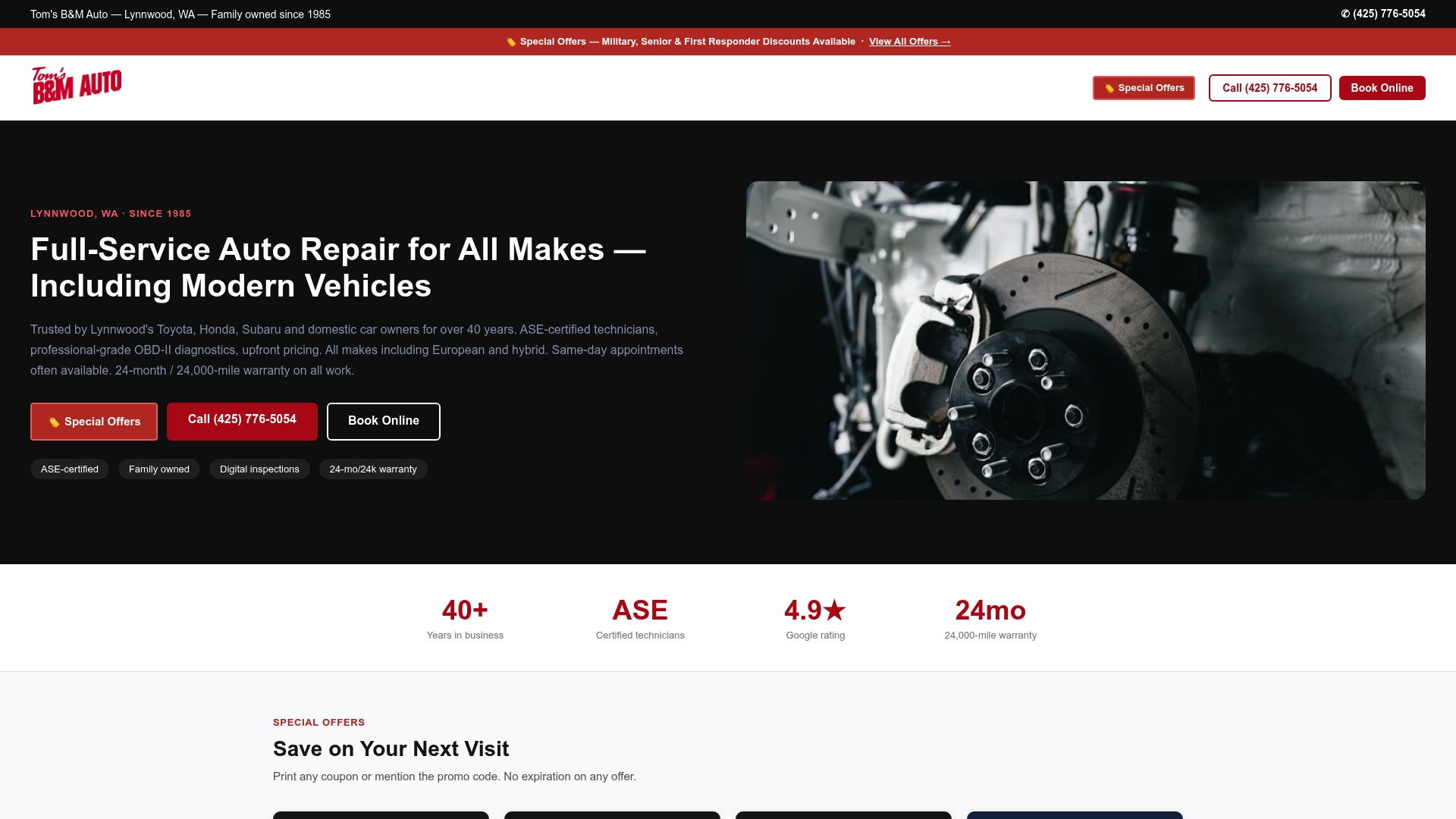
Tom’s B & M Auto has served Lynnwood, Kenmore, Edmonds, Mountlake Terrace, and Shoreline since 1985. Every diagnosis uses professional-grade OBD-II equipment, not a basic code reader. Every repair is backed by a 24-month/24,000-mile warranty. For larger repairs, financing is available so cost does not force you into a bad decision. Current specials include a free digital vehicle inspection and up to $100 off qualifying repairs over $600.
Book online or call to schedule. For check engine light service in Lynnwood, same-day appointments are often available. If you need engine repair in Kenmore, the same ASE-certified team handles everything from sensor replacements to full engine work, with upfront pricing at every step.
Useful sources for drivers who want to go deeper
- What Does Your Check Engine Light Mean?
- Dashboard warning lights explained
- What Does the Check Engine Light Mean? — Consumer Reports
- AAA guidance on check engine light
- EPA on regulations for emissions, vehicles and engines
- Check Engine Light On? What to Do First (speedXperts)
- Check Engine Light Meaning: 8 Steps to Diagnose (CarCareRoutine)
Recommended
- Check Engine Light Meaning: What Drivers Need to Know – Tom’s B & M Auto Blog
- Check Engine Light in Edmonds, WA | Tom’s B&M Auto
- Check Engine Light in Kenmore, WA | Tom’s B&M Auto
- Fix Engine Misfires Step by Step: A Car Owner’s Guide – Tom’s B & M Auto Blog
Leave a Reply