
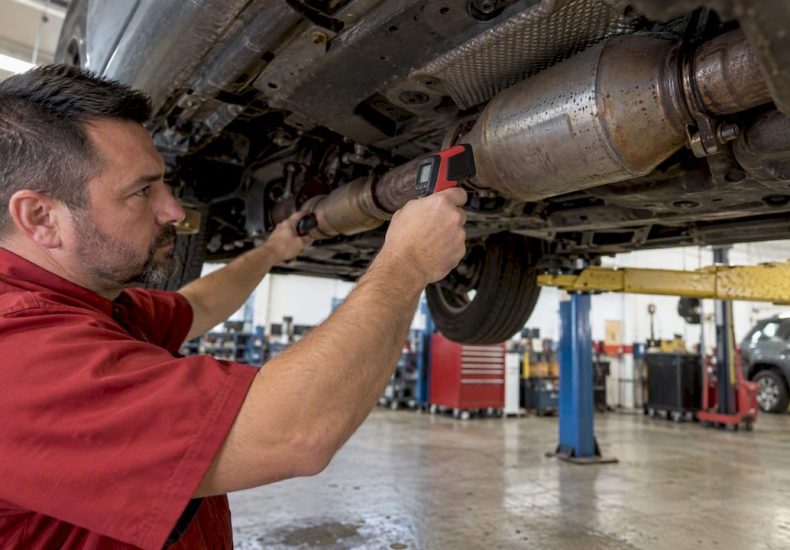
Converter Failure Symptoms: P0420 Alone Isn’t Proof for Drivers
A short list of signs reliably points to a failing catalytic converter: a P0420 or P0430 code paired with noticeable power loss, a rotten-egg smell from the exhaust, rattling from underneath the car, or visible overheating or glowing near the converter. If your check engine light is flashing or the engine is misfiring badly, stop driving and get an OBD-II live-data scan before you go any further.
TL;DR:
- A flashing light, severe misfire, glowing converter, or burning smell means stop driving and arrange a tow; heat can destroy the substrate within minutes.
- A P0420 or P0430 code does not prove the converter has failed; technicians compare oxygen sensor signals and check misfire data, backpressure, and temperature first.
- For a home temperature check, drive 10 minutes on the highway, then compare inlet and outlet readings; a flat or falling outlet suggests restriction.
- Fix the misfire, oil leak, or coolant leak before replacing a converter; cleaning may help mild soot buildup, but cracked or collapsed honeycomb requires replacement.
Table of Contents
- What symptoms mean when your catalytic converter is failing
- Safe checks you can do at home before calling a shop
- How shops confirm a failing converter
- Why catalytic converters actually fail
- Deciding between repair and replacement
- What repair and replacement typically cost
- How we diagnose a suspected converter problem
- The biggest mistake drivers make with a failing converter
- Get your converter diagnosed before you pay for a new one
- FAQ
- Sources
What symptoms mean when your catalytic converter is failing
Most drivers notice a converter problem through performance, sound, or smell before a shop ever hooks up a scanner. Each symptom points to a different stage or type of failure, and knowing which is which helps you judge how urgent the problem really is.
Reduced power and sluggish acceleration usually come from backpressure: when the converter’s internal honeycomb clogs with soot or breaks apart, exhaust gas cannot flow through fast enough, and the engine struggles to breathe, especially under load or at highway speed. A steady check engine light often means the onboard computer has logged a catalyst efficiency code such as P0420 or P0430, which signals the converter is not cleaning exhaust gas as well as it should. A flashing check engine light is different: according to ASE’s Advanced Engine Performance Specialist bulletin, the OBD-II system flashes the light specifically to warn that a severe misfire is dumping unburned fuel into the converter, which can destroy it in minutes; learning how to find misfires on performance cars is critical to avoiding this damage.
A rotten-egg or sulfur smell comes from hydrogen sulfide forming when the converter cannot fully oxidize sulfur compounds in the fuel, a sign the catalyst is no longer processing exhaust gas correctly. Rattling from underneath the vehicle, particularly when idling or accelerating, usually means the ceramic honeycomb inside has cracked or collapsed and loose fragments are bouncing around the housing. Other common signs include:
- Poor fuel economy, as the engine computer compensates for restricted exhaust flow by adjusting fuel trim.
- Stalling or rough idle, often tied to a misfire that is also overloading the converter.
- Visible discoloration or glowing on the converter housing, which signals dangerous overheating.
- A failed emissions test, which frequently confirms a converter that is no longer meeting catalytic efficiency standards.
Not every symptom carries the same urgency. A steady check engine light with a P0420 code is worth scheduling a diagnostic appointment for soon. A flashing light, visible glowing, or a strong smell of burning plastic or rubber from underneath the car means you should stop driving and arrange a tow. EPA technical guidance on converter durability notes that a converter can be destroyed by overheating within minutes during an extreme misfire, which is exactly why that flashing warning exists.
Safe checks you can do at home before calling a shop
You do not need a lift or a scan tool to gather useful information. A few careful observations can save time once you do get the car to a technician.
- Listen for rattling with the engine idling in a quiet spot; a metallic shaking sound from underneath usually means broken honeycomb material, and if you hear it, avoid highway driving until it is checked.
- Note any sulfur or rotten-egg smell, including when it happens: at idle, under acceleration, or only after a long drive, since timing helps a technician narrow down the cause.
- Compare exhaust temperatures using an inexpensive infrared thermometer, checking the pipe just before and just after the converter.
- Write down when symptoms started and whether they followed any recent repair, a check engine light, or a change in how the car drives.
A healthy converter runs hotter at the outlet than the inlet because the catalytic reaction generates heat. A flat or reversed reading, where the outlet is the same temperature or cooler, points to a clog restricting flow and blocking that reaction.
Pro Tip: Take your infrared readings after driving at least 10 minutes on the highway, since a cold engine won’t show a meaningful temperature difference across the converter.
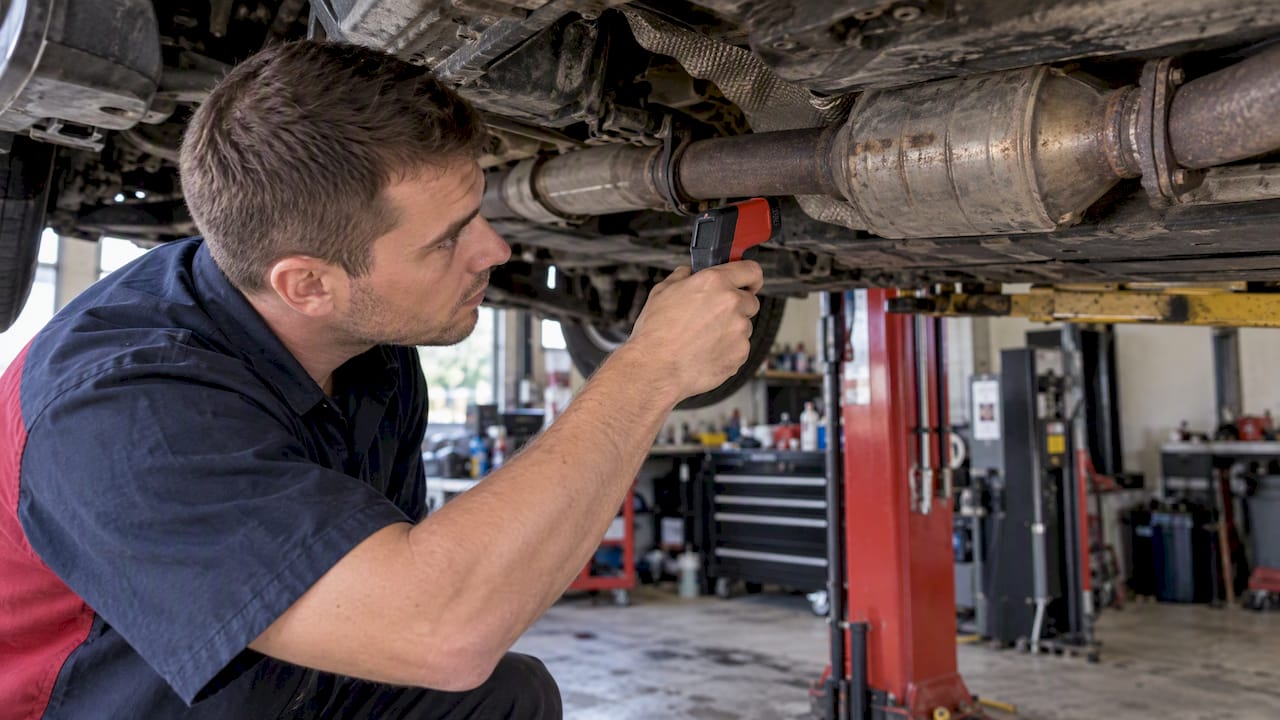
Avoid anything that risks injury or more damage. Do not tap or strike the converter housing to check for loose material. It runs extremely hot and can cause serious burns, and a bump test tells you far less than a proper backpressure or temperature check. If you see glowing metal, smell burning plastic, or the engine is shuddering badly, do not keep driving. Call for a tow instead.
How shops confirm a failing converter
Codes alone do not tell a technician whether to replace a converter. A proper diagnostic sequence rules out sensor faults and upstream engine problems first, which keeps you from paying for a part you did not need.
An OBD-II scan is the starting point. A P0420 or P0430 code means the computer sees reduced catalyst efficiency, but as our P0420 code diagnostic guide explains, that code can also point to a failing oxygen sensor rather than the converter itself. Comparing the upstream and downstream oxygen sensor waveforms shows whether the converter is actually doing its job: a healthy one produces a much steadier downstream signal than the upstream sensor, while a failing one lets both signals look nearly identical. A backpressure test measures exhaust pressure directly, and a reading that climbs well above normal at idle or under load usually confirms a clog. An infrared temperature sweep across the converter body should show rising heat from inlet to outlet; a cold spot or a sudden drop signals a blockage.
| Diagnostic test | What it measures | Result suggesting converter failure |
|---|---|---|
| OBD-II scan | Catalyst efficiency codes | P0420 or P0430 present |
| O2 sensor waveform comparison | Upstream vs. downstream signal pattern | Downstream signal mirrors upstream |
| Backpressure test | Exhaust system pressure | Pressure significantly above spec |
| Infrared temperature sweep | Inlet vs. outlet temperature | Flat or reversed temperature rise |
According to recent diagnostic workflow guidance, technicians increasingly treat a P0420 code as a starting point for live-data verification rather than an automatic replacement order, since codes alone miss sensor faults and upstream engine issues that mimic converter failure. Bench or flow testing is less common and typically reserved for shops verifying a used or reconditioned converter before installation.
Why catalytic converters actually fail
Understanding the mechanics behind converter failure explains why fixing the root cause matters as much as replacing the part. Several distinct processes can damage the catalyst, and they call for different fixes.
Sintering happens gradually: repeated thermal cycling causes the precious metal coating inside the converter to clump together, shrinking the surface area available for the chemical reaction that cleans exhaust gas. EPA technical documentation on converter durability identifies sintering, along with contamination from oil, phosphorus, and sulfur, as common long-term degradation mechanisms. Contamination happens when oil or coolant burns through the combustion chamber and coats the catalyst surface, which is why addressing excessive oil consumption or a coolant leak matters before any converter replacement. Using the oil spec your manufacturer recommends (check the ILSAC or API rating on the bottle) also reduces the phosphorus and sulfur load that gradually fouls the catalyst.
Thermal damage is often sudden rather than gradual. A severe misfire sends unburned fuel straight into the converter, where it ignites inside the housing and can push internal temperatures high enough to melt the substrate within minutes, which is exactly the scenario ASE’s technical bulletin ties to a flashing check engine light. Physical damage, whether from road debris, a pothole impact, or simple age, can crack the ceramic honeycomb and cause fragments to break loose, creating both a rattle and a blockage. Common root causes include:
- Sintering from years of normal heat cycling, which reduces catalytic efficiency over time.
- Oil or coolant contamination from an internal engine leak.
- Severe misfires that overheat the converter from unburned fuel.
- Physical impacts that crack or collapse the internal substrate.
Deciding between repair and replacement
Not every converter problem calls for a new part, but some situations leave no safe alternative. Knowing which category yours falls into keeps you from either overpaying or driving on borrowed time.
Stop driving and arrange a tow if you see a flashing check engine light, feel a severe misfire, or notice visible glowing or smell burning material underneath the car. These are signs of active thermal damage that gets worse with every mile. A mild clog from accumulated soot, without physical honeycomb damage, can sometimes respond to a cleaning treatment or an upstream repair such as fixing a misfire or an oxygen sensor. Once the substrate has cracked or partially collapsed, cleaning will not restore it, and replacement is the only real option.
A few clear triggers point toward replacement:
- A converter that still won’t clear a P0420 or P0430 code after the misfire, oxygen sensor, or leak causing it has been fixed.
- A failed emissions test tied directly to catalyst efficiency.
- Physical rattling confirming a broken or collapsed substrate.
- Visible glowing, melting, or burn damage to the housing.
Whichever route you take, make sure the replacement part matches your vehicle’s exact application. EPA guidance on aftermarket converters warns that a converter sized wrong for your engine can change backpressure and performance and may void both emissions compliance and manufacturer warranties.
What repair and replacement typically cost
Budgeting for a converter repair starts with understanding your part options. OEM converters match your vehicle’s original specifications exactly, which keeps backpressure and sensor readings where the factory intended, but they tend to cost more. Aftermarket converters are generally less expensive and widely available, though EPA guidance cautions that performance and fitment vary by brand and must match your engine size and vehicle weight. Remanufactured units fall in between on price but depend heavily on the quality of the rebuild.
Total cost depends on your vehicle, how many converters it has (some vehicles have two or more), and how much labor is involved in accessing them. A few factors consistently move the price:
- Number of converters: some V6 and V8 engines use two, which roughly doubles parts cost.
- Part quality: OEM costs more upfront but avoids fitment and backpressure issues.
- Labor complexity: rusted bolts or tight underbody access add time.
- Upstream repairs: fixing a misfire or oil leak first protects the new converter from repeating the same failure.
Warranty terms matter as much as price. A converter installed without resolving the misfire or contamination that killed the original one is likely to fail again, which is why addressing the root cause first protects both your investment and your warranty coverage.
How we diagnose a suspected converter problem
We run a set diagnostic order rather than jumping straight to a parts swap: an OBD-II scan to pull stored codes, a live oxygen sensor waveform comparison between the upstream and downstream sensors, a check of the misfire counter in the engine computer, and backpressure or infrared temperature checks to confirm restriction. That sequence, paired with ASE-certified technicians running the tests, keeps us from replacing a converter when the real problem is a failing sensor or an unresolved misfire.
A few details speed up your visit:
- When the symptoms started and whether anything changed right before, like a repair or a new fuel source.
- How the car behaves under load, at idle, and on cold starts.
- Any recent maintenance, especially oil changes, spark plug replacement, or prior check engine light visits.
Pro Tip: Bring your OBD-II code if you’ve already had one pulled. It saves diagnostic time and helps us start the live-data comparison right away.
We offer a warranty on repairs and often provide same-day appointments for check engine light diagnostics.
The biggest mistake drivers make with a failing converter
The most expensive mistake I see is replacing the converter first and asking questions later. A new converter installed on top of an unresolved misfire or an oil leak usually fails again within months, which means paying for the part twice. Diagnosis first, root cause second, converter last: that order saves money almost every time. Write down when your symptoms started and what the car was doing when you noticed them. That single page of notes often cuts a diagnostic visit in half.
— Shingi
Get your converter diagnosed before you pay for a new one
If you’re dealing with a check engine light, a rattle, or that rotten-egg smell, we run a full diagnostic sequence before recommending any parts replacement, so you’re not paying for a converter when the real issue is a sensor or a misfire.
Our technicians are ASE-certified, our diagnostics are done with professional-grade OBD-II and live-data tools, and every repair carries a 24-month, 24,000-mile warranty. Services that apply here include:
- Check engine light diagnostics
- Catalytic converter replacement
- Engine repair for misfires, oil leaks, or coolant contamination feeding converter damage
If you’re near Kenmore, you can book a catalytic converter replacement appointment directly, or reach out through our main service page to schedule a diagnostic scan today.
FAQ
Can a bad catalytic converter damage spark plugs?
A clogged converter itself does not directly damage spark plugs, but the backpressure it creates can cause poor combustion and fuel fouling that shortens plug life over time. The bigger risk usually runs the other direction: a misfire from worn spark plugs can overheat and destroy a healthy converter.
Is it worth fixing a catalytic converter?
It’s worth fixing when the root cause, such as a misfire or oil leak, gets addressed at the same time, since that protects the repair from failing again quickly. If the substrate has physically cracked or collapsed, replacement rather than cleaning is usually the only lasting fix.
What will unclog my catalytic converter?
A mild clog from soot buildup can sometimes be improved with a cleaning treatment or by fixing the upstream issue causing the buildup, such as a rich-running engine. Once the internal honeycomb has broken apart, no cleaning product will restore it, and replacement becomes necessary.
Can a clogged catalytic converter cause a misfire?
Yes, severe restriction from a clogged converter can disrupt normal exhaust flow enough to affect combustion and trigger a misfire. More often the relationship runs the opposite way: a misfire dumps unburned fuel into the converter and overheats it, so a technician needs live data to tell which came first.
Sources
- Advanced Engine Performance Specialist test (L1) – ASE
- The Emission and Oil Connection (EPA archived report)
- What You Should Know About Using, Installing, or Buying Aftermarket Catalytic Converters – EPA
- Catalytic converter failure symptoms – Motor Advises
Recommended
- P0420 Code Fix: 5 Minute O2 Waveform Test That Can Save You Hundreds
- Fix Engine Misfires Step by Step: A Car Owner’s Guide
- Types of Car Diagnostic Tests: 2026 Owner’s Guide
- Diagnose P0300 in 1–3 Hours: Lynnwood Mechanics’ Data First Fix
Leave a Reply