
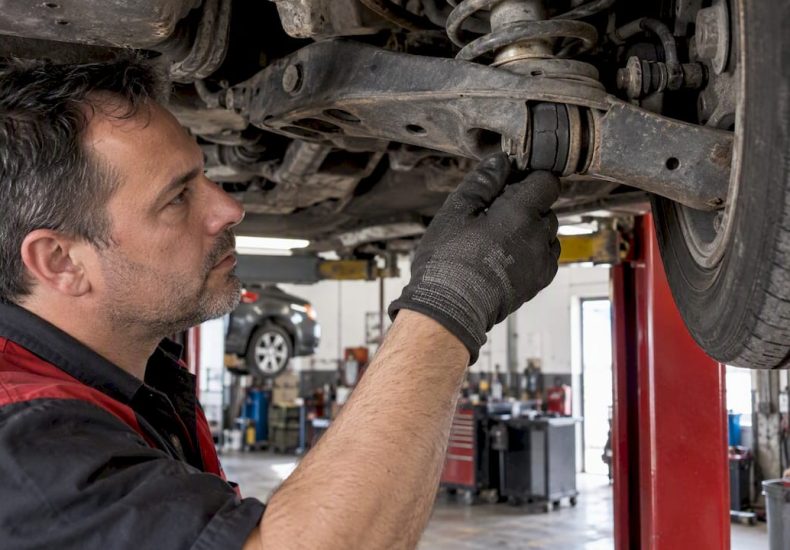
Squeaky Suspension: Quick Checks Before Clunks Signal Trouble
Most squeaky suspension noise comes from one of three things: dried or worn rubber bushings, ball joints or tie-rod ends that have lost their grease, or worn shock and strut mounts. If the squeak comes with clunks, a harsher ride, or any change in handling, treat it as urgent and get it checked soon. Start by noting exactly when the noise happens, then run through a short diagnostic before you call a shop.
TL;DR:
- A rhythmic click that speeds up during tight turns points toward a CV joint, while squeaking during stationary steering may indicate power steering trouble.
- During the bounce test, a healthy shock or strut settles after one bounce; continued bouncing suggests worn damping, while oily residue indicates a leaking shock.
- Use silicone spray on compatible rubber contact points and grease on serviceable metal joints, but check the part design because some bushings must flex dry.
- Record when the noise occurs and bring a short audio or video clip; skip lifting the car unless you can safely use approved jack points.
- Penetrating sprays may quiet noise temporarily but cannot repair mechanical wear, so arrange an inspection before relying on them or buying replacement parts.
Table of Contents
- Common Causes of a Squeaky Suspension
- How to Diagnose the Noise Yourself Before Calling a Shop
- DIY Fixes and Lubricants: What Actually Helps
- Signs Your Squeak Is Actually an Urgent Problem
- What a Professional Inspection Actually Checks
- A Mechanic’s Take on Priorities and Common Mistakes
- Get Your Suspension Checked at Tom’s B & M Auto
- FAQ
- Sources
Common Causes of a Squeaky Suspension
A squeak is rarely random. Each suspension part tends to make its own distinct sound, and matching the noise to the part saves time and money.
Rubber bushings sit at the control arms and sway bar, cushioning metal-on-metal contact. Over time, heat and age dry them out, and they crack and lose their give. A dry bushing tends to produce a dull, repetitive squeak over small bumps, and once it cracks, replacement is usually the only fix.
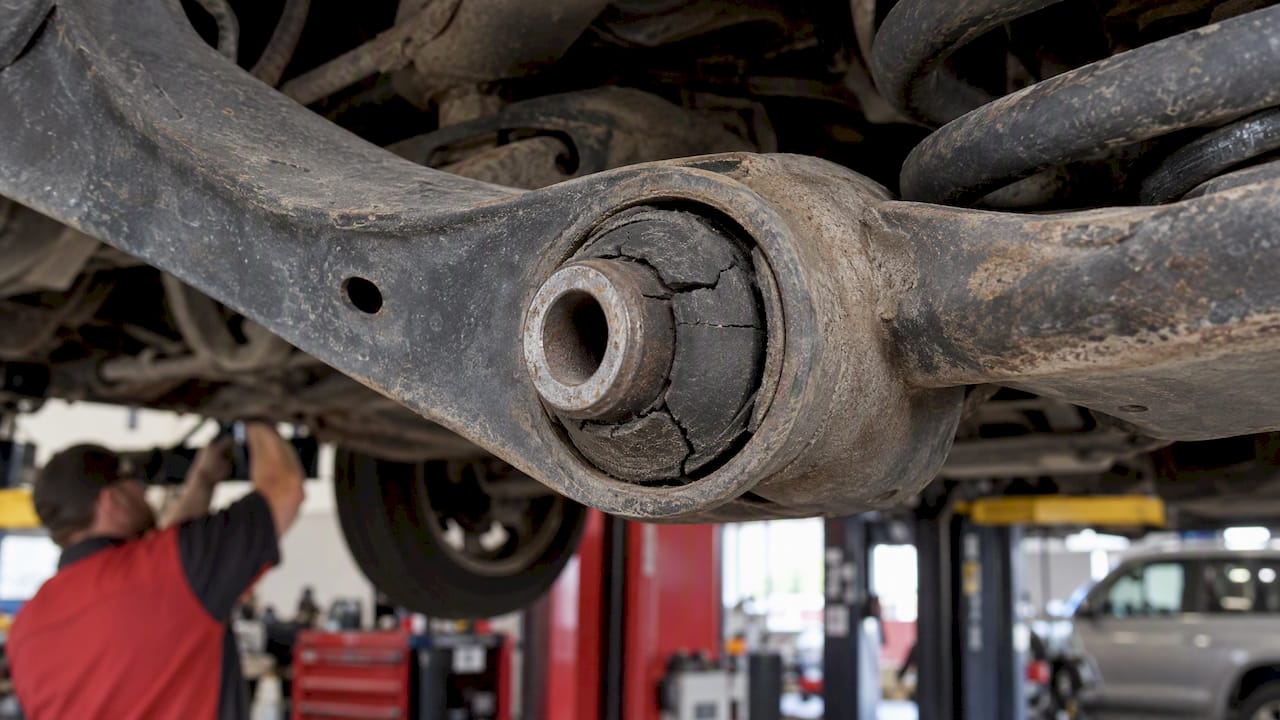
Ball joints and tie-rod ends rely on grease packed inside a rubber boot. When the boot tears or grease breaks down, the joint squeaks during steering input or over bumps. A squeak alone often means low lubrication, while a knocking or looseness when you rock the wheel suggests actual wear and play that needs attention soon.
Shocks and struts, along with their mounts, can squeak during compression, especially over broken pavement. A worn strut mount often creaks when you turn the wheel at low speed, and a leaking shock usually shows an oily residue on the shaft, a sign the damping itself has failed.
Other hardware joins the chorus too:
- Sway bar end links loosen or wear out, producing a tick or squeak over uneven roads.
- Subframe mounts and bolts can squeak when they rust or back out slightly.
- Spring isolators, the small rubber pads between coil springs and the body, dry out and creak under load shifts.
CV joints and axle boots squeak or click differently than suspension parts. A torn CV boot that has started losing grease produces a noise that gets worse with wheel turn, and it’s often a sharper click rather than a soft squeak. According to AAA Northeast’s Car Doctor, clicking during turns often points to a damaged CV boot or joint, and when the boot has failed and the joint is already dry, replacing the full axle assembly is often more practical than trying to repack it.
Steering components can also be the real source of a sound that feels like it’s coming from the suspension. Low power steering fluid, a failing pump, or a worn rack can cause a squeak that only appears when turning, often paired with stiffer steering effort, as noted by AAA.
Weather plays a role too. Cold, dry air stiffens rubber bushings and makes squeaks more noticeable, while road salt and grime work into joints and accelerate corrosion on mounts and fasteners, turning a quiet part into an intermittent squeaker almost overnight.
How to Diagnose the Noise Yourself Before Calling a Shop
A few simple tests at home can narrow down the source before you spend money on parts or a diagnostic appointment.
- Reproduce the noise on purpose. Drive slowly over a speed bump, make a few slow parking-lot turns, and roll over a curb edge at low speed while listening closely.
- Try the bounce test. Push down firmly on each corner of the car and release. A healthy shock or strut resists and settles in one bounce; one that keeps bouncing points to worn damping.
- Turn the wheel while stationary. With the car in park or neutral and the engine running, turn the steering wheel lock to lock. A squeak here often points to the steering rack or power steering system rather than the suspension itself.
- Check for turning-specific clicks. Slowly circle in a parking lot with the wheel turned sharply in each direction. A rhythmic click that speeds up with your speed usually means a CV joint issue, not a suspension squeak, as outlined in our guide to diagnosing CV axle clicking.
- Inspect visually with the car safely lifted. Look for torn CV boots, grease residue, cracked rubber bushings, loose fasteners, and rust around mounting points.
Safety note: only lift a vehicle if you’re confident with a jack and jack stands placed on solid ground and manufacturer-approved lift points. If you’re not sure, skip the lift and call a shop instead.
Pro Tip: Keep a short symptom log, noting when the noise happens (cold starts, bumps, turns), its pitch, and how long it’s been going on. That single note saves a technician diagnostic time and often lowers your total bill.
For a deeper walkthrough of this process, our suspension noise diagnostic guide covers additional checks and real examples.
DIY Fixes and Lubricants: What Actually Helps
Some squeaks are genuinely fixable at home with the right product and a little patience, while others only sound fixed for a week or two.
- Silicone spray works well on rubber-to-metal contact points like bushings and isolators without degrading the rubber.
- White lithium grease suits metal linkages such as sway bar end links and some hardware joints.
- Chassis grease (often a lithium-complex or moly-based grease) is made for serviceable ball joints and tie-rod ends with grease fittings.
Aerosol penetrating oils like WD-40 can quiet a squeak temporarily, but they aren’t a long-term fix for a joint that needs real grease or outright replacement. AAA’s Car Doctor notes that temporary sprays and additives can mask symptoms without addressing mechanical wear underneath, so an inspection before spending further is the smarter move.
Not every bushing wants grease. Many rubber bushings are designed to flex dry, and spraying one indiscriminately can trap grit against the rubber and speed up its breakdown rather than slow it, a point Jalopnik’s piece on bushing lubrication makes clearly: check the part design or a service manual before applying anything.
Delaying a small, inexpensive repair tends to accelerate wear on surrounding parts, according to AAA, which can turn a simple fix into a much larger bill later.
Tightening a loose sway bar end link or swapping a worn one is a reasonable weekend job for someone comfortable with basic tools, and a torn axle boot can sometimes be replaced solo if you’re experienced. But once you see structural cracks in a bushing, feel real play in a ball joint, or notice a part that’s visibly bent or seized, it’s time to stop and let a shop take over.
Signs Your Squeak Is Actually an Urgent Problem
Not every squeak is harmless, and a few signs mean the issue has moved from annoying to unsafe.
- Clunks, booms, or a sudden change in handling point to a broken component affecting vehicle control and call for prompt attention, as detailed in our article on suspension clunking noises.
- Visible fluid leaking from a shock or strut, a collapsed damper, or noticeable play in the steering or suspension needs repair soon, not eventually.
- A torn CV boot that has already lost grease can lead to full joint failure and loss of drive power if it’s ignored much longer.
If you notice any of these, keep driving to a minimum, avoid highway speeds and heavy loads, and arrange a tow if the steering feels compromised. AAA points out that putting off these repairs tends to raise total repair costs later, since one failed part often stresses the ones around it.
What a Professional Inspection Actually Checks
A proper suspension diagnostic goes beyond listening for the noise. Technicians typically combine a road test with a physical inspection, checking joint play by hand, photographing worn components, and confirming the source before recommending any parts.
- A road test to reproduce the noise under real conditions, not just in the shop bay.
- A hands-on check for play in ball joints, tie rods, and bushings.
- Digital photos of worn or damaged parts so you can see exactly what needs attention.
- A review of findings against your symptom log for faster, more accurate diagnosis.
Auto repair shops often work on Toyota, Honda, Subaru, and domestic vehicles with ASE-certified technicians running professional-grade diagnostics. Same-day appointments are often available, and many offer warranties on repairs. For more on what to expect, see our full diagnostic walkthrough.
Bring your symptom log to the appointment, and a short video or audio clip of the noise helps even more. If the sound you’re hearing is more of a brake noise than a suspension one, our guide to why brakes squeak can help you tell the difference, and our broader car noise reference covers sounds beyond the suspension too. If vibration or rattle is coming from something unrelated, like a loose plate cover, this fix for plate cover rattle addresses that specific annoyance.
A Mechanic’s Take on Priorities and Common Mistakes
The cheapest fixes, a greased tie-rod end or a tightened sway bar link, often prevent the expensive ones down the road, yet they’re the ones owners skip first. Put safety items ahead of comfort: a clunk or loose joint outranks a cosmetic squeak every time. Run through the checklist above before you book, and bring what you find with you.
— Shingi
Get Your Suspension Checked at Tom’s B & M Auto
A squeak is easier and cheaper to resolve before it turns into a clunk or a failed joint. Technicians diagnose suspension noise with professional-grade tools, back repairs with warranties, and often have same-day appointments open.
See our full range of suspension repair and other services, or check availability at our Shoreline suspension repair page if that location is closer to you.
FAQ
Is it okay to drive with a squeaky suspension?
A simple squeak from a dry bushing is usually safe to drive on short-term, but you shouldn’t ignore it indefinitely. If the squeak comes with clunks, play in the steering, or a handling change, AAA recommends treating it as a signal to get it inspected promptly rather than waiting.
Will WD-40 fix squeaky suspension?
WD-40 and similar sprays can quiet a squeak for a short while, but they don’t address worn joints or bushings that need real grease or replacement. Aftermarket sprays mask the symptom rather than fix the mechanical cause, so an inspection is still worth doing before you rely on temporary fixes.
How much does it cost to fix squeaky suspension?
Cost depends entirely on which part needs attention, from a quick grease job to a full strut or bushing replacement, so there’s no single answer without a diagnosis. A shop visit that identifies the exact cause is the only reliable way to get an accurate estimate for your vehicle.
What is the best lubricant to use for squeaky suspension?
Silicone spray works well on rubber bushings and isolators, while white lithium grease or chassis grease suits metal linkages and serviceable ball joints. Not every bushing is designed to be greased, so check the part design before applying anything, since the wrong lubricant can trap grit and speed up wear.
Sources
- Vehicle noises you should never ignore | AAA Club Alliance
- Q&A With AAA Northeast’s Car Doctor: October 2026
- Strange car noises: what do they mean? | AAA
- Do rubber bushings need grease? What to know | Jalopnik
Recommended
- How to Diagnose Suspension Noise Before It Gets Worse
- What Does a Suspension Clunking Noise Mean?
- Avoid a $150–$400 Repair: 5 DIY Checks for Wheel Bearing Noise
- Car Problem Sounds: What Each Noise Means and What to Do
Leave a Reply