
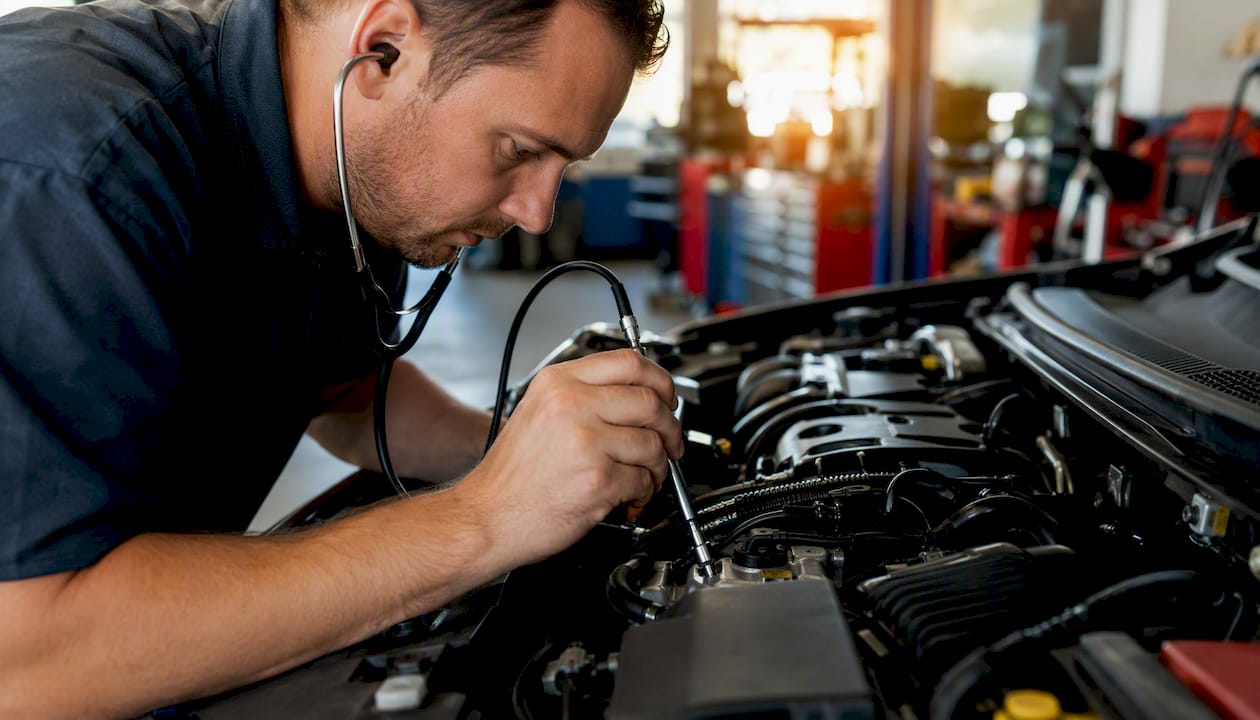
Car Problem Sounds: What Each Noise Means and What to Do
Three noises demand you pull over immediately: a loud metal-on-metal grinding when you press the brakes, a deep rhythmic knocking from the engine that speeds up with the RPMs, and a sudden high-pitched whine paired with loss of drive. The grinding means your brake pads are gone and rotors are being destroyed with every foot of travel. The engine knock points to a spun bearing or low oil pressure — keep driving and you risk a seized engine. The transmission whine with no drive means the torque converter or pump has failed. In all three cases, the action is the same: pull over safely, shut the engine off, and call for a tow.
Before you call the shop, note these details:
- When does it happen? Only when braking, turning, accelerating, or all the time?
- Any warning lights? Check engine, oil pressure, temperature, ABS, or brake light?
- Does the car steer and stop normally? Any pulling, vibration in the pedal, or soft brake feel?
- Speed and conditions? Highway only, low speed, cold start, or after the engine warms up?
Pro Tip: Hold your phone near the noise source (wheel well for suspension/brake sounds, under the dash for engine or transmission noises) and record 10–30 seconds while reproducing the exact condition. Avoid talking over the recording. Capture at least two instances.
AI audio tools like Fix My Car Sound and MyAutoSound can analyze a short clip and return a likely cause, urgency level, and a “Can I drive?” verdict before you ever call a shop. Fix My Car Sound reports high accuracy in diagnosing car issues from audio clips, correctly identifying the primary cause most of the time and listing the correct fault within its top recommended causes in the majority of cases, with some conditions showing near-complete accuracy. Treat that result as a useful first read, not a final diagnosis.
Table of Contents
- What each car problem sound most likely means
- How to diagnose car noises safely before visiting a shop
- What an ASE-certified shop does to confirm the problem
- Typical repair costs and how long fixes usually take
- Key Takeaways
- The noise your mechanic actually needs to hear
- Tom’s B & M Auto: professional diagnostics when the noise won’t wait
- Useful sources and further reading
What each car problem sound most likely means
CARFAX’s guide to scary car noises and Nationwide’s list of common car noise meanings both map the same core set of sounds to probable faults. Here is what each one tells you, how urgent it is, and a realistic cost range.
1. Squeal or screech
A high-pitched squeal when braking is almost always the wear indicator on your brake pads contacting the rotor. That is by design — it is the pad telling you it needs replacement. A squeal that happens while driving (not braking) often points to a slipping accessory belt or a dry belt tensioner. Learn more about brake noise causes and when they become safety-critical.
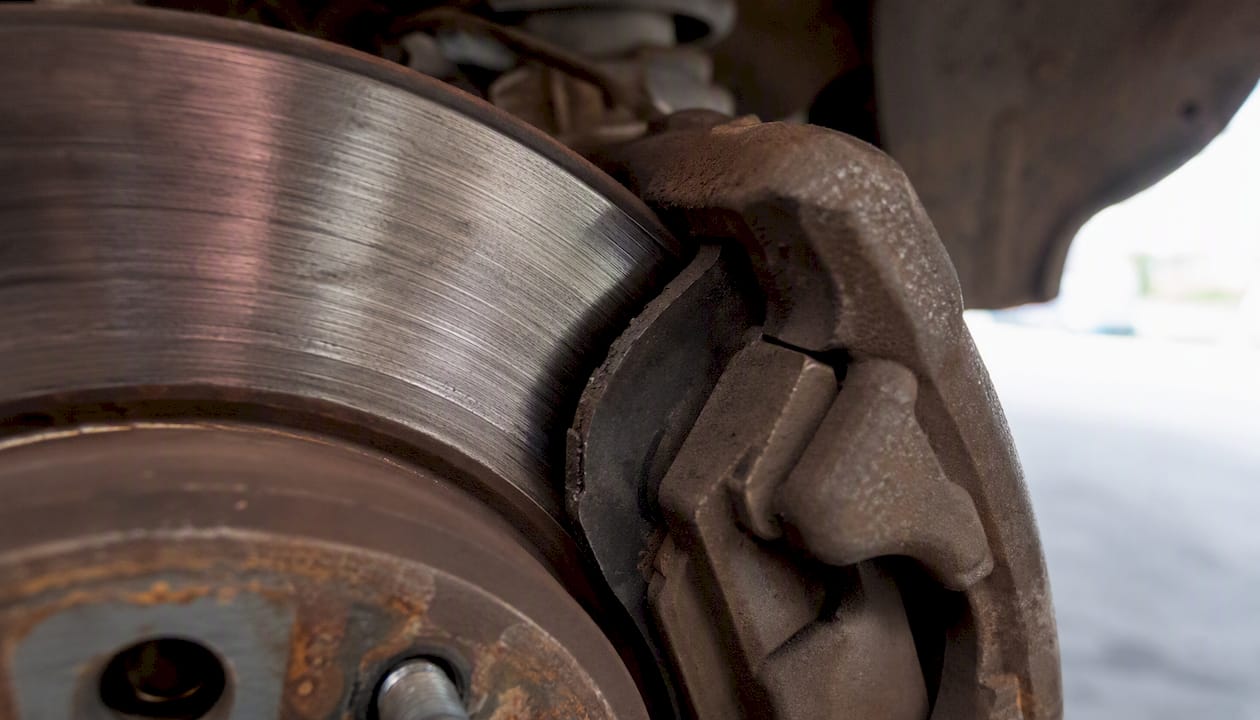
Urgency: Moderate (brake squeal) to Low (belt squeal). Typical cost: $150–$400 for brake pads and rotors; $80–$200 for a belt. Most shops complete brake pad replacement in 1–2 hours.
2. Deep knocking or thumping from the engine
A low, rhythmic knock that changes pace with engine RPM is one of the most serious car engine noises you can hear. It usually means a rod bearing is failing or oil pressure is critically low. A lighter, faster ticking at idle that quiets after warm-up is more likely a sticky lifter or low oil level. Check your oil immediately. If the knock is loud and persistent, do not drive.
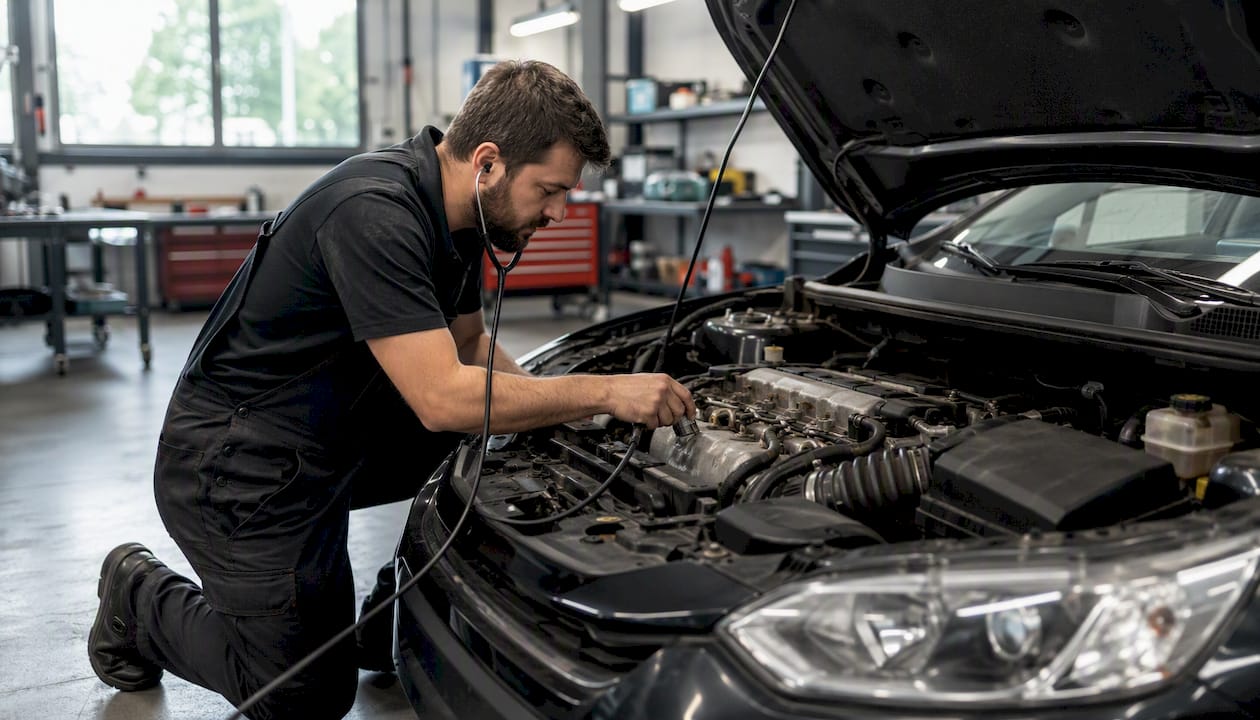
Urgency: High (rod knock) / Moderate (lifter tick). Typical cost: $500–$3,000+ for bearing work; $100–$500 for valve/lifter service. Timeline: 1 day to several days depending on severity.
3. Grinding
Grinding when braking means metal-on-metal contact — pads are worn through. Grinding when turning or accelerating (especially on a front-wheel-drive car) points to a failing CV joint. A grinding or growling that changes pitch with vehicle speed but not engine RPM is a classic wheel bearing signature. All three are high urgency.
Urgency: High. Typical cost: $200–$600 for brake repair; $200–$500 per CV axle; $150–$400 per wheel bearing. Most complete in 1–3 hours.
4. Hissing
A hiss from under the hood after you shut the engine off is often coolant hitting a hot surface — check for a leak at the radiator, hoses, or reservoir cap. A steady hiss while the engine runs points to a vacuum leak, which can cause rough idle and a check-engine light. A hiss from the AC system suggests a refrigerant leak.
Urgency: Moderate to High (coolant leak can lead to overheating fast). Typical cost: $100–$600 depending on the leak source. Diagnosis and minor hose repair: 1–2 hours.
5. Rattling or clunking
A rattle from underneath, especially over bumps, is usually a loose heat shield on the exhaust or a worn suspension component (sway bar link, strut mount). A clunk when you hit a pothole or turn the wheel points to a ball joint, tie rod, or worn strut. Exhaust rattles are often cheap to fix; suspension clunks need prompt attention because they affect steering control.
Urgency: Low (heat shield) to High (ball joint). Typical cost: $50–$150 for heat shield; $150–$600 for suspension components. Timeline: 1–3 hours.
6. Clicking when turning
A clicking or popping sound that appears only when you turn the wheel — especially at low speed — is almost always a worn CV joint or CV boot. On rear-wheel-drive vehicles, it can also be a U-joint. The clicking tends to get louder and more frequent as the joint deteriorates.
Urgency: Moderate to High (a failed CV joint can leave you stranded). Typical cost: $200–$500 per axle shaft. Most shops complete the job in 2–3 hours.
7. Humming or droning
A hum that rises and falls with vehicle speed (not engine speed) is the classic wheel bearing sound. It often changes pitch when you gently swerve left or right at highway speed — the load shift loads and unloads the bearing. A steady hum from the engine bay at idle is more likely a failing alternator bearing or power steering pump.
Urgency: Moderate to High (a failing wheel bearing can seize). Typical cost: $150–$400 per bearing. Timeline: 1–2 hours per corner.
8. Thumping from the tires
A rhythmic thump that matches wheel rotation is usually a flat spot on a tire (common after a car sits for weeks), a separated belt inside the tire, or an out-of-balance wheel. Check tire pressure and look for visible bulges or flat spots before assuming something mechanical. A thump that only appears at certain speeds and goes away at others is almost always a balance issue.
Urgency: Low to Moderate. Typical cost: $20–$50 for balancing; $100–$250 per tire if replacement is needed. Timeline: under 1 hour for balancing.
9. Scraping
A scraping sound that runs continuously while driving often means a loose brake dust shield (splash guard) is contacting the rotor, or road debris is caught between the pad and rotor. It can also be a dragging brake caliper. Do not ignore a scraping that gets worse — a stuck caliper will overheat the rotor and fade your brakes.
Urgency: Moderate to High. Typical cost: $50–$150 for debris/shield; $200–$500 for caliper replacement. Timeline: 30 minutes to 2 hours.
| Sound | Most Likely Cause | Urgency |
|---|---|---|
| Squeal when braking | Worn brake pad wear indicator | Moderate |
| Deep engine knock | Rod bearing / low oil pressure | High — stop driving |
| Grinding when braking | Metal-on-metal (pads gone) | High — stop driving |
| Hissing under hood | Coolant or vacuum leak | Moderate to High |
| Rattle over bumps | Loose heat shield / suspension | Low to High |
| Click when turning | CV joint wear | Moderate to High |
| Hum that shifts with speed | Wheel bearing failure | Moderate to High |
| Rhythmic tire thump | Flat spot / belt separation | Low to Moderate |
| Continuous scraping | Debris / dragging caliper | Moderate to High |
How to diagnose car noises safely before visiting a shop
A reliable quick diagnosis uses three inputs: context (when and how the noise appears), a short audio or video recording, and a few simple visual checks. Together, those three things let an AI tool or a technician narrow the field before any hands-on work begins.
Step-by-step checklist:
- Reproduce the noise safely. Drive in a quiet area or parking lot and recreate the exact condition (braking, turning, accelerating, highway speed). Do not attempt this on a busy road or if the noise signals a stop-driving emergency.
- Record it. Place your phone near the noise source — wheel well for suspension and brake sounds, under the dash or near the firewall for engine and transmission noises. Record 10–30 seconds per MyAutoSound’s recording guidelines, avoid talking, and capture at least two instances.
- Check the obvious first. Pull the oil dipstick (low oil causes ticking and knocking). Check coolant level (low coolant causes hissing and overheating). Look at tire pressure and condition. Scan under the car for anything visibly loose or dragging. Halfords’ diagnostic guide recommends checking belts and suspension components visually before assuming a deeper mechanical fault.
- Isolate the location. Is it front or rear? Left or right? Does it change when you turn the wheel slightly at speed (wheel bearing)? Does it appear only under load (CV joint, transmission)?
- Document conditions. Note the speed, approximate RPM, whether the engine was cold or warm, and any dashboard warning lights. This context makes any diagnosis — AI or human — significantly more accurate.
- Run an AI audio check (optional first step). Upload the clip to a tool like Fix My Car Sound, which covers 19 diagnosable conditions and returns a likely cause plus urgency rating. MyAutoSound generates a mechanic-ready PDF you can hand directly to a technician. Both tools are useful for framing the conversation with a shop, not for replacing it.
Safety note: Never crawl under a hot engine or work near moving traffic. If the noise suggests a brake or steering failure, skip the DIY checks and call for a tow. AI audio tools are a helpful first step, but they cannot feel wheel play, read OBD-II codes, or perform a compression test — shop confirmation is required for any safety-critical or expensive repair.
What an ASE-certified shop does to confirm the problem
A shop confirms the likely cause through a road test, lift inspection, component testing, and an OBD-II scan — then produces a documented estimate. That sequence matters because many noises that sound identical have completely different causes, and the wrong repair wastes money.
Typical shop diagnostic workflow:
- Targeted component tests. Depending on findings: OBD-II scan for engine/transmission codes, compression or leakdown test for engine knock, brake hydraulic check for soft pedal, and AC pressure test for refrigerant hiss. Understanding the full range of car diagnostic tests helps you know what to expect.
ASE certification means the technician has passed standardized exams in specific repair categories. It is not a marketing label — it is a verifiable credential that tells you the person diagnosing your car has demonstrated competency in that system.
What to bring to the shop: Your audio/video recording, a written note of exact conditions (speed, RPM, hot or cold, turning or straight), a list of recent maintenance, and a description of any warning lights. A mechanic-ready PDF from an AI tool like MyAutoSound is genuinely useful here — it gives the tech a starting hypothesis and saves diagnostic time.
Pro Tip: Tell the tech “it sounds like X and happens when Y” rather than “I think it’s the Z.” Describing the symptom rather than guessing the part keeps the diagnosis open and prevents a tech from anchoring on your guess before they’ve checked.
Typical repair costs and how long fixes usually take
Short jobs — brake pads, belts, a heat shield — are typically done the same day. Major engine or transmission work can take several days to over a week, depending on parts availability and the extent of the damage.
| Problem | Typical U.S. Cost Range | Typical Shop Time |
|---|---|---|
| Brake pads (both axles) | $150–$400 | 1–2 hours |
| Brake pads + rotors | — | 2–3 hours |
| Wheel bearing (one corner) | $150–$400 | 1–2 hours |
| CV axle shaft | $200–$500 | 2–3 hours |
| Exhaust repair (pipe/shield) | $50–$400 | 1–3 hours |
| Timing chain replacement | — | 1–3 days |
| Valve/lifter service | $500–$3,000+ | 1–2 days |
| Transmission service/repair | $100–$3,000+ | 1 day to 2+ weeks |
Costs vary based on four main factors:
- Vehicle make. European and hybrid vehicles often require proprietary parts or specialized procedures that add cost and time. Transmission issues on a European model, for example, can cost significantly more than on a domestic vehicle.
These ranges are estimates. A shop must inspect the vehicle and confirm the fault before quoting a final price. Safety-critical repairs (brakes, steering, suspension) should be prioritized regardless of cost.
Key Takeaways
Identifying a car noise accurately requires matching the sound type to its conditions, recording it clearly, and getting a shop to confirm the cause before spending money on parts.
| Point | Details |
|---|---|
| Stop-driving emergencies | Loud metal grinding when braking, deep engine knock, or sudden loss of drive — pull over and tow. |
| Record before you call | A 10–30 second clip near the noise source gives any technician (or AI tool) a concrete starting point. |
| AI tools help, don’t replace | Fix My Car Sound reports reasonably high top-1 accuracy; use results to frame your shop visit, not skip it. |
| Cost and time vary widely | Brake jobs finish same-day for $150–$400; major engine or transmission work can run $500–$3,000+ and take days. |
| Tom’s B & M Auto | ASE-certified diagnostics in Lynnwood, WA — bring your recording and notes for a faster, more accurate estimate. |
The noise your mechanic actually needs to hear
Most misdiagnoses I see at the shop start the same way: a driver says “I think it’s the wheel bearing” and the tech writes up a wheel bearing before the road test. Then the car goes up on the lift and it’s a loose sway bar end link — a $60 part. The customer paid for a diagnosis that started from the wrong assumption.
The single most useful thing a driver can bring to a shop is not a guess about the part. It is a recording of the noise plus a precise description of when it happens. “Grinding from the front left when I brake from above 40 mph, started three days ago, no warning lights” is more diagnostic than any amount of online research. That sentence alone tells a tech where to look first.
What customers consistently underestimate is how much context changes the diagnosis. A hum that appears only when turning left at highway speed is almost certainly the right front wheel bearing loading up. The same hum that appears all the time at highway speed regardless of steering input could be a tire issue. Same sound, completely different repair. The conditions are the diagnosis.
AI audio tools have genuinely changed the first step of this process. A 76% top-1 accuracy rate across 19 conditions is not perfect, but it is enough to walk into a shop with a credible hypothesis rather than a blank stare. Use it. Then let the ASE-certified tech confirm it with a road test and a lift inspection, because no audio clip can feel the play in a wheel bearing or read an OBD-II code.
Tom’s B & M Auto: professional diagnostics when the noise won’t wait
Hearing a strange sound from your car and not knowing whether to drive it is a genuinely stressful position. Tom’s B & M Auto has been diagnosing and fixing those sounds for Lynnwood-area drivers since 1985, with ASE-certified technicians, professional-grade OBD-II tools, and experience across domestic, European, and hybrid vehicles.
Bring your recording, your notes, and your car. The shop offers a free digital vehicle inspection as a low-friction starting point — no guessing, no unnecessary parts. If the diagnosis points to engine work, the team handles engine repair in Kenmore and surrounding areas. For a check engine light in Lynnwood paired with an unusual noise, same-day appointments are often available. Larger repairs qualify for financing options so cost does not delay a safety-critical fix.
Call the shop, book online, or walk in with your audio clip. The diagnostic conversation starts the moment you arrive.
Useful sources and further reading
- Fix My Car Sound — Free AI Car Sound Diagnosis
- MyAutoSound — AI Car Sound Diagnosis
- 17 Scary Car Noises…and What They Mean
- Why is my car making that noise? A guide
- Diagnosing Unusual Car Noises
- 12 Common Car Noises and What They Mean — Now from Nationwide
Recommended
- Why Exhaust Rattles: Causes, Fixes, and Costs – Tom’s B & M Auto Blog
- Check Engine Light Meaning: What Drivers Need to Know – Tom’s B & M Auto Blog
- Car Stalls at Idle: Causes, Diagnosis, and Fixes – Tom’s B & M Auto Blog
- Fix Engine Misfires Step by Step: A Car Owner’s Guide – Tom’s B & M Auto Blog
Leave a Reply