Brake squeaking is the audible result of high-frequency vibrations produced by friction interactions at the brake pad and rotor surfaces. These vibrations, known in engineering as stick-slip oscillations, cause the rotor to act like a speaker cone, amplifying sound you hear inside the cabin. Understanding why brakes squeak tells you whether you can ignore the noise or need to book a service appointment fast. Some squeaks are harmless physics. Others are your brake system telling you it’s running out of time.
Why do brakes squeak at the microscopic level?
Stick-slip friction is the root cause of most brake squeal. At the microscopic level, the brake pad and rotor surface grip each other, build tension, release, and grip again, thousands of times per second. Each cycle produces a tiny vibration. When those vibrations hit a resonant frequency, the rotor amplifies them into the squeal you hear from the driver’s seat.
This effect is most pronounced at low speeds under 15 mph, which is why you often hear squeaking when creeping through a parking lot but not during highway braking. At higher speeds, the contact dynamics change and the vibration frequency shifts out of the audible range. Pressing the brake pedal harder can actually reduce the squeak temporarily because firmer contact stabilizes the pad-rotor interface and disrupts the oscillation cycle.
The connection structure of friction blocks to their backing plates also influences how much vibration transfers into sound. Stiffness and damping properties of the pad assembly determine both the frequency and intensity of the squeak. This is why two cars with the same rotor condition can sound completely different depending on the pad brand and compound installed.
Pro Tip: If your squeak disappears when you press the pedal harder but returns at light pressure, stick-slip friction is almost certainly the cause. Note this pattern before calling a shop. It tells the technician exactly where to look.
Key factors that amplify stick-slip squeak:
- Brake pad material, particularly harder ceramic compounds with less natural damping
- Rotor surface finish and any scoring or uneven wear
- Brake system temperature, especially cold pads on a cold morning
- Light or inconsistent pedal pressure during low-speed stops
How do moisture and temperature affect brake noise?
Surface rust is the most common and least serious cause of brake noise. Iron rotors form a thin oxide layer overnight whenever moisture contacts the rotor surface. This happens after rain, overnight dew, or a car wash. The rust film is only microns thick, but it creates enough surface irregularity to produce a grinding or squealing sound on the first few stops of the day.
The good news: this noise is self-resolving. The friction of normal braking scrapes the rust off within two or three stops, and the sound disappears entirely. No repair needed. The bad news: if you live in the Pacific Northwest, this is going to happen regularly, especially through the wet Lynnwood winters.
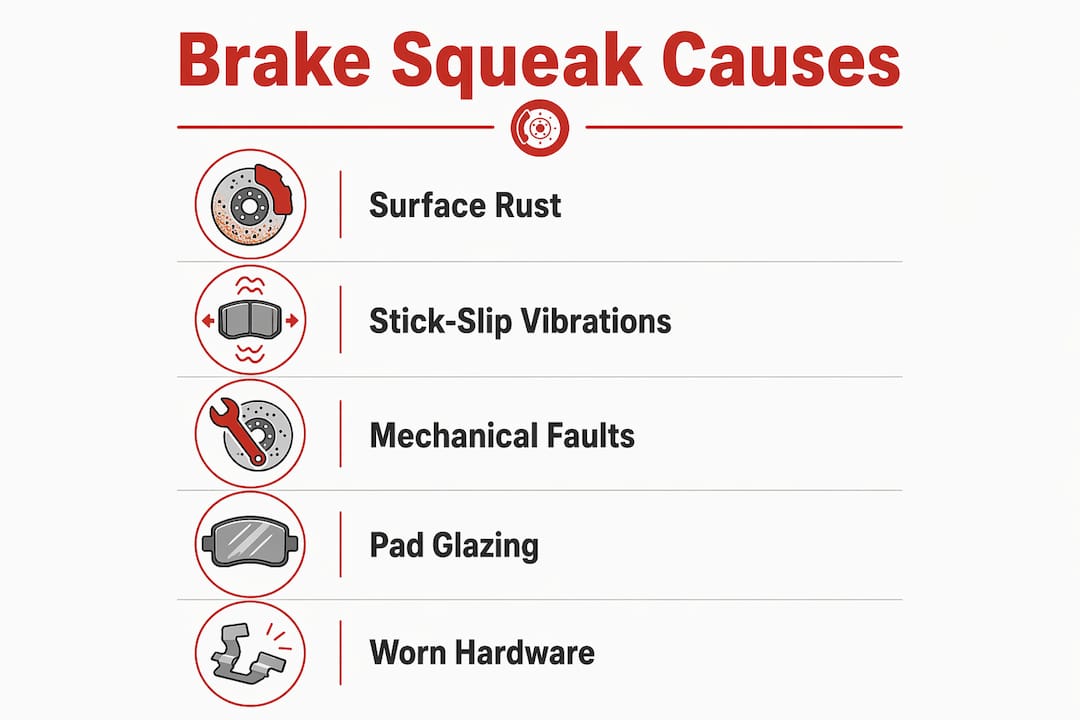
Cold temperatures add a second layer of noise risk. Ceramic brake pads become stiffer in cold weather, which reduces their natural vibration damping and makes them more likely to squeak under light pressure. This is most noticeable on the first few minutes of driving before the brakes warm up. The squeak is typically harmless, but it is worth noting if it persists past the warm-up period.
Here is how to tell normal weather-related noise from something more serious:
- The squeak appears only on the first two or three stops of the morning, then disappears completely.
- The noise started after rain, a car wash, or overnight parking in cold weather.
- There is no grinding, no vibration through the pedal, and no change in stopping distance.
- The sound is gone within five minutes of normal driving.
- The noise returns the next morning under the same conditions.
“Salt and roadside debris accelerate rust formation and can lodge in brake calipers, increasing the chance of squeaks or grinding. Regular wheel washing through winter months is one of the simplest ways to protect your brake hardware.”
What mechanical problems cause persistent brake squeaking?
Brake squeaking is rarely random. When the noise is persistent and does not clear up after a few stops, a mechanical cause is almost always responsible. These are the situations that require attention, not just patience.
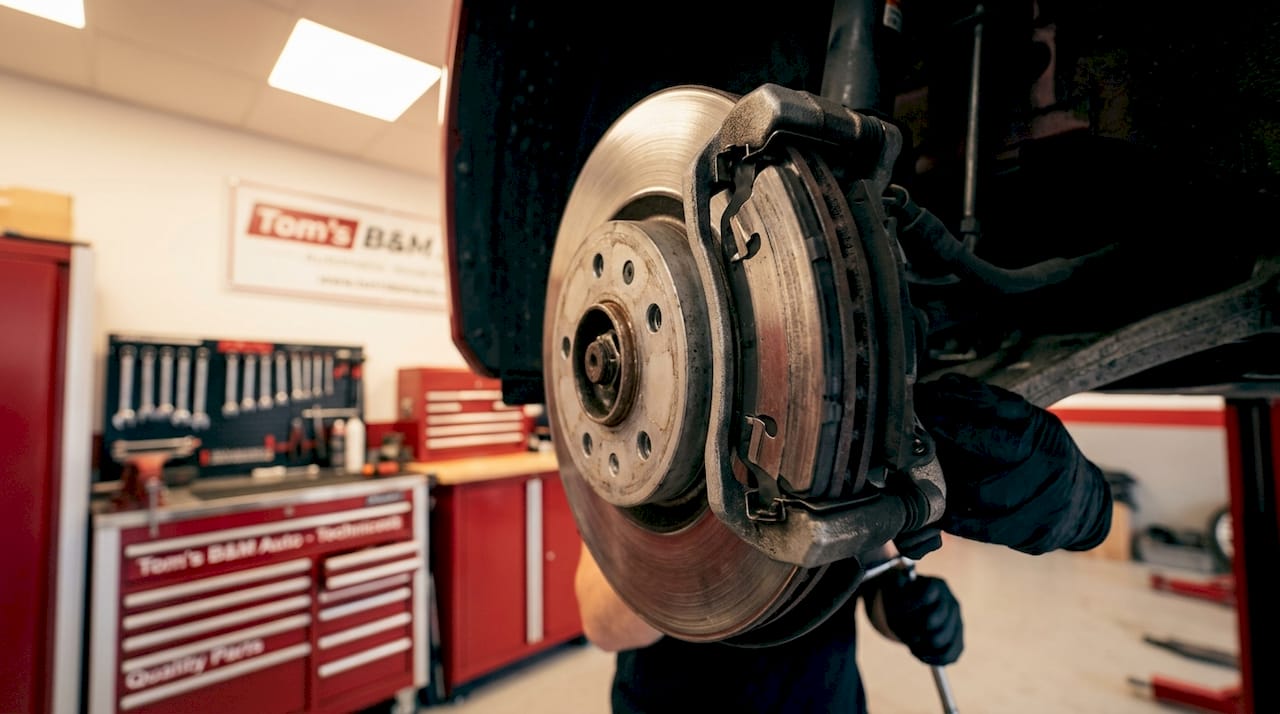
Wear indicators contacting the rotor
Brake pads include metal wear indicator clips that contact the rotor surface when pad thickness drops to approximately 2 to 3 millimeters. The contact produces a high-pitched squeal that happens while rolling, even without pressing the pedal. When you press the brake, the sound often stops because the pad fully contacts the rotor and covers the indicator. This is a deliberate warning system, and it means you have a short window before the pad wears through entirely and causes rotor damage.
Seized caliper slide pins
Sticky or seized caliper slide pins force the brake pad to drag against the rotor continuously, even when you are not braking. This creates persistent squeaking or grinding and causes uneven pad wear. The fix is cleaning and lubricating the slide pins, or replacing them if corrosion has progressed too far. A brake pressure sensor fault can sometimes accompany caliper issues, masking the true source of the problem during diagnostics.
Pad glazing and missing shims
Glazed pads develop a smooth, hardened surface from overheating or improper bedding. That glassy surface creates micro-slip and noise because the friction coefficient becomes inconsistent. Separately, missing or damaged anti-squeal shims allow vibration to transfer directly from the pad to the caliper, making squeaks louder and more persistent. Many budget brake jobs skip shim replacement entirely, which is a false economy.
| Cause | Sound pattern | Urgency |
|---|---|---|
| Morning surface rust | Clears after 2-3 stops | Low, monitor only |
| Wear indicator contact | Squeal while rolling, stops when pedal pressed | High, service soon |
| Seized caliper pin | Persistent squeak or grinding, uneven wear | High, repair needed |
| Glazed pads | Intermittent squeak under light pressure | Medium, inspect pads |
| Missing shims | Loud persistent squeak during braking | Medium, replace shims |
Pro Tip: Visual pad wear checks can be misleading. Metal wear indicators begin contact before the friction material is fully gone. Sound is often the first real warning, not what you see through the wheel spokes.
How to diagnose normal brake squeaks vs. real problems
A time-and-context approach is the most reliable way to distinguish harmless noise from a mechanical fault. The pattern of when the squeak occurs tells you more than the sound itself.
Morning rust squeak clears after two to three stops and does not return until the next morning. Wear indicator squeal happens while rolling without pedal input and stops when you press the brake. Persistent squeak during every braking event, regardless of temperature or time of day, points to a hardware or pad issue that needs professional attention.
Warning signs that mean you should stop driving and call a shop:
- Grinding or metal-on-metal sound instead of a clean squeal
- Soft or spongy brake pedal feel
- The car pulling to one side when braking
- Vibration or pulsing through the pedal during stops
- Any noticeable increase in stopping distance
Persistent stick-slip vibrations do more than make noise. They accelerate uneven pad and rotor wear, reducing brake efficiency over time. Catching the problem early protects both your safety and your wallet.
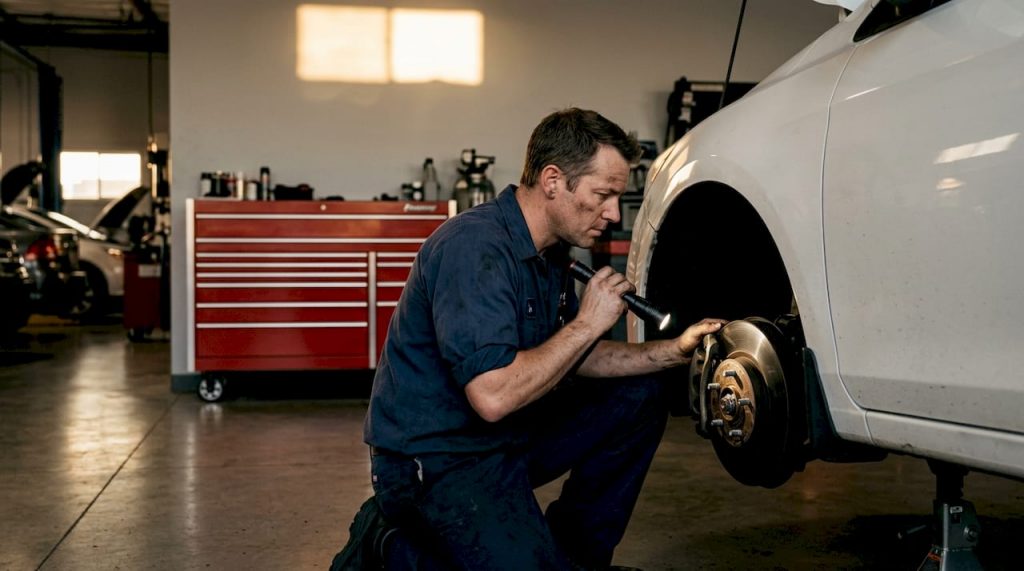
For a DIY check, look through the wheel spokes at the rotor surface. A shiny, smooth rotor with even coloring is healthy. Deep grooves, heavy rust that does not clear after driving, or a rotor that looks thinner on one side than the other are all reasons to get a professional inspection. A free visual brake inspection at a trusted shop takes less than 15 minutes and removes all the guesswork.
How to fix squeaky brakes and prevent them from returning
Solving brake noise starts with identifying the cause, then applying the right fix. Most solutions are straightforward when you catch the problem at the right stage.
- Bed in new brake pads correctly. Improper bedding is one of the most common causes of squeak in the first 100 to 200 miles after a brake job. The correct procedure involves a series of moderate stops from 30 mph to 5 mph, allowing the pads to cool between each one. This builds an even friction transfer layer on the rotor surface and dramatically reduces noise.
- Clean your brakes regularly. Brake dust, road salt, and debris accumulate on rotors, calipers, and hardware. A thorough wheel wash every few weeks through winter months removes the buildup that accelerates rust and traps debris in caliper hardware.
- Lubricate the right points. Caliper slide pins need a thin coat of high-temperature brake grease to move freely. The back of the brake pad and the contact points on the caliper bracket also benefit from anti-squeal lubricant. Never apply grease to the friction surface of the pad or the rotor face.
- Replace shims when replacing pads. Anti-squeal shims are inexpensive and critical. If a shop quotes a brake job without mentioning shims, ask specifically whether they are included.
- Park in a garage when possible. Overnight moisture is the primary cause of morning rust squeak. A garage eliminates most of that exposure, particularly during Lynnwood’s wet season.
- Address hardware wear early. Worn or corroded slide pins, caliper brackets, and pad abutment clips are cheap to fix when caught early. Left alone, they cause uneven wear that turns a $150 pad replacement into a $400 rotor job.
Pro Tip: After any brake service, check brake bleeding if the pedal feels different than before. Air in the brake lines changes pedal feel and can mask other issues developing in the system.
Key takeaways
Brake squeaking is caused by stick-slip vibrations, surface rust, or worn hardware, and the noise pattern tells you exactly which one you are dealing with.
| Point | Details |
|---|---|
| Stick-slip is the root cause | High-frequency pad-rotor oscillations produce most brake squeal, especially under 15 mph. |
| Morning rust is usually harmless | Thin oxide layers clear after 2-3 stops; persistent noise after warm-up signals a real problem. |
| Wear indicators are a countdown | Squeal while rolling without pedal input means pads are near the end of their service life. |
| Shims and slide pins matter | Missing shims and seized caliper pins are the two most overlooked causes of persistent squeak. |
| Bedding prevents future noise | Correct pad break-in procedure in the first 200 miles eliminates most post-service squeak. |
What 40 years of brake work taught me about squeaky brakes
Most car owners fall into one of two camps. The first group panics at any brake noise and rushes in for a repair they may not need. The second group ignores every squeak until the grinding starts and the rotors are destroyed. Neither approach serves you well.
What I have seen over decades of brake work is that the noise pattern is almost always diagnostic. A squeak that clears after the first two stops is physics, not a problem. A squeak that happens every time you slow down from highway speed, or that you hear while coasting without touching the pedal, is the brake system communicating something specific.
The biggest mistake I see is people replacing pads without addressing the hardware. New Brembo or Akebono pads installed on corroded caliper brackets with no shim replacement will squeak within a week. The pad quality is irrelevant if the supporting hardware is not right. A proper brake job addresses the full system, not just the friction material.
My honest recommendation: learn the pattern of your noise, use the diagnostic framework in this article to narrow it down, and then get a professional set of eyes on it if anything falls outside the “morning rust” category. Brake safety is not the place to guess.
— Shingi
Stop guessing and get your brakes checked at Tom’s B & M Auto
If your brake noise does not clear up after a few morning stops, or if you are hearing grinding, feeling pedal changes, or noticing uneven stopping, it is time to let an ASE-certified technician take a look.
Tom’s B & M Auto has been diagnosing and fixing brake problems for Lynnwood, Mountlake Terrace, Kenmore, and Shoreline drivers since 1985. The team uses professional-grade diagnostics, replaces hardware correctly, and backs every brake job with a 24-month / 24,000-mile warranty. Same-day appointments are often available. Start with a free brake inspection and get a clear answer on what your brakes actually need. For full brake service and repair, visit Tom’s B & M Auto in Mountlake Terrace or any of the nearby locations.
FAQ
Why do my brakes squeak only in the morning?
Morning brake squeak is caused by a thin rust film that forms on iron rotors overnight from moisture exposure. The noise disappears after two or three stops once the friction surface clears the oxide layer.
Why do brakes make noise when I haven’t pressed the pedal?
A squeal while rolling without pedal input is the wear indicator clip contacting the rotor. This signals that brake pads are near the end of their service life and need replacement soon.
Can new brake pads cause squeaking?
Yes. Improperly bedded new pads are a common brake noise cause in the first 100 to 200 miles after installation. Correct bedding procedure builds an even friction transfer layer and eliminates most post-service squeak.
How do I know if my brake squeak is serious?
Squeak that clears after a few stops is usually harmless rust. Persistent squeak during every braking event, grinding sounds, a soft pedal, or pulling to one side are all signs of a mechanical problem requiring professional service.
Does ceramic vs. organic brake pad material affect squeaking?
Ceramic pads are harder and have less natural vibration damping, making them more prone to squeak under light pressure and in cold conditions. Organic and semi-metallic compounds are generally quieter but wear faster in demanding conditions.