
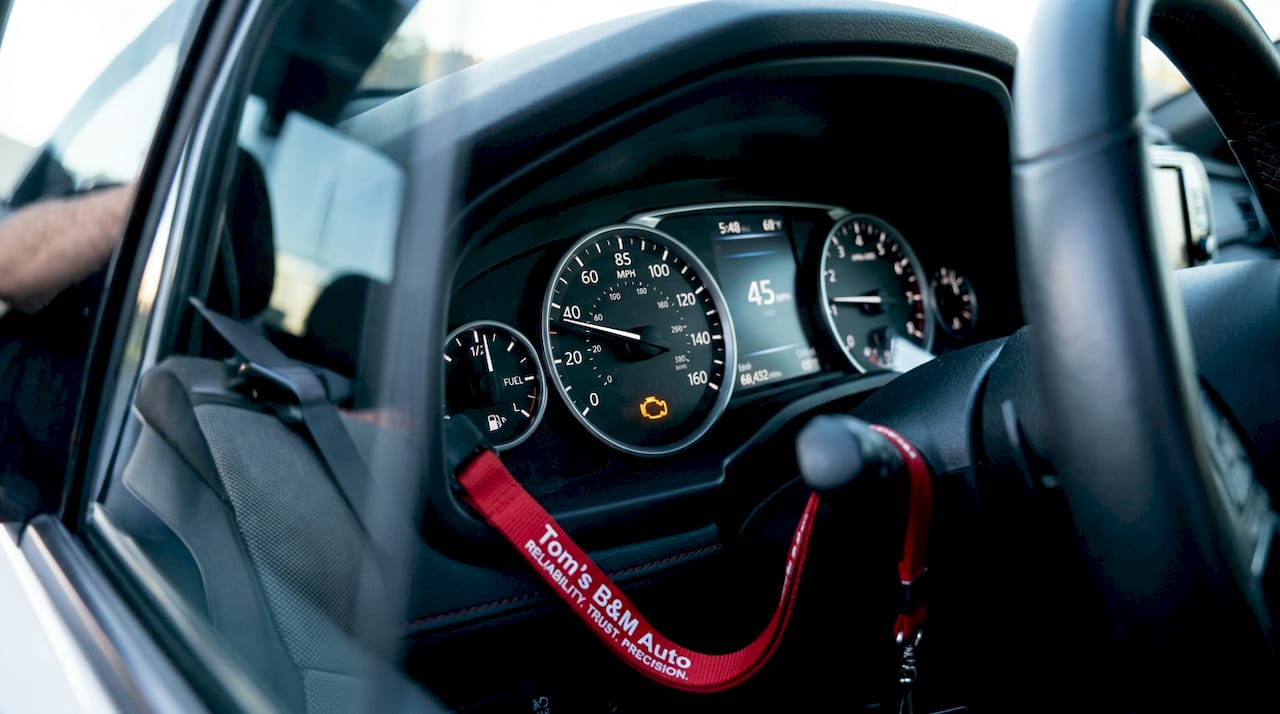
Check Engine Light Meaning: What Drivers Need to Know
The check engine light meaning is straightforward: your vehicle’s onboard computer has detected a fault in a monitored system and stored a diagnostic trouble code (DTC) requiring investigation. Officially called the Malfunction Indicator Lamp (MIL), this warning signal does not tell you which part failed or what repair to make. It tells you the computer found something wrong and logged a code. Understanding that distinction saves you from panic, guesswork, and expensive mistakes.
What the check engine light system actually does
Every vehicle sold in the United States since 1996 uses the OBD-II (On-Board Diagnostics, second generation) standard. This system connects dozens of sensors throughout your car to a central engine control module (ECM), which monitors fuel delivery, ignition timing, emissions output, oxygen levels, and more in real time.
When a sensor reading falls outside the acceptable range, the ECM logs a diagnostic trouble code and switches on the MIL. Codes follow a standardized format. P0301, for example, means a misfire detected on cylinder one. P0420 points to a catalytic converter efficiency problem. The code identifies the system with the fault, not always the exact part that needs replacing.
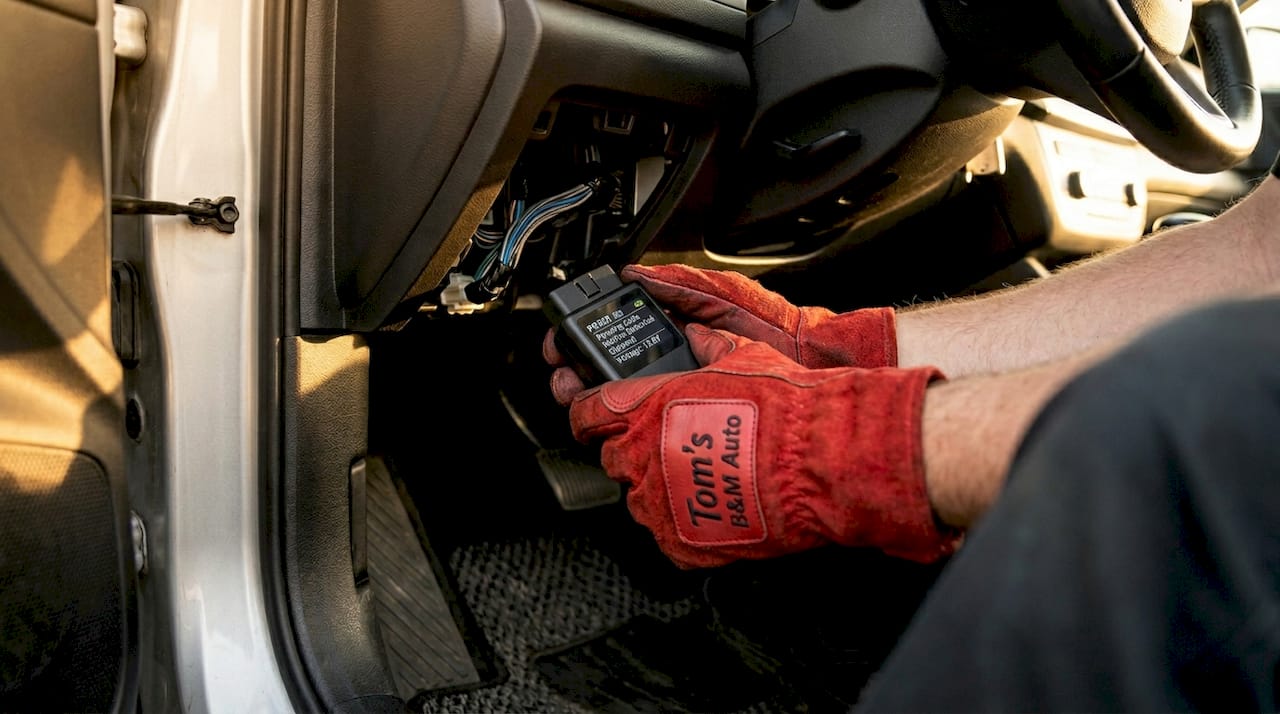
To read those codes, you need an OBD-II scanner. Auto parts retailers like AutoZone and O’Reilly Auto Parts offer free code scanning in-store. A professional shop uses more advanced scan tools that also capture freeze-frame data, which records the exact engine conditions at the moment the fault triggered. That extra data is often the difference between a fast, accurate diagnosis and a long, expensive guessing game.
Pro Tip: If you buy a basic Bluetooth OBD-II adapter (brands like FIXD or Veepeak cost under $30), you can read your own codes with a free smartphone app before visiting a shop. Write down every code you see, not just the first one.
Most common causes of the check engine light
The most common cause of a check engine light is also the easiest to fix: a loose, cracked, or missing gas cap. Tightening the gas cap is the first thing to check before anything else. If the cap was loose, the light may clear on its own after a few drive cycles.
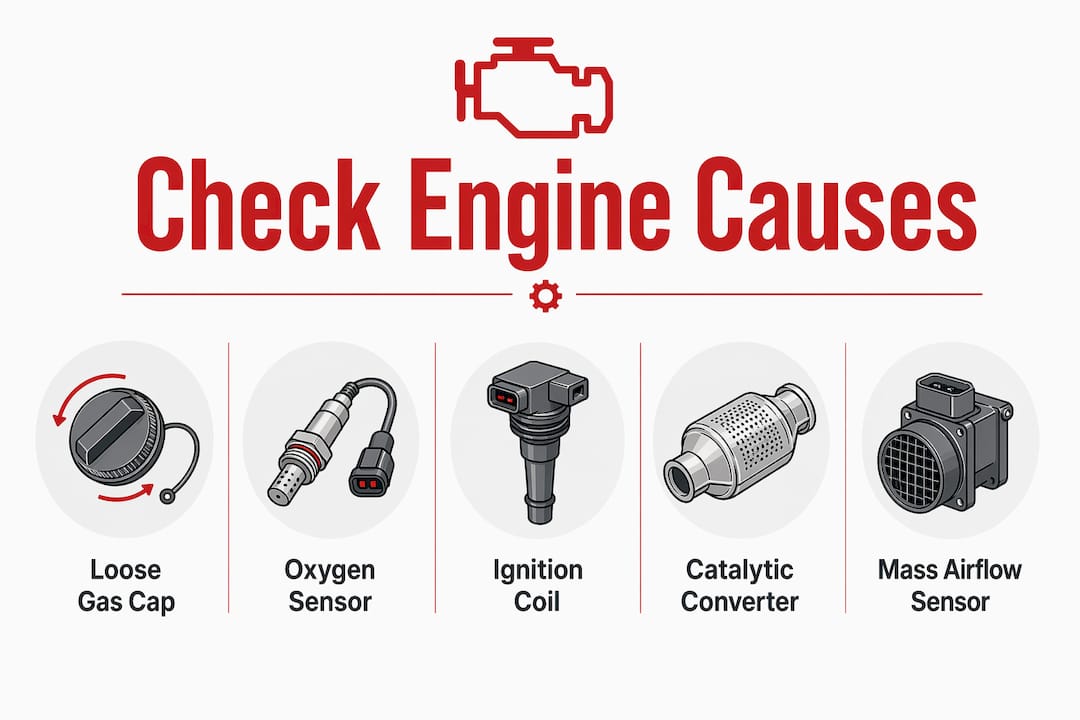
Beyond the gas cap, the most common reasons for check engine light warnings fall into a few clear categories:
- Oxygen sensor failure. The O2 sensor measures exhaust oxygen levels to optimize fuel mixture. A failed sensor can drop fuel economy by up to 40% and will eventually damage the catalytic converter.
- Spark plugs or ignition coils. Worn spark plugs or a failed ignition coil cause engine misfires. Misfires trigger codes like P0300 through P0308 and can cause rough idling, hesitation, and poor acceleration.
- Catalytic converter efficiency. Code P0420 is one of the most common codes shops see. It often means the catalytic converter is no longer processing exhaust gases efficiently, sometimes caused by a neglected O2 sensor or oil burning.
- EVAP system leaks. The evaporative emission control system prevents fuel vapors from escaping into the atmosphere. A cracked hose or faulty purge valve triggers an EVAP code, which is usually not an immediate safety concern but still requires repair.
- Mass airflow (MAF) sensor. The MAF sensor measures incoming air volume. When it fails, the engine runs too rich or too lean, causing rough performance and increased emissions.
Here is a quick comparison of common causes by urgency and typical repair cost:
| Cause | Urgency | Typical Repair Cost |
|---|---|---|
| Loose gas cap | Low | Free |
| Oxygen sensor | Medium | $150 to $300 |
| Spark plugs / ignition coil | Medium to High | $150 to $500 |
| EVAP system leak | Low to Medium | $100 to $400 |
| Catalytic converter | High | $1,000 to $2,500 |
| MAF sensor | Medium | $150 to $350 |
Steady vs. flashing: how light behavior signals urgency
Not all check engine light situations are equal. The behavior of the light tells you how urgently you need to act.
A steady check engine light means the ECM has logged a fault but the vehicle is not in immediate danger. You can typically drive to a shop within a day or two. Still, do not ignore it. A steady light left unaddressed for weeks can turn a $200 sensor replacement into a $1,500 catalytic converter job.
A flashing check engine light is a different situation entirely. A flashing signal indicates a critical problem, most often an active engine misfire. Raw fuel entering the exhaust system during a misfire can overheat and destroy the catalytic converter within minutes. It also creates a fire risk.
Follow this sequence when the light comes on:
- Note whether the light is steady or flashing.
- Check for any accompanying symptoms: shaking, power loss, unusual smells, smoke, or overheating.
- If the light is flashing or symptoms are present, pull over safely and do not continue driving. Call for a tow.
- If the light is steady and the car drives normally, drive calmly to a shop or parts store for a code scan.
- Record every code displayed before clearing anything.
Pro Tip: Never let anyone clear your codes before a mechanic has seen the data. Clearing codes erases the freeze-frame snapshot, which can make accurate diagnosis significantly harder and slower.
What to do when your check engine light comes on
When you first notice the light, start with the simplest possible cause. Remove and firmly retighten your gas cap. If it was loose, drive normally for two or three days and see if the light clears on its own.
If the light stays on, get the codes read. You do not need to pay for a full diagnostic at this stage. A free scan at a parts store or a basic OBD-II adapter gives you the fault codes to work with. Reading stored DTCs is the required first step before replacing any part.
Here is what to do with the information you collect:
- Write down every code exactly as displayed (example: P0171, P0300).
- Note the freeze-frame data if your scanner shows it, including engine RPM, coolant temperature, and fuel trim values at the time of the fault.
- Describe any symptoms you noticed: when they occur, how long they last, and whether they are getting worse.
- Bring all of this to your mechanic. A shop with professional scan tools can cross-reference your codes with live sensor data to pinpoint the actual cause.
Avoid replacing parts based on the code alone without professional confirmation. Code P0420 can mean a failed catalytic converter, but it can also mean a bad downstream O2 sensor, an exhaust leak, or even engine oil contamination. Guessing without diagnosis wastes money and often leaves the real problem unsolved.
The real cost of ignoring the check engine light
Delaying diagnosis is one of the most expensive decisions a car owner can make. Small, inexpensive faults compound into major repairs when left unaddressed. A failing oxygen sensor that costs $200 to replace today can destroy a catalytic converter that costs over $1,500 to repair. Ignition coil and spark plug repairs run close to $500 when multiple cylinders are affected.
Parts prices have risen sharply since 2022 due to supply chain disruptions and increased demand for OEM components. Delaying a repair that was affordable last year may cost significantly more this year. Checking warning lights promptly is one of the highest-return habits a car owner can build.
A check engine light that has been on for six months is not a stable situation. It is a fault that has been given six months to get worse.
The emissions impact is also real. A vehicle with a misfiring cylinder or a failed catalytic converter produces significantly more harmful exhaust than a properly maintained car. In states with emissions testing requirements, an unresolved check engine light is an automatic failure.
Key takeaways
The check engine light is a stored fault code alert, and the single most important action is to read those codes before doing anything else.
| Point | Details |
|---|---|
| MIL stores a trouble code | The light signals a logged DTC, not a specific broken part. Read the code first. |
| Flashing light means stop driving | A flashing MIL indicates active misfire or serious fault. Pull over and call for help. |
| Gas cap is the first check | A loose or cracked gas cap is the most common and cheapest cause to rule out. |
| Delay escalates repair costs | Ignoring the light can turn a $200 sensor job into a $1,500 catalytic converter repair. |
| Freeze-frame data matters | Recording DTCs and operating conditions helps mechanics diagnose accurately and faster. |
Why I stopped trusting the “clear it and see” approach
After years of watching how check engine light situations play out, the single biggest mistake I see car owners make is asking a shop to clear the code without a full diagnosis. The light goes off, the car feels fine for a week, and then it comes back on. Sometimes worse.
Clearing the code without understanding what caused it erases the freeze-frame data your mechanic needs most. That snapshot of engine conditions at the moment of failure is often the fastest path to an accurate diagnosis. Without it, a technician is working blind.
The other thing I have seen repeatedly: the same DTC can have four or five different root causes depending on when and how it triggered. Freeze-frame data and a description of your driving conditions at the time narrow that list dramatically. A P0171 lean code triggered at cold start on a Toyota Camry points to a different cause than the same code triggered at highway speed on a Honda CR-V.
My honest advice: treat the check engine light like a text message from your car. You would not delete a message without reading it. Do not clear a code without understanding it. Know your codes, keep notes, and work with a shop that uses professional-grade diagnostics rather than just a basic code reader. That approach saves money and avoids the frustration of fixing the wrong thing.
— Shingi
Get a free check engine light review at Tom’s B & M Auto
Tom’s B & M Auto has served Lynnwood and the surrounding area since 1985 with ASE-certified technicians and professional-grade OBD-II diagnostics. When your check engine light comes on, the team reads your codes, reviews freeze-frame data, and gives you a clear explanation of what the fault means before any repair is recommended. There is no guesswork and no pressure. Tom’s B & M Auto offers a free check engine review so you know exactly what you are dealing with. For full engine diagnostics and repair, the shop serves drivers in Kenmore, Mountlake Terrace, Shoreline, and Lynnwood. Same-day appointments are often available, and all work carries a 24-month / 24,000-mile warranty.
FAQ
What does the check engine light mean?
The check engine light (Malfunction Indicator Lamp) means your vehicle’s onboard computer has detected a fault and stored a diagnostic trouble code. It does not identify the specific broken part; a code scan is required to find out what system triggered the alert.
What is the most common reason for a check engine light?
A loose, cracked, or missing gas cap is the most frequent cause. Tightening the gas cap is always the first step to take before pursuing further diagnosis.
Is it safe to drive with the check engine light on?
A steady light with no other symptoms generally means you can drive carefully to a shop within a day or two. A flashing check engine light means you should stop driving immediately, as it typically signals an active engine misfire that can damage the catalytic converter.
Can I clear the check engine light myself?
You can clear codes with an OBD-II scanner, but doing so without a full diagnosis erases freeze-frame data that mechanics need for accurate repair. The underlying fault remains, and the light will return.
How much does a check engine light diagnosis cost?
Basic code scanning is free at most auto parts stores. A professional diagnostic inspection at a shop typically costs $75 to $150, which is usually credited toward the repair. Tom’s B & M Auto offers a free diagnostic review for check engine light concerns.
Recommended
- Check Engine Light in Kenmore, WA | Tom’s B&M Auto
- Check Engine Light in Edmonds, WA | Tom’s B&M Auto
- Check Engine Light in Lynnwood, WA | Tom’s B&M Auto
- Check Engine Light in Mountlake Terrace, WA | Tom’s B&M Auto
Leave a Reply