
Stop Guessing: Diagnose CV Axle Clicking in Five Minutes
A rhythmic clicking when you turn most often means a worn outer CV joint, and the smart next move is a boot inspection and a full-lock test before you assume the worst. If the boot is torn or you see grease flung inside the wheel well, get it checked soon; once the click is audible, axle replacement is usually the fix. A short drive to a shop is typically fine unless the sound turns into a clunk, you feel vibration, or the wheel loses power.
TL;DR:
- A rhythmic, metallic click or pop that worsens at full steering lock indicates outer CV joint wear, especially if grease is visible near the wheel well.
- Running a full-lock circle test in both directions helps pinpoint whether the outer or inner joint is failing before costly repairs.
- Prompt inspection can prevent the joint from running dry and avoid symptoms escalating to clunking, vibration, or complete drive loss.
- Early torn boots are fixable with a repair cost of around $150 to $250, but once clicking begins, axle replacement becomes necessary and more expensive.
- Most short-term driving is safe if no additional symptoms like vibration or loss of power emerge, but urgent towing is advised if noise shifts or the wheel feels vague.
Table of Contents
- How a CV joint click sounds and what to look for
- Step-by-step checks you can do safely
- Other faults that mimic CV clicking and how to separate them
- Why prompt inspection matters
- What mechanics do about it, and what it costs
- When a short drive is fine and when to call a tow
- What a professional inspection actually involves
- Our take on diagnosing this yourself
- Get your CV axle checked or replaced in Lynnwood
- Sources
- FAQ
How a CV joint click sounds and what to look for
CV joint clicking has a distinct signature: a rhythmic, metallic click or pop that gets louder the tighter and slower you turn, especially in parking lots or driveways. It’s worst at full steering lock because that’s when the outer joint’s worn ball bearings skip hardest in their channels under load, a pattern ExpertAutoGuide ties directly to outer CV joint failure.
Other noises get mistaken for this one, so it helps to know the differences.
- A wheel bearing hums or drones and gets louder with speed, not with steering angle.
- An inner CV joint problem usually clunks during acceleration or deceleration rather than clicking through a turn.
- Suspension noises (creaks, pops) tend to show up over bumps or body roll, not specifically at full steering lock.
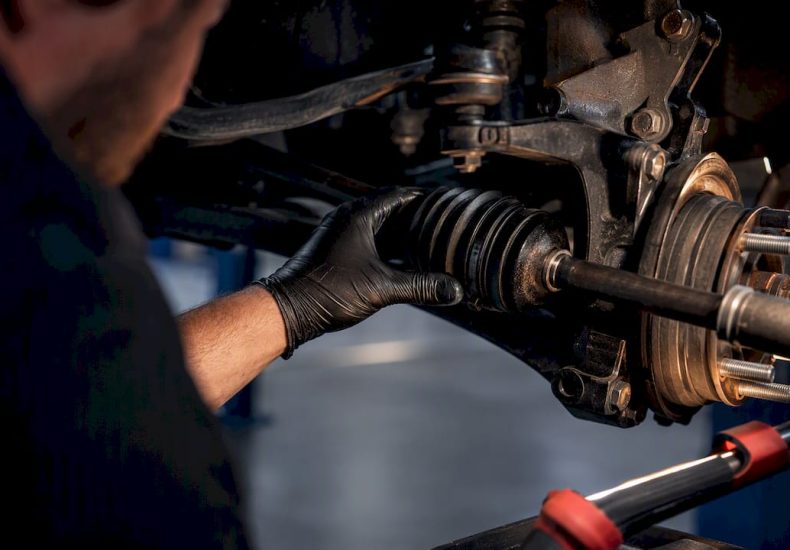
Pop the hood or get low near the wheel well and look for grease flung onto the inside of the tire, the wheel, or the brake caliper. That spray pattern is a strong visual clue that a torn boot has already let the joint’s grease escape.
Step-by-step checks you can do safely
Before you call a shop or order parts, run through a short sequence that narrows down the cause. PulsCar notes that a full-lock circle test, done slowly in both directions, often pinpoints which side and which joint is failing based on where the noise gets louder.
- Find an empty lot and turn the wheel to full lock, then drive a slow, tight circle forward. Note if the clicking gets louder on that side.
- Repeat in reverse at full lock. Louder clicking in reverse tends to point toward inner joint involvement rather than the outer joint.
- With the car parked and engine off, turn the wheel lock to lock. If you hear nothing, that helps rule out the steering column or rack, since CV clicking generally needs rolling load to appear.
- Safely jack up the front end, support it on stands, and spin the wheel by hand. Check for looseness, a torn boot, or grease spray around the joint.
- Check the simple stuff first: lug-nut torque, a stone stuck in the rotor or wheel cover, and loose brake hardware can all mimic a click.
Pro Tip: Write down which direction was loudest and whether you saw grease before you call anyone, it’s the fastest way to get an accurate quote instead of a guess.
Other faults that mimic CV clicking and how to separate them
Not every click is a CV joint. Fifth Gear Auto Repair points out that some turning noises trace back to sway bar links, strut mounts, or loose brake hardware instead, and those are usually cheaper fixes.
- A wheel bearing responds to road speed, not steering input, so it hums louder as you accelerate regardless of turning. Our wheel bearing noise checks walk through the difference in more detail.
- Loose brake hardware or a stuck stone in the rotor shield can tick or click, and both cost little to rule out.
- Worn sway bar links or strut top mounts tend to pop or creak over bumps and under body roll, not specifically at full steering lock.
- Because several of these overlap in sound, shops typically put the car on a lift and check multiple components before recommending anything as involved as axle replacement.
Why prompt inspection matters
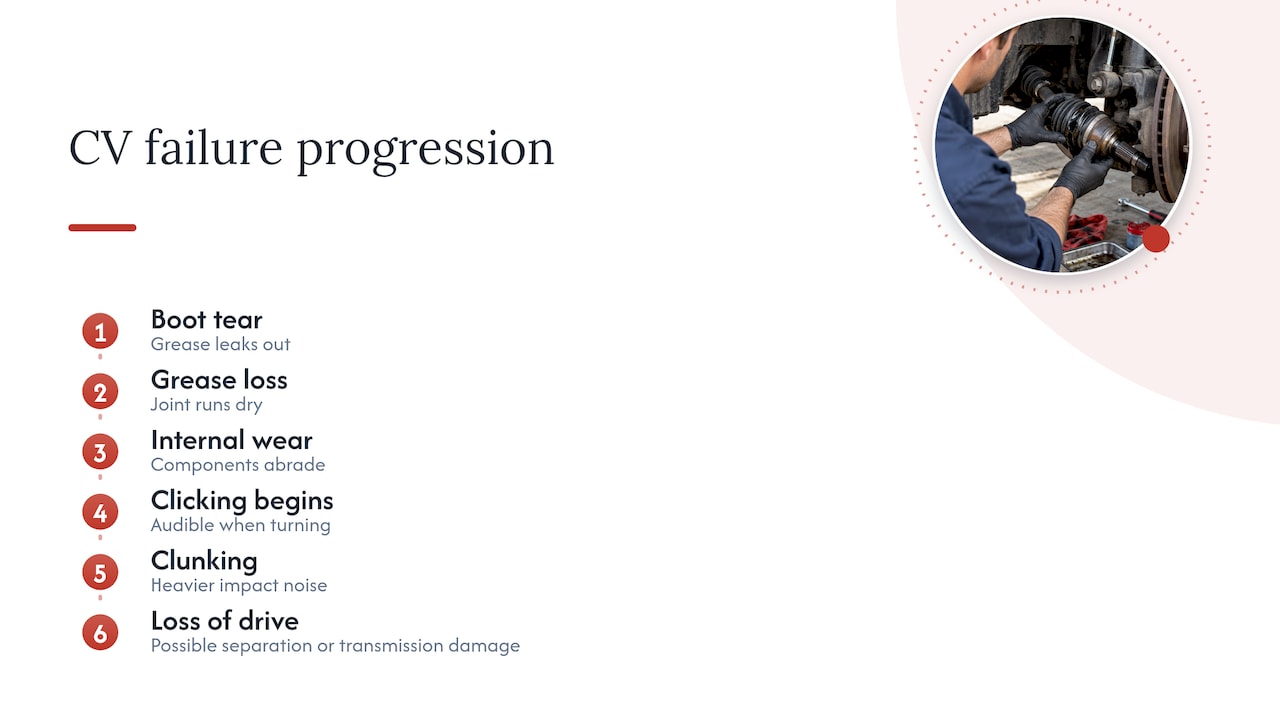
CV joint failure follows a fairly predictable path: a torn boot lets grease escape, the joint runs dry, internal wear sets in, and clicking begins. Left alone, that clicking can progress to a clunk and eventually a loss of drive.
Continued operation with a failing CV joint can lead to total separation, loss of motive power, or even transmission damage, according to AAA, which lists clicking while turning among the noises drivers should never ignore. It’s not usually an immediate emergency, but it is a real risk to the drivetrain the longer it goes unchecked, and the repair only gets more expensive as wear moves from the boot to the joint itself.
What mechanics do about it, and what it costs
The repair path depends on how far the wear has already gone. A torn boot caught early, before grease loss and internal wear, can sometimes be fixed with a new boot and clamp alone. 1A Auto notes that boot replacement mainly helps before internal wear sets in; once the joint is already worn enough to click, replacing the boot alone won’t quiet it down.
- Boot-only repairs work when the tear is caught early and the joint hasn’t started clicking yet.
- Once clicking is present, shops generally recommend replacing the whole axle rather than rebuilding the joint, since it’s more reliable long-term.
- Cost varies by vehicle model, local labor rates, and whether the shop uses OEM or aftermarket parts.
- DIY axle swaps are possible for experienced home mechanics with the right tools, but the job involves torque specs, a press or puller, and safe vehicle support, so many owners choose to leave it to a shop.
A torn boot caught early can run $150 to $250 to fix, while a full axle replacement after clicking begins commonly costs more, based on estimates from PulsCar. That gap is the real argument for catching the problem at the boot stage instead of waiting for the click.
When a short drive is fine and when to call a tow
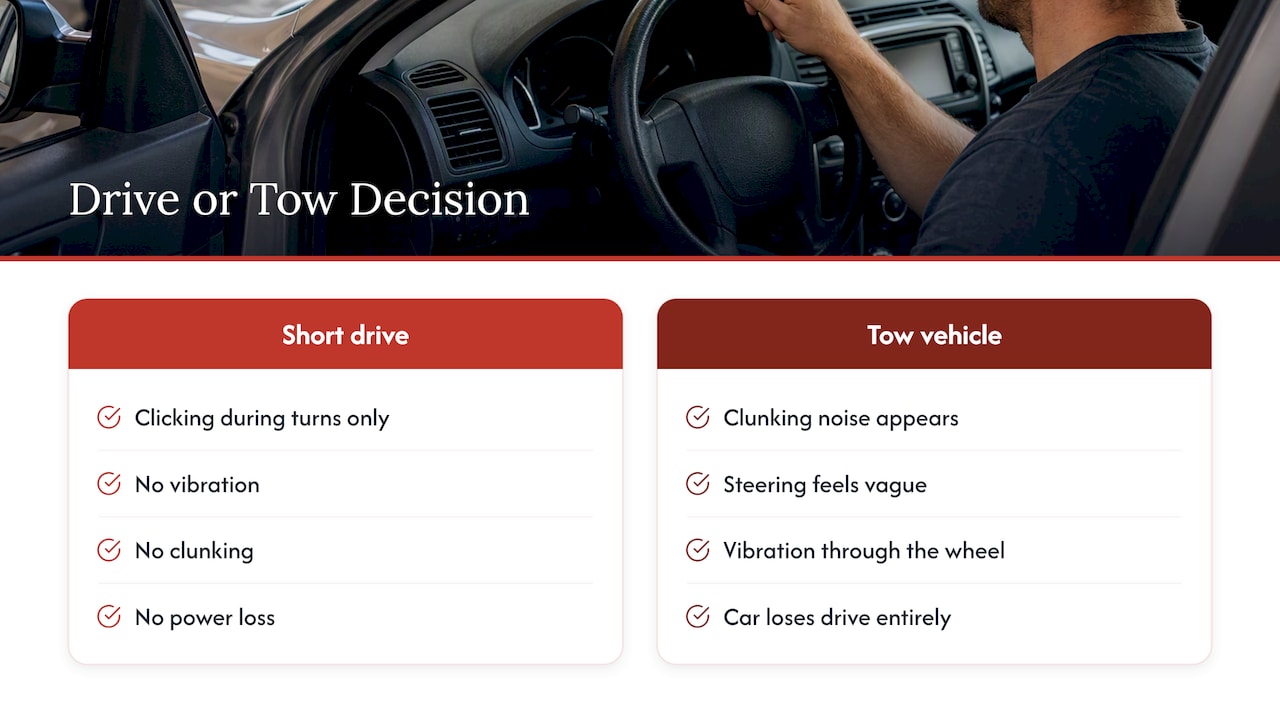
If the only symptom is clicking during turns, with no vibration, no clunking, and no loss of power, it’s generally safe to drive a short distance to a shop. That changes the moment the noise shifts to a clunk, the steering feels vague, you notice vibration through the wheel, or the car loses drive entirely, at which point towing is the safer call.
When you contact a shop, mention which direction (forward or reverse) was loudest at full lock and whether you saw grease in the wheel well. That detail alone helps a technician skip straight to the right diagnosis instead of guessing.
What a professional inspection actually involves
A real inspection goes beyond listening for the click. A technician puts the car on a lift, checks the boot and joint for play and grease loss, and rules out the lookalikes (bearings, brake hardware, suspension mounts) before recommending axle replacement.
- This shop has served local Toyota, Honda, Subaru, and domestic car owners for many years.
- The shop handles all makes, including European and hybrid vehicles, not just domestic models.
- Qualified technicians use diagnostics to confirm the cause before quoting a repair.
- Jobs come with upfront pricing and a warranty on the work.
- Same-day appointments are often available for CV axle replacement.
Our take on diagnosing this yourself
Most guidance on CV joint noise jumps straight to “replace the axle,” which skips the cheap, useful step that actually protects your wallet: the full-lock circle test. Running it in both directions and checking for grease takes five minutes and rules out or confirms the outer joint before you spend a dollar. That’s the single most underrated step in this whole process, and it’s the one drivers skip most often because it feels too simple to matter.
Where conventional advice falls short is treating every click as an emergency. It usually isn’t, not on day one. The real risk is delay, not the drive to the shop. Prioritize the diagnostic first, describe what you found accurately, and let a lift inspection settle the rest. Don’t let a shop quote a rack-and-pinion job when a five-minute test would have pointed at the axle the whole time.
— Shingi
Get your CV axle checked or replaced in Lynnwood
If that click has you second-guessing every turn, an experienced shop can confirm what’s actually happening before you spend money on the wrong repair. They inspect the joint and boot on a lift, use quality parts for the replacement, and back the work with a warranty, with same-day appointments often available.
When you call, have your vehicle’s make and model ready along with what you found: which direction was loudest at full lock, whether you saw grease, and whether the noise has changed to a clunk or vibration. That detail speeds up the diagnosis and keeps the quote accurate.
Book your CV axle replacement in Lynnwood or check our Edmonds and Mountlake Terrace locations if those are closer to you.
Sources
- Vehicle Noises You Should Never Ignore | AAA Club Alliance
- Car makes noise when turning? 10 causes by sound type | PulsCar
- Why does my car click when I turn? | Fifth Gear Auto Repair
- CV joint noise? CV axle popping or clicking — Diagnose & Fix | 1A Auto
FAQ
Is it safe to drive with clicking CV joints?
A short drive is usually fine if the only symptom is clicking during turns, with no vibration, clunking, or loss of power. If the noise changes character or the wheel loses drive, stop driving and arrange a tow instead.
How much does it cost to replace a clicking CV joint?
Once clicking has started, most shops recommend a full axle replacement rather than a boot-only fix, and cost depends on the vehicle, labor rates, and parts quality. Catching a torn boot early, before clicking begins, tends to cost less, in the range of $150 to $250 for the repair.
How long will a CV joint last once it starts clicking?
There’s no fixed timeline. Clicking signals internal wear that tends to worsen over time and can progress to clunking or a loss of drive, so AAA recommends getting it inspected rather than waiting to see how long it holds.
What noise does it make when your CV axle is bad?
A worn outer CV joint typically produces a rhythmic clicking or popping sound that gets louder on slow, tight turns, especially at full steering lock. A failing inner joint tends to clunk during acceleration or deceleration instead of clicking through a turn.
Recommended
- Avoid a $150–$400 Repair: 5 DIY Checks for Wheel Bearing Noise
- 55–75 mph Shake? Diagnose Steering Wheel Vibration in 10 Minutes
Leave a Reply