
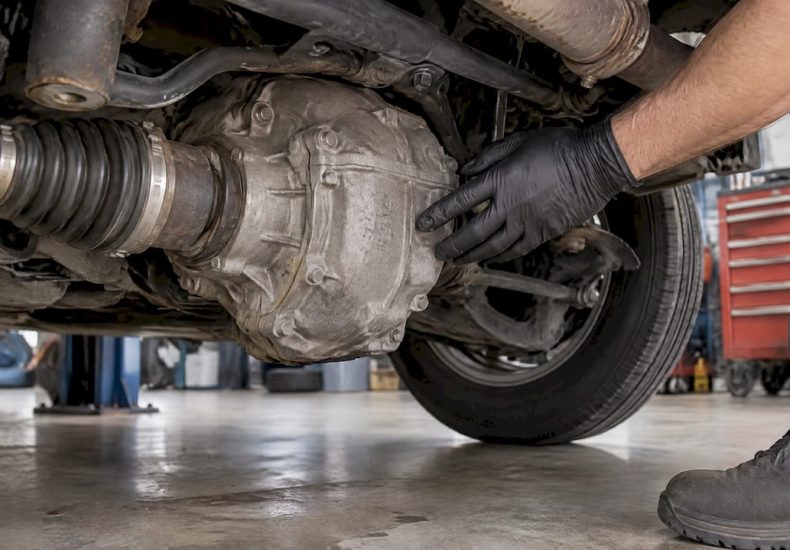
Car Owners: 4 Safe Checks to Pinpoint Differential Whine
A speed-proportional whining or howling noise that grows louder as you accelerate usually points to worn gears, failing bearings, or low gear oil inside the differential. It is rarely an emergency on day one, but it will get worse. Drive gently to a shop rather than ignoring it, and check fluid level before you spend money on parts.
TL;DR:
- Differential whine tracking with road speed and varying with acceleration suggests gear mesh issues or worn gears, especially if it changes tone during coasting.
- Low, contaminated, or incorrect gear oil can cause or worsen whine, but gear or bearing wear requires physical inspection and specific repairs.
- Simple at-home checks include fluid level and condition, in-car noise tests, and noting any vibrations, with a fluid change recommended if oil looks dirty or low.
- Worn gears, bearings, or normal gear meshing can produce similar sounds, but increasing loudness or grinding indicates progressive damage needing prompt professional diagnosis.
- For accurate repair, shops rely on road tests, fluid analysis, measurement of gear tolerances, and professional tools rather than guessing or part swapping.
Table of Contents
- How to recognize differential whine and localize it
- Mechanical causes: ring-and-pinion, bearings, fluid, and design howling
- Step-by-step safe checks owners can do before paying for parts
- Urgency and what a professional diagnosis includes
- What repairs fix which causes and ballpark costs
- Maintenance steps to avoid or delay differential whine
- Shop-level diagnostic steps and why precision matters
- An honest take on diagnosing differential whine
- How Tom’s B & M Auto can help with differential noise
- FAQ
- Sources
How to recognize differential whine and localize it
Differential whine has a distinct personality. It tracks directly with road speed rather than engine RPM, so it rises and falls as you speed up or slow down, even if you are coasting in neutral. That is the biggest clue separating it from a transmission or engine noise, which follows RPM instead.
The tone often shifts depending on whether you are accelerating or decelerating. A whine that gets louder under acceleration and quieter (or changes pitch) when you let off the gas and coast suggests gear mesh problems, since the load on the teeth reverses direction. Noise that is worse at a steady cruise rather than under load can point more toward bearing wear.
Most owners first notice it at moderate to higher driving speeds, though it can appear at highway speeds too and simply get masked by road and wind noise at lower speeds. A few simple in-car tests help narrow things down:
- Cruise test: hold a steady speed on a flat road and listen for a constant tone that rises with speed.
- Load test: accelerate gently, then lift off the throttle and coast, noting if the pitch or volume changes.
- Turn test: a noise that changes in turns points more toward wheel bearings than the differential.
- Reverse test: whine that persists in reverse at low speed also suggests the differential rather than tires.
These checks narrow the possibilities but will not confirm the exact part. Wheel bearing noise can sound similar, and our wheel bearing noise guide walks through the checks that separate the two.
Mechanical causes: ring-and-pinion, bearings, fluid, and design howling
Most differential whine traces back to one of four things: worn gears, worn bearings, bad fluid, or a sound that is simply normal to the design.
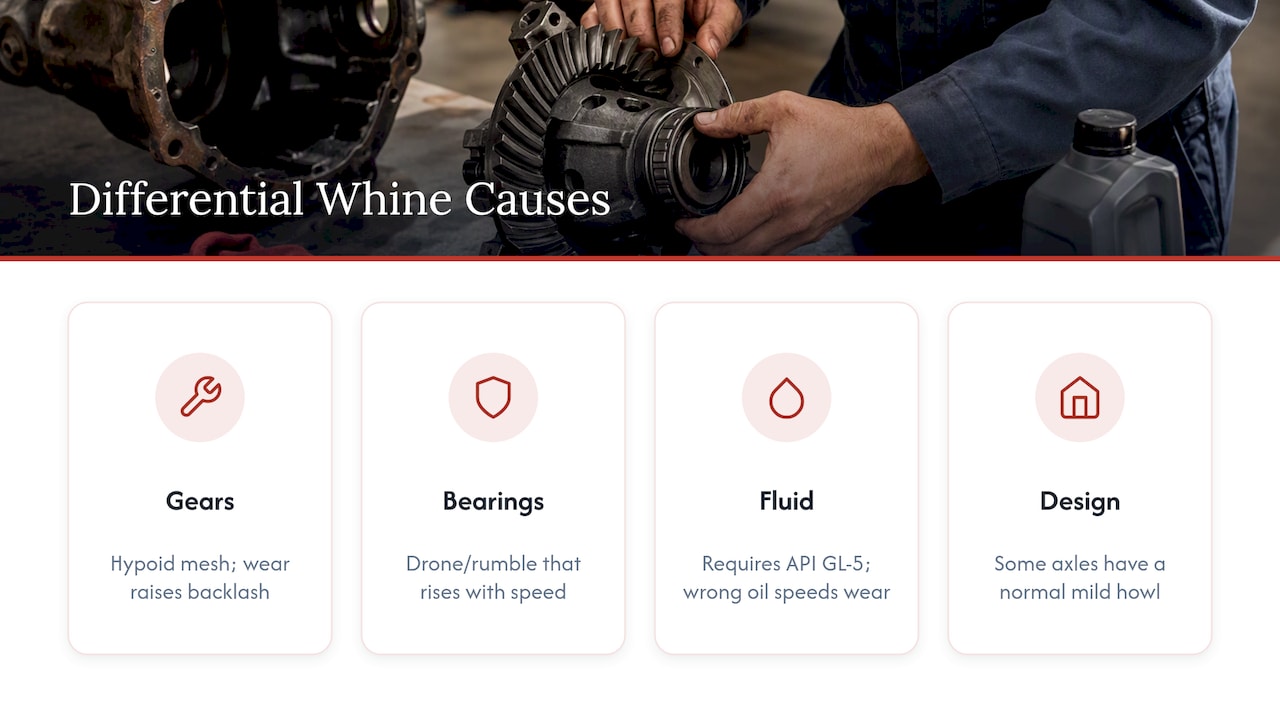
The ring-and-pinion gear set is a hypoid design, meaning the gear teeth mesh at an angle rather than straight on. That geometry is sensitive to backlash (the small gap between teeth) and pinion depth (how deeply the pinion gear seats into the ring gear). As teeth wear, backlash grows and the mesh becomes noisier, producing a whine that tracks speed and changes character between acceleration and deceleration. Fresh gear oil can sometimes quiet an early-stage whine by restoring the extreme-pressure additives that cushion the gear mesh, but once the tooth profile itself is worn, fluid alone will not fix it.
Bearing wear produces a different signature: often a more constant drone or rumble that does not shift as sharply between acceleration and coast, though it still rises with speed. Worn pinion or carrier bearings allow the gears to shift slightly out of their ideal position, which compounds gear noise over time.
Fluid condition matters more than most owners realize. Low fluid, contaminated fluid, or the wrong specification can starve the gear mesh of lubrication. Standard hypoid differentials need gear oil rated to the API GL-5 spec, and limited-slip units often need an added friction modifier on top of that. Using the wrong oil, or oil that has broken down, accelerates wear even on otherwise healthy gears.
Not every howl is a problem. Some manufacturers document that certain rear-axle howling is a normal design characteristic, with meshing noise that varies with load and can transfer into the cabin at certain speeds. According to that same bulletin, grinding, chattering, or noise paired with excessive play are not normal and point to damaged bearings or abnormal gear wear. The distinction matters because chasing a “repair” for a normal design characteristic wastes money.
Watch for this pattern: a whine that is mild and constant at one speed range but never grinds or chatters may simply be your differential’s normal mesh note. One that grows progressively louder over weeks, or that changes to a grind, is wear in progress.
Step-by-step safe checks owners can do before paying for parts
Before scheduling a repair, a few checks at home can save a wasted diagnostic fee.
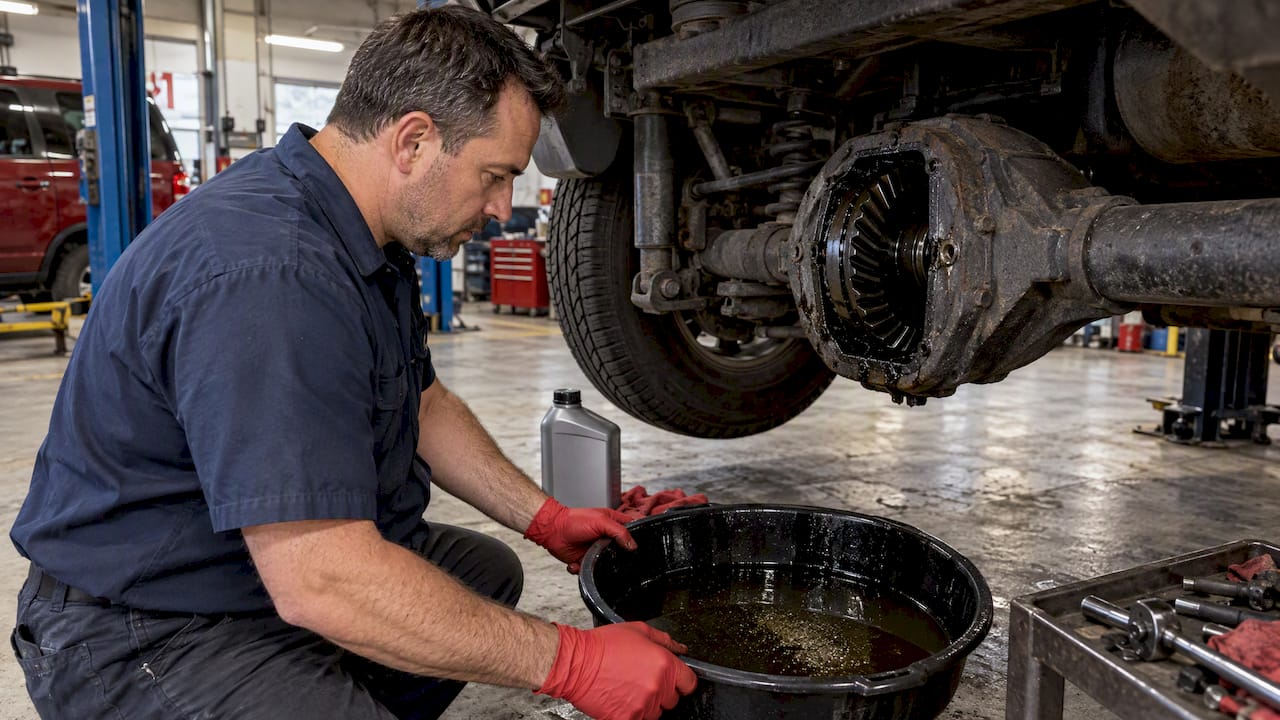
- Check the fluid level and condition. Locate the fill plug on the differential housing, remove it, and check that oil sits at or near the hole. Dark, gritty, or metallic-smelling fluid suggests internal wear; a magnet dipped in the drained oil that pulls metal flakes is a strong sign of gear or bearing damage.
- Run the cruise, load, and coast tests described above and write down the speed ranges and conditions where the noise appears or changes.
- Test in reverse at a slow, safe speed in an empty lot to see if the whine is present there too.
- Note any vibration that accompanies the noise, since vibration paired with whine often means more advanced wear.
If you have access to a lift or ramps, a technician can spin the wheels with the vehicle safely supported to isolate the noise source without a road test, but this should only be done by someone familiar with proper vehicle support and should never be attempted with the vehicle on a jack alone.
Pro Tip: Record a short video of the noise at a consistent speed before your appointment. A mechanic can often tell more from hearing it in context than from a verbal description alone.
A fluid change is worth doing when the oil is low, old, or contaminated, since it is cheap, fast, and genuinely essential maintenance. It is a reasonable first step and a useful diagnostic indicator: if the whine quiets noticeably, you likely caught wear early. If the oil already looks clean and full, a fluid change by itself is unlikely to resolve a whine that has gear or bearing wear behind it, and treating it as a guaranteed fix often just delays the real diagnosis.
Urgency and what a professional diagnosis includes
Some signs mean you should stop driving aggressively and get the vehicle looked at soon:
- Metal flakes or grit in the fluid, which signals active gear or bearing wear.
- Grinding or clunking layered on top of the whine.
- Vibration through the floor or seat that tracks with the noise.
- A sudden increase in volume over a short period.
A short, gentle drive to a shop is usually fine if the noise is a steady whine with no grinding or vibration. If you notice grinding, heavy vibration, or the noise worsening rapidly, a tow is the safer call, since continued driving accelerates tooth wear and can lead to a cracked gear. At the shop, expect a lift inspection, a fluid sample check, and often a road test or stationary isolation test to confirm where the sound originates before anything is quoted.
What repairs fix which causes and ballpark costs
The right fix depends entirely on what the diagnosis finds, and the cost range is wide because the causes are so different.
- Fluid service: appropriate when oil is low, degraded, or wrong-spec. It is inexpensive and doubles as a diagnostic step: if a quiet differential stays quiet after a fluid change, you likely solved it early.
- Bearing replacement: needed when pinion or carrier bearings show wear. This involves disassembling part of the differential, so labor makes up a meaningful share of the cost.
- Ring-and-pinion replacement or rebuild: required when gear teeth show pitting or wear that fluid and bearing work cannot fix. This is the most involved repair, since the ring and pinion must be matched, set with precise backlash, and often re-shimmed, which is why it carries the highest parts and labor cost of the three.
Diagnostic guidance from ConsumerAffairs notes that shops rely on specialized noise-isolation tools and structured road tests because differential whine is frequently mistaken for wheel bearing or tire noise, and that skipping proper diagnosis in favor of guesswork tends to drive up total repair cost. A separate ConsumerAffairs breakdown makes the same point about fluid: changing it is essential maintenance, but it is not a guaranteed cure once gear teeth are actually worn. Turnaround time and warranty terms vary by shop and by how much of the differential needs to come apart, so ask for both when you get a quote.
Maintenance steps to avoid or delay differential whine
Routine care is the cheapest way to keep a differential quiet for years.
- Follow fluid change intervals, and shorten them if you tow frequently, drive off-road, or carry heavy loads, since those conditions break down gear oil faster.
- Use the correct spec, typically API GL-5 gear oil, and add the manufacturer-specified friction modifier if you have a limited-slip differential.
- Inspect for leaks at the pinion seal and axle seals, since a slow leak eventually starves the gears of lubrication.
- Check fluid color and drag a magnet through drained oil at every service to catch metal contamination before it becomes a loud problem.
Shop-level diagnostic steps and why precision matters
A proper differential diagnosis layers several checks: a road test to hear the noise under real load, a lift inspection to check for play and leaks, a fluid sample to look for metal content, and often an acoustic isolation tool to pinpoint whether the sound is coming from the differential or a nearby component like a wheel bearing.
Gear setup tolerances inside a differential are tight. Backlash and pinion depth are measured in thousandths of an inch, and getting either slightly wrong reintroduces the exact whine a rebuild was supposed to fix.
Differential noise is often confused with wheel bearing or tire noise, and guessing at replacements instead of diagnosing properly tends to create unnecessary expense, as explained in What Is “Death Wobble”? A Straightforward Guide for Truck Owners.
That is why we rely on ASE-certified technicians and professional-grade diagnostics rather than swapping parts on a hunch.
An honest take on diagnosing differential whine
The biggest mistake we see is replacing parts before confirming what is actually worn. Fluid, bearings, and gears each fail differently, and skipping the diagnostic step to save time usually costs more in the end.
DIY is reasonable for fluid checks and the basic driving tests above. Once you are talking about disassembly, leave it to a shop with the right measuring tools. Paying for a proper diagnosis upfront is almost always cheaper than paying twice for the wrong repair.
— Shingi
How Tom’s B & M Auto can help with differential noise
We start every differential complaint with a road test, a lift inspection, and a fluid check, then give you an upfront estimate before any work begins. We back repairs with a warranty, and same-day appointments are often available.
| First visit step | What happens |
|---|---|
| Road test | We confirm the noise under real driving load |
| Lift inspection | We check fluid, bearings, and play |
| Estimate | You get upfront pricing before repairs start |
Ready to get the noise checked? Book a diagnostic visit or explore our full range of services to get a straight answer before you spend on parts you may not need.
FAQ
How long will a whining differential last?
It depends on what is causing it: a whine from low fluid can be stable for a long time if caught early, but worn gear teeth or bearings tend to get progressively louder and eventually risk a gear failure. There is no safe way to predict a timeline without inspecting the fluid and the gears directly.
How do I get rid of differential whine?
Start with a fluid check and change if the oil is low, dirty, or the wrong spec, since that resolves early-stage whine in some cases. If the noise persists after fresh fluid, the fix usually involves bearing replacement or a ring-and-pinion rebuild, which requires a shop with precision measuring tools.
What does a failing differential sound like?
A failing differential typically whines or howls in a way that tracks vehicle speed and changes character between acceleration and coasting. As wear progresses, that whine can turn into grinding, clunking, or a noise paired with vibration, which signals more advanced damage.
What could be causing a whining noise from my front differential?
Front differentials whine for the same core reasons as rear units: worn ring-and-pinion gears, worn bearings, or low or contaminated gear oil. A front differential also shares some symptoms with CV axle issues, so it is worth ruling out CV axle clicking before assuming the differential itself is at fault.
Sources
- Sprinter 907 – Rear axle noise diagnosis best practices (OEM bulletin excerpt)
- ConsumerAffairs — front differential replacement cost (fluid misconceptions)
Recommended
- Avoid a $150–$400 Repair: 5 DIY Checks for Wheel Bearing Noise
- Car Problem Sounds: What Each Noise Means and What to Do
- How to Diagnose Suspension Noise Before It Gets Worse
- Stop Guessing: Diagnose CV Axle Clicking in Five Minutes
Leave a Reply