European vehicles demand more from their brake systems than most domestic models, and they demand more from the technicians who service them. Pads, rotors, brake fluid, calipers, ABS modules, and electronic parking brakes all need attention, and getting any one of them wrong affects the entire system. For owners of BMW, Audi, Mercedes-Benz, Volkswagen, Volvo, or similar makes, proper brake system maintenance isn’t just about stopping power. It’s about preserving the precision engineering those vehicles were built around.
Here’s what a complete brake service for a European vehicle actually covers:
- Brake pad inspection and replacement using manufacturer-specified friction compounds
- Rotor inspection, resurfacing, or replacement to maintain smooth, even contact
- Brake fluid flush with the correct DOT-rated fluid for your specific model
- Brake line and hose inspection for corrosion, leaks, and wear
- Caliper inspection and servicing to prevent uneven pad wear and binding
- ABS and electronic brake system diagnostics using professional-grade scan tools
- Electronic parking brake calibration where applicable
- Brake warning light diagnosis to catch faults before they become failures
ASE-certified technicians with European vehicle experience know that these systems have tighter tolerances and more integrated electronics than most domestic platforms. Skipping steps or using generic parts can cause noise, vibration, and reduced stopping performance. At Tom’s B & M Auto in Lynnwood, WA, every brake service comes with a written estimate upfront and a 24-month/24,000-mile warranty on all work.
How to service a European vehicle brake system: pads and rotors
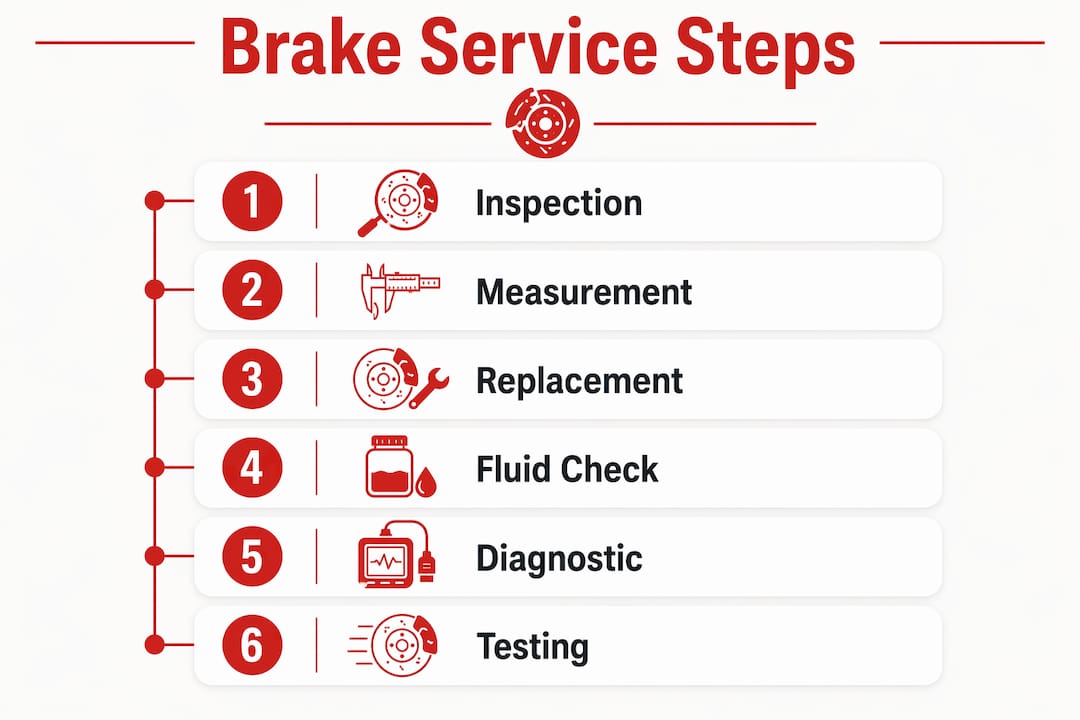
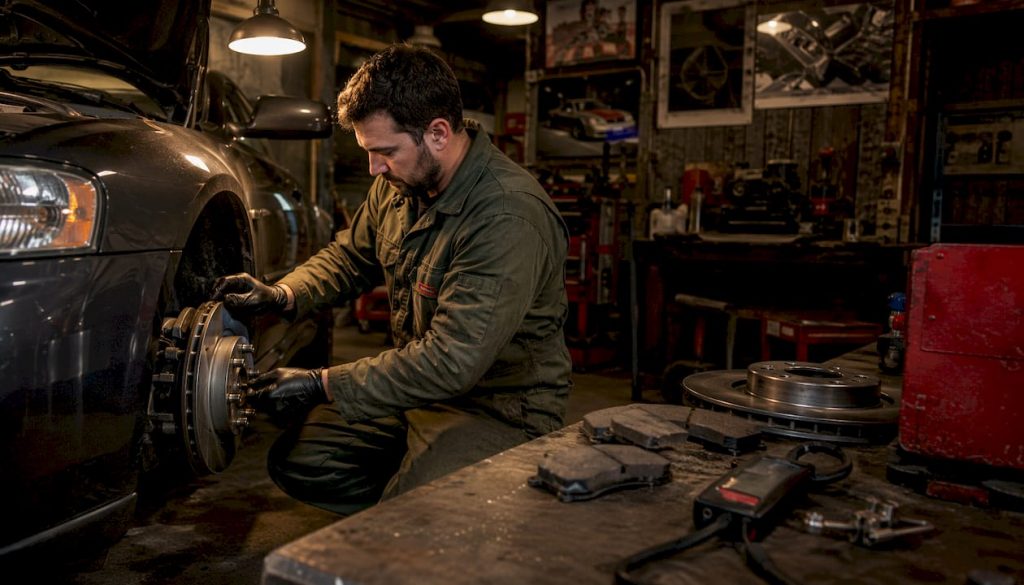
Brake pad inspection starts with measuring friction material thickness and checking the wear pattern across the pad face. Uneven wear often points to a sticking caliper or a misaligned slide pin, not just a worn pad. European vehicles, particularly German and British models, frequently use ceramic or semi-metallic compounds engineered for specific rotor metallurgy, as explained in Why Variable Valve Exhaust Outperforms Fixed Systems. Swapping in a generic pad changes the friction characteristics and can accelerate rotor wear.
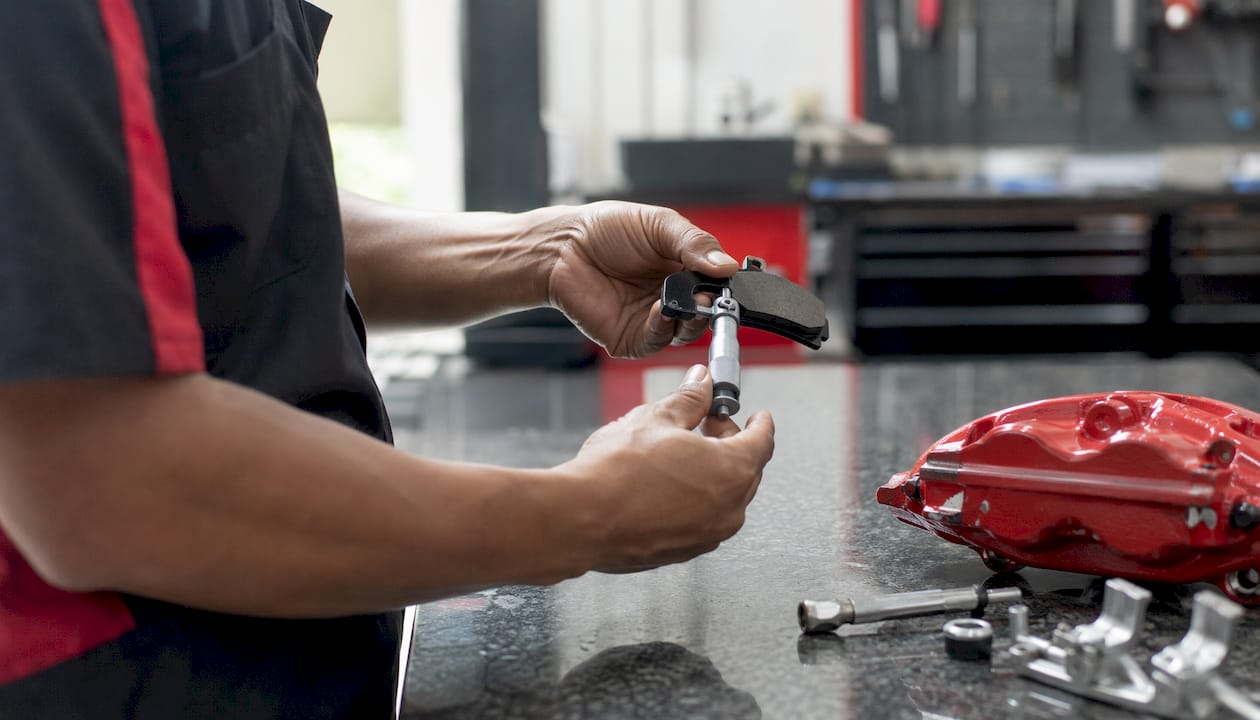
Rotors deserve equal attention. Grooves, scoring, or thickness below the manufacturer’s minimum spec all call for replacement, not just resurfacing. Replacing pads and rotors together maintains consistent contact and prevents the uneven wear that comes from seating new pads on a compromised surface.
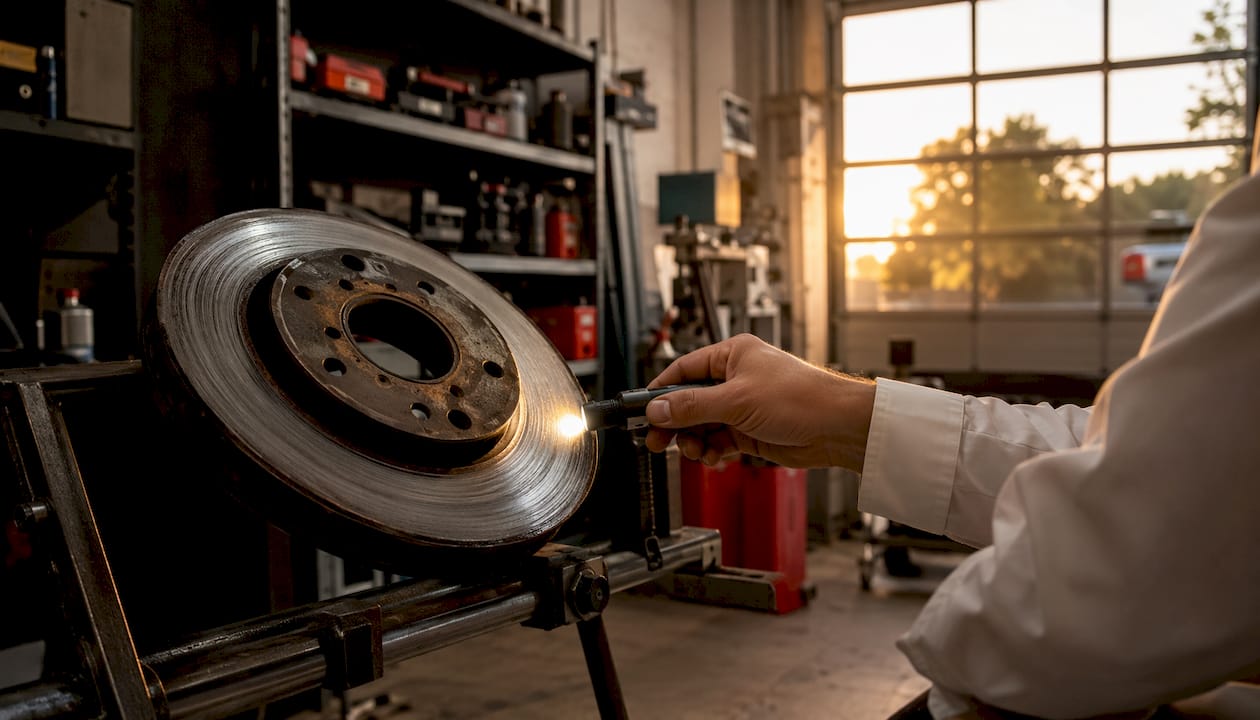
Pro Tip: If you hear a high-pitched squeal that disappears after the first few stops in the morning, that’s often the pad wear indicator touching the rotor. Don’t wait. By the time you hear grinding, the rotor is already taking damage.
Watch for these warning signs between services:
- Squealing or squeaking during braking
- Grinding or metal-on-metal noise
- Pulsating or vibrating brake pedal
- Vehicle pulling to one side when stopping
- Longer stopping distances than usual
Why brake fluid and brake line condition matter more than most owners realize
Brake fluid is hygroscopic, meaning it absorbs moisture from the air over time. That absorbed moisture lowers the fluid’s boiling point, which creates a soft, spongy pedal feel under hard braking and reduces stopping power exactly when you need it most. Most European manufacturers recommend a full fluid flush every two years regardless of mileage, because the degradation happens whether the car is driven hard or barely at all.
Using the right fluid matters just as much as changing it on schedule. European vehicles typically specify DOT 4 or DOT 5.1, and the correct DOT-rated fluid for your specific model is listed on the reservoir cap or in the owner’s manual. Never substitute a lower-spec fluid to save a few dollars.
Brake line inspection rounds out the hydraulic side of the service:
- Check rubber hoses for cracking, bulging, or soft spots
- Inspect steel lines for rust, corrosion, or physical damage
- Look for any signs of fluid seepage at fittings and connections
- Verify the master cylinder reservoir level and condition
- Confirm no air has entered the system after any line work
Low fluid in the reservoir without an obvious external leak often means the pads are worn thin, pushing the caliper pistons further out. That’s a useful diagnostic clue, not just a top-off situation.
What a professional brake inspection actually covers for European vehicles
A thorough brake inspection goes well beyond pulling the wheels and eyeballing the pads. A complete brake job treats the system as an integrated safety chain, meaning every component gets checked because a failure in one part compromises the whole.
European vehicles add complexity through advanced electronic systems like electronic brake distribution, adaptive braking controls, and stability management that all interact with the base hydraulic system. Diagnosing faults in these systems requires professional-grade scan tools capable of live data streaming and bi-directional testing, not just reading fault codes.
| Component | Common issues found | Standard corrective action |
|---|---|---|
| Brake pads | Thin friction material, uneven wear | Replace pads; inspect caliper slides |
| Rotors | Scoring, warping, thickness below spec | Resurface or replace |
| Calipers | Sticking pistons, seized slides | Rebuild or replace caliper |
| Brake fluid | Moisture contamination, low boiling point | Full hydraulic flush |
| Brake lines/hoses | Corrosion, cracking, leaks | Replace affected sections |
| ABS module/sensors | Fault codes, wheel speed sensor failure | Diagnose with scan tool; replace sensor or module |
| Electronic parking brake | Calibration errors, motor failure | Recalibrate or replace actuator |
| Master cylinder | Internal leaks, spongy pedal | Replace master cylinder |
Tom’s B & M Auto uses professional-grade OBD-II diagnostic equipment to read and clear ABS and electronic brake system faults accurately. Every inspection comes with a written service estimate before any work begins, and all repairs are backed by the shop’s 24-month/24,000-mile warranty.
Driving habits and seasonal maintenance that protect your brakes year-round
How you drive has a direct effect on how long your brake components last. Hard, frequent braking from high speeds generates heat that accelerates pad and rotor wear. Leaving more following distance and coasting down to lower speeds before applying the brakes reduces thermal stress on the entire system.
Climate plays a real role too. Pacific Northwest winters bring moisture and road salt that corrode brake hardware, caliper slides, and steel lines faster than dry conditions. Summer heat, especially during mountain driving or towing, pushes brake temperatures higher and makes fluid condition more critical. Seasonal checks are worth building into your maintenance routine.
Practical habits that extend brake life:
- Avoid riding the brake pedal on long downhill grades; use engine braking instead
- Allow brakes to cool after extended hard use before parking
- Check brake fluid condition and level at every oil change
- Have brake hardware cleaned and lubricated during each pad replacement
- Respond to any brake warning light immediately rather than monitoring it
The free visual brake inspection at Tom’s B & M Auto is a good starting point if you haven’t had your system checked recently. Catching a sticking caliper slide or contaminated fluid early costs far less than replacing a warped rotor or a damaged ABS module later.
For European vehicle owners curious about how brake maintenance fits into the broader picture of European car repair challenges, the complexity of these systems is exactly why specialist knowledge matters.
What brake service costs for European vehicles in the United States
European brake repairs cost more than equivalent work on domestic vehicles, and the gap is real. Specialized components, precision engineering, and OEM-grade parts all carry a price premium. A ceramic brake pad set for a BMW or Mercedes-Benz costs more than a generic semi-metallic set, and the labor to properly service the electronic parking brake or recalibrate the ABS adds time that a standard brake job doesn’t require.
Caliper repair and replacement typically represent the most expensive single brake repair item due to the complexity of the component and its role in the hydraulic system. Caliper work should always be quoted separately from pad and rotor replacement so you understand exactly what you’re paying for.
Budgeting tips for European brake service:
- Ask for a written itemized estimate before approving any work
- Bundle fluid flushes with pad replacements to reduce labor time
- Use OEM or OEM-equivalent parts to protect vehicle value and avoid repeat repairs
- Address minor issues like sticking caliper slides early before they damage rotors
- Consider financing options if a full brake overhaul is needed
Preventive maintenance consistently costs less than reactive repair. A fluid flush and pad replacement done on schedule prevents the rotor damage, caliper failure, and ABS module corrosion that come from deferred service. The math favors staying ahead of it.
Tom’s B & M Auto has served Lynnwood and the surrounding area since 1985. ASE-certified technicians, professional-grade diagnostics, upfront pricing, and a 24-month/24,000-mile warranty on every repair. Same-day appointments are often available. Schedule your brake inspection or get $50 off any repair over $300 at Tom’s B & M Auto today.
Key Takeaways
Properly servicing a European vehicle’s brake system requires specialized parts, professional-grade diagnostics, and ASE-certified technicians who understand the integrated electronic and hydraulic systems these vehicles use.
| Point | Details |
|---|---|
| Pads and rotors together | Replacing both at the same time prevents uneven wear and maintains consistent braking contact. |
| Fluid degrades silently | Brake fluid absorbs moisture over time, lowering its boiling point and causing soft pedal feel under hard braking. |
| Electronics need specialist tools | ABS modules and electronic parking brakes require professional scan tools, not just a visual inspection. |
| Caliper work costs the most | Caliper repair or replacement is generally the most expensive single brake repair item for European vehicles. |
| Preventive service saves money | Addressing minor issues early prevents rotor damage, caliper failure, and costly ABS module repairs later. |