
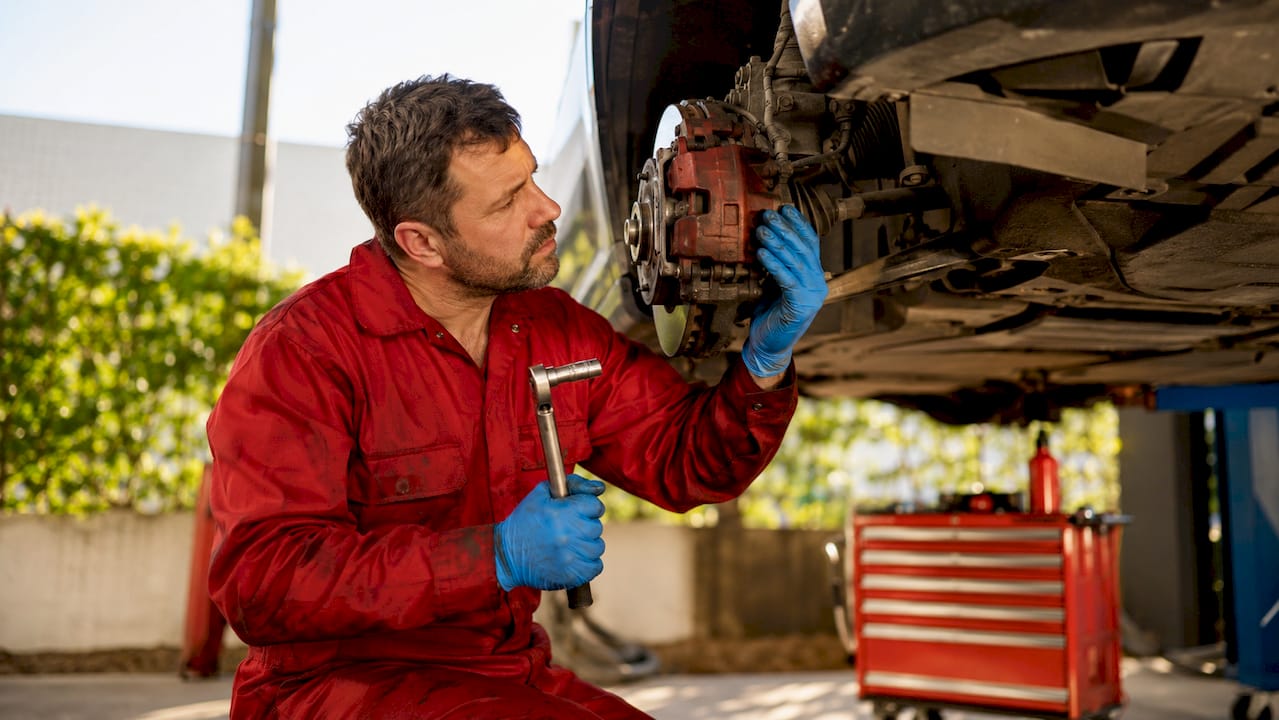
The Role of Brake Caliper in Vehicle Safety
A brake caliper is the hydraulic component that squeezes brake pads against a wheel’s rotor to create the friction needed to stop your car. Every time you press the brake pedal in a disc brake system, the caliper is the part doing the actual clamping work. Understanding the role of brake caliper components in your vehicle is not just useful knowledge. It is the foundation for catching problems early, maintaining your brakes correctly, and keeping yourself and others safe on the road. Two caliper designs cover most vehicles: floating calipers and fixed calipers.
How do brake calipers work to slow or stop a car?
The brake caliper converts hydraulic pressure from brake fluid into mechanical clamping force. When you press the brake pedal, fluid travels from the master cylinder through brake lines to the caliper. That pressure pushes one or more pistons outward, forcing the brake pads against both sides of the spinning rotor. Friction between the pads and rotor converts kinetic energy into heat, which slows the wheel.
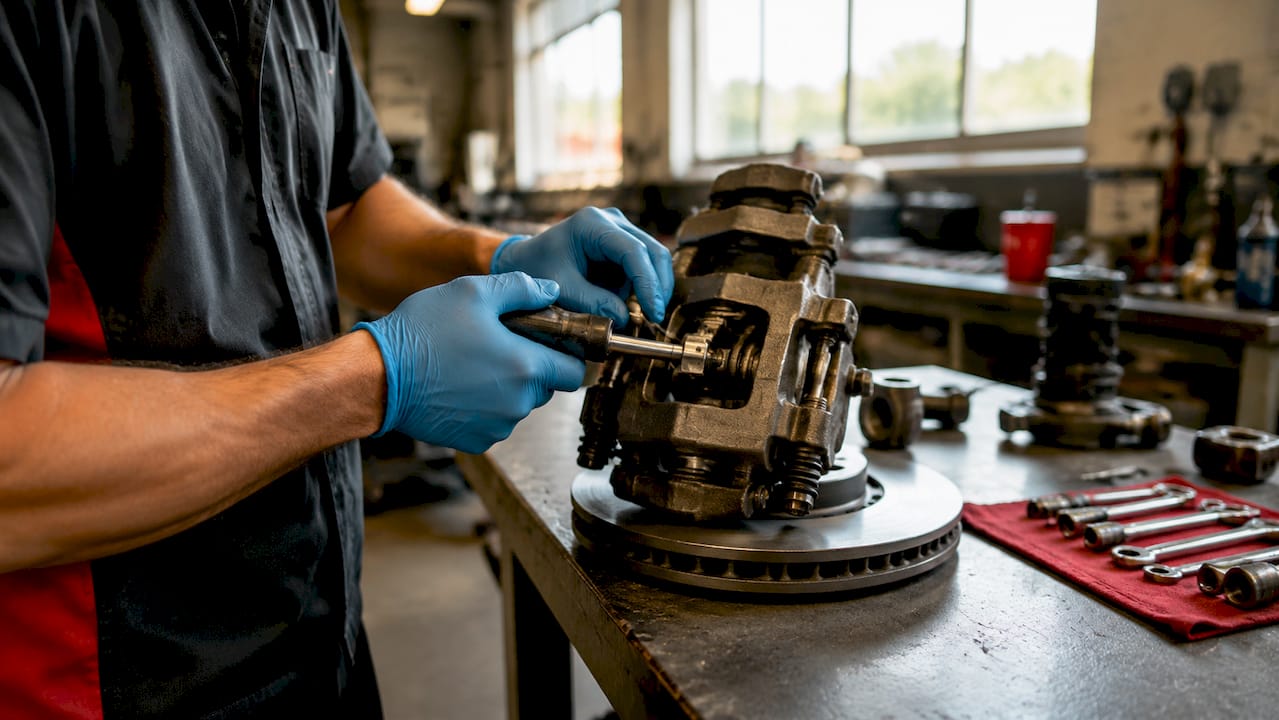
The forces involved are significant. A properly sized caliper generates between 2,000 and 4,000 N·m of braking torque per wheel under typical conditions. Operating pressure at the caliper during hard stops runs around 60–80 bar, with pad friction coefficients near 0.40. That combination of pressure and friction is what brings a two-ton SUV to a controlled stop.
One detail most drivers never think about is what happens after you release the pedal. The square-cut piston seal inside the caliper is designed to flex slightly when pressurized, then spring back to its original shape when pressure drops. That micro-retraction pulls the piston back just enough to release pad contact with the rotor. Without it, the pads would drag constantly, wearing out far faster than they should.
Even pressure across both brake pads matters for safety. If one side of the caliper applies more force than the other, the pads wear unevenly and the vehicle can pull to one side under braking.
- Brake fluid transmits pedal force to caliper pistons
- Pistons push pads against the rotor surface
- Friction slows wheel rotation by converting motion to heat
- The piston seal retracts the piston slightly after each stop
- Even clamping pressure keeps pad wear consistent and braking straight
Pro Tip: Spongy brake pedal feel often points to air in the brake lines, not a failing caliper. Bleed the system first before assuming the caliper is at fault. Tom’s B & M Auto covers the full process in this guide on brake bleeding basics.
What are the main types of brake calipers?
Two main caliper designs exist: floating calipers and fixed calipers. Each has a different mechanical approach to squeezing the rotor, and each suits a different type of vehicle.
Floating calipers (also called sliding calipers) have pistons on one side only. The caliper body slides on guide pins so that when the pistons push one pad inward, the caliper body slides in the opposite direction and pulls the other pad against the rotor. This design is cost-effective and works well for most passenger cars, including Toyota Camry, Honda Accord, and Subaru Outback models.
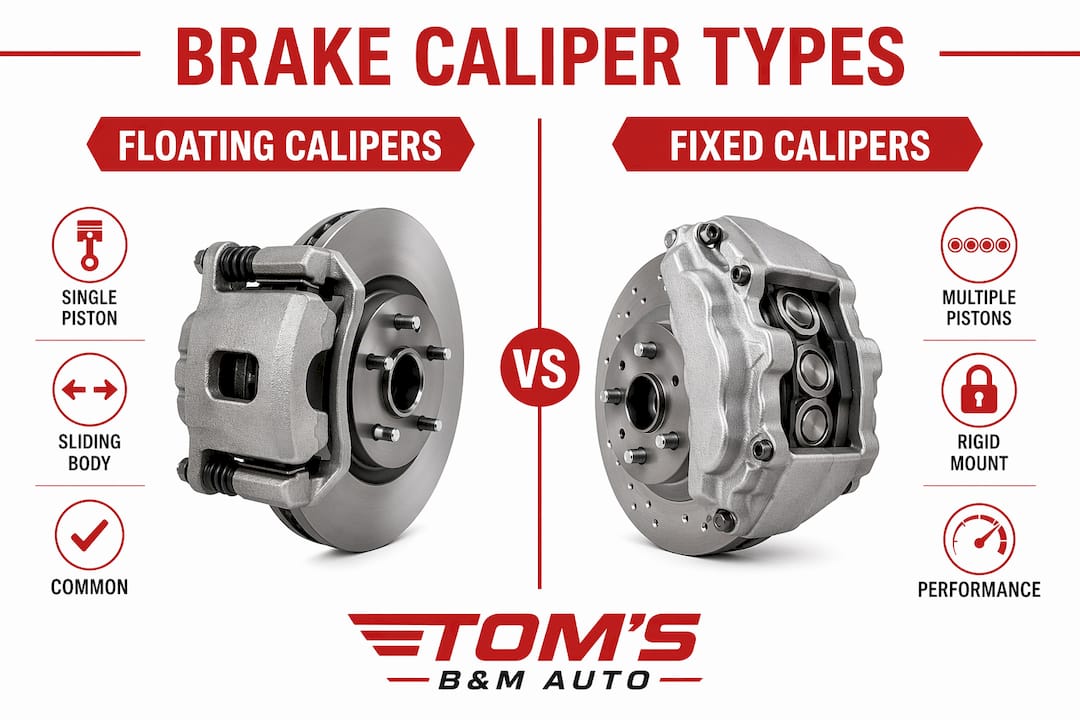
Fixed calipers are bolted rigidly to the suspension and have pistons on both sides of the rotor. Both sets of pistons activate simultaneously, squeezing the rotor symmetrically from each side. Fixed calipers deliver more consistent pedal feel and higher braking performance. You find them on performance vehicles, trucks, and heavy-duty applications where braking consistency under repeated hard stops matters most.
| Feature | Floating caliper | Fixed caliper |
|---|---|---|
| Piston placement | One side only | Both sides of rotor |
| Caliper movement | Slides on guide pins | Bolted rigid, does not move |
| Common application | Passenger cars | Performance and heavy-duty vehicles |
| Pedal feel | Adequate for daily driving | More consistent and direct |
| Maintenance focus | Guide pin lubrication | Piston seal inspection on both sides |
| Cost | Lower | Higher |
For most drivers in Lynnwood and the surrounding area, floating calipers are what you have. That makes guide pin condition the single most important maintenance item to watch.
What problems affect brake calipers and how do they impact braking?
Brake calipers are often the most neglected part of the braking system. Most drivers focus on pads and rotors and assume the caliper will take care of itself. That assumption leads to the most common and most preventable caliper failures.
Seized pistons are the most serious failure. A piston that will not retract keeps the pad pressed against the rotor even when you are not braking. The result is constant friction, rapid pad wear, a rotor that overheats, and a vehicle that pulls to one side. In severe cases, the wheel can lock.
Sticking guide pins in floating calipers cause uneven pad wear that is commonly mistaken for piston or master cylinder problems. One pad wears down while the other stays thick. If you pull a wheel and find pads with very different thicknesses, the guide pins are the first thing to check.
Driving with a damaged or leaking caliper significantly reduces braking performance and increases stopping distance. A fluid leak drops hydraulic pressure, which means the pistons cannot generate full clamping force. That is a direct safety risk, not a “fix it later” situation.
Watch for these warning signs:
- Grinding or squealing that does not stop after new pads are installed
- Vehicle pulling left or right under braking
- One wheel noticeably hotter than the others after a drive
- Visible brake fluid on the inside of a wheel or on the ground beneath it
- Brake pedal that feels soft or sinks toward the floor
- Uneven pad thickness when you inspect the brakes
You can learn more about what squealing brakes actually signal in this breakdown of brake noise causes.
Pro Tip: After a long highway drive, carefully hold your hand near each wheel without touching it. A wheel that radiates noticeably more heat than the others likely has a dragging caliper on that corner.
How should you maintain brake calipers for safety and long life?
Caliper maintenance is straightforward when you stay ahead of it. Waiting until something fails makes the repair more expensive and the risk much higher.
-
Inspect and lubricate guide pins at every brake job. Seized guide pins are the leading cause of uneven pad wear in floating calipers. Clean the pins, check for corrosion, and apply a thin coat of high-temperature brake caliper grease before reinstalling.
-
Check piston dust boots and seals. A cracked or torn dust boot lets moisture and road grit into the piston bore. That causes corrosion, which leads to a seized piston. Catching a torn boot early costs a few dollars. Ignoring it costs a caliper rebuild or replacement.
-
Replace brake pads before they reach 3 mm of friction material. Worn-down pads force the piston to extend much further than it was designed to travel. Pads worn below 3 mm risk piston cocking, seal damage, and brake fluid loss. Check pad thickness every 10,000–15,000 miles or at every tire rotation.
-
Bleed the brake fluid on schedule. Brake fluid absorbs moisture over time, which lowers its boiling point and accelerates internal corrosion in the caliper. Most manufacturers recommend a fluid flush every two years. Fresh fluid protects the piston seals and keeps the hydraulic system responsive.
-
Pay extra attention to front calipers. Front brake calipers handle most of the braking load because vehicle weight shifts forward during deceleration. That means front pads and calipers wear faster than rear ones. Inspect the fronts first and inspect them more often.
-
Know when to call a professional. Rebuilding a caliper requires the right tools, clean workspace, and correct torque specs. If you find a leaking caliper, a seized piston, or a cracked housing, bring the vehicle to a shop. The brake rotor often needs inspection at the same time, since a dragging caliper can warp or score the rotor surface.
Pro Tip: Never apply grease to the pad contact surface or the rotor face. Grease belongs only on the guide pins, caliper slide surfaces, and the back of the brake pad shim. Grease on friction surfaces destroys braking performance.
Key Takeaways
The brake caliper is the hydraulic clamp that converts pedal pressure into stopping force, and neglecting it leads to uneven braking, accelerated wear, and real safety risk.
| Point | Details |
|---|---|
| Core function | The caliper converts hydraulic pressure into mechanical clamping force against the rotor. |
| Two caliper types | Floating calipers suit most passenger cars; fixed calipers suit performance and heavy-duty vehicles. |
| Top failure causes | Seized pistons, sticking guide pins, and leaking seals are the most common caliper problems. |
| Critical pad thickness | Replace pads before friction material drops below 3 mm to protect piston seals and prevent fluid loss. |
| Front caliper priority | Front calipers wear faster due to weight transfer during braking and need more frequent inspection. |
Why I think calipers are the most underrated brake component
Most brake conversations start and end with pads and rotors. I get it. Those are the parts you see advertised, the parts shops put on sale, and the parts most DIY guides focus on. But in my experience, the caliper is where the real problems hide.
A seized guide pin does not announce itself loudly. The car still stops. The pedal still feels mostly normal. But one pad is grinding down twice as fast as the other, and by the time you notice the pull or the squeal, you have already damaged the rotor. That is a $30 guide pin service that turned into a $300 repair.
The other thing I see constantly is people who replace pads and rotors on a vehicle with a sticky caliper. Six months later they are back with uneven wear and a confused look on their face. The caliper was the problem the whole time.
My honest advice: treat the caliper as a first-class citizen of your brake system. Inspect the guide pins every time you change pads. Check the dust boots. Do not let pads wear to metal. And if you see fluid on the inside of a wheel, do not drive the car until that caliper is inspected. Brakes are the one system where “I’ll deal with it next week” is genuinely dangerous.
— Shingi
Get your brake calipers inspected at Tom’s B & M Auto
A brake caliper problem caught early is a quick, affordable fix. Left alone, it becomes a safety issue and a much larger repair bill. Tom’s B & M Auto has served Lynnwood drivers since 1985 with ASE-certified technicians who inspect the full brake system, including calipers, guide pins, pads, and rotors, not just the parts that are easy to see. Take advantage of a free brake inspection to get a clear picture of your caliper condition before a small problem becomes a big one. If repairs are needed, financing is available to keep necessary brake work within reach. Same-day appointments are often available. Call or book online today.
FAQ
What is the main function of a brake caliper?
The brake caliper squeezes brake pads against the rotor to create friction that slows or stops the wheel. It converts hydraulic pressure from brake fluid into mechanical clamping force.
How do I know if my brake caliper is failing?
Common signs include the vehicle pulling to one side under braking, uneven brake pad wear, a soft or sinking pedal, and visible brake fluid on the inside of a wheel. A wheel that stays noticeably hotter than the others after driving is another clear indicator.
What is the difference between a floating and a fixed caliper?
A floating caliper slides on guide pins and has pistons on one side only. A fixed caliper is bolted rigidly in place and has pistons on both sides of the rotor for more consistent, symmetrical clamping force.
How often should brake calipers be serviced?
Guide pins should be cleaned and lubricated at every brake pad replacement. Piston seals and dust boots should be inspected at the same time. Brake fluid, which directly affects caliper performance, should be flushed every two years.
Is it safe to drive with a leaking brake caliper?
No. A leaking caliper reduces hydraulic pressure and significantly increases stopping distance. The vehicle should be inspected and repaired before it is driven again.
Recommended
- What Is Brake Bleeding? A Car Owner’s Guide – Tom’s B & M Auto Blog
- What Is a Brake Rotor? Function, Wear, and Care – Tom’s B & M Auto Blog
- Why Brakes Squeak: Causes, Fixes, and Warning Signs – Tom’s B & M Auto Blog
- Free Visual Brake Inspection | Tom’s B&M Auto — Lynnwood WA
Leave a Reply