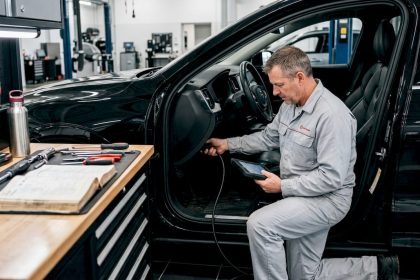
An engine misfire is defined as a combustion failure in one or more cylinders, where the air-fuel mixture fails to ignite at the right time. You’ll recognize it by a rough idle, hesitation under acceleration, vibrations through the seat, or a Check Engine light on your dashboard. Worn or fouled spark plugs cause roughly 40% of misfires, and ignition coils account for another 25–30%. That means most misfires have a clear, fixable cause. The key to fixing engine misfires step by step is working through a cost-ordered diagnostic process, starting cheap and getting more involved only when needed.
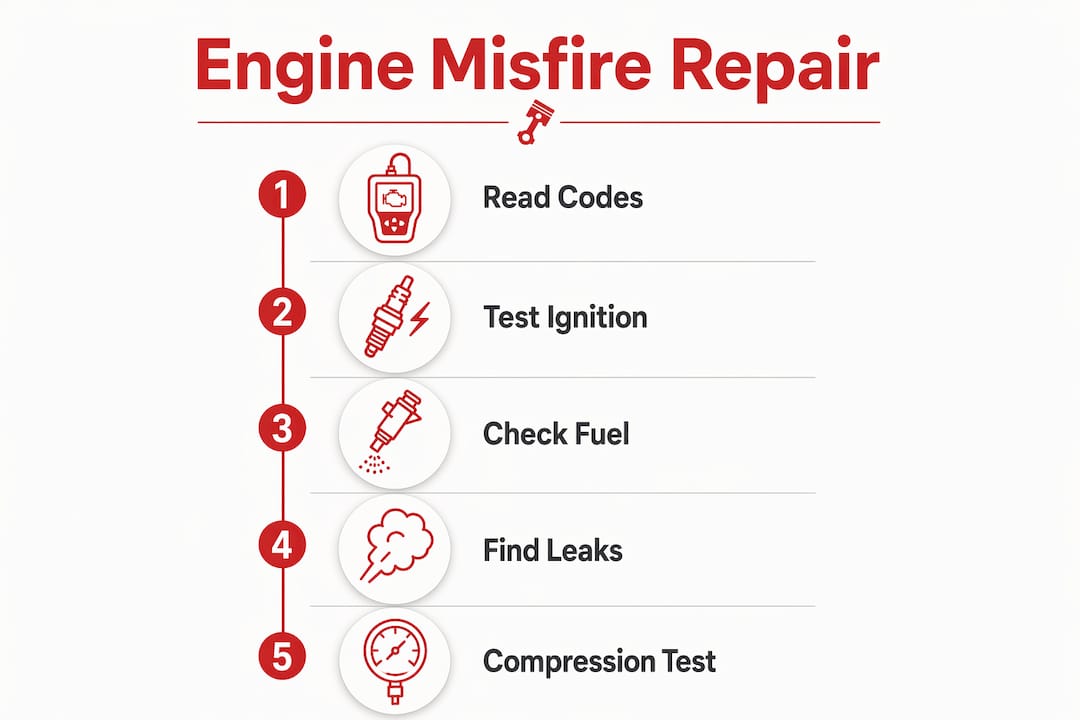
How to fix engine misfires step by step: start with OBD-II codes
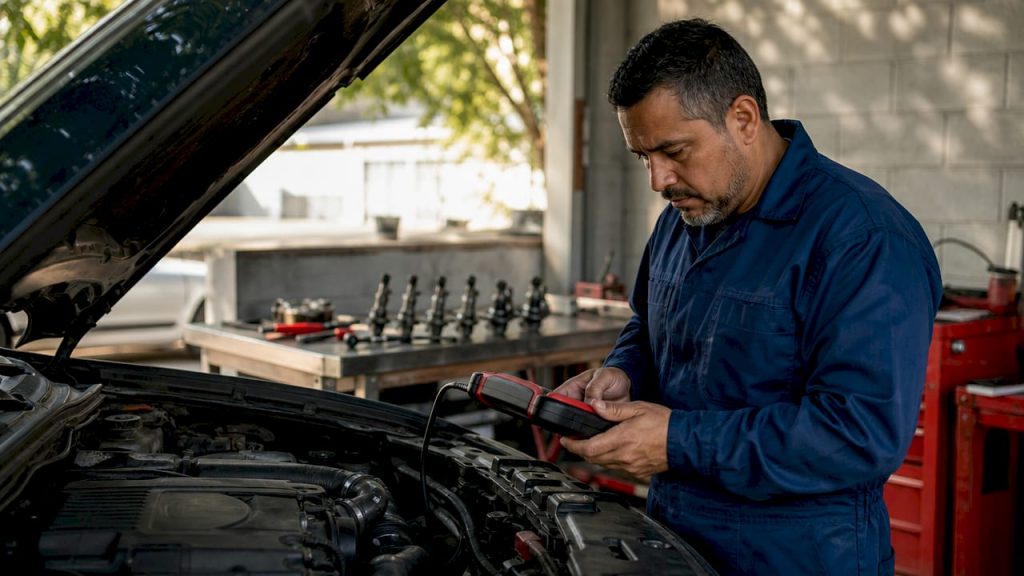
The first tool you need is an OBD-II scanner. You can buy a basic one for under $30, or borrow one free from many auto parts stores. Plug it into the diagnostic port under your dashboard, turn the ignition to “on,” and read the stored codes.
Two code types matter most for misfires:
- P0300 signals a random or multiple cylinder misfire, which means the problem is system-wide. Think fuel delivery, vacuum leaks, or low compression across multiple cylinders.
- P0301 through P0308 are cylinder-specific codes. P0301 means cylinder 1 is misfiring, P0302 means cylinder 2, and so on. These codes narrow your search immediately.
- Freeze frame data captures engine conditions at the moment the code triggered. Check the RPM, engine load, and fuel trim values. High positive fuel trims suggest a lean condition, often caused by a vacuum leak or weak injector.
- Live data lets you watch misfire counts per cylinder in real time. This is especially useful when a misfire is intermittent and not always present when you scan.
Pro Tip: Read codes before you buy a single part. Guessing costs money. A $30 scanner can save you hundreds in wrong replacements.
Cylinder-specific codes send you straight to the ignition system. Random misfire codes send you to fuel, vacuum, and compression. That distinction alone shapes the entire repair path.

How do you test spark plugs and ignition coils for misfires?
The ignition system is the right place to start after reading your codes. About 70% of engine misfires resolve after addressing spark plugs and ignition coils, which makes this the highest-return diagnostic step.
Inspecting spark plugs
- Remove the spark plug from the cylinder flagged by your OBD-II code.
- Examine the electrode tip. A healthy plug is light gray or tan. Black, sooty deposits indicate a rich mixture or oil fouling. White or blistered tips suggest the engine is running too hot.
- Check the gap with a feeler gauge. Most modern engines require a gap between 0.028 and 0.060 inches. Consult your owner’s manual for the exact spec.
- Replace a worn or fouled plug. DIY spark plug replacement costs $20–$120 depending on plug type and how many cylinders your engine has.
Testing ignition coils with the swap test
The coil swap test is the most reliable free diagnostic step available to a DIYer. The recommended method for cylinder-specific misfire codes is the coil swap test, which confirms a coil failure without buying anything new.
- Identify the coil on the misfiring cylinder.
- Swap it with the coil from a neighboring cylinder that is running fine.
- Clear the codes with your scanner.
- Drive the car for 10–15 minutes under normal conditions.
- Rescan. If the misfire code follows the coil to its new cylinder, the coil is bad. If the code stays on the original cylinder, the coil is not the problem.
Pro Tip: Always swap before you buy. A new coil costs $30–$80. The swap test is free and takes five minutes.
While you have the coils out, clean the connector terminals with electrical contact cleaner and inspect the boots for cracks or carbon tracking. A cracked boot causes the same symptoms as a dead coil and costs almost nothing to fix.
What causes fuel system and vacuum leak misfires?
If new plugs and a coil swap do not fix the misfire, the problem lives in the fuel system or the intake tract. These issues are slightly harder to find but still very manageable with basic tools.
Fuel injector problems
Clogged or failing fuel injectors deliver too little fuel to a cylinder, causing a lean misfire. Signs include:
- A misfire that worsens under load but improves at idle
- Rough idle on a cold start that smooths out as the engine warms
- Poor fuel economy alongside the misfire
Listen to each injector with a mechanic’s stethoscope or a long screwdriver held to your ear. A healthy injector produces a steady, rhythmic clicking. A dead or clogged injector sounds different or silent. You can also test fuel pressure with a gauge connected to the fuel rail’s Schrader valve. Low pressure points to a weak pump or clogged filter.
Professional fuel injector cleaning and flow testing costs $30–$35 per injector. That is worth considering when a single injector is confirmed as the problem but cleaning at home has not resolved it.
Finding vacuum leaks
Vacuum leaks introduce unmetered air into the intake, leaning out the mixture and causing misfires. Common leak points include cracked intake hoses, a failed PCV valve, a leaking intake manifold gasket, and loose throttle body connections.
Pro Tip: Spray carburetor cleaner on intake hoses while the engine idles. A change in RPM tells you exactly where the leak is. Keep the spray away from hot exhaust components and open flame.
A vacuum leak that causes a P0300 random misfire often shows up as a high positive short-term fuel trim in your live data. That number is the engine’s way of saying it is adding extra fuel to compensate for unexpected air. Trim values above +10% are worth investigating.
Transmission problems can mimic misfire symptoms, producing shudder and hesitation. Transmission issues do not trigger P030x codes, so accurate code reading keeps you from chasing the wrong system entirely.
When should you do a compression test for engine misfires?
A compression test is the last diagnostic step, not the first. Run it only after you have ruled out ignition, fuel, and vacuum issues. It checks the mechanical health of the engine itself, specifically the piston rings, valves, and head gasket.
How to perform a compression test
- Warm the engine to operating temperature, then shut it off.
- Remove all spark plugs so the engine cranks freely.
- Disable the fuel system by pulling the fuel pump fuse or relay.
- Thread the compression gauge into cylinder 1 and crank the engine for 4–5 seconds.
- Record the reading. Repeat for every cylinder.
Interpreting the results
| Reading | What it means |
|---|---|
| All cylinders within 10% of each other | Engine is mechanically healthy |
| One cylinder significantly low | Possible bad valve, worn rings, or head gasket |
| Low reading rises on wet test | Worn piston rings (oil seals the gap temporarily) |
| Low reading unchanged on wet test | Valve or head gasket issue |
Wet and dry compression tests differentiate ring wear from valve problems. For the wet test, add a teaspoon of engine oil into the low cylinder before retesting. A rise in pressure confirms ring wear. No change points to the valves or head gasket.
Most gasoline engines produce 130–180 PSI per cylinder. Anything below 100 PSI in one cylinder is a red flag. Consistent low readings across multiple cylinders suggest a more serious internal problem that warrants professional evaluation. At that point, the types of diagnostic tests available at a full-service shop go well beyond what a home garage can replicate.
Key Takeaways
Fixing engine misfires requires a systematic, cost-ordered process: read OBD-II codes first, address ignition components, then check fuel delivery and vacuum leaks, and reserve compression testing for last.
| Point | Details |
|---|---|
| Read codes before replacing parts | OBD-II codes like P0301 pinpoint the problem cylinder and prevent wasted spending. |
| Spark plugs and coils fix most misfires | About 70% of misfires resolve after addressing plugs and ignition coils alone. |
| Use the coil swap test | Swapping coils between cylinders confirms failure for free before buying a replacement. |
| Vacuum leaks cause lean misfires | Carb cleaner spray on intake hoses reveals leaks by changing engine RPM at idle. |
| Compression testing is the last step | Run it only after ignition, fuel, and vacuum checks have failed to find the cause. |
What I’ve learned from watching people misdiagnose misfires
The most expensive mistake I see is skipping the coil swap test. A driver gets a P0302 code, assumes the coil is bad, buys a new one, installs it, and the misfire is still there. Then they buy another part. Then another. Skipping the swap test is the single most common DIY mistake in misfire diagnosis, and it is entirely avoidable.
The second mistake is ignoring a flashing Check Engine light. A steady light means a stored fault. A flashing light means an active, severe misfire is happening right now. A flashing CEL signals unburned fuel entering the catalytic converter, which can destroy it within minutes of continued driving. Pull over. The catalytic converter on most modern vehicles costs $500–$2,000 to replace. The misfire that caused it might have been a $25 spark plug.
The third mistake is jumping straight to compression testing because it sounds thorough. Compression tests are genuinely useful, but they belong at the end of the process. Systematic diagnosis in cost order catches the problem at the cheapest possible point. Most of the time, you never need to get to compression testing at all.
Do the basics yourself. Learn to use a scanner. Swap coils. Check plugs. Know when to stop. A good shop is not a sign of failure. It is the right call when the problem goes deeper than what a driveway repair can safely address.
— Shingi
Engine misfire diagnosis at Tom’s B & M Auto
Tom’s B & M Auto has served Lynnwood, WA drivers since 1985, and engine misfires are one of the most common issues the ASE-certified technicians handle every week.
If your DIY diagnosis has hit a wall, or if your Check Engine light is flashing right now, Tom’s B & M Auto offers a free Check Engine light review to get you started without guesswork. The shop handles full ignition system repairs, professional fuel injector cleaning, vacuum leak diagnosis, and compression testing for all makes including Toyota, Honda, Subaru, European, and domestic vehicles. For larger repairs, financing options are available to keep the work affordable. Same-day appointments are often available, and every repair comes with a 24-month / 24,000-mile warranty.
FAQ
What are the most common causes of engine misfires?
Worn spark plugs cause roughly 40% of misfires, and ignition coils account for another 25–30%. The remaining cases involve fuel injectors, vacuum leaks, or internal engine problems like worn rings or valves.
What does a flashing Check Engine light mean during a misfire?
A flashing Check Engine light means an active, severe misfire is occurring. Stop driving immediately, as continued operation can destroy the catalytic converter within minutes.
Can I drive with an engine misfire?
A mild misfire with a steady Check Engine light can be driven carefully to a shop. A flashing Check Engine light requires you to pull over and stop driving right away.
What is the coil swap test and how does it work?
The coil swap test moves the ignition coil from the misfiring cylinder to a healthy one, then rescans for codes. If the misfire code follows the coil, the coil is confirmed bad without buying a new part first.
How much does it cost to fix an engine misfire?
DIY spark plug replacement runs $20–$120, and a single ignition coil costs $30–$80 to replace yourself. Professional fuel injector cleaning runs $30–$35 per injector, with total repair costs varying based on the root cause.