

Engine Compression Test: What Car Owners Need to Know
An engine compression test is the process of measuring the pressure each cylinder produces during the compression stroke to evaluate the engine’s internal mechanical condition. The industry standard term is a “cylinder compression test,” though “engine compression test” is the phrase most car owners and shops use interchangeably. Healthy gasoline engines read 130–200 PSI per cylinder; diesel engines run 275–400 PSI. Those numbers tell you whether your pistons, rings, and valves are sealing the way they should. Think of it the way a doctor thinks about blood pressure: one reading matters less than consistency across all cylinders. Tom’s B & M Auto has used compression testing as a front-line diagnostic tool since 1985, and it remains one of the most cost-effective ways to catch serious engine problems before they become catastrophic.
What is an engine compression test and what does it check?
A compression test checks whether each cylinder can build and hold adequate pressure during the compression stroke. The test targets three main failure points: worn piston rings, damaged or burnt valves, and head gasket failures. All three problems reduce the cylinder’s ability to seal, which drops pressure and hurts performance.
The test does not evaluate ignition timing, fuel delivery, or sensor function. Compression tests only diagnose mechanical sealing issues; a misfiring engine could have perfect compression and still run poorly due to a bad ignition coil or clogged injector. That distinction matters before you spend money on parts.
Compression testing is also a smart step when buying a used vehicle. A single test on a warm engine can reveal years of wear that a visual inspection will never show. For high mileage vehicle maintenance, periodic compression checks give you a baseline so you can track engine wear over time rather than reacting to it after a breakdown.
How to perform an engine compression test
Performing a compression test correctly takes preparation. Rushing the setup produces misleading numbers and can damage the engine. Follow these steps in order.
- Warm the engine. Test on a warm engine at operating temperature with the oil fully circulated. Cold testing produces artificially low readings.
- Disable the ignition and fuel system. Pull the fuel pump fuse or relay and disconnect the ignition system. This prevents fuel from flooding the cylinders and eliminates fire risk during cranking.
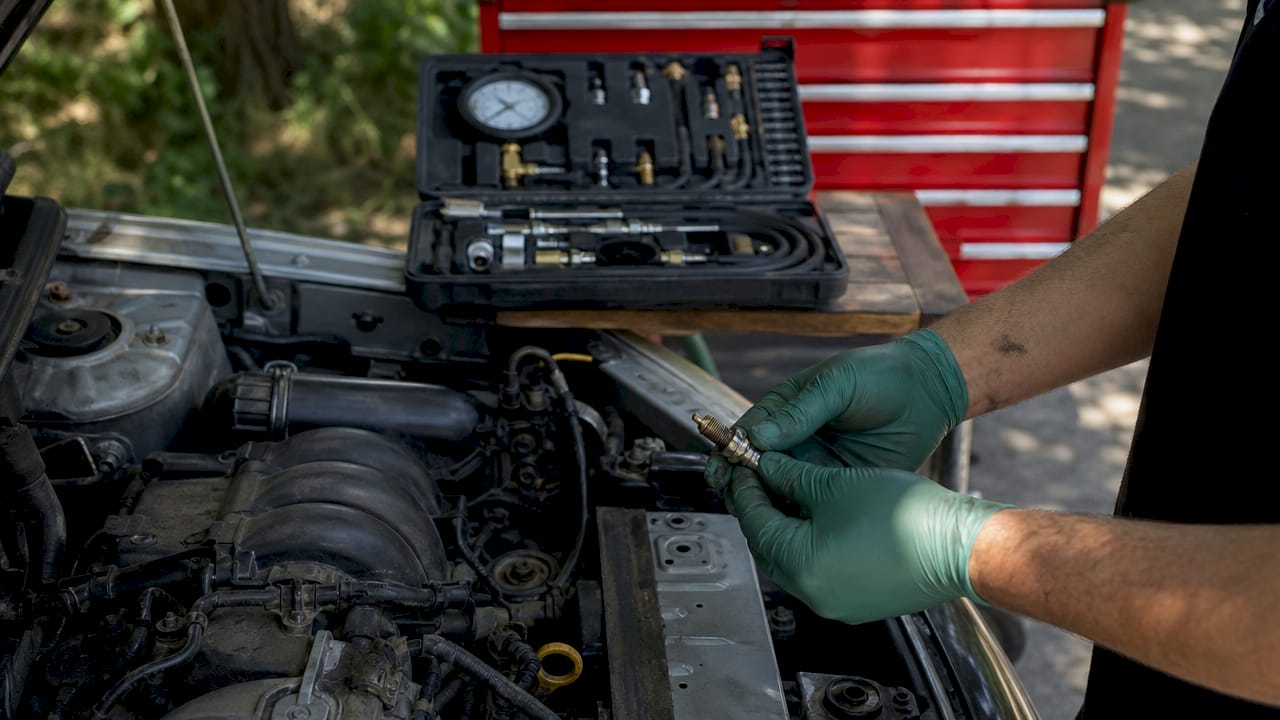
- Remove all spark plugs. Removing all plugs at once lets the engine crank freely and gives you consistent readings across every cylinder.
- Blow out the spark plug wells. Before pulling plugs, blast compressed air into each well. Dirt entering cylinders causes internal engine damage on restart. This step is skipped far too often.
- Thread in the compression gauge. Use a gauge that threads directly into the plug hole for a tight seal. Hand-tight is sufficient.
- Hold the throttle wide open. Failure to maintain wide-open throttle produces artificially low readings and false diagnoses. Drive-by-wire vehicles may need a scan tool or throttle-holding tool to keep the throttle plate open during cranking.
- Crank the engine and record PSI. Crank for 4–6 compression strokes per cylinder. Write down the peak reading for each cylinder.
- Compare all cylinders. Readings should fall within 10–20% of each other. Outliers point to specific problems.
DIY compression test kits cost $20–$50, and the full procedure takes 30–60 minutes once the engine is prepped. That is a small investment for the information it provides.
Pro Tip: Blow compressed air into each spark plug well before removing the plugs. Even a small amount of grit falling into an open cylinder can score the cylinder wall and cause more damage than the problem you were diagnosing.
What do compression test numbers mean?
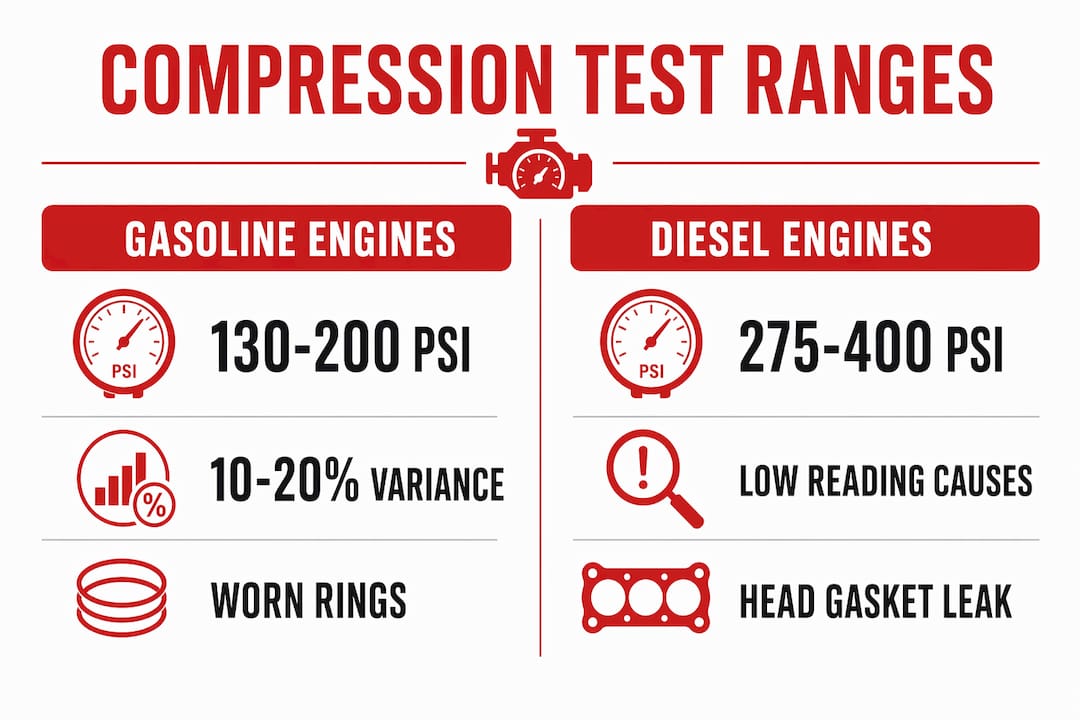
Interpreting compression readings correctly separates a useful diagnosis from a wasted afternoon. The table below shows normal ranges and what low readings typically indicate.
| Reading | Gasoline engine | Diesel engine | Likely cause |
|---|---|---|---|
| Normal | 130–200 PSI | 275–400 PSI | Healthy cylinder |
| One cylinder low | Below 10% of others | Below 10% of others | Worn rings, burnt valve, or head gasket |
| Two adjacent cylinders low | Both low | Both low | Head gasket failure between cylinders |
| All cylinders low | Uniformly low | Uniformly low | Worn rings throughout, timing issue |
| One cylinder high | Above normal range | Above normal range | Carbon buildup on piston crown |
Consistency across cylinders matters more than any single number. A reading 10–20% lower than the others signals a specific failure worth investigating. Two adjacent cylinders that are both low almost always point to a blown head gasket between those two cylinders, which is a more urgent and expensive repair than a single worn ring.
High readings are less common but worth noting. Carbon deposits on the piston crown raise the effective compression ratio, which can cause pre-ignition and engine knock under load.
Pro Tip: When one cylinder reads low on a dry test, add a tablespoon of engine oil into that cylinder and retest. A low reading that improves by 15–20 PSI or more after oil points to worn piston rings. No change after adding oil points to a valve or head gasket problem. This “wet test” takes two minutes and narrows the repair scope significantly.
How does a compression test compare to a leak-down test?
Both tests evaluate cylinder sealing, but they work differently and answer different questions.
| Feature | Compression test | Leak-down test |
|---|---|---|
| Engine state | Cranking | Stationary |
| What it measures | Maximum pressure built | Percentage of pressure lost |
| Speed | 30–60 minutes | 60–90 minutes |
| Complexity | Low, DIY-friendly | Moderate, requires air compressor |
| Best use | Initial screening | Pinpointing leak source |
| Locates leak source | No | Yes |
A compression test measures maximum cylinder pressure during cranking; a leak-down test pressurizes a stationary cylinder and measures how much air escapes. The leak-down test is more precise. By listening for air escaping from the intake, exhaust, or coolant reservoir, a technician can confirm exactly where the seal has failed.
The practical workflow is straightforward. Run a compression test first. If a cylinder reads low, follow up with a leak-down test on that specific cylinder to confirm the source. Skipping straight to a leak-down test on every cylinder wastes time. Using only a compression test and skipping the leak-down means you may replace the wrong parts.
Practical uses and limitations of compression testing
Compression testing is a front-line screening tool, not a complete diagnostic system. Knowing what it can and cannot tell you prevents misdiagnosis and wasted repair money.
When a compression test helps:
- Engine misfires with no obvious ignition or fuel cause. A low-compression cylinder will misfire consistently. Linking engine misfiring causes to a specific cylinder narrows the repair immediately.
- Noticeable power loss under load, especially on older or high-mileage engines.
- Excessive oil consumption with blue smoke from the exhaust, which often indicates worn piston rings.
- Pre-purchase inspection on any used vehicle with unknown service history.
- Periodic baseline testing on engines with more than 100,000 miles.
What a compression test cannot diagnose:
- Ignition system failures (bad coils, fouled plugs, failed ignition modules)
- Fuel delivery problems (weak fuel pump, clogged injectors)
- Sensor failures (MAF, O2, crankshaft position sensor)
- Valve timing issues caused by a stretched timing chain or worn cam lobes
Technicians note that many enthusiasts expect compression tests to diagnose all engine running issues. They only reveal mechanical sealing problems. A running compression test is a less common variant that measures cylinder pressure at idle with the engine running. It catches valve timing problems that a static test misses, making it useful for borderline cases and drivability complaints that do not show up clearly on a standard test.
One common pitfall: testing a cold engine. Cold oil is thicker and does not flow into ring gaps the same way warm oil does. A cold test can make a worn engine look healthier than it is. Always warm the engine fully before testing.
Key takeaways
An engine compression test is the most direct way to screen cylinder sealing health, and consistent readings across all cylinders matter more than any single PSI value.
| Point | Details |
|---|---|
| Normal PSI ranges | Gasoline engines read 130–200 PSI; diesel engines read 275–400 PSI per cylinder. |
| Consistency is the key metric | All cylinders should read within 10–20% of each other; outliers indicate specific failures. |
| Use the wet test to narrow repairs | Adding oil to a low cylinder and retesting distinguishes worn rings from valve or head gasket problems. |
| Compression tests have limits | They diagnose mechanical sealing only; ignition, fuel, and sensor faults require separate testing. |
| Follow up with a leak-down test | When compression reveals a low cylinder, a leak-down test pinpoints the exact source of the leak. |
What I’ve learned from years of watching compression tests change repair decisions
Most car owners treat a compression test as a last resort, something you do after the engine is already making terrible noises. That is backwards. The test costs almost nothing in time and money, and it gives you information that changes every repair decision that follows.
The mistake I see most often from enthusiasts doing their first compression test is not holding the throttle fully open during cranking. The reading drops, they panic, and they start pricing head gaskets. Then a shop retests with the throttle properly open and the numbers are fine. That one procedural error sends people down an expensive and unnecessary path.
The second mistake is testing a cold engine. I have seen engines that looked borderline on a cold test read perfectly normal once fully warmed up. Warm the engine, disable the fuel and ignition properly, and blow out those plug wells. The procedure only works if you follow it completely.
For anyone with a vehicle past 100,000 miles, I recommend a compression test every two years as a baseline check. You are not looking for a problem. You are establishing a trend. An engine that drops from 175 PSI to 155 PSI over two years is telling you something useful long before it starts misfiring or burning oil. Combine that with a professional inspection and you have a real picture of where your engine stands.
— Shingi
Engine diagnostics at Tom’s B & M Auto
Tom’s B & M Auto has served Lynnwood and the surrounding communities since 1985, and compression testing is a standard part of how the shop approaches engine complaints.
ASE-certified technicians at Tom’s B & M Auto perform compression and leak-down testing as part of a thorough free digital vehicle inspection that gives you a clear picture of your engine’s condition before any repair decision is made. If the results point to a repair, engine repair services in Lynnwood cover everything from ring and valve work to full engine rebuilds, all backed by a 24-month / 24,000-mile warranty. Financing is available for larger repairs, so a necessary fix does not have to wait. Call or book online for a same-day appointment.
FAQ
What does an engine compression test check?
A compression test checks how much pressure each cylinder builds during the compression stroke. It identifies worn piston rings, damaged valves, and head gasket failures that reduce cylinder sealing.
What is a normal compression reading for a gasoline engine?
Most healthy gasoline engines produce 130–200 PSI per cylinder. All cylinders should read within 10–20% of each other for the engine to be considered mechanically sound.
How long does a compression test take?
A compression test typically takes 30–60 minutes after the engine is warmed up and the spark plugs are removed. DIY kits cost $20–$50 and are available at most auto parts stores.
What does it mean when one cylinder reads low?
A single low cylinder usually points to a worn piston ring, a burnt valve, or a head gasket leak at that cylinder. A wet test (adding oil to the cylinder and retesting) helps determine which component has failed.
Can a compression test diagnose a check engine light?
A compression test diagnoses mechanical sealing problems only. It will not identify ignition faults, fuel delivery issues, or sensor failures that commonly trigger a check engine light. A professional OBD-II scan is the correct first step for a check engine light.
Recommended
- What Is an AC Compressor? A Car Owner’s Guide – Tom’s B & M Auto Blog
- European Car Repair Challenges: What Owners Must Know – Tom’s B & M Auto Blog
- Check Engine Light Meaning: What Drivers Need to Know – Tom’s B & M Auto Blog
- What Is Brake Bleeding? A Car Owner’s Guide – Tom’s B & M Auto Blog
Leave a Reply