
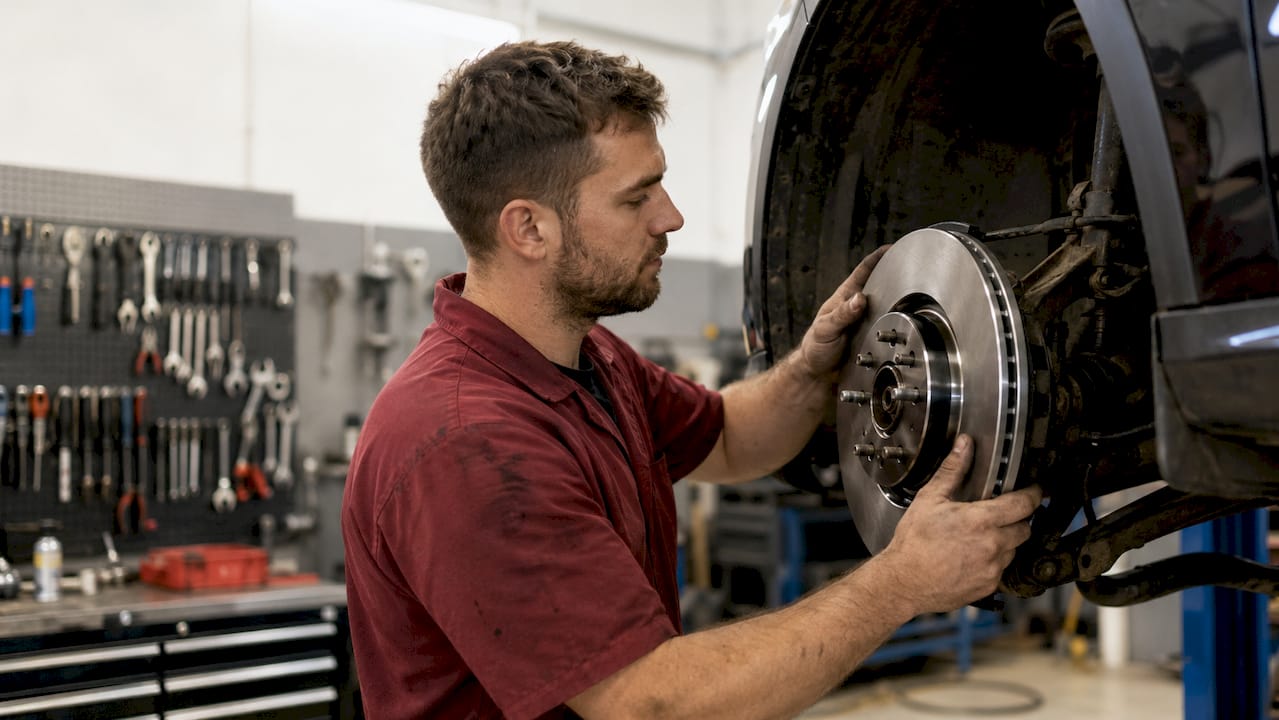
What Is a Brake Rotor? Function, Wear, and Care
A brake rotor is a flat, circular metal disc mounted to the wheel hub that spins with the wheel and provides the friction surface where brake pads clamp to slow or stop your vehicle. You may also hear it called a brake disc. Both terms refer to the same component, though “rotor” is the more common term in American shops. Most passenger cars use cast-iron rotors, while high-performance vehicles may use stainless steel or carbon-ceramic composites. The rotor is not just a friction surface. It is the brake system’s primary heat sink, and how well it manages heat determines whether your brakes feel firm or fade under pressure.
What is a brake rotor and what does it do?
A brake rotor is defined as the metal disc that works with brake pads and calipers to convert your vehicle’s forward motion into heat, bringing the car to a stop. That process sounds simple, but the physics involved put enormous stress on the rotor every time you press the pedal.
When you press the brake pedal, hydraulic pressure multiplies the force you apply and transmits it to the brake calipers. The calipers squeeze brake pads against both sides of the spinning rotor. That contact creates friction, which converts kinetic energy into heat. The rotor absorbs that heat and sheds it into the surrounding air.
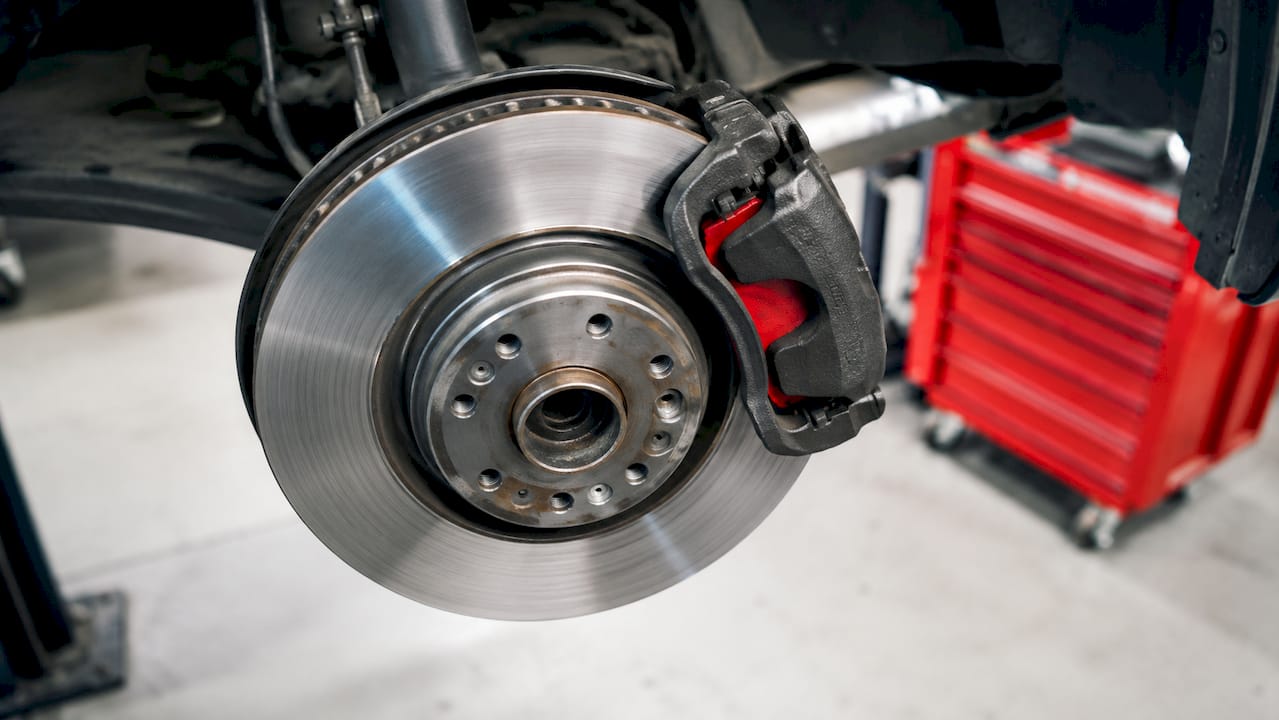
Brake rotors act as the vehicle’s primary heat sink in disc braking. That role goes well beyond simply providing a surface to grip. A rotor that cannot shed heat fast enough causes brake fade, the condition where repeated hard stops make your brakes feel soft and unresponsive. Understanding this function is why rotor material and design matter far more than most car owners realize.
How do brake rotors work inside the disc brake system?
The disc brake system relies on three components working together: the rotor, the brake pads, and the caliper. Remove or degrade any one of them, and braking performance drops.
Here is how the sequence works on every stop:
- Pedal input: You press the brake pedal, which pressurizes brake fluid through the hydraulic lines.
- Caliper activation: Hydraulic pressure moves caliper pistons that clamp the brake pads against both sides of the spinning rotor.
- Friction and heat: The pad-to-rotor contact creates friction, slowing the wheel. That friction generates significant heat.
- Heat dissipation: The rotor absorbs the heat and transfers it to the air. Vented rotors use internal cooling vanes between the inner and outer friction surfaces to accelerate this process.
Many rotors use internal cooling vanes to move air through the disc and pull heat away from the friction surfaces. This design is standard on front rotors for most sedans and SUVs because front brakes handle the majority of stopping force. Rear rotors on lighter vehicles are often solid, meaning they have no internal vanes, because the heat load is lower.
Pro Tip: If you notice your brake pedal feels soft after repeated hard stops, that is brake fade in action. It usually means the rotors are heat-soaked. Give the brakes time to cool before driving aggressively again, and schedule an inspection if it happens regularly.
What types and materials are used for brake rotors?
Rotor design and material directly determine how well a rotor handles heat, how long it lasts, and how it feels under your foot. The four main rotor types each serve a different purpose.
| Rotor Type | Design | Best For | Trade-off |
|---|---|---|---|
| Solid | Single-layer disc, no vanes | Rear axles, light vehicles | Lower heat capacity |
| Vented | Two friction surfaces with internal cooling vanes | Front axles, most passenger cars | Heavier than solid |
| Drilled | Holes through the disc surface | Wet-weather performance, sport driving | Can crack under extreme heat |
| Slotted | Channels cut into the friction surface | Track use, heavy-duty towing | Accelerates pad wear |
Cast iron is the standard material for most passenger car rotors. It offers a good balance of heat capacity, durability, and cost. Stainless steel rotors resist corrosion better, which matters in wet climates like the Pacific Northwest. Carbon-ceramic rotors, used on performance vehicles like the Porsche 911 GT3 and Chevrolet Corvette Z06, handle extreme heat with minimal weight but cost significantly more than cast iron.
Drilled rotors look impressive, but they carry a real trade-off. The holes reduce the rotor’s ability to absorb sustained heat. Under track conditions or repeated hard stops, drilled rotors can develop cracks around the holes. Slotted rotors avoid that weakness by using surface channels instead of holes. They clear gas and debris from the pad surface, which improves bite, but the slots act like a file on the pad material and shorten pad life.
For most daily drivers in Lynnwood and surrounding areas, a quality vented cast-iron rotor is the right choice. Performance upgrades make sense only when your driving demands them.
How do you recognize worn or damaged brake rotors?
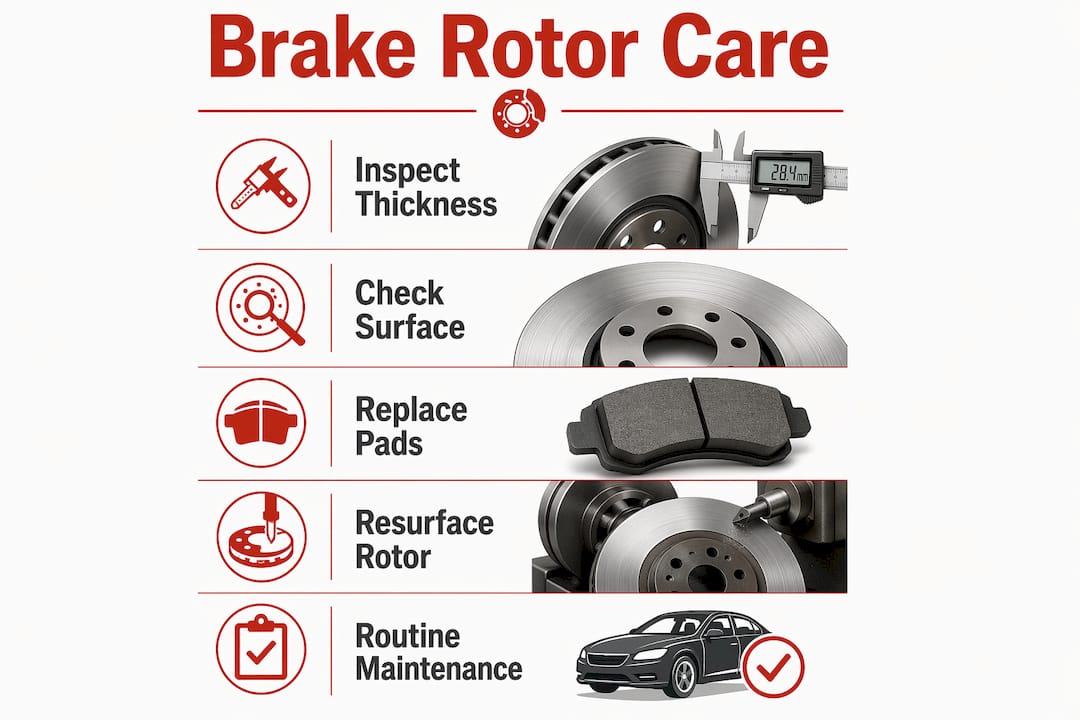
Catching rotor wear early saves money and keeps you safe. Rotors must maintain thickness above minimum spec; once they drop below that threshold, resurfacing is no longer safe and replacement is the only option.
Watch for these signs of rotor wear or damage:
- Vibration through the steering wheel or brake pedal. This is the most common sign of a warped rotor. Warping happens when a rotor overheats unevenly, causing the surface to become slightly wavy. You feel that wave as a pulsation when the pads contact the high and low spots.
- Visible grooves or scoring on the rotor surface. Deep grooves mean the brake pads have worn down to the metal backing plate and are cutting into the rotor. At that point, both pads and rotors need replacement.
- Squealing or grinding noises. A worn rotor and pad combination creates noise because the friction surfaces no longer make clean, even contact. Grinding specifically signals metal-on-metal contact.
- A rust ring on the rotor edge. Surface rust after rain is normal and clears after a few stops. A thick rust ridge at the outer edge of the rotor means the pads are not reaching the full rotor surface, which indicates significant wear.
- Longer stopping distances. If your car takes noticeably more distance to stop, the rotor surface may be too degraded to generate adequate friction.
Pro Tip: A micrometer is the right tool for measuring rotor thickness. Every rotor has a minimum thickness stamped on its edge or hat. If you do not own a micrometer, any shop can measure it in minutes during a rotor inspection. Do not guess.
Rotor resurfacing is only appropriate when the rotor still has enough material above the discard specification to remove the surface damage and leave a safe margin. Many modern rotors are cast thin from the factory to save weight. After one set of pads wears through, there may not be enough material left to resurface safely. Replacement is often the smarter call.
City stop-and-go driving degrades rotors faster than steady highway driving. Frequent stops heat the brakes repeatedly without giving them time to cool fully. If you commute in heavy traffic, expect to inspect your rotors more often than the owner’s manual interval suggests.
Brake pads vs. brake rotors: how they work together
Brake pads and rotors are a matched friction pair. Damage or wear on one component degrades the performance of the other.
Here is the key difference between the two:
- Brake pads are consumables. They are designed to wear down and be replaced. The friction material on a pad is sacrificial by design.
- Brake rotors are durable components meant to outlast multiple sets of pads, but they do wear down over time and are not permanent.
Replacing pads on schedule is the single most effective way to protect your rotors. When pads wear past the friction material and the metal backing plate contacts the rotor, the rotor surface gets scored deeply. What would have been a pad replacement becomes a pad-and-rotor replacement, which costs significantly more.
Technicians at Tom’s B & M Auto consistently find that worn rotors reduce the effectiveness of new pads. Installing fresh pads on a grooved or warped rotor means the pads cannot make full, even contact with the surface. Braking performance suffers from day one, and the new pads wear unevenly. Always inspect rotors during every pad change.
You can learn more about related brake system maintenance, including brake fluid dynamics, to get a complete picture of how your braking system stays healthy between service visits.
Key takeaways
A brake rotor’s heat management function is just as critical as its friction surface, and neglecting rotor thickness or pad replacement timing turns a low-cost maintenance item into an expensive repair.
| Point | Details |
|---|---|
| Rotor function | The rotor provides the friction surface and acts as the brake system’s primary heat sink. |
| Rotor types matter | Vented rotors suit most passenger cars; drilled and slotted designs serve specific performance needs. |
| Thickness is the key spec | Rotors below minimum thickness must be replaced, not resurfaced, regardless of surface condition. |
| Pad timing protects rotors | Replacing pads on schedule prevents metal-on-metal contact that scores and ruins rotors. |
| City driving accelerates wear | Stop-and-go commuting heats brakes repeatedly and degrades rotors faster than highway miles. |
The mistake i see most often at the shop
Most drivers who come in worried about their brakes are actually in decent shape. The ones who are not usually waited too long on pads. That is the pattern I have seen repeat itself for years: a straightforward pad replacement turns into a full rotor swap because the metal backing plate had been grinding against the rotor for weeks.
The other misconception I run into is that rotors should always be resurfaced rather than replaced to save money. That logic made more sense 20 years ago when rotors were cast thicker. Modern rotors are lighter and thinner, and after a set of pads wears through, many of them simply do not have the material left for a safe resurface. A shop that automatically resurfaces without measuring first is not doing you any favors.
My honest advice: pay attention to brake noise warning signs before they escalate. Squealing is the system telling you the pads are getting low. Grinding means you are already past that point. Catching it at the squeal stage keeps your rotors intact and your repair bill manageable.
Brake maintenance is not complicated. It just requires not ignoring the signals your car is already sending you.
— Shingi
Get your brake rotors checked at tom’s b & m auto
If you are not sure what condition your rotors are in, Tom’s B & M Auto makes it easy to find out.
Tom’s B & M Auto in Lynnwood, WA has been inspecting and servicing brake systems since 1985. ASE-certified technicians measure rotor thickness precisely, assess pad wear, and give you a straight answer on what actually needs attention. No upselling. No guessing. You can start with a free visual brake inspection to get a clear picture of where your brakes stand. If repairs are needed, brake service savings of up to $120 are available, and financing options are on the table for larger jobs. Same-day appointments are often available. Call or book online today.
FAQ
What is a brake rotor on a car?
A brake rotor is a flat metal disc mounted to the wheel hub that spins with the wheel. Brake pads clamp against it to create the friction needed to slow or stop the vehicle.
Is a brake disc the same as a brake rotor?
Yes. Brake disc and brake rotor refer to the same component. “Rotor” is the more common term in American automotive shops, while “disc” appears more often in technical manuals and European contexts.
How long do brake rotors typically last?
Rotor lifespan depends on driving style, pad material, and vehicle weight. City driving and frequent hard stops wear rotors faster than steady highway use. Inspect rotors at every pad change to catch wear early.
What are the signs that brake rotors need replacement?
The main signs include steering wheel vibration when braking, visible grooves on the rotor surface, grinding or squealing noises, and longer stopping distances. A technician can confirm by measuring rotor thickness against the manufacturer’s minimum specification.
Can you replace brake pads without replacing rotors?
Yes, if the rotors are above minimum thickness and free of deep scoring or warping. Technicians should always measure rotor thickness and inspect the surface before deciding whether pads alone are sufficient.
Recommended
- What Is Brake Bleeding? A Car Owner’s Guide – Tom’s B & M Auto Blog
- Why Brakes Squeak: Causes, Fixes, and Warning Signs – Tom’s B & M Auto Blog
- What Is Radiator Function in Your Car’s Cooling System – Tom’s B & M Auto Blog
- Brake Repair in Kenmore, WA | Tom’s B&M Auto
Leave a Reply