
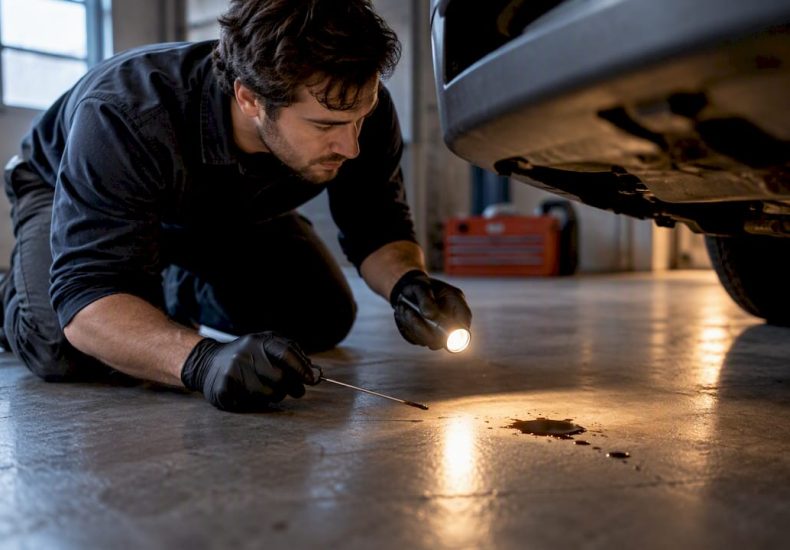
Drivers: Document an Oil Leak in 10 Minutes After an Oil Change
A few drops under the car right after service are often just spilled oil from the job, not necessarily a real leak. The real warning signs are an oil-pressure light, a growing puddle, smoke, or a dipstick reading that drops fast. If you see any of those, park on level ground, wait about 10 minutes, check the dipstick, photograph the leak, and call the shop before driving further.
TL;DR:
- Most leaks after an oil change are caused by issues the technician touched, such as a loose filter or drain plug, not new engine problems.
- The oil-pressure warning light, steady puddles, smoke, or rapidly dropping dipstick levels indicate serious issues requiring immediate stopping and professional inspection.
- Documenting the leak with photos, noting the oil level, and checking around the filter and drain plug helps determine leak severity and supports warranty claims.
- Repairs for minor leaks, like filter reseats or drain plug washers, are typically quick and inexpensive, while gasket or pan replacements take longer and cost more.
- Prevent leaks by inspecting under the car within days of service, confirming technician torque, and keeping detailed records of all maintenance.
Table of Contents
- Five common causes of oil leaks right after a service
- Is it safe to drive? How to judge severity and when to stop
- Quick checks you can do at home
- What to tell the shop and what they should do
- How long diagnosis and repairs take, and likely cost bands
- What AAA and Consumer Reports say about acting fast
- How oil leak risks differ by vehicle type
- What happens if you keep driving on a leak
- Preventing leaks after your next oil change
- The troubleshooting sequence most advice gets backwards
- Getting a leak checked without the guesswork
- Where this guidance comes from
- Sources
- FAQ
Five common causes of oil leaks right after a service
Most post-service leaks trace back to something the technician touched during the job, not a mystery problem that appeared on its own.
- Loose or misaligned oil filter: if the filter wasn’t torqued to spec or its gasket seated crooked, oil seeps out around the filter housing, often visible as a wet ring near the engine’s side or bottom.
- Drain plug issues: a plug that’s loose, missing its washer, or cross-threaded will drip steadily from the bottom of the pan, usually the first place worth checking.
- Overfilling or wrong viscosity: too much oil raises pressure inside the crankcase and pushes fluid past seals and gaskets that would otherwise hold, and Consumer Reports recommends following the owner’s manual for the correct oil type and quantity rather than assuming a standard fill applies to every engine.
- Residual spilled oil: technicians sometimes leave a light film on the pan or block during the change itself, which looks alarming under a car but stops appearing after the first few miles.
- Old seals exposed by fresh oil: fresh, thinner oil can find its way through a valve cover or pan gasket that was already worn, meaning the oil change didn’t cause the leak so much as reveal it.
A shop can usually tell these apart in minutes with a visual inspection, which is why documenting what you see before cleaning it up matters. For a broader rundown of where oil escapes an engine, see our guide to common oil leak causes.
Is it safe to drive? How to judge severity and when to stop
The oil-pressure light is the clearest stop-driving signal there is. AAA advises pulling over right away, waiting about 10 minutes for oil to settle, then checking the level on flat ground before deciding what to do next.
A stop-now rule of thumb: a large puddle, visible smoke, or a dipstick that keeps dropping between checks means you need towing or professional help, not a short drive to the shop, according to AAA’s guidance on oil-pressure warnings.
If the leak is limited to a few drops and the dipstick still reads within the normal range, driving a short distance to the shop is usually reasonable, but recheck the level every stop and watch for the warning light the entire way.
Quick checks you can do at home
Before calling the shop, a short inspection tells you how serious the leak actually is and gives the technician something concrete to work from.
- Park on level ground and let the engine sit for about 10 minutes before checking the dipstick, following the steps in your owner’s manual.
- Look closely around the oil filter, drain plug, filler cap, and the bottom of the oil pan for fresh, wet oil rather than old residue.
- Photograph the leak’s exact location, note the time and current mileage, and pull up your service invoice from the recent change.
- If the level reads low, top up only to the recommended mark. Overfilling again can make the leak worse instead of buying you time.
- Keep the photos, invoice, and mileage note together. That record is what supports a fast, no-charge shop recheck or a warranty claim.
Pro Tip: Don’t wipe the leak clean before photographing it. Technicians rely on the color, position, and spread of the oil to tell a fresh drip from an old stain.
For a longer walkthrough on keeping this kind of evidence organized, our guide to documenting repair history covers what to save and for how long.
What to tell the shop and what they should do
When you call, give the shop the date of service, your invoice number, current mileage, and the photos you took. If the leak showed up shortly after their oil change, ask directly for a free recheck rather than booking a new paid diagnostic visit.
A shop working the problem correctly will typically:
- Re-inspect the filter and its gasket to confirm proper seating and torque.
- Check the drain plug for tightness and look at the condition of its washer.
- Run a pressure check, and a dye test if the source still isn’t obvious.
Fixes range from a five-minute filter reseat to replacing a valve cover gasket. Ask about the shop’s rework policy for workmanship errors and whether the repair falls under any existing warranty on the original service.
How long diagnosis and repairs take, and likely cost bands
Simple fixes move fast. A loose filter or a bad drain plug washer is usually a same-day repair, often finished in under an hour once the shop confirms the source. Gasket or oil pan work takes longer, generally 1 to 3 days depending on parts availability and the shop’s schedule.
Cost follows the same pattern. A filter reseat or new drain plug washer sits at the low end. A valve cover gasket reseal runs higher once labor is factored in, since gasket-related leak repairs commonly land in a wider range depending on the engine and access difficulty. A full oil pan replacement costs more still, mostly due to labor time rather than parts.
If the shop’s own work caused the leak, a documented, photographed case makes it far easier to get the repair covered under their workmanship policy instead of paying twice for the same job.
What AAA and Consumer Reports say about acting fast
AAA’s guidance on the oil-pressure light is direct: pull over, wait roughly 10 minutes, then check the dipstick before deciding whether to drive further. Consumer Reports stresses matching oil type and quantity to the owner’s manual, since a mismatch is a common, preventable cause of pressure problems. Topping off oil can hide how fast a leak is actually progressing, so document it rather than relying on refills alone.
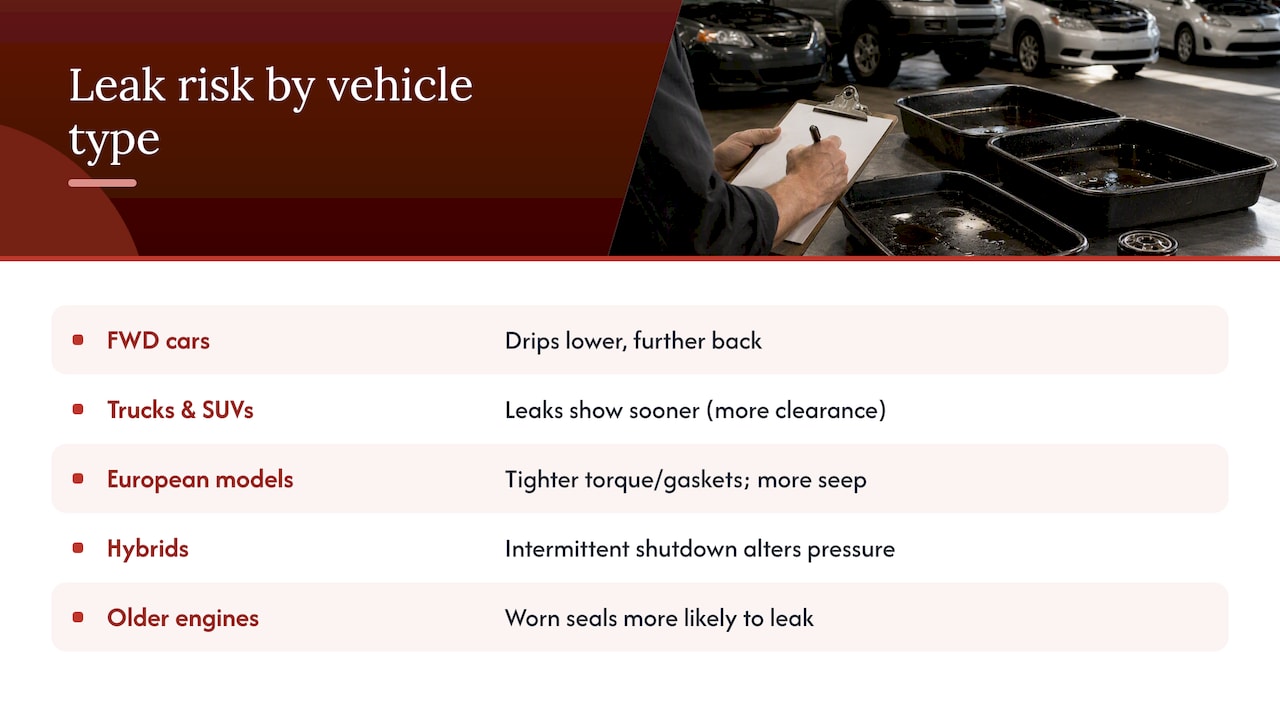
How oil leak risks differ by vehicle type
Not every leak behaves the same way once it starts, and the engine layout has a lot to do with it. Front-wheel-drive cars with tightly packed engine bays tend to show drips lower and further back, since gravity pulls oil along the underbody before it hits the ground. Trucks and SUVs with more ground clearance often make a leak more visible sooner simply because there’s more open space underneath to catch it on the pavement.
European models frequently use different gasket materials and tighter torque specs than domestic engines, so a filter or drain plug that isn’t seated to the exact spec is more likely to seep. Hybrid vehicles add a second consideration: some hybrid engines shut off intermittently at stops, which changes oil pressure cycling and can make an existing seal weakness show up differently than it would in a conventional gas engine that runs continuously.
Older engines with higher mileage are simply more likely to have gaskets and seals nearing the end of their service life, so a fresh oil change is more likely to reveal a leak that was already forming rather than cause a new one. None of this changes the basic safety checks, but it does explain why two cars with the same symptom can need different repairs.
What happens if you keep driving on a leak
Ignoring a small leak rarely stays a small problem. As oil level drops, the remaining oil has to do more work cooling and lubricating moving parts, which raises engine temperature and accelerates wear on bearings and the timing chain or belt.
If the level drops far enough to trigger the oil-pressure light and driving continues anyway, the risk shifts from wear to sudden failure. AAA’s guidance identifies low oil as the leading cause of low oil pressure, and running an engine on low pressure for extended periods can lead to bearing damage that turns a low-cost gasket fix into a full engine repair.
There’s also a practical cost to waiting. A drain plug washer replacement is inexpensive and quick. Let that same leak run long enough to starve the engine, and the repair bill moves from a minor part swap to a much larger job, sometimes including engine repair or replacement. Beyond the mechanical risk, a steady drip on your driveway or in a parking garage is also an environmental and cleanup issue worth addressing promptly rather than tolerating.
Preventing leaks after your next oil change
The single biggest thing you can do is check under the car within a day or two of any oil change, before the leak has a chance to become a bigger problem. A quick look at the driveway or garage floor catches most issues early.
Ask whoever performs the service to confirm the filter torque and drain plug tightness before you leave, and request the exact oil type and quantity they used so you can compare it against your owner’s manual. Consumer Reports also recommends keeping consistent service records, since a shop with your full history can spot a pattern (like a recurring filter issue) faster than one starting from scratch.
If you use a quick-lube location for convenience, keep your invoice and note the technician’s name if possible. Returning to the same shop for a suspected leak is usually faster than starting a diagnostic from zero elsewhere, since they already have your oil type, quantity, and service date on file.
The troubleshooting sequence most advice gets backwards
Most articles on this topic lead with causes: bad gasket, loose plug, wrong oil. That’s useful, but it’s not what a driver standing in their driveway actually needs first. The order matters more than the list of possibilities. Check the warning light, then the dipstick, then the ground, then the invoice. Causes come after safety, not before it.

The bigger gap in typical advice is what happens between spotting the leak and calling the shop. Most guidance stops at “check your oil” and skips the part where documentation determines whether you pay for a second visit or get a free recheck. A photo taken before you wipe anything clean is worth more than a detailed description over the phone.
If there’s one thing to prioritize, it’s this: don’t let topping off oil become your only response. It buys time, but it also hides how fast the problem is actually getting worse. Treat a top-up as a bridge to a proper inspection, not a substitute for one.
— Shingi
Getting a leak checked without the guesswork
If a leak shows up after a recent service, bring the invoice and your photos in for a direct look rather than starting from scratch. This shop has handled oil changes and leak diagnosis in Lynnwood since 1985, staffed with ASE-certified technicians and offering a 24-month/24,000-mile warranty on work performed.
What that means for you:
- A prompt recheck if the leak appeared shortly after an oil change, using your invoice and mileage to speed up diagnosis.
- Straightforward repairs for filter, gasket, or drain plug issues, with pricing provided upfront before any work starts.
- Same-day appointments often available, helping prevent small leaks from becoming bigger repairs while waiting.
Book through our oil change page or bring your documentation by, and we’ll walk you through what we find.
Where this guidance comes from
Safety and maintenance details here come from AAA’s oil-pressure light guidance and Consumer Reports’ maintenance checklist. For general shop-finding resources, GarageMap lists oil-change providers as a starting point.
Sources
FAQ
Can I still drive my car if it has an oil leak?
Small drips with a normal dipstick reading and no warning light usually allow a short drive to the shop, checking the level along the way. A puddle, smoke, or an oil-pressure light means you should stop and arrange towing instead, following AAA’s guidance on when to pull over.
How to know if an oil change was done wrong?
Fresh oil around the filter, drain plug, or filler cap within a day or two of service points to a mistake during the job, such as an under-torqued filter or a missing drain plug washer. Comparing the oil type and quantity used against your owner’s manual, as Consumer Reports recommends, can also reveal an overfill or wrong-viscosity error.
How expensive is it to fix an oil leak?
Cost depends entirely on the source: a loose drain plug washer or filter reseat is a low-cost, often same-day fix, while a valve cover gasket or oil pan replacement costs more due to labor time. If the leak followed a recent oil change at the same shop, ask about a free recheck under their workmanship policy before paying for a new diagnostic visit.
Why is my car leaking oil on the driveway after an oil change?
The most common causes are a loose or misaligned oil filter, a drain plug that wasn’t torqued correctly, or leftover spilled oil from the service itself. Less often, fresh oil simply reveals an older seal or gasket that was already failing before the change.
Leave a Reply