
5 Head Gasket Symptoms Car Owners Must Treat Now
Persistent white exhaust smoke that never clears, milky oil on the dipstick, bubbling in the coolant reservoir, unexplained coolant loss, and repeated severe overheating are the five clearest head gasket symptoms. If you’re seeing milky oil, severe overheating, or bubbling coolant right now, stop driving and arrange a tow. Anything short of that still warrants prompt diagnostic testing, not a wait-and-see approach.
TL;DR:
- Persistent symptoms like milky oil, bubbling coolant, and severe overheating require immediate dealer or professional diagnostics, not a wait-and-see approach.
- A certified shop will perform tests such as a combustion-gas check and compression test before confirming a head gasket failure to avoid unnecessary repairs.
- Mild symptoms like occasional white smoke or slow coolant loss can often be from condensation or minor leaks, not necessarily a gasket failure.
- Early detection of internal leaks through proper testing prevents costly repairs like warped heads or cracked blocks.
- Always request detailed test results, including photos if possible, and avoid rushing into head gasket replacement based solely on vague symptoms.
Table of Contents
- What Are the Warning Signs of a Blown Head Gasket?
- How Do You Diagnose a Suspected Head Gasket Leak?
- Why Repair Cost and Severity Vary So Widely
- What Should a Diagnostic Visit Include?
- Why Owners Get This Wrong So Often
- Get a Real Diagnosis Instead of a Guess
- Sources
- FAQ
What Are the Warning Signs of a Blown Head Gasket?
A head gasket seals the cylinder head to the engine block, keeping combustion pressure, oil, and coolant in three separate lanes. When it fails, those lanes start crossing, and the symptoms depend on exactly where the breach happens. Some signs scream “pull over now.” Others just nag at you for weeks before anything dramatic happens.
Overheating that keeps coming back. A one-time overheat on a brutally hot day towing a trailer might mean nothing. A gauge that creeps toward the red zone every week, especially with no clear trigger, is different. Once a head gasket lets combustion gases pressurize the cooling system, the engine loses its ability to regulate temperature efficiently, and overheating tends to snowball because the damage that caused it gets worse under heat. Check your coolant level cold, glance at the temperature gauge on every drive for a week, and note whether the fan is cycling normally. Overheating that recurs after a fresh coolant top-off is a strong signal something internal is leaking.
White smoke that won’t quit. Every car makes some water vapor on a cold morning. Normal condensation clears within one to two minutes of startup, according to CRC Industries. Smoke that’s still pouring out after the engine is fully warm, especially with a faintly sweet smell, means coolant is burning in the combustion chamber. That sweet smell is ethylene glycol, and it’s the single easiest tell between “normal” and “get this looked at.”
Milky oil on the dipstick or oil cap. Pull the dipstick and look for a tan, frothy, chocolate-milk color instead of clear amber or dark oil. Check the underside of the oil filler cap too. Mechanics treat milky oil as a stop-driving condition because coolant mixed into oil breaks down its lubricating properties fast, and bearings running on degraded oil can fail within miles, not months.
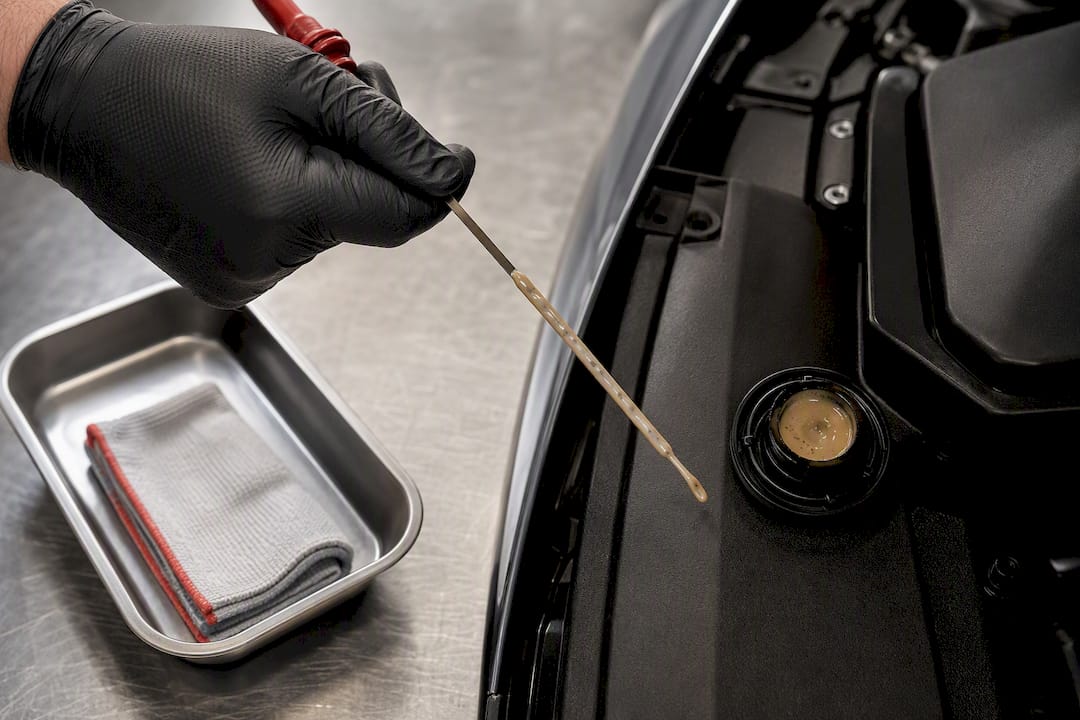
One caveat worth knowing: a milky residue on just the oil cap, especially after a lot of short trips in cold weather, can come from ordinary condensation rather than a blown gasket. Always confirm with the dipstick and other symptoms before assuming the worst.
Coolant that disappears with no puddle underneath. Mark your coolant reservoir with a permanent marker and check it every few days. If the level keeps dropping and you’re not seeing stains on the driveway, the coolant likely isn’t leaking outward. It’s probably being burned in the cylinders or seeping into the oil, both classic internal-leak patterns.
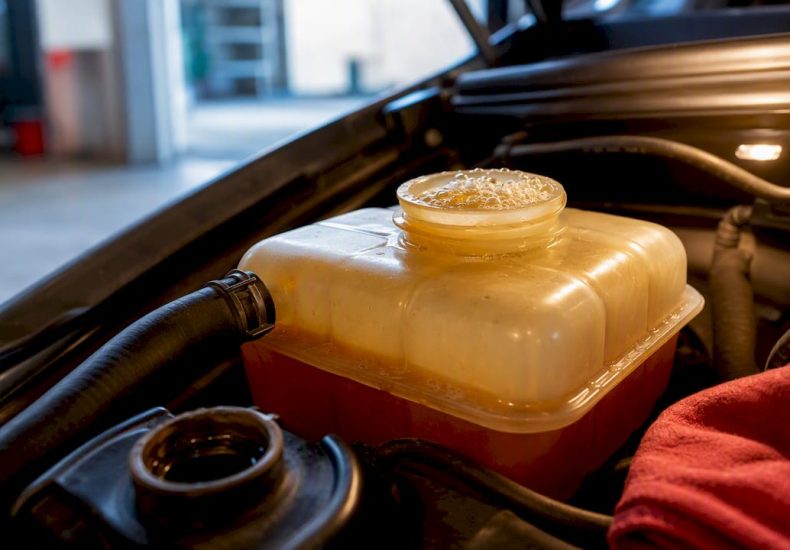
Bubbling or frothing in the reservoir while the engine runs. Combustion gases forcing their way into the cooling system show up as bubbles at the radiator neck or reservoir, and this is one of the more telling visual signs you can catch without any tools. Pair it with overheating and you’ve got a strong case for a head gasket problem before a mechanic even touches the car.
Power loss, misfires, and a lit check engine light. Coolant leaking into a cylinder can foul the spark plug or dilute the air-fuel mixture enough to cause a rough idle or a misfire. The check engine light doesn’t diagnose a head gasket by itself, but a misfire code showing up alongside overheating or white smoke narrows things down fast.
Pro Tip: Keep a spray bottle of water in your trunk and a cheap infrared thermometer in your glovebox. Aiming it at the radiator and thermostat housing after a short drive can catch a hot spot or uneven cooling pattern days before the gauge ever moves.
How Do You Diagnose a Suspected Head Gasket Leak?
Before touching anything, let the engine cool completely. Never open a radiator cap on a hot engine. Pressurized coolant can hit 250°F and cause severe burns the instant the seal breaks.
Once the engine is cold, work through checks in this order:
- Pull the dipstick. Look for froth, a tan color, or a texture that looks more like a milkshake than oil.
- Check the oil filler cap. A light film there alone isn’t proof, but combined with a dirty dipstick it’s a red flag.
- Watch the exhaust after a full warm-up. Idle the car for ten minutes and see whether white smoke persists past the first couple of minutes.
- Mark the coolant reservoir and recheck over 3 to 5 days. Consistent drops with no visible puddle point to an internal leak.
- Note any rough idle, hesitation, or check engine light that shows up alongside the other signs.
None of these owner checks confirm a head gasket on their own, but stacked together they build a strong case for a shop visit.
A shop will typically run one or more of these tests:
- Combustion-gas (block) test: A chemical tester placed at the radiator neck changes color if exhaust gases are present in the coolant. It’s inexpensive, non-invasive, and one of the fastest ways to confirm a breach.
- Compression or leak-down test: Low compression in a single cylinder can point to other problems, but low readings in two adjacent cylinders is a classic head-gasket signature, since it suggests the gasket has failed between them.
- Coolant pressure test: The cooling system gets pressurized while the engine is off to check for external leaks at hoses, the radiator, or the head gasket’s exterior edge.
- Visual inspection: A technician checks the dipstick, oil cap, and reservoir the same way you did, just with more experience spotting subtle contamination.
Pro Tip: Ask the shop to run the block test before the compression test. It’s cheaper, faster, and if it comes back positive, you may not need the more invasive compression check at all.
If the block test is positive and you’re also seeing milky oil or bubbling coolant, that’s a tow-truck situation, not a “drive it in next week” situation. If symptoms are mild, like slow coolant loss with no overheating, scheduling within a few days is usually reasonable.
Why Repair Cost and Severity Vary So Widely
Where the gasket fails changes everything about what happens next. A breach that vents coolant externally might only leave stains and a slow drip, no white smoke, no oil contamination. A breach between the combustion chamber and a coolant passage produces the more alarming symptoms discussed above, and CRC Industries notes that this pattern is also the one most likely to cause rapid, cascading damage.
Driving on a failed gasket risks turning a moderate repair into a major one:
- Warped cylinder head: Repeated overheating cycles can bow the head enough that it no longer seats flat, requiring resurfacing or replacement.
- Cracked block: In severe cases, sustained overheating cracks the block itself, which usually means the engine isn’t economically repairable.
- Bearing damage: Milky oil circulating through the engine accelerates bearing wear, sometimes within a short drive.
A typical head gasket repair involves replacing the gasket, resurfacing or replacing the head if it’s warped, flushing the cooling system, and replacing any sensors or hoses disturbed during the job. Catching the problem early, before the head warps, keeps the repair closer to a gasket-and-labor job instead of a head-and-labor job.
What Should a Diagnostic Visit Include?
A shop that takes head gasket symptoms seriously will run a defined sequence, not just glance under the hood. Expect an OBD-II scan for stored codes, a combustion-gas block test, a compression or leak-down test if the block test is inconclusive, a coolant pressure test, and a physical check of the oil and coolant.
At Tom’s B & M Auto, that diagnostic sequence runs through ASE-certified technicians, backed by a 24-month/24,000-mile warranty on completed repairs and same-day appointments in most cases. The shop has handled Subaru head gasket work for Lynnwood-area drivers for years, relevant since certain Subaru engine families are known for this exact failure pattern.
Before you agree to any repair, ask for:
- A written estimate that separates parts, labor, and any exploratory diagnostic charges
- The actual block-test result or compression readings, not just a verbal “it’s your head gasket”
- Photos of contaminated oil or coolant if that’s part of the diagnosis
Be wary of an estimate that skips straight to head gasket replacement without mentioning any test result. A vague diagnosis is a red flag regardless of which shop gives it.
Why Owners Get This Wrong So Often
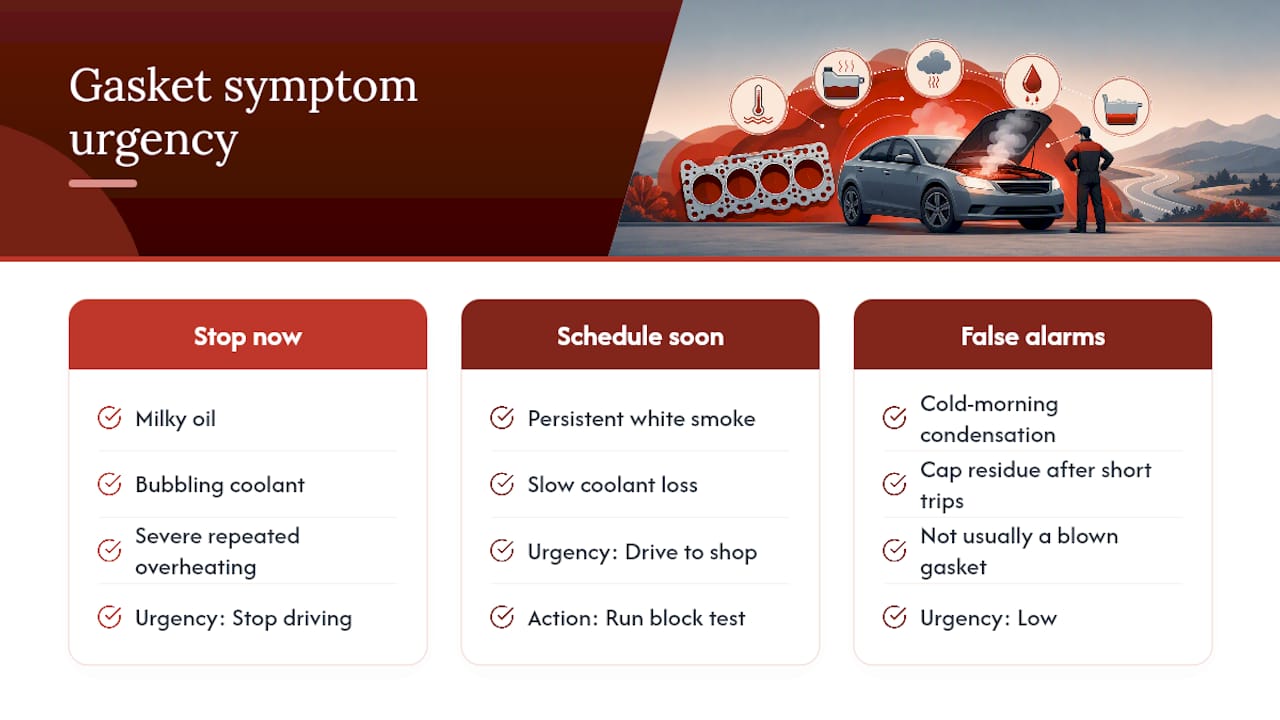
Most head gasket confusion comes from treating every white puff of exhaust or every oily smudge on the cap as a crisis. It isn’t. Cold-morning condensation and short-trip cap residue mimic the scary symptoms without meaning anything close to a blown gasket, and I think too much advice online skips that nuance entirely in favor of maximum alarm.
The conventional wisdom oversells drama and undersells process. A block test costs far less than a head gasket replacement, yet plenty of owners jump straight to worrying about a rebuild before anyone has run a single test. That’s backwards. Cheap, fast diagnostics exist specifically so you don’t have to guess.
If there’s one thing worth prioritizing, it’s this: separate the stop-driving symptoms (milky oil, bubbling coolant, severe repeated overheating) from the schedule-it-soon symptoms (persistent white smoke, slow coolant loss). Treating every symptom as equally urgent leads to either panic or complacency, neither of which serves you. Ask for the block test first. Let the result, not the anxiety, decide what happens next.
— Shingi
Get a Real Diagnosis Instead of a Guess
Tom’s B & M Auto exists for exactly this moment: the point where you’re staring at a milky dipstick or a bubbling reservoir and need an actual answer, not another forum thread. As a family-owned Lynnwood shop running since 1985, Tom’s B & M Auto uses ASE-certified technicians and upfront pricing, so the block test, compression check, or coolant pressure test you request gets documented instead of hand-waved.

Completed repairs carry warranty coverage, and same-day appointments are often available if your symptoms have crossed into stop-driving territory. When you call, ask specifically for a combustion-gas block test and a coolant system inspection, that request alone will steer the visit toward a confirmed diagnosis rather than a guess. If your car is already overheating or leaking milky oil, don’t drive it in. Call first to arrange a tow, or if it’s still running safely, book a diagnostic appointment for engine repair in Lynnwood and bring your notes on when the symptoms started.
Sources
- White smoke from the exhaust? Engine overheating? How to diagnose a blown head gasket — 1A Auto Blog
- Head gasket leak symptoms & how to fix it — AutoZone DIY
FAQ
What Can Be Mistaken for a Blown Head Gasket?
Condensation on a cold exhaust, a light film on the oil cap from short trips, a failing radiator cap, or a leaking heater core can all mimic head gasket symptoms. The key differences are timing and persistence: normal condensation clears within a minute or two, while coolant-burning smoke does not.
How Does a Vehicle Act With a Blown Head Gasket?
Expect some combination of overheating, white exhaust smoke that lingers after warm-up, rough idling or misfires, and a loss of power under acceleration. Some vehicles show only one or two of these signs at first, which is why running an actual block test matters more than guessing from symptoms alone.
Will the Car Still Run With a Blown Head Gasket?
Often yes, at least for a while, especially if the breach is minor or external. But running it on milky oil or through repeated overheating risks turning a gasket repair into a warped head or a cracked block, so “it still runs” isn’t the same as “it’s safe to keep driving.”
Is It Worth Fixing a Blown Head Gasket?
For most vehicles, yes, since the alternative is a full engine replacement once the head warps or the block cracks. Catching the problem early, before milky oil or severe overheating sets in, generally keeps the repair closer to a straightforward gasket-and-resurfacing job rather than a major rebuild.
Recommended
- $160–$700 to Fix? Valve Cover Gasket Leak Checks for Car Owners
- Engine Smells: What Every Driver Needs to Know
- Why Your Car Leaks Oil: Causes, Risks, and Fixes
- Why Your Car Burns Oil: Causes, Checks, and Fixes
Leave a Reply