
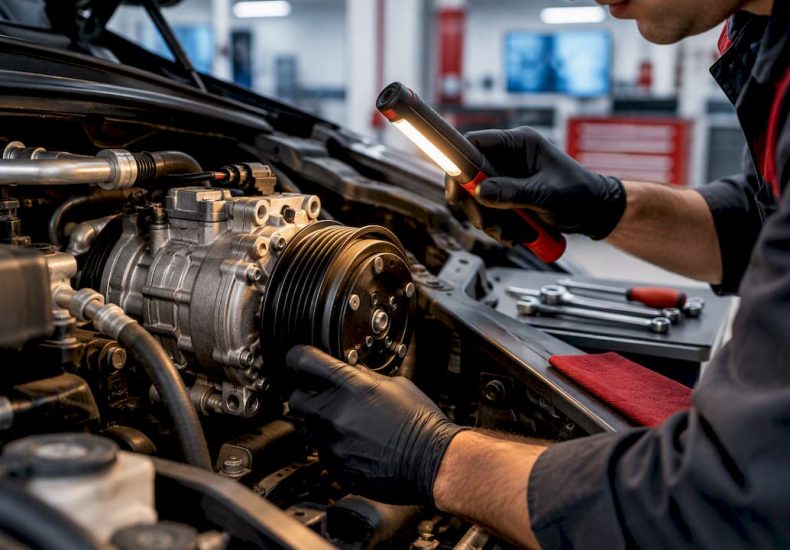
Car Owners: 6 Safe Checks for AC Compressor Symptoms Before Replacement
If your AC blows warm air, you hear new grinding or screeching when it runs, or the system trips a breaker or hums without starting, the compressor is the prime suspect. Any one of those three ac compressor symptoms deserves attention, and if you hear grinding, spot oily residue on the lines, or the breaker keeps tripping, shut the system off now and get a professional diagnostic before running it again.
TL;DR:
- Compressor issues often show warning signs such as warm air, strange noises, or breaker trips, and immediate shutdown is necessary if oil leaks or grinding occur.
- Suspected compressor failure should be diagnosed with electrical tests and pressure checks before considering replacement, especially in systems older than 10 years.
- Common causes include mechanical wear, electrical failures, refrigerant leaks, airflow restrictions, and system contamination after burnout.
- Regular maintenance, like clearing condenser airflow and fixing leaks early, can significantly extend compressor lifespan.
- DIY troubleshooting is limited; stop testing and call a professional when breaker trips or grinding sounds happen to avoid further damage.
Table of Contents
- Common Signs of a Failing AC Compressor
- Quick Checks You Can Safely Run Before Calling a Shop
- What Actually Causes These Compressor Problems
- Repair or Replace? How to Read a Shop’s Diagnosis
- Small Habits That Extend Compressor Life
- Inside a Real Compressor Diagnostic Workflow
- When to Stop Troubleshooting and Call a Technician
- Get Your AC Diagnosed the Right Way
- Sources
- FAQ
Common Signs of a Failing AC Compressor
A compressor rarely fails without warning. It usually telegraphs trouble through one or more of these bad ac compressor signs before it quits completely.
- Warm or lukewarm air despite the blower running. The fan works, air moves, but it’s not cold. This points to lost compression inside the compressor or a refrigerant problem that’s starving the system of the pressure it needs to cool air.
- New mechanical noises when the AC is on. Grinding, rattling, or screeching that only shows up when the compressor kicks on usually means worn bearings, a failing internal valve, or metal-on-metal contact inside the unit. These are not sounds that get better on their own.
- The compressor clutch won’t engage. With the engine off, you can visually check the clutch pulley for obvious damage, a broken spring, or debris, but confirming clutch engagement under load needs a shop’s diagnostic tools.
- Breaker trips or hard-starting (hum then click). A hum-and-click pattern followed by a failed start is a classic locked-rotor symptom, though it’s just as often a failed start capacitor mimicking compressor failure. Repeated breaker trips signal the compressor is drawing excessive current, and that calls for immediate diagnosis, not another reset.
- Short cycling or excessive run times. A compressor that starts and stops rapidly, or one that runs constantly without ever satisfying the cooling demand, is usually overheating or fighting an imbalance somewhere in the system.
- Visible oil or refrigerant residue near the lines or compressor. Oily film around fittings almost always means a seal has failed and refrigerant is escaping, taking lubricating oil with it. Our breakdown of refrigerant leak symptoms covers exactly what that residue looks like and where to check first.
Quick Checks You Can Safely Run Before Calling a Shop
Before you pick up the phone, a few minutes of careful observation can save real diagnostic time. None of these require touching refrigerant lines or opening the compressor itself.
- Rule out a shutdown situation first. Grinding metal, a burning smell, repeated breaker trips, or visible fluid leaking are all reasons to turn the system off immediately and stop testing further.
- Check the AC fuse and relay. With the engine off, pull the AC fuse and inspect it for a broken filament, and look at the relay for scorch marks or a loose socket connection.
- Inspect the compressor and clutch connections visually. Look for frayed wiring, a disconnected plug, or a pulley that wobbles when spun by hand.
- Listen for the hum-click pattern. Turn the AC on and note whether the compressor hums, clicks once, and stalls, or whether the cooling fan runs at all. That detail alone often points a technician straight to a start capacitor.
- Do a rough vent-temperature check. Note whether the warm air happens only after idling, only on hot days, or constantly regardless of conditions. Timing patterns matter more than most drivers realize.
- Look for oil stains or puddles under the vehicle. Record where you saw them and when, since that detail speeds up leak tracing once you’re at the shop.
Pro Tip: Write down exactly when the noise or warm air started, whether it happens at idle or highway speed, and any smells you noticed. A technician who starts with real observations skips a lot of guesswork.
What Actually Causes These Compressor Problems
Symptoms point to a handful of underlying causes, and getting the cause right is the difference between a $200 fix and a compressor replacement you didn’t need.
- Mechanical wear. Worn bearings, damaged internal valves, or seized components produce the grinding and clanking noises drivers notice first.
- Electrical failures. Failed start or run capacitors, bad contactors, damaged wiring, or shorted windings show up as humming, clicking, or breaker trips. Many contractor checklists flag a humming unit that won’t start as a capacitor issue far more often than a truly dead compressor.
- Refrigerant charge problems. Leaks, overcharging, or the wrong refrigerant type all change system pressure in ways that stress or damage the compressor over time.
- Airflow restrictions. Dirty coils, clogged filters, or a failing cooling fan force the compressor to run hotter than it should, and sustained overheating shortens its life fast.
- Contamination after a burnout. Running a failing compressor too long can send metal debris and acid through the lines, which is exactly why a proper replacement includes flushing the system rather than just swapping the part.
Repair or Replace? How to Read a Shop’s Diagnosis
Age and cost give you two reliable rules of thumb. A compressor that’s newer or still under warranty is almost always worth repairing. Once a vehicle or system component is pushing 10 to 12 years old, replacement tends to make more financial sense than chasing repeated repairs.
The cost math matters just as much. If a quoted repair runs close to 40% of what full replacement would cost, or the parts and refrigerant type are getting hard to source, replacement usually wins out.
Before you approve a compressor swap, insist on documented numbers, not a verbal guess:
- Amp draw and start current readings
- Winding resistance measurements
- Capacitor microfarad values compared against spec
- Refrigerant pressure readings on both sides of the system
A competent technician will document these values before recommending replacement, and that step alone catches a lot of unnecessary compressor sales. Diagnostic visits typically run $80 to $200, and minor electrical repairs like a capacitor or contactor usually land in the low hundreds. Full compressor replacement costs vary widely depending on the vehicle and refrigerant type, so treat any flat number you hear before diagnosis with some skepticism.
Small Habits That Extend Compressor Life
Compressor failure is rarely sudden. It’s usually the end result of small stresses that built up over months.
- Keep condenser airflow clear and replace cabin air filters on schedule. Poor airflow forces the compressor to run hotter, and heat is what wears components down early.
- Have capacitors and contactors checked during routine service so a weak start gets caught before it becomes a no-start.
- Fix refrigerant leaks as soon as you notice them. Running a system low on charge stresses the compressor every time it cycles.
- Watch for frequent short cycling. If it keeps happening, have the system checked for sizing or control issues rather than living with it.
- Get the system checked before the hot season hits. A quick pre-summer look catches marginal parts while they’re still cheap to fix.
Pro Tip: A $30 cabin air filter swapped on schedule is a lot cheaper than the compressor failure that neglect eventually causes.
Inside a Real Compressor Diagnostic Workflow
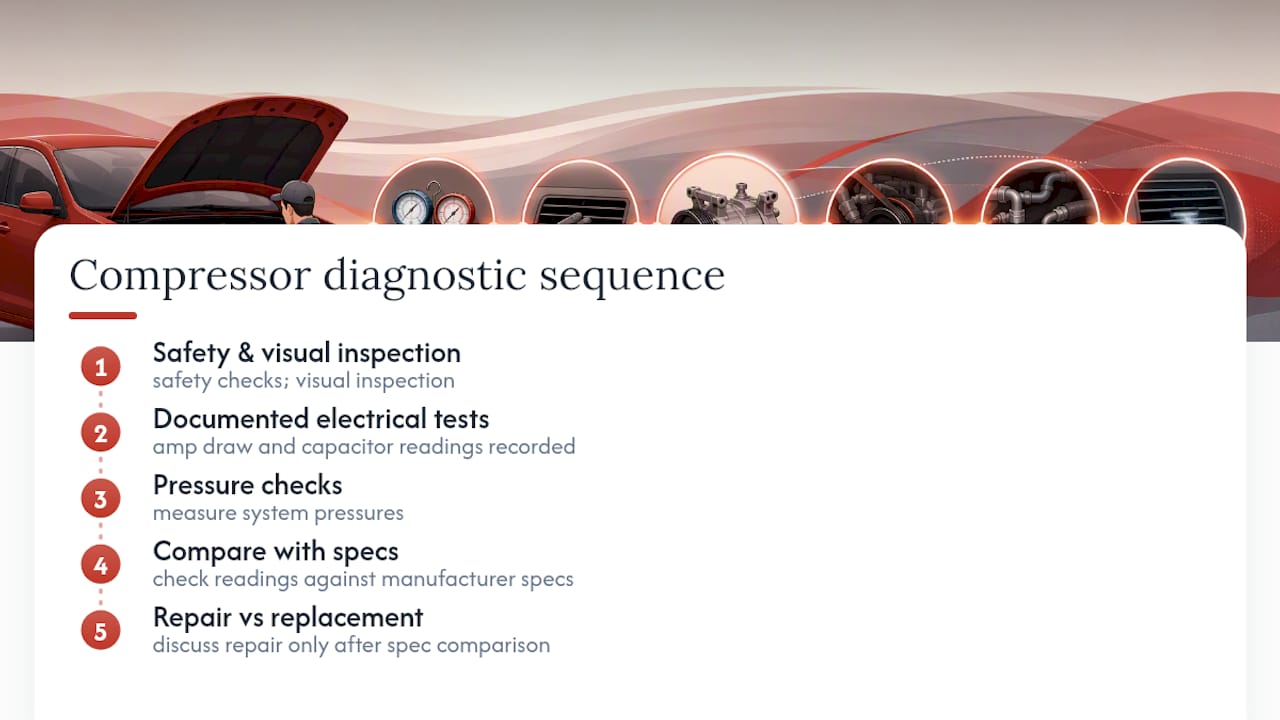
A trustworthy diagnosis starts with a safety and visual inspection, then moves to documented electrical tests (amp draw, capacitor readings) and pressure checks before anyone talks about compressor replacement. At a qualified auto repair shop, ASE-certified technicians walk through that same sequence, checking readings against spec rather than assuming the compressor is the culprit. Every repair carries a warranty, and same-day appointments are often available. For a deeper look at related checks, see our guides on refrigerant leak symptoms and compressor replacement options.
When to Stop Troubleshooting and Call a Technician
Stop the DIY checks the moment a breaker trips, you hear grinding, or the fix would mean handling refrigerant. Write down the sounds, when they happen, and anything you saw leak. That handful of details speeds up an accurate diagnosis more than any home test kit ever will.
— Shingi
Get Your AC Diagnosed the Right Way
Tom’s B & M Auto approaches AC problems the same way this guide recommends: rule out the cheap fixes before touching the compressor. The shop has served local drivers with ASE-certified technicians, documented diagnostics, and upfront pricing, so you know what a repair costs before any work starts.

If your vents are blowing warm or you’ve heard a new noise when the AC kicks on, the AC Repair service starts with a diagnostic from $150, and same-day appointments are often available for drivers who need answers fast. Every repair comes backed by a warranty, whether the fix turns out to be a minor electrical repair or a full compressor swap. Book a diagnostic appointment through the AC Repair page and get a documented answer instead of a guess.
Sources
- How to Tell If Your AC Compressor Is Bad | Icy Hot
- Compressor Failure: Diagnosis and Replacement Checklist – HVAC School
- AC Compressor Failure: Warning Signs & What To Do Next
- AC compressor failure overview and prevention
FAQ
What’s the Average Cost to Replace an AC Compressor?
A diagnostic visit typically runs $80 to $200, while minor electrical fixes like a capacitor or contactor usually cost a few hundred dollars. Full compressor replacement varies widely by vehicle and refrigerant type, so ask for a written quote after diagnostic testing rather than relying on a phone estimate.
How Do I Know If My AC Compressor Is Bad Versus Something Else?
The clearest sign is warm air combined with a new noise or a hum-click pattern when the system tries to start. Since a failed start capacitor often produces the same hum-click symptom as a locked compressor, a shop should test the capacitor and amp draw before confirming compressor failure.
What Is the Average Lifespan of an AC Compressor?
Most automotive AC compressors last many years under normal use, but poor maintenance, low refrigerant, or airflow problems can shorten that significantly. Systems approaching 10 to 12 years old, especially with a history of repairs, are usually better candidates for replacement than another round of patching.
Will My AC Still Work If the Compressor Is Bad?
The blower fan may still run and push air through the vents, but that air won’t be cold once the compressor loses compression or fails electrically. If the system runs but only produces warm air, treat it as a compressor or refrigerant issue and get it looked at rather than assuming a filter or thermostat problem.
Can I Keep Driving With a Failing Compressor?
You can drive safely with a compressor that’s simply not cooling, but grinding noises, breaker trips, or visible leaks mean you should shut the AC off and stop running it. Continuing to run a failing compressor risks sending metal debris and contamination through the system, which can damage a replacement compressor down the line.
Recommended
- Car Owners: 5 AC Refrigerant Leak Symptoms That Require a Shop Visit
- Car AC System Checklist: A Quick Diagnostic Guide
- What Is an AC Compressor? A Car Owner’s Guide
- Why Car AC Blows Warm Air: Causes and Fixes
Leave a Reply