

Three checks tell you almost everything: is air moving strongly out of the vents, is the condenser fan spinning when the A/C is on, and does the compressor actually engage? Fail the first, you’re chasing airflow. Fail the second, look at fans and wiring. Fail the third, you’re likely into refrigerant or compressor territory that needs shop tools.
- Airflow: strong, cold air from every vent on max A/C
- Fan: condenser fan(s) spinning at idle, not just while driving
- Compressor: clutch engages (belt-driven) or the system audibly cycles (electric)
This is the order ASE-certified technicians run through first, and it’s the same sequence Carparts recommends, because it isolates the cheap fixes before anyone touches refrigerant. Most cooling complaints trace back to one of three culprits: a leak, blocked airflow, or a compressor that won’t engage.
Pro Tip: If your A/C was fine last week and dead today, run the three checks before you assume the worst. A $12 cabin filter or a leaf-clogged grille causes more “dead A/C” calls than a failed compressor ever does.
Key Takeaways
Running airflow, fan, and compressor checks in that exact order pinpoints most AC problems before a shop ever hooks up a gauge.
| Point | Details |
|---|---|
| Start with the 3-step sequence | Check airflow strength, condenser fan operation, then compressor engagement, in that order. |
| Rule out the cheap causes first | A dirty cabin filter or debris-packed condenser causes more “dead AC” calls than a failed compressor. |
| Measure before you guess | Use a thermometer at the vent and a voltmeter on the clutch coil before assuming a refrigerant problem. |
| Never DIY refrigerant work | Leak repair, recovery, and recharge by weight require EPA-certified equipment and belong to a shop. |
| Book Tom’s B & M Auto for full diagnosis | ASE-certified technicians provide pressure testing, leak detection, and compressor work backed by a 24 month/24,000 mile warranty. |
Table of Contents
- Car AC System Checklist: The 5-Minute Checks
- What Tools Do You Need for Deeper AC Diagnosis?
- What Do Common AC Symptoms Actually Mean?
- How Often Should You Maintain Your Car’s AC?
- What DIY Mistakes Make Car AC Problems Worse?
- When Should You Call a Professional for AC Repair?
- What Tools and Safety Precautions Do You Need for DIY Checks?
- Frequently Asked Questions
- Sources
Car AC System Checklist: The 5-Minute Checks
Before you touch a wrench, run through the checks that cost nothing but a few minutes and a flashlight.
Set the controls first: max A/C (not just “cool”), recirculate mode, and the blower on high. Confirm air is actually routing to the dash vents and not stuck on defrost or floor. A surprising number of “broken A/C” complaints turn out to be a stuck blend door sending cold air to the floor vents while the dash blows warm.

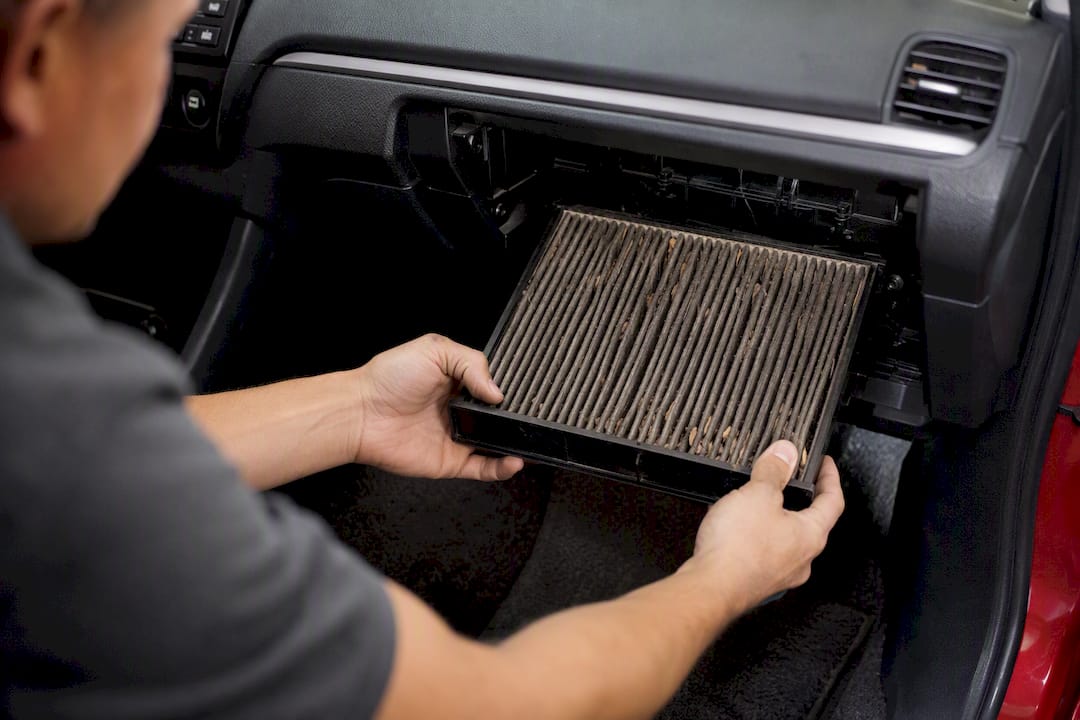
Feel the airflow strength at each vent. Weak or uneven flow often means a clogged cabin air filter, which the AutoZone diagnostic guide flags as one of the most overlooked culprits in a no-cold-air complaint. If yours is accessible behind the glovebox, pull it and check for dust buildup or debris.
Next, pop the hood and look at the condenser, the thin radiator-like unit in front of your actual radiator. Leaves, cottonwood fluff, plastic bags, and dead bugs pack into those fins and choke off airflow. Clear visible debris by hand or with a soft brush; never use a pressure washer directly into the fins, since it bends them.
With the engine running and A/C on, watch the fan behind the grille. It should spin at idle, not just when you’re driving. If cooling only improves once you’re moving, the fan (or its relay) is the prime suspect.
Finally, check the obvious electrical points: pull the A/C fuse and inspect it, glance at the relay if you know which one it is, and look for oily residue around hose fittings and the compressor, since refrigerant oil leaves visible streaks.
Pro Tip: Oily grime near a fitting isn’t dirt, it’s refrigerant escaping with the oil that lubricates the system. That’s your leak, even before a gauge confirms it.
What Tools Do You Need for Deeper AC Diagnosis?
Once the basic checks pass but cooling still isn’t right, a few inexpensive tools turn guesswork into data.
- Set the system correctly. Max A/C, recirculate, high blower, doors and windows shut, engine at idle for a few minutes to stabilize.
- Measure vent temperature. Place a probe or infrared thermometer at the center vent. A healthy system typically pulls ambient air down significantly; anything that barely drops below outside temperature signals a real problem, not just an off day.
- Watch the compressor. On belt-driven systems, look for the clutch snapping into engagement, often with a visible click and a slight engine RPM dip. On electric compressors, listen for the characteristic whine, since there’s no clutch to watch.
- Check clutch coil voltage if it won’t engage. A basic voltmeter across the clutch connector should show battery voltage when the A/C is requested. No voltage means a wiring, relay, low-pressure switch, or fuse issue, not a refrigerant problem.
- Feel the lines by hand, carefully. The line from the compressor should run warm to hot; the line into the evaporator should run cool. Two warm lines with no temperature split usually means low charge or a restriction.
Manufacturer service manuals list the exact factory refrigerant charge and type on an under-hood label, information you’ll want on hand before calling a shop. That label matters more than guessing based on your car’s age.
Static pressure readings need manifold gauges, and that’s where most home mechanics should stop. Refrigerant charge level is easy to misjudge by pressure alone, since it swings with ambient temperature.
Never crack open a service port at home. Refrigerant handling requires EPA certification and recovery equipment by law, and improper handling can cause frostbite injuries or release refrigerant into the atmosphere.
What Do Common AC Symptoms Actually Mean?
Matching what you’re feeling or hearing to a likely cause saves a lot of wasted diagnostic time.
- Cold on the highway, warm at idle: almost always condenser airflow. Check the fan and clear the grille first, as detailed in why A/C blows warm under similar conditions.
- Cool, but never actually cold: points to low refrigerant from a slow leak, restricted airflow, or a compressor that’s engaging but underperforming.
- Strong airflow, zero temperature drop: the compressor isn’t running, or a blend door/control issue is routing warm air in. Confirm compressor engagement before assuming refrigerant is the problem.
- Musty or sour smell: evaporator mold or a saturated cabin filter. Replace the filter first; an evaporator cleaning treatment often clears the rest.
- Oily film near hoses or fittings: a refrigerant leak. Don’t top it off and hope. Get it pressure tested.
How Often Should You Maintain Your Car’s AC?
A little routine attention beats every reactive repair on this list. Here’s the maintenance rhythm technicians actually recommend:
- Run the A/C monthly, even in winter. Five to ten minutes of compressor cycling keeps seals lubricated and prevents the slow leaks that come from dried-out O-rings, a habit Carvira’s maintenance guide calls one of the highest-return habits available to owners.
- Add pre-summer checkpoints to your seasonal routine: belt tension, condenser fin condition, cabin filter, and a quick vent temperature check.
- Keep the cowl area under the windshield clear of leaves, since a blocked intake starves the evaporator and invites moisture buildup.
- Replace the cabin air filter at the interval your owner’s manual specifies, typically every 15,000 to 30,000 miles. An activated carbon filter helps with odor control if you’re in a high-traffic area.
- Run defrost occasionally, even outside winter, to dry out evaporator moisture and cut down on mold growth.
The NRF technical guidance recommends at least one annual visual and functional check, with a full service no less than every two years.
Pro Tip: For fuel economy, set the temperature to its coldest point and drop the fan speed once the cabin cools rather than running a warmer setting on high blower. The compressor cycles less that way.
What DIY Mistakes Make Car AC Problems Worse?
- Charging by pressure gauge readings alone, since pressure shifts with ambient temperature and this routinely leads to overcharge or undercharge.
- Using “stop-leak” additives, which tend to clog the expansion valve or orifice tube and turn a simple leak repair into a full system flush.
- Replacing the compressor before confirming airflow, charge level, and line restrictions are ruled out.
- Loosening any fitting or attempting refrigerant recovery without certified equipment.
A compressor swapped in without checking why it failed in the first place often fails again within months, because the underlying contamination or restriction was never addressed.
When Should You Call a Professional for AC Repair?
Some jobs simply require a shop. Book service once you’re looking at manifold-gauge diagnosis, leak detection with UV dye or an electronic sniffer, system evacuation, or a recharge measured by weight rather than pressure.
Specific red flags worth an appointment: oily residue anywhere in the system, a compressor that cycles rapidly on and off, no compressor engagement despite confirmed refrigerant, or a musty smell paired with visible moisture behind the dash.
Walk in with your data. Tell the shop your measured vent temperature, whether the fan ran at idle, whether the compressor engaged, and any dashboard codes or noises you noticed. That alone speeds up triage considerably.
On cost, expect a wide range. Simple repairs and evaporator treatments can run around $150, while compressor or evaporator replacement, especially with the receiver-drier and system flush that usually accompany it, can push past $1,500 depending on the vehicle and labor rate.
What Tools and Safety Precautions Do You Need for DIY Checks?
For inspection-level work, a probe or infrared thermometer, a basic multimeter, hand tools, a flashlight, and a UV dye kit cover nearly everything a car owner should attempt.
Refrigerant is pressurized and hazardous. Never open a high-pressure fitting, and wear gloves and eye protection anywhere near the lines.
Leak repair, system evacuation, weighted recharge, compressor replacement, and flushing a contaminated system all belong to a certified shop, not a driveway toolkit.
What Our Shop Sees Most Often in Local AC Repairs
Most of the failures we diagnose at Tom’s B & M Auto trace back to slow leaks, a seized or noisy condenser fan, or a cabin filter nobody’s changed in years. Our technicians are ASE-certified, and every repair carries a 24 month/24,000 mile warranty.
Let a Professional Finish the Diagnosis
If your checklist results point to low refrigerant, a fan that won’t spin, or a compressor that won’t engage, that’s where driveway tools stop being enough. Tom’s B & M Auto runs full pressure testing, electronic leak detection, recovery and recharge by weight, and compressor or condenser replacement, backed by digital vehicle inspection results you can actually see, not just take someone’s word for.

Bring what you’ve already found: your measured vent temperature, whether the fan spun at idle, and whether the compressor engaged. That short list lets our techs skip straight to confirming the cause instead of re-running your basic checks. Lynnwood drivers can also check our A/C leak repair cost guide for what to expect before booking. Ready to get a straight answer on what’s wrong? Schedule an A/C inspection and get upfront pricing before any work starts.
Frequently Asked Questions
How do I know if my car’s AC needs refrigerant or just a repair?
Weak but present cooling with warm compressor lines and no visible leak often points to low charge. Oily residue near fittings usually means a leak needs repair before any recharge will hold.
Can I just add refrigerant myself with a can from the auto parts store?
Charging by pressure alone often leads to overcharge or undercharge, since pressure varies with ambient temperature. A proper recharge measured by weight is safer and more reliable.
Why does my AC blow cold on the highway but warm at idle?
That pattern almost always points to a condenser fan or airflow issue. The fan should spin at idle when the A/C is on; if it only helps once you’re moving, check the fan and grille for obstructions.
How often should I run my car’s AC to keep it healthy?
Run it for five to ten minutes at least once a month, even in winter, to keep compressor seals lubricated and prevent slow leaks from developing.
Sources
- Carparts
- Car Air Conditioning: Tips To Keep It in Shape and Cold – Kelley Blue Book
- Diagnosing car AC problems – AutoZone DIY
- HOW TO KEEP YOUR CAR AIR CONDITIONING SYSTEM IN FULL WORKING ORDER – NRF technical article
- How to Maintain Your Car’s Air Conditioning System: A Complete Guide for U.S. Drivers – Carvira
Recommended
- Brake System Components Checklist: Your Safety Guide – Tom’s B & M Auto Blog
- What Is an AC Compressor? A Car Owner’s Guide – Tom’s B & M Auto Blog
- Car AC Leak Repair Cost: What Lynnwood Drivers Should Know – Tom’s B & M Auto Blog
- Car AC Heater: How They Work and When to Run Both – Tom’s B & M Auto Blog