Most car AC leak repairs in Lynnwood run somewhere between $150 for a simple O-ring swap and $1,700 or more for a full compressor replacement. J.D. Power reports that labor alone commonly falls in the $150–$500 range, with total bills varying from roughly $160 to over $1,000 depending on which component failed. Before anyone recharges your system or orders parts, the right first move is a professional leak detection. Skipping that step is how a $200 job turns into a $1,500 one.
Here’s what that typically looks like in practice:
- O-rings and seals: $150–$300 total (parts are cheap; labor to access them varies)
- AC hoses or lines: costs depend on routing and vehicle make
- Condenser replacement: moderate parts and labor costs
- Evaporator core: higher costs due to labor intensity and location behind the dashboard
- Compressor replacement: $1,000–$1,700+, sometimes higher on European or hybrid vehicles
Tom’s B & M Auto in Lynnwood handles all of these with ASE-certified technicians and professional-grade leak detection equipment. If your AC stopped blowing cold, the sections below explain exactly what drives the price and what to expect at the shop.
Key Takeaways
Car AC leak repair costs vary widely depending on the repair type, from relatively low costs for minor seals to significantly higher for compressor replacements, and getting a professional diagnostic first is the single most reliable way to avoid paying for the wrong repair.
| Point | Details |
|---|---|
| Typical cost range | Most AC leak repairs fall between $150 and $1,700+, depending on the failed component. |
| Diagnostic-first rule | Always get professional leak detection before recharging or ordering parts to avoid repeat failures. |
| Refrigerant type matters | R-1234yf vehicles cost more to recharge than R-134a; confirm your car’s type before approving any service. |
| Red-flag symptoms | Warm air, compressor noise, or oily residue under the car signal immediate service, not monitoring. |
| Tom’s B & M Auto | Lynnwood’s ASE-certified shop offers upfront pricing, same-day diagnostics, and a 24-month / 24,000-mile warranty. |
Table of Contents
- How much does AC leak repair cost by component?
- How do shops detect refrigerant leaks?
- What should you expect when you bring your car in?
- Should you attempt a DIY AC leak repair?
- How Tom’s B & M Auto handles AC leaks in Lynnwood
- When should you act fast versus wait?
- Tom’s B & M Auto: book your AC diagnostic in Lynnwood
- Sources
How much does AC leak repair cost by component?
Kelley Blue Book’s repair cost data puts average general AC repair in the typical repair cost ranges that vary depending on repair type. Those numbers make sense once you understand what’s actually involved in each job.
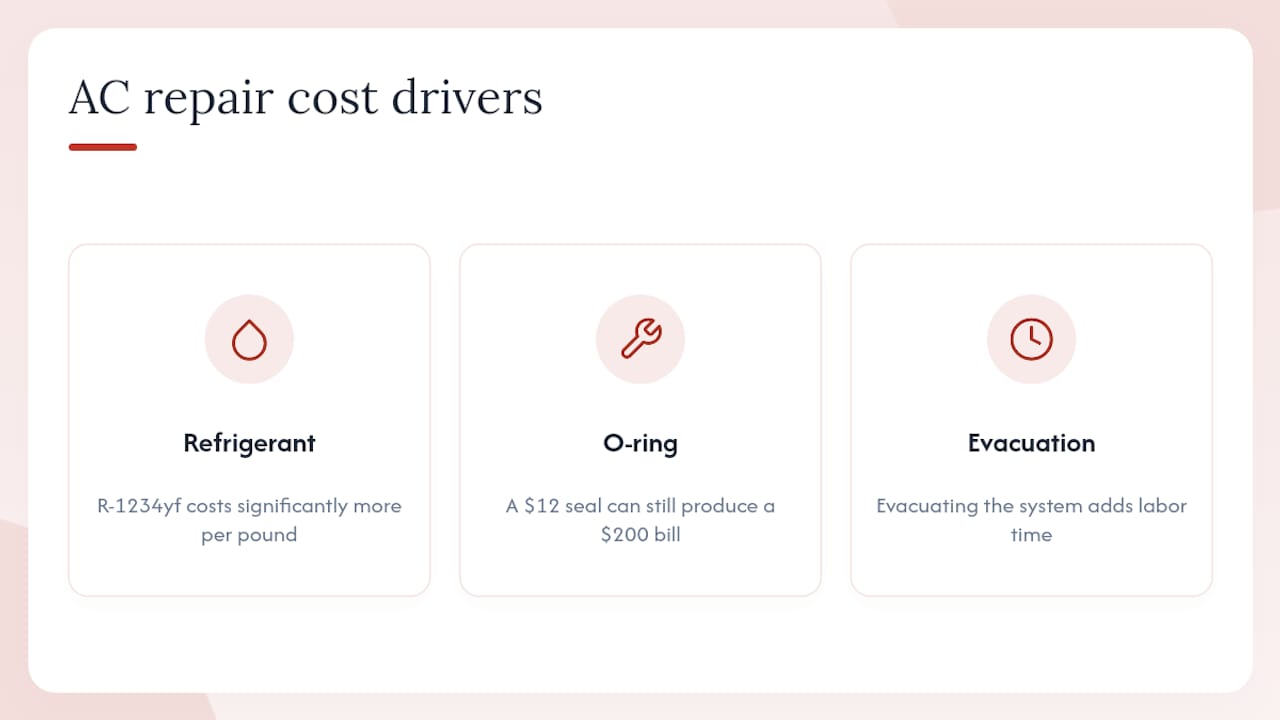
Refrigerant type matters more than most drivers realize. Older vehicles use R-134a, which is relatively inexpensive. Newer models (roughly 2017 and later) often require R-1234yf, which costs significantly more per pound and sometimes requires specialized shop equipment. If your car takes R-1234yf, expect the recharge portion of any repair to run noticeably higher than the older estimates you might find online.
Pro Tip: Even replacing a small O-ring usually requires evacuating the entire AC system first. That evacuation step adds labor time regardless of how minor the leak source is, which is why a $12 seal can still produce a $200 bill.
How do shops detect refrigerant leaks?
HELLA TechWorld identifies three main professional methods: UV dye with a contrast agent and UV lamp, electronic leak detection, and forming-gas electronic detection. Most shops use at least two of these on the same vehicle.
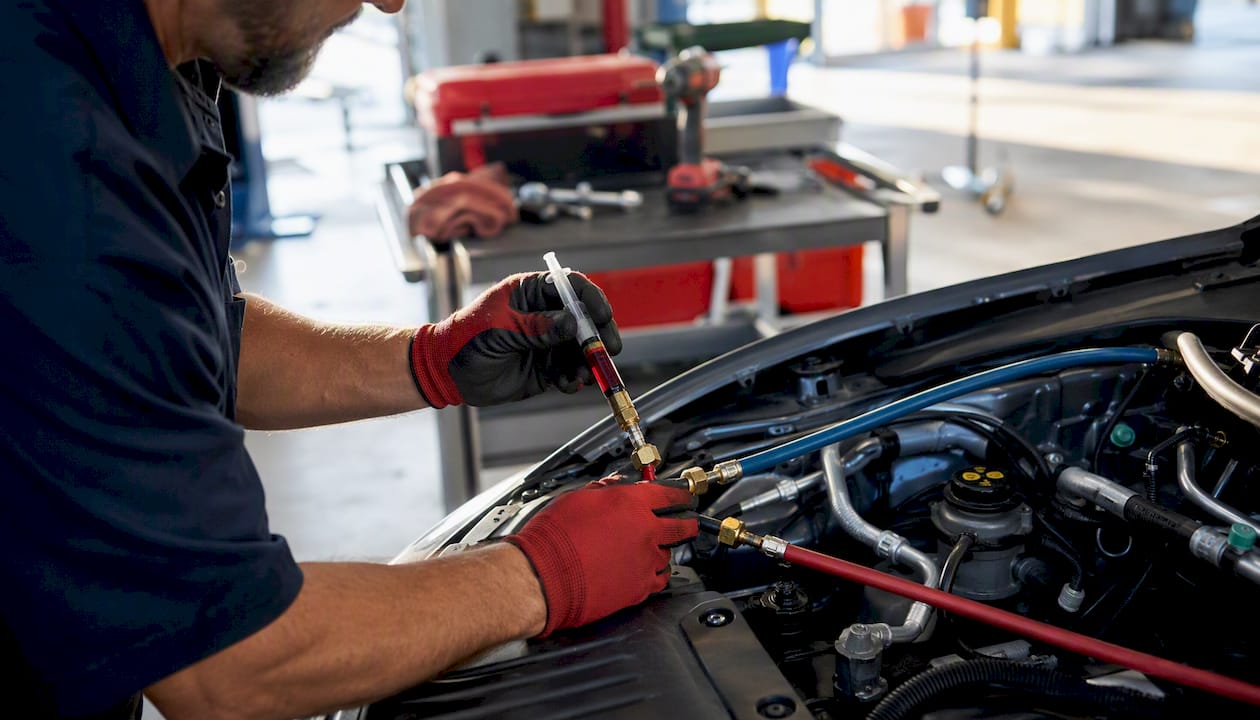
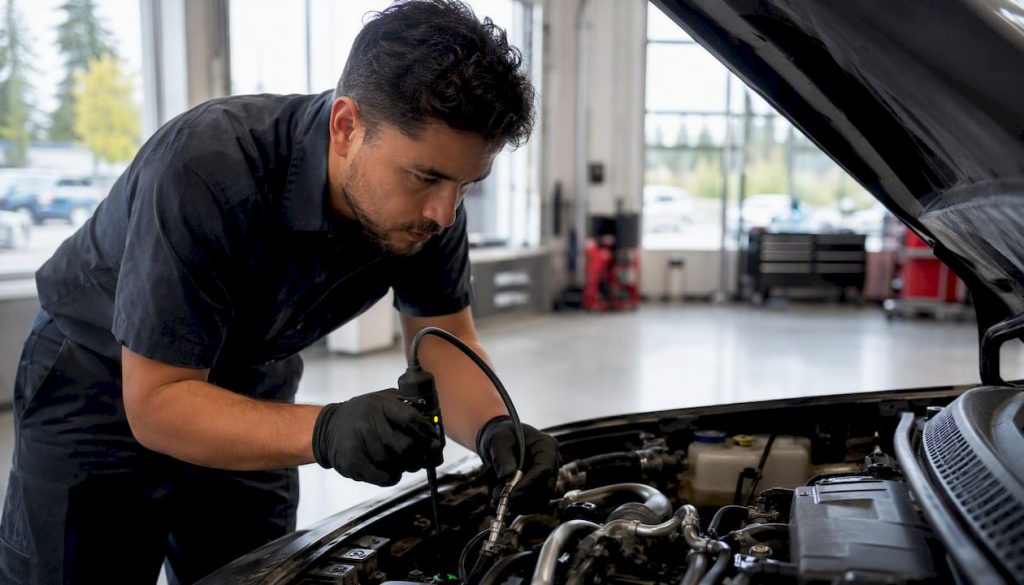
Electronic leak detectors are the fastest starting point. A technician passes a probe around fittings, hoses, and components while the detector reads refrigerant concentration in the air. They work on both R-134a and R-1234yf and can pinpoint a leak in minutes when it’s large enough to register.
UV dye injection works differently. The shop injects a fluorescent dye into the system, runs the AC, and then inspects with a UV lamp. Small leaks can take a day or two of vehicle operation before enough dye accumulates to show clearly, so this method sometimes requires a follow-up inspection rather than a same-day answer.
Nitrogen or forming-gas pressure tests pressurize the system to find leaks in areas that are hard to reach with a probe or lamp. Forming gas (a nitrogen/hydrogen mix) requires a compatible electronic detector and specific handling procedures. Shops use this method when a leak is suspected in a buried component like the evaporator.
A well-run diagnostic typically combines electronic detection first, dye as confirmation, and pressure testing when the leak location is still unclear. Shops that follow this diagnostic-first standard perform full system evacuation and pressure testing before recommending any parts, which prevents the costly cycle of replacing components that weren’t actually the problem.
What should you expect when you bring your car in?
The shop visit follows a predictable sequence. Knowing it helps you ask better questions and avoid surprise charges.
- Intake and visual inspection (10–15 minutes): The technician checks for obvious oil residue around fittings, hoses, and the condenser. Refrigerant oil leaves a greasy film at leak points.
- System recovery (20–30 minutes): Any remaining refrigerant is recovered using certified equipment before the system is opened. EPA regulations require this step.
- Leak detection (30–60 minutes): Electronic sniffer first, UV dye if needed, pressure test for buried leaks.
- Repair (varies widely): An O-ring takes under an hour. An evaporator core replacement can be labor-intensive, often requiring several hours.
- Evacuation and drying (45–60 minutes): The system is pulled into a deep vacuum to remove moisture before recharging.
- Recharge and performance test (20–30 minutes): Refrigerant is added to spec, and vent temperatures are verified.
Questions worth asking before you approve any work: What refrigerant type does my car use, and what’s the per-pound price? Is the diagnostic fee credited toward the repair if I proceed? What warranty covers the parts and labor? A shop that hesitates on any of those three questions is a shop worth leaving.
Request ASE-certified technicians, a written estimate before work begins, and confirm the warranty terms. Tom’s B & M Auto backs all repairs with a 24-month / 24,000-mile warranty.
Should you attempt a DIY AC leak repair?
Some checks are genuinely low-risk and worth doing before you call a shop. Others will cost you more money than they save.
Safe DIY checks:
- Look for oily residue around AC fittings, hose connections, and the condenser (visible from the front of the car)
- Check the cabin air filter (a clogged filter reduces airflow but won’t cause a refrigerant leak)
- Inspect accessible hoses for cracking or abrasion
- Note whether cooling loss is gradual or sudden, and whether the compressor clutch engages
Where DIY goes wrong:
- Recharging without fixing the leak. The refrigerant will escape again, usually within weeks. Repeated recharges without diagnosing the leak source are a false economy and can accelerate compressor wear.
- Using stop-leak additives. These products can clog expansion valves and service ports, turning a $300 repair into a full system flush.
- Venting refrigerant intentionally. Federal EPA regulations prohibit venting R-134a or R-1234yf into the atmosphere. Violations carry real fines.
- Handling R-1234yf without proper equipment. This refrigerant is mildly flammable and requires different recovery tools than R-134a.
Quick safety checklist for any DIY work near the AC system:
- Never vent refrigerant to the atmosphere.
- Wear safety glasses; refrigerant causes frostbite on contact with skin.
- Confirm your vehicle’s refrigerant type before buying any product.
- Stop and call a shop if you hear compressor noise or see oil pooling under the car.
How Tom’s B & M Auto handles AC leaks in Lynnwood
Tom’s B & M Auto has been servicing vehicles in Lynnwood since 1985. The shop’s AC workflow starts with a full system recovery before any component is touched, followed by electronic leak detection, UV dye confirmation when needed, and nitrogen pressure testing for leaks in hard-to-access areas. That sequence matches the diagnostic-first standard that prevents repeat failures.
All pricing is upfront, and the shop handles every make including Toyota, Honda, Subaru, European vehicles, and hybrids. Same-day diagnostic appointments are often available. For larger repairs like compressor replacement in Lynnwood, financing is available through the shop.
Pro Tip: Bring a note of when you first noticed the cooling loss, whether the compressor clutch is engaging (listen for a click when you switch the AC on), and any smells or sounds from the vents. That information cuts diagnostic time and can reduce your bill.
When should you act fast versus wait?
The honest answer is that most AC leaks don’t give you weeks to decide. Low refrigerant is a common cause of cooling loss, and a compressor running low on refrigerant also runs low on the oil that refrigerant carries. That’s how a $400 condenser job becomes a $1,500 compressor replacement.
Act immediately if: the system blows completely warm air, you hear grinding or squealing from the compressor area, or you see oily residue pooling under the car. These are signs the compressor is already stressed.
Schedule within the week if: cooling is gradual and intermittent, the system still cools somewhat in the morning but fades by afternoon, or you’ve noticed the problem building over a few weeks. You have a short window before compressor damage becomes likely.
Monitoring and waiting is rarely the cheaper option once symptoms appear. A diagnostic appointment gives you a real number to work with, not a guess.
Tom’s B & M Auto: book your AC diagnostic in Lynnwood
Tom’s B & M Auto offers a free digital vehicle inspection with your AC diagnostic appointment. For repairs over $300, a $50 discount is available, and larger jobs over $1,000 qualify for $150 off. Financing options are available for compressor-level repairs. Call the shop or book online at bandmautocare.com. Same-day appointments are often available. ASE-certified technicians, upfront pricing, and a 24-month / 24,000-mile warranty on all work.
Sources
- 3 key facts about car AC diagnostic cost (2026) – Marks Air
- How much does it cost to fix a car AC leak? – J.D. Power
- Car air conditioning leak detection – HELLA TechWorld
- Car AC repair costs – Kelley Blue Book