
Drivers: Use 3 Second Tests to Avoid Rebuilds for Delayed Engagement
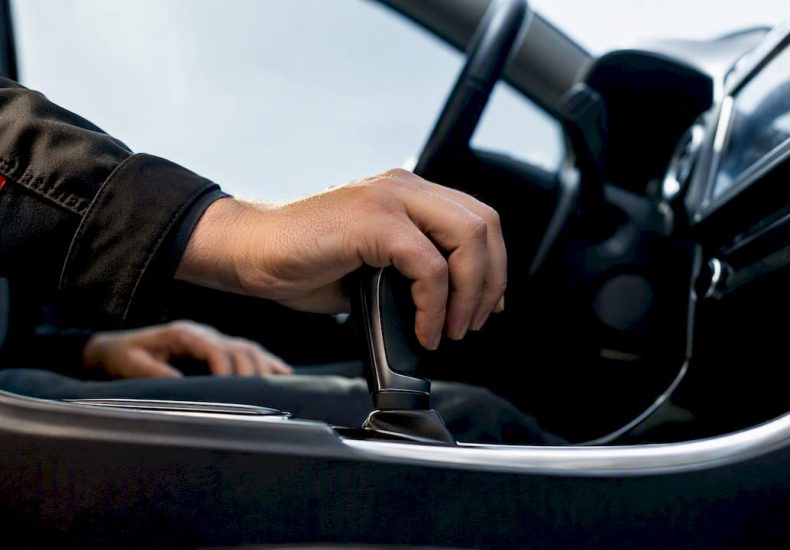
Delayed engagement is the pause between shifting into Drive or Reverse and actually feeling the car move. A healthy automatic transmission engages in under a second; anything consistently past 1.5 to 3 seconds signals a real problem worth diagnosing. If you notice it, check your fluid level and color first, avoid revving the engine to force a shift, and book a diagnostic if the delay holds past that window.
TL;DR:
- Delayed engagement over 1.5 to 3 seconds indicates a real transmission issue, often caused by low, degraded, or thickened fluid from cold weather or wear.
- Diagnosing the problem involves timed engagement tests and pressure measurements, with specific patterns pointing to fluid, pump, valve, or clutch pack faults.
- Common DIY checks include proper fluid level, color, smell, and absence of leaks, along with noting when the delay occurs to assist diagnostic accuracy.
- Repairs vary from low-cost fluid and filter changes to extensive clutch rebuilds, with early intervention significantly reducing costs and repair time.
- Immediate attention is advised if symptoms include metal shavings, slipping under load, or worsening delay, to avoid costly transmission rebuilds.
Table of Contents
- What Does Delayed Engagement Feel Like?
- What Causes Delayed Engagement in Automatic Transmissions?
- How Do Technicians Diagnose Delayed Engagement?
- Safe DIY Checks Before You Call a Shop
- What Repairs Fix Delayed Engagement, and What Do They Cost?
- When Should You Get Delayed Engagement Checked Immediately?
- How a Trusted Shop Diagnoses This Problem
- A Technician’s Checklist Before You Head In
- Get Your Transmission Checked Before a Small Delay Becomes a Big Bill
- Sources
What Does Delayed Engagement Feel Like?
You shift into Drive, the engine responds, and for a beat, nothing happens. That gap between shift and motion is the whole story. Then you get a clunk or a lurch as the transmission finally grabs, sometimes hard enough to rock the car.
A healthy transmission typically engages in about one second. A delay creeping toward 1.5 to 3 seconds is the range where technicians start paying attention, and it’s also roughly where owners start noticing it themselves without a stopwatch.
The pattern usually shows up in specific situations:
- After the car has sat overnight or for several hours with the engine off
- On a cold start, before the fluid has warmed and thinned out
- In one gear only, such as Reverse but not Drive, or vice versa
- After the vehicle has been running a while and fluid has broken down from heat
Owners on forums like r/MechanicAdvice consistently describe the same one to three second lag after the car sits, often worse in cold weather. That’s not a coincidence. It’s a hydraulic system that takes longer than it should to fill and build pressure, and cold, thick fluid makes that slower fill even slower.
What Causes Delayed Engagement in Automatic Transmissions?
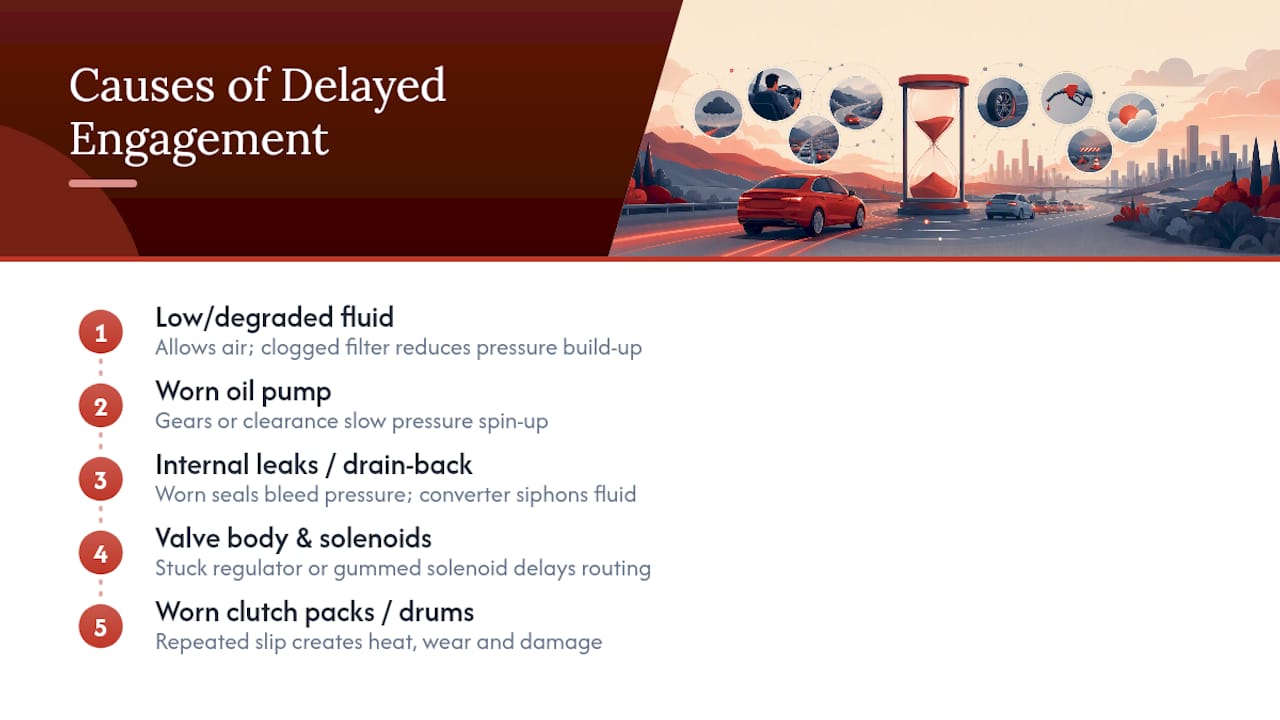
Almost every case traces to the transmission’s hydraulic circuit taking longer than normal to build the pressure that clamps the clutch packs and locks the selected gear. One common and inexpensive cause to check for first is low or degraded fluid since it can allow air into the system, reducing pressure transmission effectiveness. Old fluid loses its friction properties and its ability to build pressure quickly, which is exactly why low fluid and a clogged filter are the first things to check before assuming anything more serious.
A worn oil pump is the next likely suspect. The pump has to spin up and generate pressure fast enough to fill the clutch circuit the instant you shift. A pump with worn gears or excessive internal clearance takes longer to reach working pressure, and that lag is what you feel as delayed engagement.
Internal leaks are trickier to catch because nothing shows up on the garage floor. Worn seals inside the transmission let pressurized fluid bleed past the pistons instead of applying force where it needs to go. Torque converter drain-back, where fluid siphons out of the converter overnight, and a failing pump check valve both produce the exact same symptom: a normal-feeling transmission once it’s finally full, but a frustrating wait to get there.
Valve body and solenoid faults point to the transmission’s control system rather than its plumbing. A stuck pressure regulator valve or a failing shift solenoid can delay the flow of fluid to the right clutch pack even when the pump and fluid are fine. Shift solenoids in particular act like tiny valves electronically triggered to route pressure. When one is worn or gummed up with debris, the whole shift timing shifts with it. You can read more on how transmission solenoids control gear shifting if you want the mechanical detail.
Worn clutch packs or drum damage are the ones nobody wants to hear. Repeated slow engagement causes clutch plates to slip fractionally against each other every time you shift, generating heat and wear with every start. Over months, that slow-motion slip turns a fixable hydraulic issue into a mechanical one, which is the entire argument for catching this early instead of living with it.
How Do Technicians Diagnose Delayed Engagement?
A shop doesn’t guess at this. There’s an actual test with a number attached, and it’s what separates a five-minute fluid check from a full teardown.
- Engagement-time test. The technician selects Drive or Reverse and times how long it takes the transmission’s input shaft speed to drop to 0 RPM, measured with a scan tool while watching engine RPM simultaneously. OEM service bulletins define this test explicitly and generally treat anything over 3 seconds as a diagnosable fault, not just a quirk to monitor.
- Line pressure testing. With a mechanical or electronic gauge tapped into the pressure port, the technician watches how fast pressure climbs after the shift. A slow climb points to the pump or the pressure regulator valve. A pressure that never reaches spec points somewhere else entirely, often a leak.
- Symptom-to-cause mapping. Delay only in Reverse tends to point at the reverse clutch drum or a specific hydraulic circuit; delay only when warm versus only when cold tells a technician which seal or valve is more likely misbehaving. This is where symptom patterns genuinely narrow down the diagnosis instead of leaving it to trial and error.
- Clutch learn or adaptation procedure. On borderline cases, some manufacturers specify a repeated Park to Drive or Reverse cycling procedure under controlled temperature to let the transmission’s adaptive logic relearn fill times, which sometimes resolves the delay without a single part being replaced.
Pro Tip: Ask your shop to show you the engagement-time reading and pressure numbers, not just the verdict. A shop using objective thresholds instead of a hunch is a shop less likely to sell you a rebuild you didn’t need.
Safe DIY Checks Before You Call a Shop
You can rule out the cheapest, most common causes yourself, and it takes less time than a coffee run.
- Check the fluid level correctly. With the engine running and the transmission warm, most vehicles want the dipstick check in Park on level ground; some newer sealed transmissions require a scan tool to check level electronically. Consult your owner’s manual before assuming the classic dipstick method applies.
- Look at the color and smell. Healthy automatic transmission fluid is red or pink and smells faintly sweet. Brown, black, or burnt-smelling fluid means it’s degraded and likely contributing to your delay, echoing routine fluid checks that consumer maintenance guides list as a first-line defense against bigger transmission problems.
- Scan for visible leaks. A puddle or fresh stain under the transmission bell housing area suggests fluid loss you need to address before it gets worse.
- Do not rev the engine to force a shift. It doesn’t speed up hydraulic fill, and it puts extra load on clutch packs that are already struggling to engage cleanly.
Pro Tip: Keep notes on when the delay happens: cold start only, one gear only, or after the car sits a specific number of hours. Handing that pattern to your technician cuts diagnostic time significantly, because it points them at a circuit before they’ve even opened the pan.
Learn more about reading transmission fluid condition if you want a deeper walkthrough of what healthy fluid should look like at different mileage intervals.
What Repairs Fix Delayed Engagement, and What Do They Cost?
The right fix depends entirely on what the diagnostic tests find, and the price gap between the smallest and largest fix is enormous.
- Fluid and filter service addresses low or degraded fluid and is often the lowest-cost, highest-value first step, especially on higher-mileage vehicles that haven’t had a fluid change in years.
- Valve body or solenoid service addresses stuck regulator valves or failed shift solenoids found during pressure testing; sometimes a single solenoid can be replaced, other times the whole valve body needs rebuilding or swapping.
- Pump repair or replacement addresses slow pressure build confirmed by a line pressure test that shows a weak climb even with fresh fluid.
- Clutch pack or drum repair, up to a full rebuild, addresses cases where slippage has already worn the clutch material or damaged the drum, usually the end result of a delay that went unaddressed too long.
| Repair Type | Typically Addresses | Relative Cost & Time |
|---|---|---|
| Fluid and filter service | Low/degraded fluid, minor contamination | Lowest cost; usually same-day |
| Valve body or solenoid service | Stuck regulator, faulty solenoid | Moderate cost; often 1 to 2 days |
| Pump repair or replacement | Slow pressure build, worn pump gears | Higher cost; multi-day, requires transmission removal |
| Clutch pack repair or rebuild | Worn clutch material, drum damage | Highest cost; extensive labor, full teardown |
The pattern holds across nearly every case: the earlier you catch it, the cheaper and faster the fix. A fluid service costs a fraction of a rebuild, and it’s the reason technicians push so hard for owners to act at the first sign of hesitation rather than waiting for a flare or a bang.
When Should You Get Delayed Engagement Checked Immediately?
Some symptoms mean schedule it this week. Others mean get it looked at today.
- Flare and bang on engagement (the RPMs jump before the car suddenly grabs gear) suggests significant clutch slippage already underway.
- Metal flakes or shavings in the fluid or pan point to internal component wear that’s actively damaging the transmission.
- A check engine or transmission warning light paired with the delay narrows the cause and shouldn’t be ignored.
- Slipping under load, especially on hills or while towing, means the transmission is losing its grip when it matters most.
- A delay that’s getting longer week over week is a transmission telling you the problem is progressing, not stable.
Before your appointment, write down when the delay happens, which gears are affected, and whether it’s worse cold or warm. That single page of notes speeds up diagnosis more than almost anything else you can do.
How a Trusted Shop Diagnoses This Problem
Delayed engagement diagnosis starts with a visual inspection and fluid check, then moves to a pan drop if needed, followed by pressure testing and an engagement-time log using professional-grade scan tools. ASE-certified technicians document actual numbers, not guesses, and repairs carry warranties. That combination is what keeps a fixable fluid issue from turning into an unnecessary transmission rebuild.
A Technician’s Checklist Before You Head In
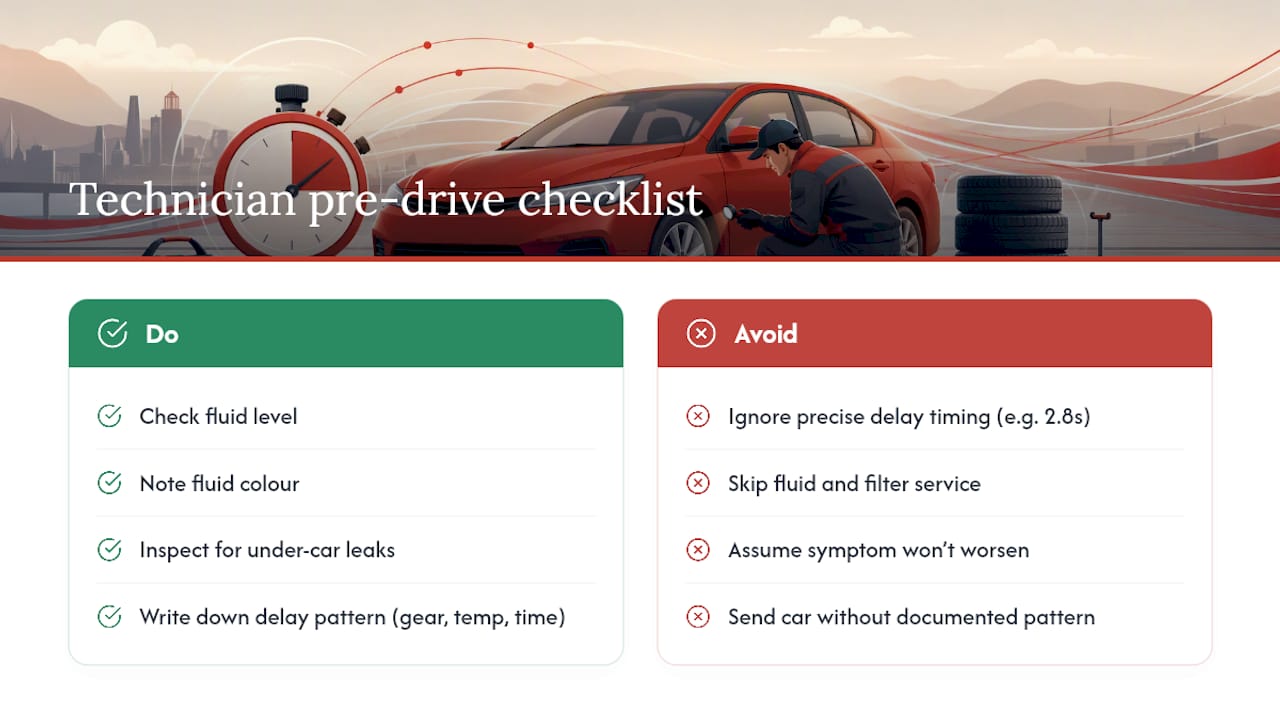
Before you drive anywhere, run through this: fluid level checked, fluid color noted, no leaks visible underneath, delay pattern written down (gear, temperature, time of day), and the check engine light status confirmed. Five minutes of your own homework can save a shop an hour of diagnostic guesswork.
A shop I know once caught a customer’s delay at exactly 2.8 seconds, right under the red line most bulletins draw at 3. A fluid and filter service alone fixed it. The car that came in two months later with the same complaint, ignored the first time around, needed a full clutch pack rebuild. Same symptom, wildly different outcome, purely because of timing.
— Shingi
Get Your Transmission Checked Before a Small Delay Becomes a Big Bill
Delayed engagement rarely fixes itself, and waiting is usually the most expensive choice you can make. A trusted shop has been diagnosing transmissions in the area for decades, using engagement-time and pressure testing rather than guesswork, helping customers avoid unnecessary part replacements.
Our ASE-certified technicians run professional-grade diagnostics with upfront pricing, and every repair, from a simple fluid service to full transmission service, comes backed by a 24-month, 24,000-mile warranty. Same-day appointments are often available, and if the fix turns out to be bigger than expected, financing options can help spread the cost.
If you’re noticing a pause before your car moves, don’t wait for the flare-and-bang stage. Book a free digital vehicle inspection with Tom’s B & M Auto and get an actual diagnosis instead of a guess.
Sources
- Delayed and/or Harsh Engagement of Transmission Shift After Vehicle Sitting with Engine Off (service bulletin excerpt)
- Troubleshooting: Delayed Engagement in an Automatic Transmission – Drivetrain Resource
- Delayed Transmission Engagement: Causes & Fix 2026 | AmpAuto
- Your car maintenance checklist
Recommended
- Advanced Engine Timing Procedures: Technician’s Guide
- Why Your Car Hesitates During Acceleration: 2026 Guide
- Fix Engine Misfires Step by Step: A Car Owner’s Guide
- The Role of Software Updates in Vehicle Repair
Leave a Reply