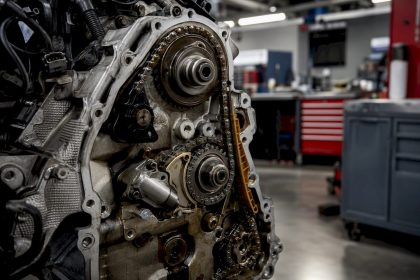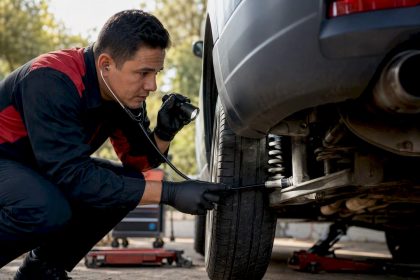
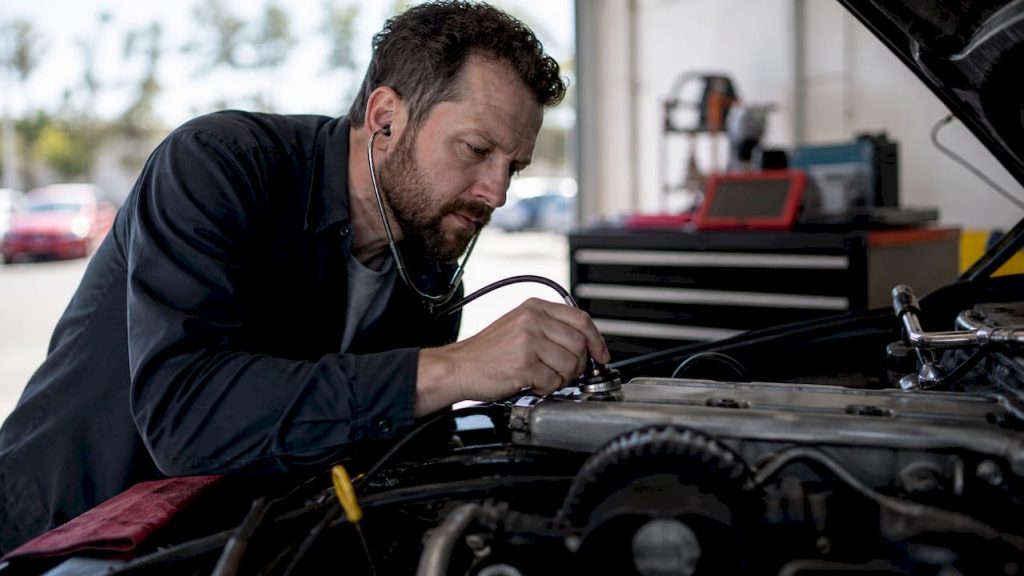
A timing chain rattle that vanishes within a few seconds of a cold start is usually a mild concern you can schedule repair for. A rattle that continues at idle, gets louder under acceleration, or appears with a check engine light is more serious and requires immediate professional attention. The difference between those two scenarios is almost entirely about duration, consistency, and whether other symptoms are riding along with the noise.
Here’s what to do in the next few minutes, before you do anything else:
- Check your oil level and condition. Low oil or oil that’s been neglected for too many miles is one of the most common triggers for tensioner-related noise, and it’s the easiest thing to rule out.
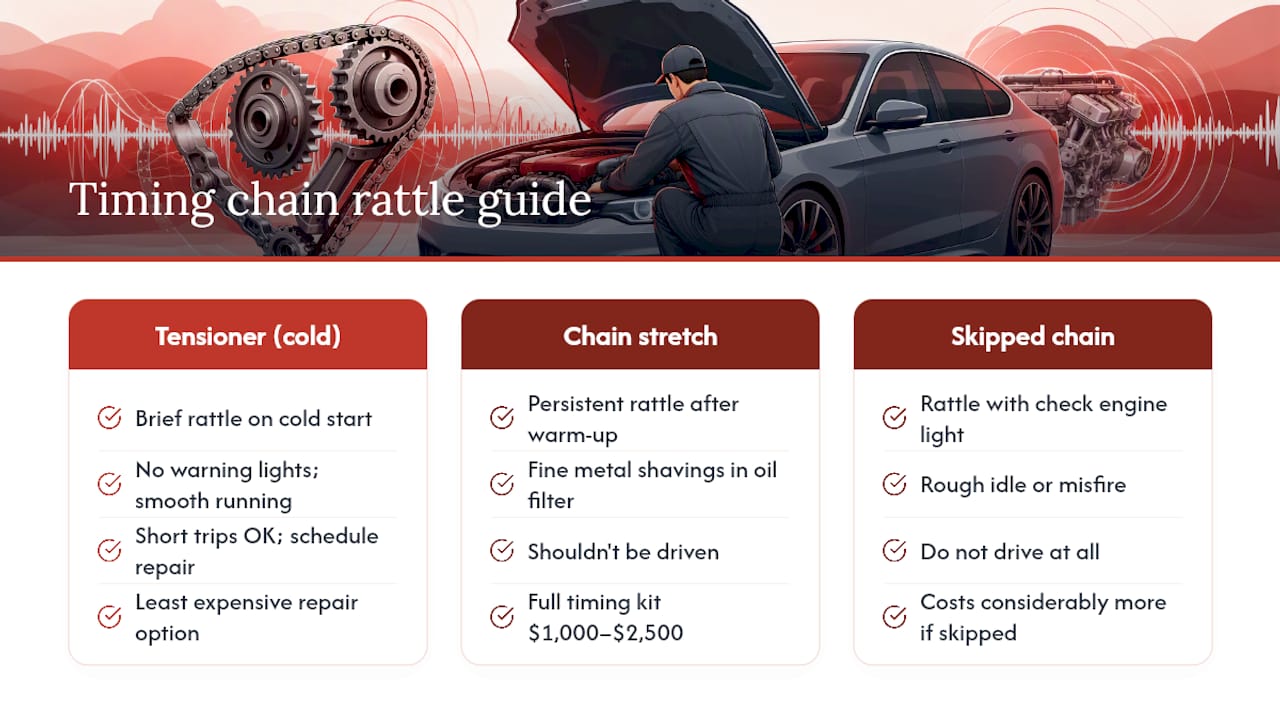
- Listen for how long the rattle lasts. A cold-start rattle that fades in two to ten seconds points toward the tensioner losing pressure overnight. A rattle that does not quiet down is a warning sign of more severe issues.
- Scan for codes or call a shop. If you have access to an OBD-II reader, check for cam/crank correlation codes. If not, describe what you’re hearing to a shop before you drive any real distance.
If the rattle is brief and only happens on a cold start, with no warning lights and no rough running, most vehicles can be driven cautiously to a shop. But if the noise persists past warm-up, or you notice a misfire, power loss, or codes like P0016 or P0017, stop driving. Have the car towed. A skipped timing chain in an interference engine can bend valves or destroy pistons in a matter of seconds, and that turns a $400 repair into a $4,000 one.
Key Takeaways
Timing chain rattle safety comes down to one variable: a brief cold-start rattle that fades within seconds is a monitor-and-schedule situation, while a persistent rattle with codes or misfire means stop driving and tow.
| Point | Details |
|---|---|
| Duration is the key signal | A brief rattle on cold start that fades quickly may indicate tensioner delay; persistent noise after warm-up can indicate chain stretch or guide wear. |
| Check oil first | Low or wrong-viscosity oil, or a filter without an anti-drain-back valve, causes many cold-start rattles that mimic tensioner failure. |
| Watch for these codes | P0016, P0017, P0340, and P0344 indicate cam/crank timing correlation faults and warrant immediate attention. |
| Tow if symptoms stack up | Persistent rattle plus misfire, power loss, or a check engine light means arrange a tow rather than continuing to drive. |
| Get a professional diagnosis | Tom’s B & M Auto uses ASE-certified technicians and professional-grade OBD-II diagnostics, backed by a 24-month/24,000-mile warranty, to confirm the cause before repair. |
Table of Contents
- What Does Timing Chain Rattle Sound Like, and When Does It Happen?
- What Causes a Timing Chain to Rattle?
- How Dangerous Is a Timing Chain Rattle If You Keep Driving?
- Can You Drive With a Timing Chain Rattle Right Now?
- How Do Mechanics Diagnose Timing Chain Rattle?
- What Does It Cost to Fix a Rattling Timing Chain?
- How Do You Prevent Timing Chain Rattle in the First Place?
- How Experienced Technicians Read a Timing Chain Rattle
- The Uncomfortable Truth About “Just Monitor It” Advice
- How Tom’s B & M Auto Handles Timing Chain Diagnosis and Repair
- Frequently Asked Questions
- Sources
What Does Timing Chain Rattle Sound Like, and When Does It Happen?
Timing chain rattle has a distinct character once you know what to listen for. It’s a metallic, marble-in-a-coffee-can sound, sometimes described as a rattle, a clatter, or a light slap. It’s not the tick-tick-tick of a lifter, and it’s not the deep, rhythmic rasp of a loose heat shield banging against the exhaust. If you’re not sure which noise you’re dealing with, it helps to compare what you’re hearing against common under-hood noise patterns before assuming the worst.
Timing chain noise tends to fall into three distinct patterns, and each one tells a different story about what’s actually failing.
- Cold-start-only rattle (lasts a few seconds). This is the classic sign of a hydraulic tensioner that bled down overnight and needs a moment to build oil pressure and take up slack. Once oil pressure rises, the chain quiets down.
- Persistent rattle at idle. This suggests the tensioner isn’t just slow to respond. It’s failing to hold tension at all, or the chain itself has stretched enough that the tensioner can’t fully compensate.
- Rattle that worsens under acceleration or load. This is often the most serious pattern. It points to significant chain stretch, worn guides, or a tensioner that’s essentially given up, and it means timing accuracy is degrading as RPM climbs.
Run a quick diagnostic before you call anyone. Start the engine cold, stand near the front of the vehicle (not underneath it), and use your phone’s voice memo app to record ten to fifteen seconds of the noise. Note whether it fades, how many seconds it takes, and whether revving the engine in park (briefly, gently) changes the pitch or volume.
Pro Tip: When you call a shop, don’t just say “it’s making a noise.” Tell them the exact timing: how many seconds the rattle lasts after startup, whether it happens every time or only on some mornings, and whether it changes with RPM. That single detail often lets a technician narrow the diagnosis before the car even arrives.
What Causes a Timing Chain to Rattle?
Four mechanical issues account for the overwhelming majority of timing chain rattle complaints, and they don’t all carry the same urgency.
Hydraulic tensioner collapse happens when the tensioner’s internal check valve wears out or oil pressure drops too low to keep it charged. This is the most common cause of a rattle that’s isolated to the first few seconds after a cold start, and it’s often the cheapest fix if caught early.
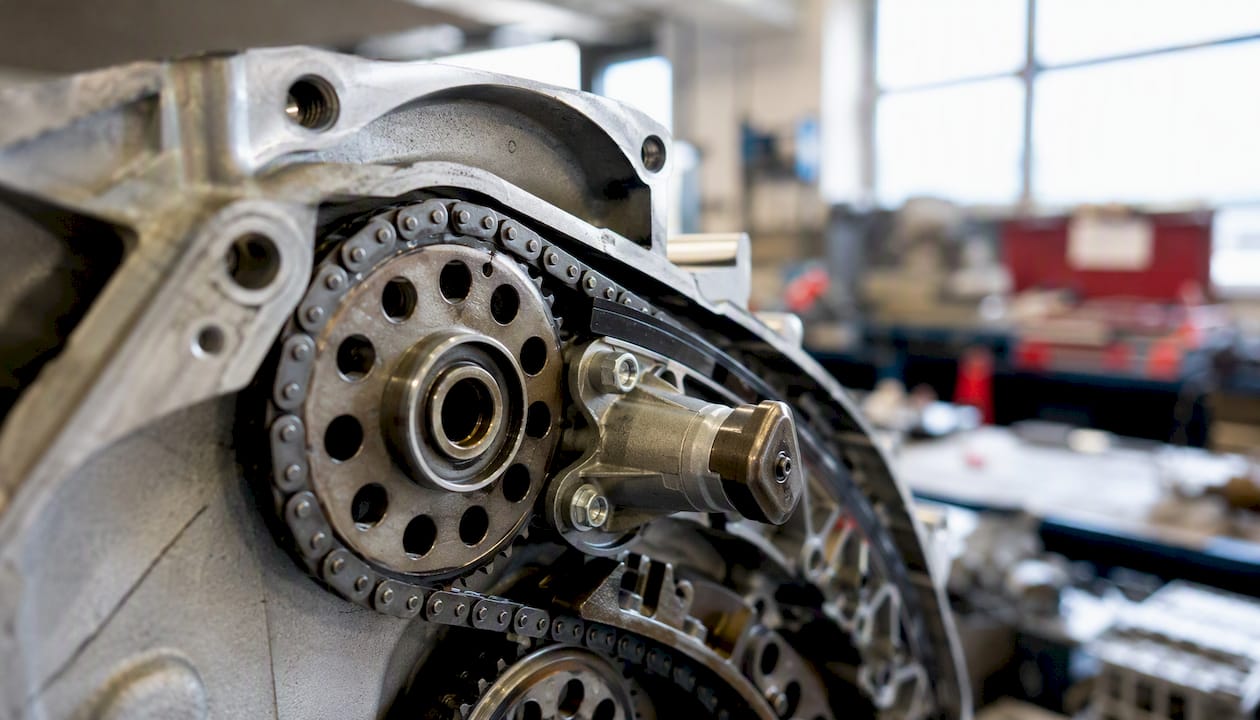
Chain stretch (elongation) is a real mechanical phenomenon, not a figure of speech. Every link in a timing chain wears microscopically over tens of thousands of miles, and that wear adds up until the chain effectively grows longer than the sprockets were designed for. A persistent rattle that doesn’t resolve after warm-up is the signature of this problem, and metal shavings in the oil filter often confirm it.
Worn or cracked guides are the plastic or composite rails that keep the chain riding smoothly on its path around the sprockets. When they crack or wear thin, you’ll often find plastic fragments in the oil pan or filter, and the noise pattern tends to be intermittent and rattly rather than a steady buzz.
Delayed oil pressure from the wrong viscosity, old oil, or a low-quality filter without a functioning anti-drain-back valve can mimic tensioner failure even when the tensioner itself is fine. Oil that drains back into the pan overnight leaves the tensioner starved for a few extra seconds every morning, which is exactly the kind of thing a $12 oil filter upgrade can fix.
- Cold-start-only, fades in seconds → tensioner or oil pressure delay
- Persistent + metal shavings in oil → chain stretch
- Intermittent rattle + plastic debris in oil → guide wear
- Rattle that worsens with RPM → combination of stretch and guide wear, or advanced tensioner failure
Correct oil viscosity and a filter with a working anti-drain-back valve won’t fix a chain that’s already stretched, but they can prevent tensioner-related rattle from ever starting.
How Dangerous Is a Timing Chain Rattle If You Keep Driving?
Not every rattle carries the same risk, and lumping them all together is where a lot of drivers go wrong. Think of it in three tiers.
Low risk: A brief cold-start rattle, gone in under ten seconds, with smooth running and no warning lights. This is worth monitoring and scheduling a repair, not panicking over.
Moderate risk: A rattle that’s getting longer or louder over weeks, or one that shows up occasionally at idle even after the engine’s warm. This is the window where inspection within days to a couple of weeks is the right call, not months.
High risk: A persistent rattle combined with a misfire, rough idle, loss of power, or a check engine light showing cam/crank correlation codes. This is the tier where continued driving risks real engine damage, and the timeline to failure can be alarmingly short.
Engine designs where the pistons and valves occupy the same physical space at certain points in the rotation, known as interference engines, don’t give you a grace period once the chain skips a tooth. A dropped chain in a design like that can bend every valve in the head in less than a second of running. That’s the difference between a repair bill measured in hundreds of dollars and one measured in thousands.
The progression from moderate to catastrophic isn’t always slow. A tensioner that’s been quietly losing pressure for months can fail completely and rapidly, especially under sustained highway load, where the chain is under more tension and the consequences of it jumping a sprocket tooth are more severe. If your car is showing the high-risk pattern, arrange a tow rather than driving it, even a short distance.
Can You Drive With a Timing Chain Rattle Right Now?
This is the question everyone actually wants answered, so here’s the decision tree in plain terms.
You can likely drive short distances, carefully, if:
- The rattle only happens for a few seconds right after a cold start and disappears completely once the engine warms up.
- There’s no check engine light, no misfire, and no noticeable loss of power.
- The oil level is correct and the oil doesn’t smell burnt or look sludgy.
You should not drive, and should arrange a tow, if:
- The rattle continues after the engine has fully warmed up, at idle or under load.
- You have a check engine light, especially with codes like P0016, P0017, P0340, or P0344, which typically indicate a cam or crank timing correlation fault.
- You notice rough idle, hesitation, misfire, or any drop in power alongside the noise.
If you’re in the “can drive” category, keep the trip short, avoid hard acceleration, stay off the highway if possible, and get to a shop the same day or the next. Don’t let a “monitor it” situation quietly turn into weeks of ignoring it. Rattles that are getting progressively louder or lasting longer each week are telling you the tensioner or chain is losing the battle.
A car with a persistent timing chain rattle and a cam/crank correlation code isn’t a “drive it gently to the shop” situation in most interference engines. Towing costs a fraction of what a bent valve or a wrecked piston costs, and the math almost always favors caution.
For a broader sense of how this noise differs from other under-hood symptoms, like a car that stalls at idle for unrelated reasons, it’s worth reviewing what rough idle and stalling can mean on their own, since the two problems sometimes overlap.
How Do Mechanics Diagnose Timing Chain Rattle?
A good shop doesn’t guess. There’s a fairly standard sequence that separates a tensioner problem from a chain problem from a guide problem, and it usually doesn’t require tearing the engine apart to get an answer.
- Cold-start listening test. A technician starts the engine cold, often before it’s even been touched, and listens with a mechanic’s stethoscope placed against specific points on the engine block to pinpoint where the noise originates.
- OBD-II scan. This checks for cam and crank correlation codes such as P0016 and P0017, along with camshaft position sensor codes like P0340 or P0344, which show up once chain slack has drifted far enough to throw off ignition and valve timing.
- Oil and filter inspection. Draining a small sample and checking the filter for metal shavings versus plastic fragments tells a technician a lot about whether they’re dealing with chain wear or guide failure before any parts come off.
- Visual and borescope inspection. If the first three steps don’t give a conclusive answer, removing the timing cover or using a borescope through an access point lets a technician see actual chain slack, guide condition, and tensioner extension directly.
Each step rules something in or out. The listening test locates the noise. The code scan tells you whether timing has drifted enough to matter electronically. The oil inspection often confirms the mechanical cause before anyone picks up a wrench. Combining all three usually gets to a confident answer without unnecessary teardown, and borescope inspection is typically reserved for cases where the first three steps disagree.
Pro Tip: If a shop tells you they can diagnose a timing chain issue over the phone without hearing the car or pulling codes, get a second opinion. This is one of those problems where professional-grade OBD-II diagnostics and a trained ear genuinely matter, and ASE-certified technicians are trained specifically to separate these overlapping symptoms rather than guess.
What Does It Cost to Fix a Rattling Timing Chain?
Repair scope varies enormously depending on how far the problem has progressed, and that’s exactly why catching a rattle early matters financially, not just mechanically.
| Repair Type | What’s Typically Replaced | Approximate Time | Notes |
|---|---|---|---|
| Tensioner replacement only | Hydraulic tensioner, sometimes a gasket | 1 to 3 hours | Lowest-cost fix; only appropriate if chain and guides are still in good shape |
| Guides plus tensioner | Guides, tensioner, related gaskets | 3 hours | Common when plastic debris is found in the oil filter |
| Full timing chain kit | Chain, tensioner, guides, sprockets, sometimes water pump | 4 hours | Typically runs $1,000 to $2,500 depending on engine layout and labor access |
| Catastrophic repair after chain skip | Valves, pistons, head work, or full engine replacement | Days to weeks | Cost and time vary widely; this is the outcome the other repairs are meant to prevent |
Many shops recommend replacing the water pump, seals, and tensioner together with a full chain kit to save labor costs, even if the water pump appears fine.
Before authorizing any timing-system work, ask your shop three things: what specifically failed and how they confirmed it, whether related parts (guides, tensioner, sprockets) are included in the quote, and what warranty covers the labor and parts. A shop backing its work with a 24-month, 24,000-mile warranty gives you real protection if something related fails down the line, and financing options can make a full kit replacement manageable if it comes as a surprise.
How Do You Prevent Timing Chain Rattle in the First Place?
Timing chains aren’t scheduled-replacement items the way timing belts are, but that doesn’t mean they’re maintenance-free. Neglect accelerates every one of the failure modes covered above.
- Follow the manufacturer’s oil-change interval, not a generic “every 5,000 miles” rule that might not match your engine’s actual spec.
- Use the exact oil viscosity and specification your owner’s manual calls for. The wrong viscosity changes how quickly oil pressure builds at startup, which directly affects tensioner performance.
- Choose a quality filter with a functioning anti-drain-back valve. Cheap filters that let oil drain back into the pan overnight are a common, underrated cause of cold-start rattle.
- Check your oil level regularly between changes, and watch for leaks that could let levels drop unnoticed.
- Watch for sludge buildup, which often signals extended intervals between changes and can starve the tensioner of clean oil pressure.
Pro Tip: Shopping for a used car? Ask for service records showing oil-change intervals, and if you can, start the engine cold before test-driving it. A brief rattle on a cold engine that’s been sitting overnight is one of the most reliable ways to catch a developing tensioner problem before you own the problem. Certain engine families are more prone to chain and tensioner issues than others, so a quick pre-purchase inspection is worth the cost every time.
How Experienced Technicians Read a Timing Chain Rattle
An experienced technician treats the duration and timing of a rattle almost like a fingerprint. A customer who describes a rattle that lasts exactly three or four seconds every cold morning and then disappears is describing a textbook tensioner delay, and that’s often confirmed within minutes on the lift. A customer who says the noise never fully goes away, even after a ten-minute highway drive, is describing something the tensioner can no longer compensate for, and that usually means chain stretch has set in.
The oil filter tells its own story. Fine metallic glitter in the filter media points toward chain and sprocket wear grinding against each other. Small plastic flecks point toward a cracked guide shedding material into the oil pan. Both findings change the repair plan, and both are things a technician can spot in the first few minutes of a diagnostic appointment, without pulling the timing cover.
- ASE-certified technicians trained specifically to separate overlapping engine noise symptoms
- Professional-grade OBD-II diagnostics to catch cam/crank correlation faults before they become misfires
- A 24-month, 24,000-mile warranty on completed repairs
- Same-day appointments frequently available for diagnostic visits
- Decades of hands-on experience with these exact failure patterns, drawn from four decades in business
The single biggest mistake we see is a driver who hears a brief cold rattle, assumes it’s nothing because it goes away, and doesn’t have it checked for months. By the time the rattle becomes constant, the repair has usually gotten more expensive, not less.
This article was compiled with input from Tom’s B & M Auto’s automotive content team, drawing on decades of hands-on diagnostic experience with exactly these symptoms.
The Uncomfortable Truth About “Just Monitor It” Advice
A lot of advice floating around treats timing chain rattle as binary: either it’s nothing, or your engine is about to explode. Neither extreme is honest. The research on this is pretty clear that duration and consistency are the real signal, and most cold-start-only rattles are tensioner issues that give you a genuine window to schedule a repair rather than an emergency to panic over.
Where conventional advice falls short is in treating “keep an eye on it” as a passive activity. Monitoring a rattle isn’t just noticing it exists. It means tracking whether it’s getting longer, whether it’s showing up at times it didn’t before, and whether new symptoms like rough idle or hesitation are joining the party. A rattle that was three seconds long in January and is six seconds long in March isn’t stable. It’s degrading, and that trajectory matters more than any single day’s noise level.
The other thing underestimated by most drivers: oil discipline is doing more preventive work here than people give it credit for. Chain stretch and guide wear are largely mechanical wear-and-tear that catches up with every engine eventually, but a huge share of tensioner-related rattle complaints trace back to oil that’s the wrong viscosity, overdue for a change, or filtered through hardware that lets it drain back overnight. That’s a five-minute fix in most cases, not a $2,000 one, and it’s worth ruling out before assuming the worst.
If there’s one thing worth prioritizing above all else, it’s getting an actual diagnosis instead of guessing from internet forums. The pattern of the noise, cross-checked against an OBD-II scan and a look at the oil filter, usually gives a confident answer in under an hour. That’s a small investment against the alternative of driving on a problem that’s quietly getting worse.
How Tom’s B & M Auto Handles Timing Chain Diagnosis and Repair
If you’re hearing a rattle and you’re not sure whether it’s a five-minute oil fix or a full timing kit, that uncertainty is exactly what a proper diagnostic appointment resolves, and it’s worth getting an answer before the noise gets worse or more expensive to fix.
Tom’s B & M Auto has been diagnosing engine noise in Lynnwood, Washington since 1985, and timing chain complaints are one of the most common calls the shop gets. Every diagnostic appointment uses professional-grade OBD-II scanning to check for cam and crank correlation codes, paired with a hands-on inspection from ASE-certified technicians who know the difference between a tensioner delay and genuine chain stretch without guessing. If your check engine light is already on, the shop’s free check engine light review is a no-cost way to get a real answer instead of sitting on it.
Same-day appointments are frequently available, and every completed repair, from a simple tensioner swap to a full timing chain kit, carries a 24-month, 24,000-mile warranty. Financing is available if a full timing system replacement catches you off guard financially. If your engine is a Kenmore-area vehicle needing more involved work, the shop’s engine repair services cover everything from tensioner replacement through full kit installation with related parts done in one visit. Call or book online, and describe the noise pattern you recorded. It genuinely speeds up the diagnosis.
Frequently Asked Questions
Is timing chain rattle always serious?
No. A brief rattle limited to the first few seconds of a cold start, with no warning lights and smooth running otherwise, is often just a tensioner that’s slow to build pressure. It’s worth getting checked, but it’s not automatically an emergency.
How long can I drive with a timing chain rattle?
If the rattle is cold-start-only and disappears within seconds, many drivers can continue short trips for days to a couple of weeks while scheduling a repair. If the rattle persists after warm-up or comes with a check engine light, you shouldn’t drive it at all.
What does timing chain noise on startup usually mean?
It usually points to a hydraulic tensioner that lost oil pressure overnight, though low oil level, the wrong oil viscosity, or a filter without an anti-drain-back valve can cause the same symptom.
What are the most common timing chain tensioner symptoms?
A cold-start rattle that fades within seconds, timing-related check engine codes like P0016 or P0017, and in advanced cases a rough idle or misfire as timing accuracy degrades.
How do I know if it’s chain stretch and not just the tensioner?
Chain stretch tends to produce a rattle that doesn’t fully quiet down even after the engine warms up, and it’s often accompanied by fine metal shavings in the oil filter. A tensioner issue typically resolves within seconds of startup.
How much does it cost to fix timing chain rattle?
A tensioner-only repair is the least expensive option, while a full timing chain kit with sprockets and guides typically runs $1,000 to $2,500 depending on the engine and labor involved. Catastrophic damage from a skipped chain costs considerably more.
Can a timing chain rattle just go away on its own?
The noise might seem less noticeable on some days, especially with warmer weather or fresh oil, but the underlying wear doesn’t reverse itself. It’s a sign to schedule inspection, not to assume the problem resolved.
Sources
- How To Diagnose Timing Chain, Tensioner, And Guide Failure: Symptoms Every Car Owner Should Know
- Timing chain replacement cost estimator | RepairPal
- Carparts
- Timing Chain Rattle On Startup: Causes, Risks & Repair Costs UK | Motor Vehicle Expert
- 8 Causes of Timing Chain Noise (And What It’ll Cost to Fix in 2026)
This article’s diagnostic guidance and cost estimates are drawn directly from the sources above. Confirm current pricing and your vehicle’s specific timing-system design with a qualified technician before authorizing repair work.