
Direct Injection Carbon Buildup: Causes, Symptoms and Fixes
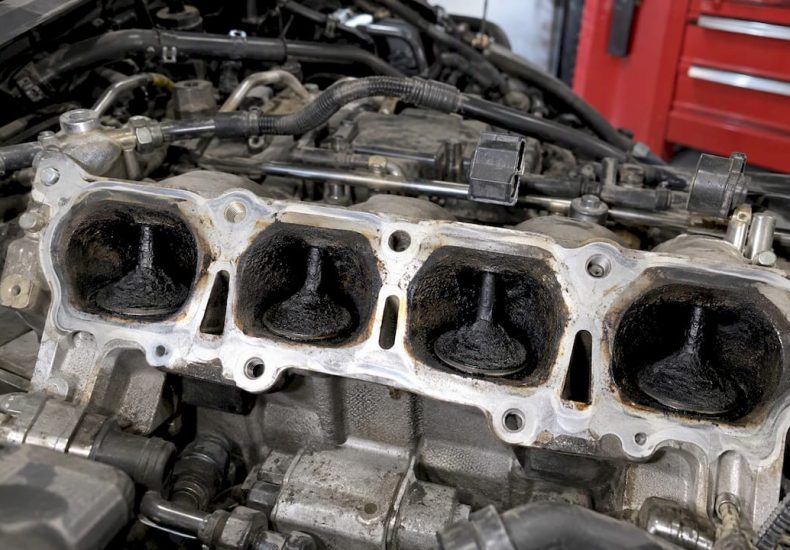
Direct injection carbon buildup is baked-on oil and soot on the back of your intake valves. It forms because fuel in a direct-injection engine never washes over those valves the way it does in an older port-injected engine. It can cause rough idle, hesitation, misfires and lost power. Fuel additives rarely reach it. The proven fix is a mechanical cleaning, and the best protection is regular oil changes and a clean air filter.
This guide explains what is happening inside the engine, how a shop confirms it, what cleaning methods exist and what they cost, and what you can do to slow the buildup. We have been working on Lynnwood cars since 1985, and these engines now come through our bays every week.
TL;DR
- Direct-injection (GDI) engines spray fuel straight into the cylinder, so nothing rinses the intake valves. Oil vapor and dirt bake onto them over time.
- Typical signs: rough idle (worse on cold starts), hesitation, power loss, worse fuel economy and misfire codes.
- Fuel-system cleaners and additives treat the injector tips, not the backs of the valves. Heavy deposits usually need the intake manifold removed and the valves cleaned by hand or by walnut-shell blasting.
- Prevention: on-time oil changes, a clean air filter, quality fuel and regular driving at highway speed.
- A scan-tool diagnosis should come before any cleaning, because misfires have many other causes.
Table of Contents
- Why direct injection engines build carbon on the valves
- Symptoms of intake valve carbon buildup
- How a shop confirms carbon buildup
- How direct injection carbon is cleaned
- Can you clean it with a spray or an additive?
- Does my Subaru, Toyota, Honda or European car have this?
- How to slow carbon buildup
- Our perspective
- Get your engine checked in Lynnwood
- FAQ
- Sources
Why direct injection engines build carbon on the valves
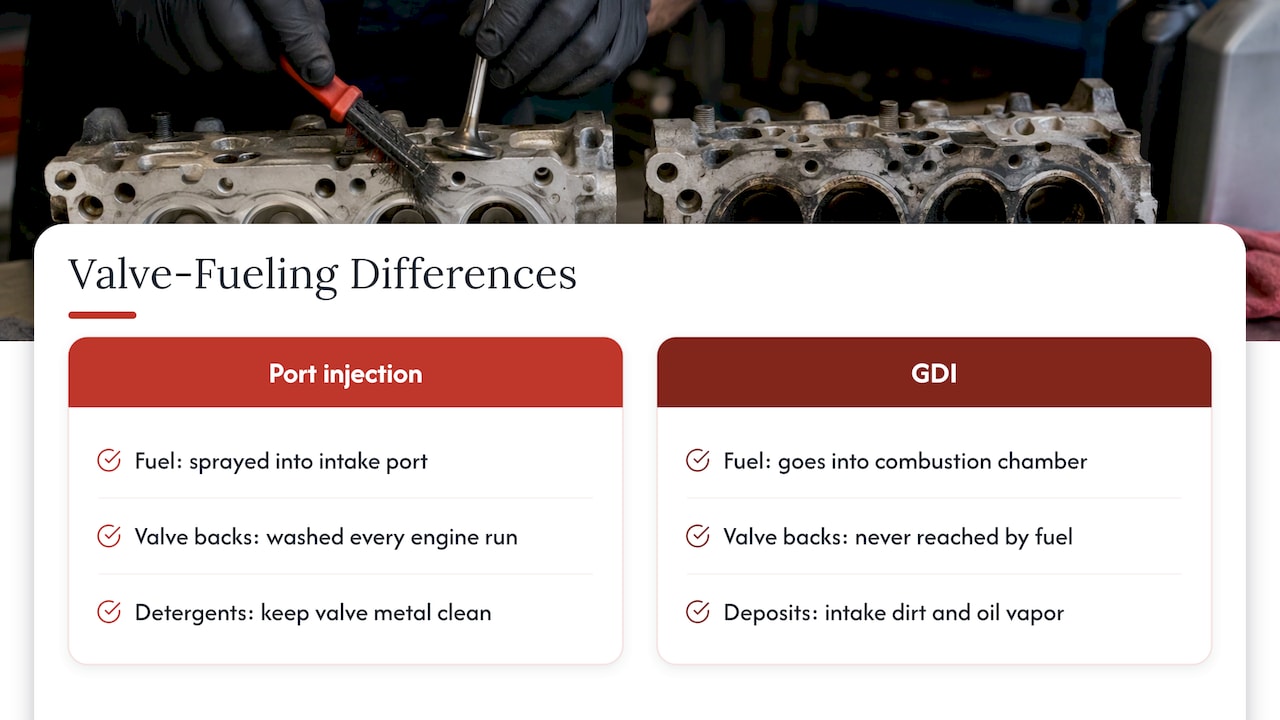
In a traditional port-injection engine, gasoline is sprayed into the intake port. It washes over the back of each intake valve every time the engine runs, and the detergents in the fuel keep the metal clean. In a GDI engine, fuel goes directly into the combustion chamber, so gas never reaches the back of the valves. Dirt from the intake air and oil vapor from the crankcase ventilation system then settle on the hot valve surface and burn on.
Car makers adopted the design for good reasons. In 2019, more than half of the gasoline-powered new cars sold in North America had direct injection, largely to meet tougher fuel economy and emissions rules. That means a large share of the cars on Lynnwood roads today, from compact Hondas and Toyotas to turbocharged Subarus and European sedans, have this design.
Where the deposits come from
The sticky layer on the valves comes from several sources working together. Oil vapor from the PCV system, variable cam timing that lets combustion gases enter the intake, and worn piston rings that let blow-by overwhelm the PCV system all contribute. Once a thin, sticky film forms, it traps more particles and the layer thickens.
That is why two engines of the same model can look very different at 80,000 miles. Short trips, long oil intervals, a dirty air filter and a high-blow-by engine all speed it up.
Valve carbon vs. injector tip fouling
People use “carbon buildup” for two separate problems, and the difference matters when you pick a fix.
| Intake valve deposits | Injector tip deposits | |
|---|---|---|
| Where | Back of the intake valves and intake ports | Tip of the injector inside the combustion chamber |
| Main cause | Oil vapor and dirt baking onto hot valves with no fuel wash | Fuel left in the injector tip after shutdown, cooked by residual heat |
| Can fuel-rail cleaner reach it? | No | Partly |
| Typical fix | Manual cleaning or walnut-shell blasting | Cleaner through the fuel system, or injector service |
Solvent that goes through the fuel rail can address injector tip fouling, but it never reaches the back of the valves. A bottle of additive can be a reasonable maintenance habit for the injectors, but it will not fix a valve-deposit problem.
Symptoms of intake valve carbon buildup
The onset is gradual, so many owners adapt without noticing. Common signs include a rough or uneven idle, especially when cold, hesitation or stumbling under acceleration, loss of power, lower fuel economy and misfire fault codes. You may also notice a hard start on a cold morning.
How early can it show up? It varies a lot by engine. One industry source says GDI systems can show drivability problems related to valve deposits as early as 3,000 miles, with hard starting and random misfire codes. Many engines run for far longer before the symptoms bother the driver. Mileage alone does not tell you the condition of the valves.
Symptoms that look like something else
Carbon is only one cause of these symptoms, and treating the wrong problem wastes money. A rough idle or hesitation can also come from worn spark plugs, ignition coils, a vacuum leak, low fuel pressure or a sensor fault. A weak battery or charging problem can disturb a modern engine too, because engine management relies on a steady electrical supply, as this explanation of the battery’s role in engine management shows.
These pages from our blog walk through the most common look-alikes:
- What is engine misfiring? Causes, signs and fixes
- Fix engine misfires step by step
- Why your car hesitates during acceleration
- Loss of power when accelerating
- Why a car stalls at idle
How a shop confirms carbon buildup
Guessing is the expensive way to do this. A proper diagnosis follows a sequence:
- Scan for codes and read live data. Technicians look at large fuel trim corrections and cylinder-specific misfire counters, and sometimes low intake vacuum readings. A misfire concentrated on one or two cylinders points somewhere different from a general rough idle.
- Rule out the basics. Spark plugs, coils, fuel pressure, vacuum leaks and the PCV system come first, because they are cheaper to fix and far more common.
- Check intake vacuum while cranking. Low vacuum can point to restrictions or sealing problems at the valves.
- Inspect the valves. The definitive check is to remove the intake manifold and look at the intake runners and the backs of the valves. Some shops can also use a borescope through the spark plug or injector port on certain engines.
If your check engine light is on, start with that. We offer a free check engine light review so you can get the stored codes explained before you decide on any repair.
How direct injection carbon is cleaned
There are three broad approaches. Which one fits depends on how heavy the deposits are and what the manufacturer specifies for your engine.
Chemical cleaning
Some manufacturers publish their own chemical procedures. Subaru, for example, has a service bulletin for specified models that uses its P.E.A. carbon cleaner applied into the intake manifold while the engine runs. A related bulletin covers removing carbon from fuel injectors and internal engine components, including the intake valves and manifold, to address misfire codes, black smoke, lack of power, knocking and rough idle.
The takeaway: chemical cleaning works best when it follows the manufacturer’s own procedure for your engine, in the right product, quantity and sequence. It is not the same as pouring something into the gas tank.
Walnut-shell blasting
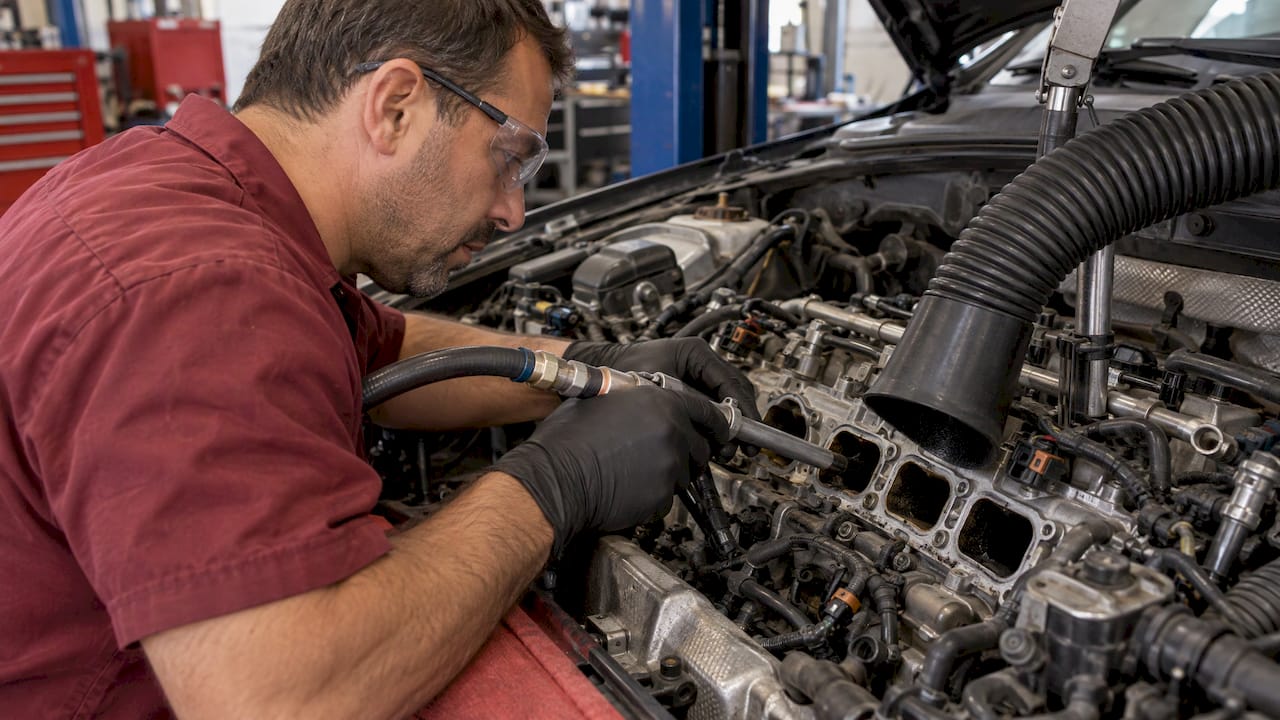
The most tried-and-true method for heavy intake deposits is to remove the intake manifold and air-blast the ports with crushed walnut shell media. The shells are hard enough to knock off carbon but softer than the metal, so they leave the valve and port surfaces intact. The method is accepted at the manufacturer level too: Subaru of America approved a walnut blasting machine as an alternative to its chemical procedure.
Manual cleaning
With the manifold off, a technician can also scrape and solvent-clean the valves and ports by hand. This is slower than blasting but can work on lighter deposits.
What to expect to pay
The job is labor-heavy because the manifold has to come off. One US price guide puts intake valve cleaning at roughly $450 for a four-cylinder and up to $900 for a six-cylinder. Actual quotes vary by engine, because some manifolds take an hour to remove and others take much longer. Ask for a written, upfront estimate that covers manifold gaskets and any related parts replaced during the job.
Can you clean it with a spray or an additive?
Two questions come up constantly.
Fuel-system cleaner. In a GDI engine, cleaner added through the fuel system will not reach deposits on the intake plenum or valves, because the high-pressure injector sits inside the combustion chamber. It can help keep injectors tidy, but the valves need a different approach.
WD-40 and household sprays. We do not recommend spraying general-purpose lubricants or solvents into an intake. They are not made for this job, and the manufacturer procedures listed above specify dedicated products and methods for a reason. Excess liquid in the wrong place can also wash oil off cylinder walls or foul sensors. If you want a cleaning done, have a shop follow the procedure for your engine.
Does my Subaru, Toyota, Honda or European car have this?
Any engine with gasoline direct injection and no port injectors can build intake valve deposits. That includes many turbocharged and non-turbo engines from Subaru, Honda, Toyota, Hyundai, Kia, Ford, GM, Volkswagen, BMW and Mercedes. Some Toyota and Lexus engines use both port and direct injection, which gives the valves a fuel wash and reduces the problem. Check your owner’s manual or ask us whether your engine uses direct injection only, port only or both.
Subaru owners ask often, and the service bulletins above show the company has published carbon procedures for specified models. Turbocharged direct-injection engines tend to attract the most attention, but the right answer for your car depends on its exact engine and mileage, not the badge on the hood.
How to slow carbon buildup
You cannot eliminate it on an engine designed this way, but you can slow it considerably.
- Change oil on time. Oil vapor is the main fuel for valve deposits, so fresh oil of the correct specification matters. Our oil change service starts from $100. Use the interval in your owner’s manual, and go shorter if you drive mostly short trips or in stop-and-go traffic.
- Keep the air filter clean. Dirt that gets past a clogged or poorly seated filter ends up in the intake.
- Use quality gasoline. TOP TIER+ standards will require fuels to actively clean fuel injectors. Fuel with strong detergent packages protects injectors, even though it cannot wash the valves.
- Fix PCV and blow-by problems early. A worn PCV system or tired piston rings push more oil vapor into the intake.
- Drive it properly. Engines that only ever do five-minute trips rarely get hot enough to burn off light deposits. A regular highway run helps, though it will not remove hardened carbon.
- Follow scheduled maintenance. Our 30k, 60k and 90k service covers the milestone checks where the air filter, spark plugs and fluids get attention.
If the engine already misfires, do not wait. Persistent misfires can damage the catalytic converter, and hard deposits that break loose can cause further trouble. Hardened bits breaking off can potentially damage the catalytic converter or turbocharger.
Our perspective
Most of the direct-injection cars that come in with a rough idle do not have a carbon problem alone. They have a carbon problem plus an overdue oil change, a tired spark plug set or an air filter that has seen better days. Our approach is to diagnose first, using professional-grade OBD-II scan data, and to explain what we find in plain terms before anyone approves a repair.
We have serviced Toyota, Honda, Subaru, domestic and European vehicles in Lynnwood since 1985, and our ASE-certified technicians see how these engines age. The cheapest protection is not a miracle additive. It is regular maintenance, done on schedule, with the right oil and filters.
When an engine does need deeper work, we quote it upfront and stand behind it with our 24-month / 24,000-mile warranty on all work.
Shingi
Get your engine checked in Lynnwood
If your direct-injection engine idles rough, hesitates or has a misfire code, we will find out why before recommending anything. Our technicians are ASE-certified, we use professional-grade OBD-II diagnostics, and we work on all makes, including European and hybrid models. Same-day appointments are often available, and military members, seniors and first responders can ask about our discounts.

Start with the free check engine light review, or book engine repair in Lynnwood and tell us the symptoms. You can also see everything we do at Tom’s B & M Auto.
FAQ
Can direct injection injectors be cleaned?
Yes, the injector tips can be cleaned, usually with a cleaner run through the fuel system or by a professional service. Injector tip deposits come from fuel cooking in the tip after shutdown. This is a different problem from intake valve carbon, which needs a different fix.
How do I clean carbon from a GDI engine?
For intake valves, the established methods are manufacturer-approved chemical procedures, hand cleaning and walnut-shell blasting, the last two with the intake manifold removed. Heavy deposits generally call for the blasting or hand cleaning route. A diagnosis should confirm the carbon before any work starts.
Do Subarus have carbon buildup?
Subaru has published service bulletins with carbon-removal procedures for specified models, so it is a recognized issue on some engines. Whether your car is affected depends on its engine and how it has been maintained. We can check your symptoms and codes and tell you what we see.
How often should I change oil in a direct-injection engine?
Follow the interval and oil specification in your owner’s manual, and shorten it if most of your driving is short trips or heavy traffic. Clean oil helps limit the vapor that feeds valve deposits. Our oil change starts from $100.
Sources
- GDI Engines and Carbon Buildup, Know Your Parts
- Fuel Induction Service: does your car need it?
- Causes of carbon buildup in GDI engines, FenderBender
- Diagnosing Carbon Buildup On GDi Injectors, Carwood
- Fuel Injector Cleaning: Methods, Limits and When to Replace
- December 2014 GDI, Motor
- How to Diagnose Engine Carbon Buildup: 7 Key Checks
- Subaru service bulletin, P.E.A. carbon cleaner procedure
- Subaru service bulletin 09-74-21R
- Subaru bulletin, Autool HTS558 walnut blasting machine
- GDI System Maintenance: Preventing Misfires and Carbon, Underhood Service
- Case study, 2017 Hyundai Sonata
- TOP TIER+ 101, Fuels Market News
- The Role of Battery in Engine Management Systems
Recommended
- Fix Engine Misfires Step by Step: A Car Owner’s Guide
- Why Your Car Burns Oil: Causes, Checks, and Fixes
- Exhaust Leak Symptoms: Headaches Can Signal Carbon Monoxide Exposure
- Rough Idle After Refueling: Causes, Checks and Fixes
Leave a Reply