Car Leaning to One Side: Causes, Checks and Fixes
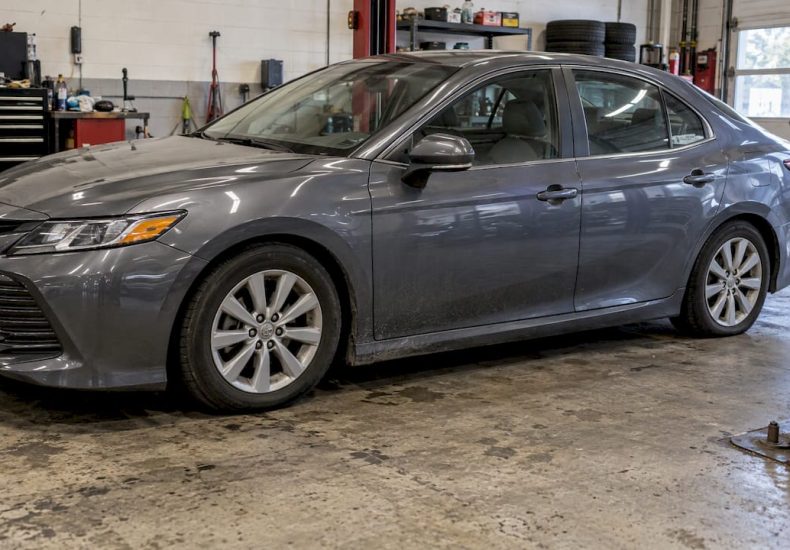
A car that sits visibly lower on one side, or drifts toward one side of the lane, is telling you that something under it has changed. The usual suspects are uneven tire pressure, a worn or damaged suspension part, or wheels knocked out of alignment. Sometimes the cause is as simple as the slope of the road. The sections below show how to tell which one you have, what you can check in your driveway, and when to stop driving and call a shop.
TL;DR
- “Leaning” can mean two things: the body sits lower on one side when parked on flat ground (usually suspension), or the car pulls sideways while driving (usually tires, alignment or brakes).
- Start with cold tire pressure and a look at each tire. It takes five minutes and rules out the most common cause.
- A bulging, rubbing or damaged tire sidewall, or a lean that appeared suddenly after an impact, means you should not keep driving it.
- Alignment fixes tire angles. It does not repair a worn spring, bushing or control arm, so the suspension should be inspected first.
- We inspect tires, suspension, steering and brakes on all makes at our Lynnwood, WA shop, and our repairs carry a 24-month / 24,000-mile warranty.
Table of Contents
- Is it leaning or pulling? Two different problems
- Rule out the road first
- Five-minute checks you can do at home
- What actually makes a car lean or pull
- Quick reference: symptom to likely cause
- When a leaning car is unsafe to drive
- What a proper diagnosis looks like
- When to schedule an alignment
- Get your car inspected in Lynnwood
- Frequently asked questions
- Sources
Is it leaning or pulling? Two different problems
People use “leaning” for two symptoms, and the fix depends on which one you have.
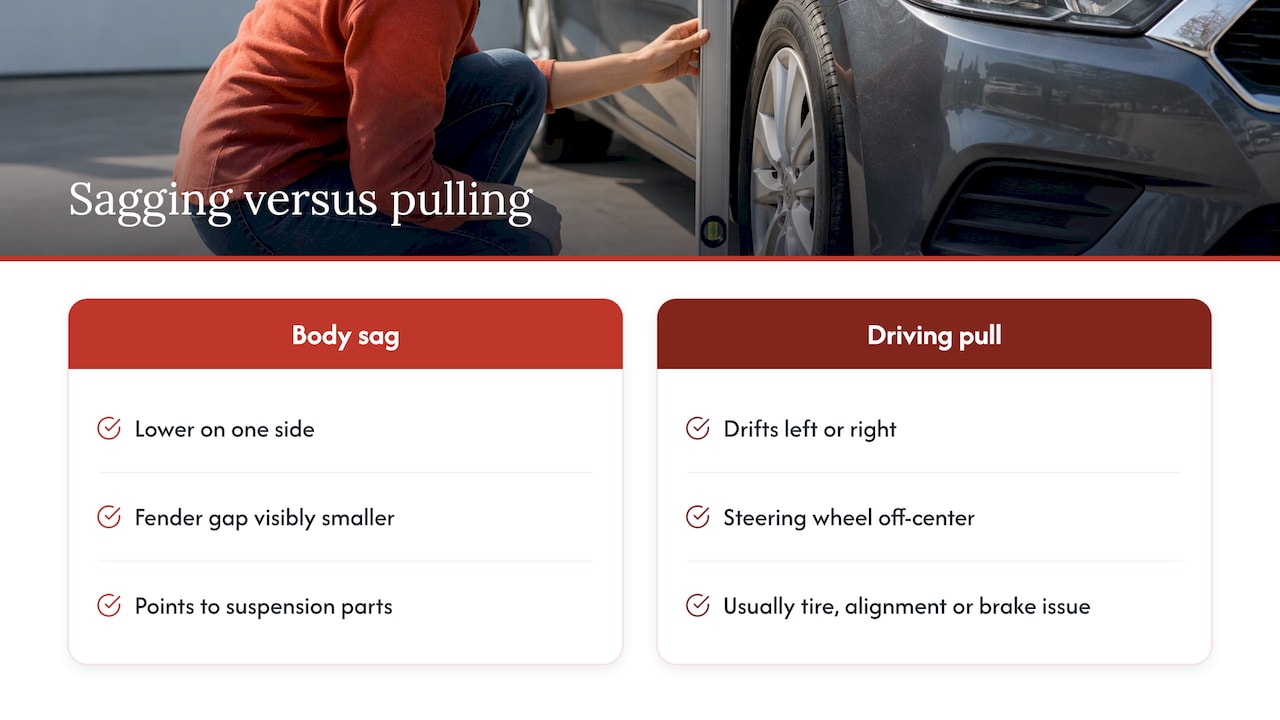
The body sits lower on one side. Park on level ground, step back and look at the gap between each tire and the fender. If one corner or one side is clearly closer to the tire, the car is physically sagging. That points to a suspension component: a spring, a mount, a bushing or a damaged part that no longer holds its share of the weight.
The car drifts or pulls while driving. On a flat, straight road with your hands lightly on the wheel, the car wanders toward the left or right. Or the steering wheel sits off-center when you are driving straight. This is usually a tire, alignment or brake issue, though worn steering and suspension parts can also cause it.
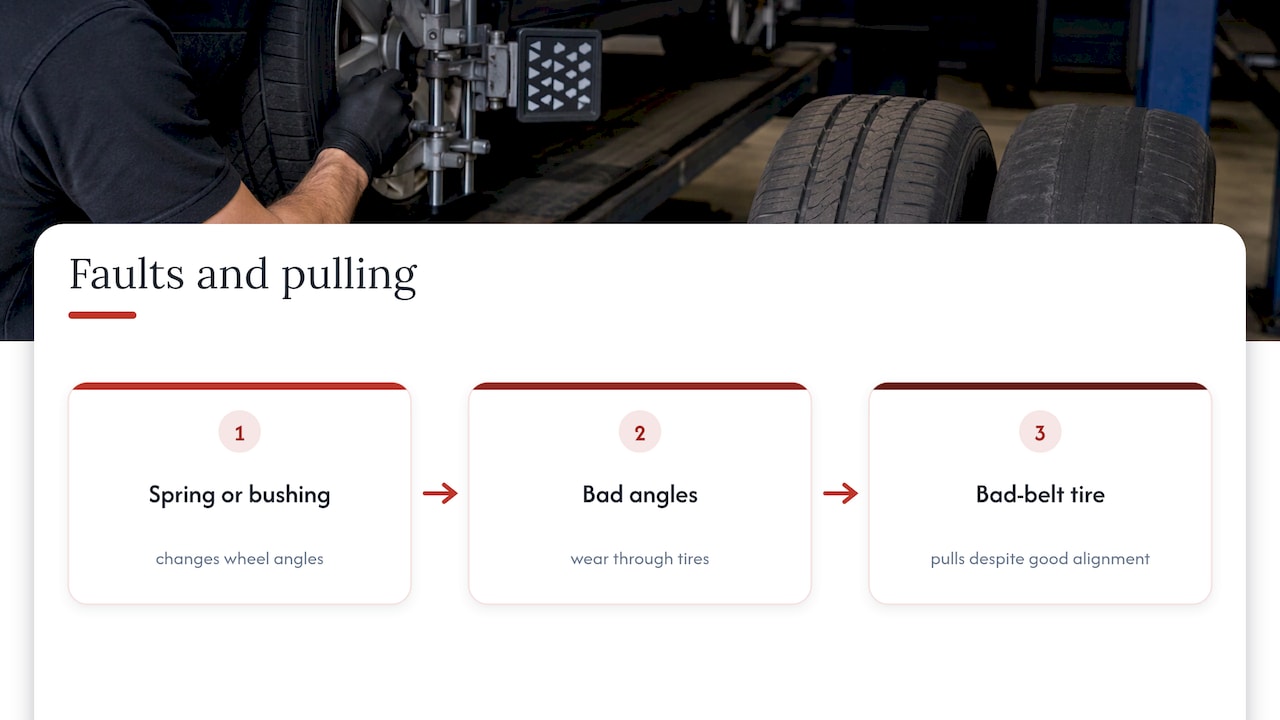
The two can overlap. A sagging corner changes the wheel angles, and bad angles wear tires unevenly. That is why a proper inspection looks at everything instead of guessing at one part.
Rule out the road first
Before you suspect a part, check the road. Most roads are built with a slight slope for drainage, about 1 to 2 percent, most commonly toward the right. NHTSA’s technical service bulletin on vehicle pull lists road crown as a cause of a pull, commonly toward the right in the US.
A gentle, steady drift to the right on a crowned two-lane road is often just this. Find an empty, flat parking lot or a wide, level road and repeat the test. If the car tracks straight there, the road was the cause. If it still pulls, keep reading.
The same logic applies to parking. A car on a sloped driveway or a canted street will look tilted because the surface is tilted. Judge a lean only on flat ground.
Five-minute checks you can do at home
These checks are safe and need no tools beyond a tire gauge. Do them with the car parked on level ground.
- Check cold tire pressure. Measure before you drive, or after the car has sat for a few hours. AAA advises comparing your readings against the recommendation in the owner’s manual or on the driver-door jamb, and looking over the tread and sidewall for wear or debris.
- Use the right number. Inflate to the vehicle manufacturer’s specification, not the maximum printed on the tire sidewall. Bridgestone makes the same point about the door-jamb placard.
- Look at the stance. Crouch at the front and rear of the car. Compare the gap from the top of each tire to the fender edge, left to right. Note which corner is low.
- Read the tread. Wear on only the inner or outer edge of a tire suggests an angle problem. Our guide to tread patterns that reveal uneven tire wear shows what each pattern means and how to check depth.
- Feel for dragging brakes. After a short drive, a wheel that is much hotter than the others, or a burning smell from one corner, can point to a brake that is not releasing. Do not touch a hot rotor. Brake dragging is part of the standard pull diagnosis in the NHTSA bulletin.
Write down what you find: which side, which corner, whether it is constant or only under braking or at highway speed. That note makes a technician’s job faster.
What actually makes a car lean or pull
Tire pressure and tire condition
Low or unequal pressure is the cheapest cause to fix and the first one to rule out. AAA lists low or unequal tire pressure and a failed radial belt among causes of a vehicle that pulls or drifts, alongside worn or bent steering and suspension parts.
Tires themselves can pull a car even when everything else is perfect. NHTSA’s bulletin explains that tire lateral forces such as ply steer or conicity can cause a pull. A common shop test for conicity is swapping the front tires side to side to see whether the pull changes direction.
Worn or damaged suspension parts
Suspension is what holds the body at the right height and keeps each wheel planted. AAA describes the system as springs, shock absorbers, control arms, bushings and joints. When one of these wears out or breaks, one corner can sag, the steering can feel loose, and the car can drift.
A sagging side is the classic case for a tired or broken spring or a failed mount. Rubber bushings that have cracked and collapsed can also let a wheel sit out of position. You may notice clunks over bumps, a bouncy ride or a sound that changes when you turn. Our guides on squeaky suspension checks and diagnosing suspension noise walk through what those sounds can mean.
Wheel alignment
Alignment is the adjustment of the angles at which the tires meet the road. Bridgestone explains that alignment adjusts suspension-related tire angles, not the tire or wheel itself, and names the key angles as camber, caster and toe. NHTSA’s bulletin notes that large cross-camber or caster differences between the left and right wheels can cause a pull.
AAA lists these common symptoms of misalignment:
- Pulling left or right
- An off-center steering wheel
- Uneven or fast wear on the inner or outer edges of the tires
- Steering that feels hypersensitive or loose
- Squealing during ordinary turns
Potholes and curbs are the everyday culprits. AAA notes that hitting them can affect alignment. Around Lynnwood and the rest of Snohomish County, with wet roads and patched pavement, that is an easy hit to take without noticing.
Brakes that drag
A caliper that sticks or a hose that restricts can leave one brake partly applied. The car then tugs toward that side, and the wheel runs hot. It is a short list item on a pull diagnosis, but a worthwhile one, since a dragging brake wears pads quickly and can damage the rotor. If your brake pedal feels soft or the car pulls only when braking, see our guide on what mechanics test for a soft brake pedal, and our brake system components checklist for how the parts fit together.
Frame or body damage
If the car has been in a collision, even a minor one, or hit a large object, a bent frame member or body mount can change the stance and the geometry. Technicians check the body and frame as part of a pull diagnosis for this reason. Alignment cannot correct a bent structure, so a lean that began right after an impact needs a hands-on inspection, not a quick adjustment.
Quick reference: symptom to likely cause
| What you notice | Likely area | First step |
|---|---|---|
| Drifts right on a two-lane road, straight on flat lot | Road crown | Retest on a level surface |
| One tire visibly softer, pull toward that side | Tire pressure or leak | Check cold pressure, look for a nail or valve leak |
| Steering wheel off-center, inner or outer tire edge wearing | Alignment | Inspection, then alignment |
| One corner sits lower when parked on flat ground | Spring, mount or bushing | Suspension inspection |
| Pulls when braking, one wheel hot | Dragging brake | Brake inspection |
| Pull follows the tire if fronts are swapped | Tire (conicity or ply steer) | Tire inspection |
| Lean began after a crash or hard hit | Suspension, frame or body | Full inspection before driving far |
When a leaning car is unsafe to drive
Some leans can wait for the next free appointment. Others cannot. Stop driving and arrange a tow or a very short, slow trip to a shop if you see any of these:
- A bulge, cut or visible damage on a tire sidewall.
- A tire that rubs on the fender or a suspension part. NHTSA recall documents show why this is urgent: contact between a tire and suspension components can damage the tire, cause sudden air loss and create a crash risk without warning.
- A sudden lean after hitting a curb, pothole or object.
- Steering that feels loose, stiff or unpredictable, or a clunk that gets louder.
- A soft or sinking brake pedal along with the pull.
- Fluid on the ground near a wheel or under the front of the car. Our checklist on documenting a steering rack leak tells you what to note before you call.
If the car vibrates at highway speed instead, that is a different pattern, covered in our guide to steering wheel vibration.
What a proper diagnosis looks like
A good diagnosis is a sequence, not a guess. NHTSA’s bulletin describes the process for one manufacturer: inspect the tires, wheels, suspension, steering, body and frame, and brakes, then road-test on a flat road to separate a true pull from an off-center steering wheel. If the tires are suspect, the front tires are swapped to test for conicity.
The general order is the same on any make:
- Confirm the complaint with a road test and note direction, speed and braking behavior.
- Check tire pressure, tread and sidewalls.
- Measure ride height and inspect springs, mounts, bushings, control arms, ball joints and tie rods.
- Check the brakes for drag.
- Measure alignment angles and compare them with the manufacturer’s specification.
- Repair what is worn or damaged, then align.
That last step matters. AAA recommends a complete inspection before an alignment, because the cause is not always alignment. Aligning a car with a worn part just sets angles on something that will not hold them. For the reverse situation, our article on wheel alignment after suspension work explains why replacing a part usually calls for a fresh alignment afterward.
When to schedule an alignment
Alignment is the right fix when the inspection shows tires and suspension are sound but the angles are off. AAA advises having alignment checked and adjusted when new tires are installed and whenever you notice unusual steering characteristics.
People also mix up alignment and balancing. They solve different problems: alignment deals with angles and pulling, while balancing deals with vibration. This explanation of alignment versus balancing shows what each one fixes and how to tell which you need.
A “slanted” tire that looks tilted at the top or bottom is usually a camber issue, which is an alignment angle. Alignment changes the angle the suspension holds. It is not a matter of pushing the wheel into place. If the tilt is severe or appeared suddenly, expect a worn or bent part to be involved.
What alignment costs depends on the vehicle, whether it is a two-wheel or four-wheel job, and whether parts need replacing first. Ask any shop for the price on your specific car before work starts. At our shop, we quote before we begin.
Our take on a leaning car
Most people who call us about a car that leans or pulls ask for an alignment. Sometimes that is exactly right. Often it is only part of the answer.
We have been working on cars in Lynnwood since 1985, and the pattern we see is that tires, suspension and alignment are connected. A weak spring or a worn bushing changes the angles. Bad angles chew through a tire. A tire with a bad belt pulls the car no matter how good the alignment is. If you fix only one of these, the symptom often comes back.
That is why our approach is to inspect first. Our ASE-certified technicians look at tires, suspension, steering and brakes, show you what they find through a digital inspection, and give you upfront pricing before any repair. We work on domestic, Asian and European vehicles, including hybrids, so the answer is based on your specific car and not a generic checklist.
We would rather you come in while it is a tire pressure issue or a worn bushing than after a tire has failed. A short inspection is a good investment compared with a blowout on I-5.
Shingi
Get your car inspected in Lynnwood
If your car sits lower on one side or pulls and you cannot pin down why, bring it to us. We inspect tires, suspension, steering and brakes on all makes and models, and we explain what we find before any work begins. Our repairs come with a 24-month / 24,000-mile warranty, and same-day appointments are often available.
The services most often involved in a lean or pull include suspension repair and the rest of our services and brake repair, which starts from $280 per axle. If the issue is a tire that has been wearing unevenly, a routine maintenance service at your mileage interval is a good moment to have it all checked together. We also offer discounts for military, seniors and first responders.
Frequently asked questions
Why is my car leaning to one side when parked?
If the car sits lower on one side on level ground, a suspension part is the first suspect: a weak or broken spring, a failed mount or a collapsed bushing. Uneven tire pressure can also make one side look lower. Check pressure first, then have the suspension inspected.
Is it bad to park a car on a slanted surface?
A car parked on a slope will look tilted only because the ground is tilted, so judge any lean on flat pavement. What matters more is whether the lean persists when the car is on level ground. If it does, have it inspected, since that points to a worn or damaged part.
Can an alignment fix a car that leans or pulls to one side?
It can fix a pull caused by wheel angles. It cannot repair a worn spring, bushing or control arm, or a tire that pulls on its own. AAA recommends a complete inspection first, so the alignment is done on parts that can hold their settings.
Why does my car drift right even when everything seems fine?
Road crown is the most common reason. Roads slope slightly for drainage, most often toward the right, and that can produce a gentle drift. Retest on a flat, level lot. If the car tracks straight there, the road is the cause.
Is it safe to keep driving with a leaning car?
It depends on the cause. A small pressure difference can be corrected on the spot. A sudden lean, a damaged or rubbing tire, loose steering or a soft brake pedal means you should stop driving and get the car towed or inspected immediately.
Sources
- Vehicle Pull, Steering Wheel Off Center, and Alignment (NHTSA technical service bulletin)
- Safety Recall 19V-758 (NHTSA)
- Car Maintenance Guide: Tires (AAA)
- Guide to Vehicle Wheel Alignment and Suspension (AAA)
- Tire Safety and Maintenance (AAA Exchange)
- TPMS Light On? What It Means (Bridgestone)
- What You Need to Know About Tire Alignment (Bridgestone)
- Alignment vs Balancing: What Each Fixes and When
Recommended
- Why Your Car Pulls to One Side: Causes and Fixes
- 6 Checks to Document a Steering Rack Leak Before You Visit a Shop
- Squeaky Suspension: Quick Checks Before Clunks Signal Trouble
- Wheel Alignment After Suspension Work: When You Need It
Leave a Reply