
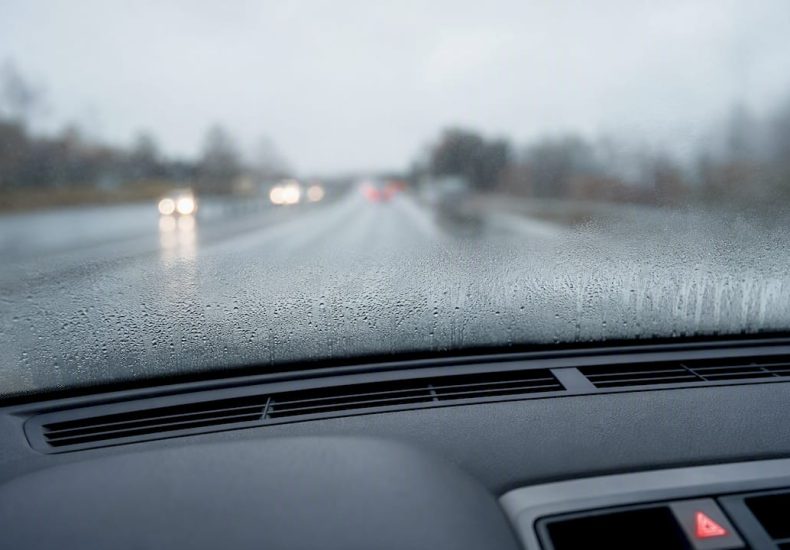
5 Steps Drivers Use to Clear Fogged Car Windows and When to See a Shop
Fog on your windows happens when warm, moist air inside the cabin meets cold glass and condenses. The fix is immediate: hit the front defrost, turn on the AC compressor, and switch your intake to fresh air instead of recirculation. If you can’t see clearly, pull over first. If the fog keeps coming back no matter what you do, that’s a sign something mechanical needs a look.
TL;DR:
- Using the defrost button, turning on the AC compressor, and switching to fresh air can clear interior fog quickly, but persistent fog may signal mechanical issues.
- Regularly cleaning the windshield, replacing the cabin filter, and avoiding damp items in the cabin significantly reduce interior fog formation.
- External fog results from cold glass dropping below outside dew point, especially in humid conditions, and can be minimized by moderating AC temperature and using the rear defogger.
- Persistent fog that returns quickly after clearing, or appears as a greasy film or with a smell of coolant, indicates potential heater core leaks or drain blockages needing professional inspection.
- Proper airflow management, such as directing vents toward side windows and increasing fan speed, helps prevent fogging by maintaining drier glass surfaces.
Table of Contents
- How to Defog Car Windows Fast While Driving
- How Can I Stop My Windows From Fogging in the First Place?
- Why Do Car Windows Fog Up in the First Place?
- When Does Fogging Point to a Real Mechanical Problem?
- What a Repair Shop Actually Does About Persistent Fog
- Does Cabin Airflow Actually Affect Fogging?
- How Much Does Weather Make Fogging Worse?
- Do Anti-Fog Sprays and Windshield Coatings Really Work?
- What to Do the Moment Fog Blocks Your View While Driving
- Where This Information Comes From
- An Editor’s Take on the Defog Habit Most Drivers Skip
- How Tom’s B & M Auto Handles Stubborn Fogging Problems
- Sources
- FAQ
How to Defog Car Windows Fast While Driving
Fog rarely picks a convenient moment. It shows up right as you’re merging onto the freeway or backing out of a driveway in the rain, and the fix has to happen in seconds, not minutes.
For interior fog, work through this order:
- Press the defrost button (usually the icon that looks like a windshield with wavy lines).
- Turn on the AC compressor, even if you’re running heat. Cold, dry air from the AC gets warmed by the heater core, which gives you dry, warm air instead of humid air.
- Push the intake setting to fresh air, not recirculation. Recirc traps the moisture already inside the car and keeps feeding it back onto the glass.
- Bump the fan speed up. More airflow moves moisture off the glass faster.
- If it’s still not clearing and you’re stopped or can crack a window safely, drop it an inch. That lets humid air escape instead of just moving it around the cabin.
Exterior fog is a different animal. It happens when the glass itself is colder than the outside air’s dew point, which is common on humid mornings or right when it starts raining after a cold night. Your wipers handle it in the short term, but running the AC too cold can actually make outside fog worse by chilling the glass further, according to the University of Illinois Physics Van. Moderate the AC rather than blasting max cold, and use your rear defogger for the back glass since wipers won’t reach it.
If visibility drops fast, slow down before you troubleshoot. Pull into a safe spot if you genuinely can’t see the road, and only wipe the glass by hand with a microfiber cloth once you’re stopped, never while driving.
Pro Tip: If your windows fog up, clear fine, then fog again within a minute or two of driving, don’t just accept it as normal. Write down when it happens (cold mornings, after rain, with passengers) so a technician has something concrete to check.
How Can I Stop My Windows From Fogging in the First Place?
Prevention beats a frantic defrost session every time, and most of it comes down to keeping moisture out of the cabin before it ever gets the chance to condense.
- Pull wet floor mats, umbrellas, and damp gym bags out of the car. A soaked mat can hold enough water to keep your windows fogging for days.
- Keep a microfiber cloth in the glove box for quick wipe downs, and dry any wet seats or carpet with a towel after a rainy drive.
- Clean the inside of your windshield with a non-ammonia glass cleaner every few weeks. Oily film from skin, plastics, and cleaning products gives water droplets something to cling to, and regular degreasing measurably cuts down on fogging frequency.
- Swap your cabin air filter on schedule. A clogged filter restricts airflow, which makes your HVAC system less effective at pulling moisture out of the air.
- Run the AC occasionally even in winter. It dehumidifies the air passing through your vents, which keeps fog from forming in the first place rather than just clearing it after the fact.
- Try an anti-fog spray or wipe on the interior glass, or tuck a small silica gel pack in the door pocket or under a seat. Both are cheap, effective add-ons for cars parked in consistently damp climates.
- Check your door and window seals and your sunroof drain tubes once a season. A failing seal lets outside moisture seep in slowly, which quietly raises your cabin humidity over weeks.
Pro Tip: Keep a small container of silica gel packets (the kind that come in shoe boxes) in your car door pocket. They’re free, reusable if you dry them out in the sun, and they pull ambient moisture out of the air overnight.
Why Do Car Windows Fog Up in the First Place?
Every gas has a dew point, the temperature at which moisture in the air starts turning into liquid. Warm cabin air holds a lot of water vapor. When that air touches a cold surface like your windshield, it cools instantly, hits its dew point, and the vapor turns into thousands of tiny droplets you see as fog.
Interior fog and exterior fog come from opposite directions but the same physics. Interior fog happens because your breath, wet clothes, and even a damp dog in the back seat pump moisture into the cabin, and that moist air condenses on window surfaces that are colder than the air itself. Exterior fog happens when the glass itself drops below the dew point of the outside air, which is exactly why a car parked overnight in humid weather can show fog on the outside of the windshield before you even start the engine, per the physics explanation from the University of Illinois.
Your cabin is a fairly sealed box, and every passenger inside it is breathing out warm, humid air constantly. That’s why a full car fogs up faster than one with a single driver. Your HVAC system’s real job here isn’t just heating or cooling, it’s dehumidifying, since the AC compressor pulls moisture out of the air as it passes over the cold evaporator coil.
Recirculation mode makes interior fog worse because it keeps recycling that same humid cabin air instead of pulling in drier air from outside. Switching to fresh air breaks that loop, which is why it’s step three in the quick fix above.
When Does Fogging Point to a Real Mechanical Problem?
Occasional fog on a cold morning is normal. Fog that won’t quit no matter what you do is a different story, and it usually means something in the car is adding moisture faster than your HVAC system can remove it.
Watch for these warning signs:
- A greasy, hard-to-wipe film on the inside of the glass rather than plain water droplets.
- A sweet smell in the cabin, which often points to a coolant leak from the heater core.
- Damp or soaked carpet in the footwells with no obvious spill to explain it.
- Fog that returns within a minute or two of clearing it, even with the AC running correctly.
A shop diagnostic for persistent fogging typically checks the cabin air filter for clogging, inspects the footwells and trunk for standing water, tests the sunroof and door drain lines for blockages, and confirms the rear defogger grid and its fuse are working. Technicians can also run a heater core pressure test and check the AC evaporator drain, since a clogged drain can back up condensation into the cabin instead of routing it outside, as NAPA Know How notes.
If you smell coolant or see standing water, get it checked soon rather than waiting for your next scheduled service. Ordinary seasonal fog can wait for your next maintenance visit.
What a Repair Shop Actually Does About Persistent Fog
When fog won’t go away with the usual defrost routine, a shop visit typically starts with an HVAC diagnostic to check airflow, then moves to a cabin air filter inspection, a heater core check, and a look at the AC condensate drain for clogs. Seal replacement comes into play if water is getting in around doors or the sunroof.
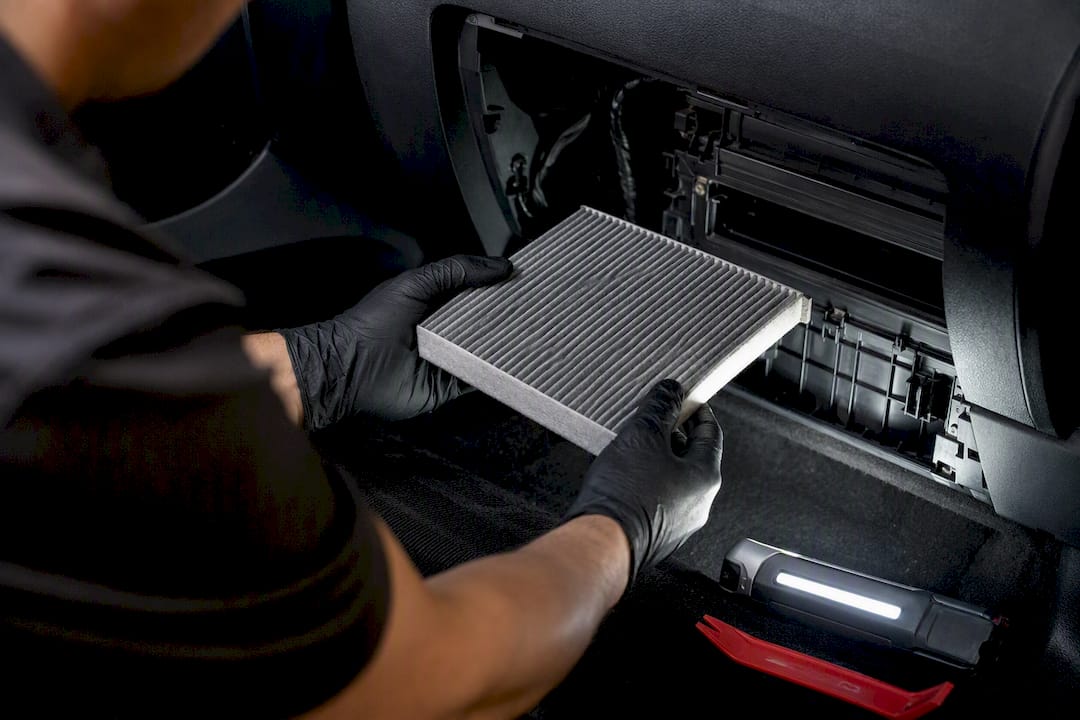
The diagnostic work for fog issues typically involves ASE-certified technicians running OBD-II diagnostics to determine whether fog is a moisture problem, a mechanical fault, or both, with many shops offering warranties on their repairs. For readers curious about related HVAC quirks, the shop’s blog covers why car AC blows warm air and why car AC smells like mold, both common companions to chronic fogging.
DIY habits like cleaning glass and swapping cabin filters handle most everyday fog. A professional inspection makes sense once you see grease film, smell coolant, or find wet carpet.
Does Cabin Airflow Actually Affect Fogging?
Where the air moves inside your car matters almost as much as how much moisture is in it. Most vents point at the windshield and side windows for a reason: constant airflow across the glass keeps a thin layer of drier air moving over the surface, which slows condensation even before the fog fully clears.

Recirculation mode disrupts that airflow pattern in a way that works against you. It seals off the fresh-air intake and just churns the same cabin air, which means the same moisture keeps circulating past the glass instead of getting swapped out for drier outside air. That’s a big part of why turning off recirc is a non-negotiable step in any interior defog routine, not a nice-to-have.
Fan speed changes the airflow pattern too. A low fan setting on defrost might feel quieter, but it barely moves enough air to keep the glass dry, especially with four people breathing in the car. Cranking the fan up temporarily creates enough velocity across the windshield to outpace new condensation forming.
Vent direction plays a role for side windows specifically. Cars with adjustable vents that can angle toward the door glass clear side fogging faster than those relying only on windshield defrost vents to indirectly warm the rest of the cabin. If your side windows stay foggy after the windshield clears, try directing a vent or two toward them directly rather than waiting for ambient airflow to do the job.
How Much Does Weather Make Fogging Worse?
Humidity is the single biggest weather variable behind fogging, and it works differently depending on the season. On a rainy day, outside humidity climbs, rain-soaked clothes and umbrellas add moisture directly into the cabin, and the temperature gap between outside air and your climate-controlled interior widens. All three combine to make rainy commutes the worst offenders for both interior and exterior fog.
Cold weather brings its own version of the problem. Cold glass has a lower temperature threshold before it hits the dew point, so even modest cabin humidity from normal breathing can fog a windshield fast on a frosty morning. This is why fog seems to appear almost instantly the second you start the engine and the cabin air starts warming up around still cold glass.
High ambient humidity, tracked regionally through resources like the National Weather Service’s humidity data, also explains why some regions deal with fogging constantly while drier climates barely notice it. If you live somewhere with consistently high relative humidity, prevention habits like anti-fog treatments and cabin filter maintenance pay off far more than they would in a dry climate.
Snow and slush add a secondary effect: wet boots and snow-covered gear melt inside the cabin, quietly raising humidity over the course of a drive even if no one notices it happening.
Do Anti-Fog Sprays and Windshield Coatings Really Work?
Hydrophobic sprays and anti-fog treatments work by changing how water behaves on the glass surface rather than removing moisture from the air. A hydrophobic coating causes water to bead up and roll off rather than spreading into the thin, even film that scatters light and reads as fog. That helps most with exterior fog and rain, since it keeps droplets from forming a continuous sheet across your field of view.
Anti-fog products for interior glass work on the opposite principle. They leave behind a surfactant layer that lets condensation form as a flat, transparent film instead of countless tiny light-scattering droplets, so the glass looks clear even though moisture is technically still there. These are worth applying to the inside of the windshield before long drives in humid conditions or before storing a car for winter.
Thermal or heated windshield features, more common on newer vehicles, work by warming the glass itself above the dew point so condensation never has a chance to form. That’s a different mechanism entirely from wipers or defrost, since it prevents fog rather than clearing it after the fact.
None of these treatments replace basic glass cleaning. A coating applied over grease and film performs worse and wears off faster than one applied to properly cleaned glass, so a wipe down with a non-ammonia cleaner should always come first.
What to Do the Moment Fog Blocks Your View While Driving
Sudden fogging while driving is a visibility emergency, not a minor annoyance, and it deserves a calm but immediate response.
First, ease off the accelerator and increase your following distance. You’re about to lose some visual information, so give yourself more time to react to anything ahead. Second, hit defrost and AC together in one motion rather than fumbling through settings one at a time. Third, switch intake to fresh air if it isn’t already set that way, since recirc will only make the problem worse while you’re trying to fix it.
If the fog is heavy enough that you can’t see the lane lines or the car ahead within two or three seconds of trying these steps, pull over. Use a hazard-light stop in a parking lot, a wide shoulder, or the nearest exit rather than continuing to drive while half blind. It’s tempting to keep going and just squint through a clear patch, but that’s how minor visibility problems turn into real accidents.
Once stopped, you can safely wipe the inside of the glass with a microfiber cloth while the defrost and AC continue running. Give it another thirty seconds to a minute before pulling back into traffic. If this keeps happening on the same drive, treat it as a sign to get your HVAC system checked rather than a fluke of the weather.
Where This Information Comes From
The University of Illinois Physics Van explains the dew-point science behind fogging in plain terms. Consumer Reports tests practical defog methods drivers can use immediately. NAPA Know How offers professional repair guidance for persistent cases, and the National Weather Service tracks the humidity patterns behind seasonal fogging spikes.
An Editor’s Take on the Defog Habit Most Drivers Skip
Most drivers treat fog as a defrost problem, something to fix with a button once it’s already blocking their view. The more useful habit is treating it as a humidity problem you manage before it ever gets that far: run the AC even in winter, keep the glass free of oily film, and don’t let wet gear sit in the cabin. That routine handles the vast majority of foggy-window complaints without a single trip to a shop. When it doesn’t, and the fog keeps coming back on its own schedule, that’s your car telling you something specific is wrong, and it’s worth listening to before a small leak becomes a bigger repair.
— Shingi
How Tom’s B & M Auto Handles Stubborn Fogging Problems
If you’ve cleaned the glass, run the AC, and switched off recirculation and the fog still keeps coming back, that’s usually a sign your HVAC system needs a professional look, not a bigger bottle of anti-fog spray. Experienced auto repair shops diagnose and fix fogging-related HVAC issues by running OBD-II diagnostics to confirm whether the issue is a clogged AC drain, a failing heater core, or a cabin filter problem before replacing any parts.

A typical visit for persistent fogging starts with a diagnostic check of your AC system, drain lines, and cabin filter, followed by an upfront estimate before any work begins. If a heater core leak or seal failure turns out to be the cause, the repair may come backed by a warranty on the work. Book an AC repair diagnostic with Tom’s B & M Auto and get a clear answer instead of guessing your way through another foggy commute.
Sources
- Car Windows Fogging Up – Physics Van (University of Illinois)
- Should you run your car’s AC in winter? — rycompressors
- Fastest way to defog car windows — Consumer Reports
- Auto windows fogging? Here’s how to deal with it — NAPA Know How
FAQ
How Do I Make My Car Windows Stop Fogging Up?
Turn on your front defrost, switch the AC compressor on, and set your intake to fresh air instead of recirculation. This combination clears interior fog fastest because the AC dehumidifies the air while fresh air stops moisture from recycling back onto the glass.
Why Did My Windshield Suddenly Fog Up?
A sudden fog usually means warm, moist cabin air just hit glass that’s noticeably colder, often right after starting the car or adding a passenger. If it happens repeatedly with no clear trigger, it can point toward excess cabin moisture from a leak, which is worth a professional inspection if it keeps recurring.
Why Are My Car Windows Fogging Up Outside When It Rains?
Exterior fog forms when your windshield’s surface temperature drops below the outside air’s dew point, which happens often in humid, rainy conditions. Your wipers clear it in the moment, and moderating rather than maximizing AC cooling prevents the glass from getting cold enough to keep triggering it, according to the University of Illinois Physics Van.
Why Are My Car Windows Fogging Up Inside When Parked?
A parked car with the engine off has no active airflow to remove humidity, so moisture from wet seats, damp mats, or simply cooling temperatures condenses on the glass overnight. Removing wet items after each drive and keeping a silica gel pack in the cabin both cut down on this significantly.
When Should I Get My Car’s Fogging Checked by a Shop?
Get it checked if you notice a greasy film on the glass, a sweet smell inside the cabin, or wet carpet with no clear cause, since these often signal a heater core leak or clogged drain. Tom’s B & M Auto offers AC and HVAC diagnostics starting from $150 to pinpoint the exact cause before any repair work begins.
Recommended
- Car AC System Checklist: A Quick Diagnostic Guide
- Seasonal Car Maintenance Checklist for Every Season
- Car Owners: 5 AC Refrigerant Leak Symptoms That Require a Shop Visit
- Dealership vs Independent Repair Shop: When to Pick Each
Leave a Reply