
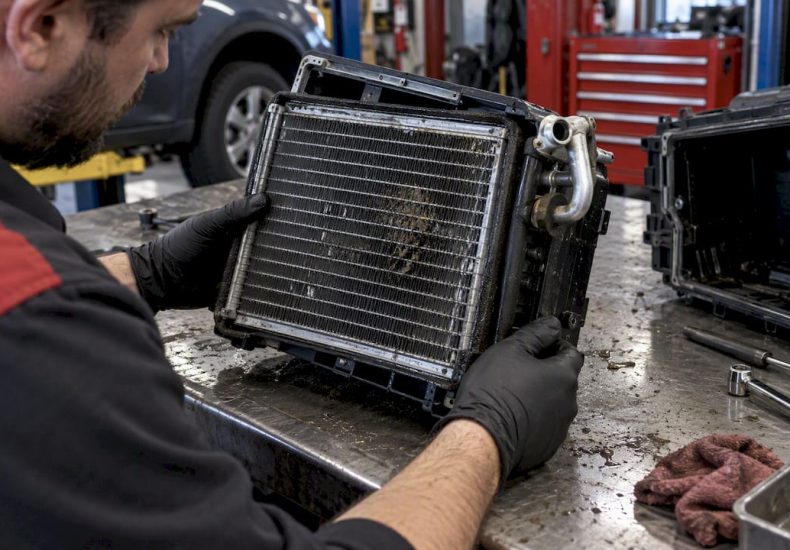
Fix car AC vinegar smell: biofilm cause and shop checklist for owners
A vinegar smell from your car’s AC is almost always microbial growth, mold, mildew or bacteria colonizing the evaporator core or ductwork, producing sour-smelling compounds as a byproduct. Start with the fastest fixes: run the blower on high with windows open, swap the cabin air filter if it looks dirty, and spray an AC-safe disinfectant into the intake plenum. If the odor persists, or you notice wet carpet, weaker cooling or a sharper chemical smell, it’s time for a shop to look at the system.
TL;DR:
- A clogged or saturated evaporator drain allows moisture to pool, fostering biofilms that produce the sour vinegar smell.
- Running the blower with windows open and replacing the cabin air filter can resolve many cases of microbial odor.
- Persistent odors despite DIY fixes may indicate deeper biofilm growth or refrigerant leaks requiring professional diagnosis.
- A sharp chemical or burnt smell suggests refrigerant or fluid leaks, which demand prompt expert inspection.
- Regular maintenance, including filter replacement and occasional system runs in cooler months, helps prevent the return of microbial odors.
Table of Contents
- What causes a vinegar-like smell from your car’s AC
- Step-by-step DIY checks and fixes to try now
- When to see a mechanic: red flags and what a shop will do
- How to stop the problem coming back
- Shop checklist and expert notes from Tom’s B & M Auto
- DIY vs professional service: how to choose for your situation
- Tom’s B & M Auto: AC diagnostics and repair, how we help
- FAQ
- Sources
What causes a vinegar-like smell from your car’s AC
The evaporator core sits behind the dashboard and gets wet every time the AC runs, since cooling the air means condensing moisture out of it. That moisture rarely drains away completely, and the dark, damp space behind the dash is close to ideal for microbial growth. A PubMed-indexed study on automobile AC systems identifies biofilms, colonies of bacteria and fungi, as the main source of the sour or musty odors drivers report. A separate DNA-based analysis of evaporator cores found that Methylobacterium species often dominate these biofilms and release volatile organic compounds responsible for the smell.
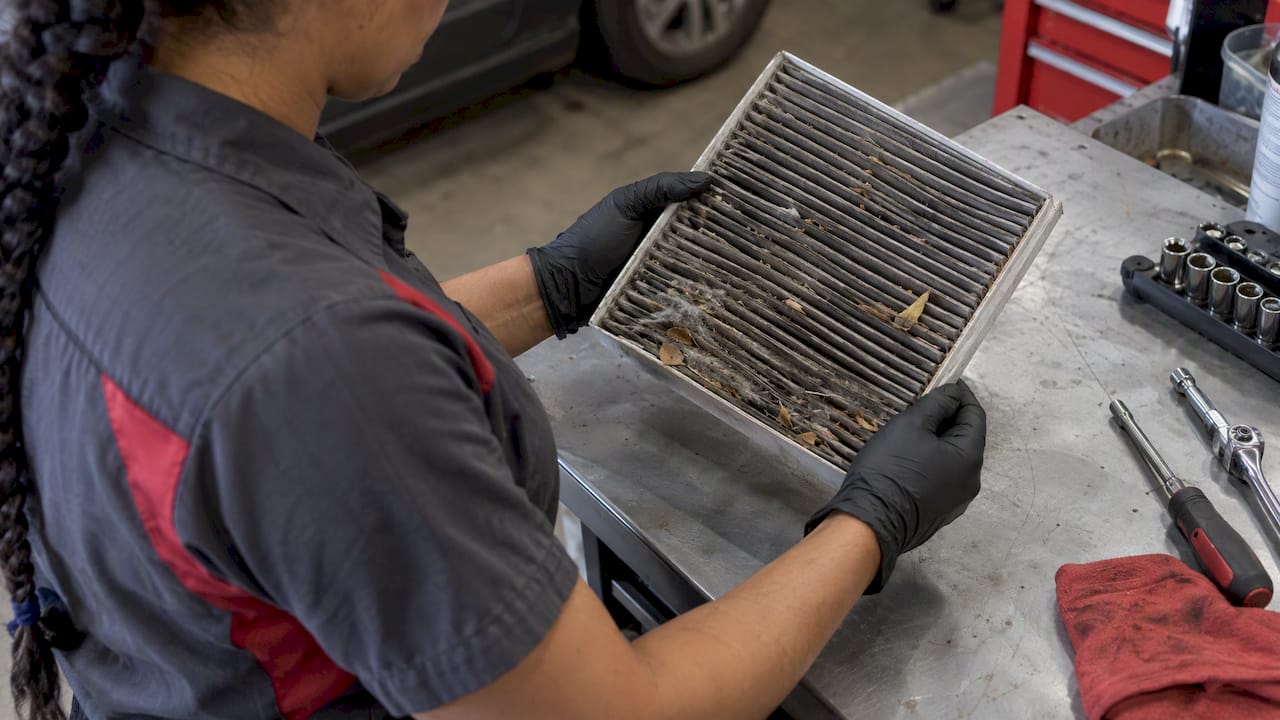
A few conditions make this worse. A clogged or restricted evaporator drain lets condensation pool instead of draining out from under the car, feeding the growth instead of flushing it away. A saturated cabin air filter can also store and recirculate odor-causing microbes every time the blower kicks on.
Not every AC smell is biological. A sharp, chemical odor can point to a refrigerant leak or a fluid leak under the hood, such as battery acid, and that calls for a technician rather than a spray bottle.
A quick way to sort likely causes by symptom:
- Smell only when the AC first starts, then fades: points to evaporator biofilm, the classic vinegar or musty smell.
- Smell that’s constant and sour: often a saturated cabin filter or standing condensation.
- Wet carpet near the passenger floor: usually a clogged evaporator drain.
- Sharp, chemical, or burnt odor: possible refrigerant or fluid leak, worth a professional look.
Step-by-step DIY checks and fixes to try now
Most vinegar smells respond to a few cheap, low-risk steps before you need a mechanic.
- Ventilate first. Open the windows and run the blower on its highest setting for several minutes to see whether the smell fades or lingers once the system is moving air.
- Check and replace the cabin air filter. It’s usually behind the glovebox or under the dash. If it’s gray, damp or smells sour, replace it. Consumer Reports notes that a clogged or dirty filter is one of the most common and easiest sources to fix.
- Disinfect the plenum and vents. Remove the cabin filter, then spray an automotive HVAC disinfectant or enzyme cleaner into the intake and through the vents with the blower running. Cars this as a standard fix for mold and mildew buildup on the evaporator.
- Clear the evaporator drain. It’s a small tube or hole under the car, near the firewall on the passenger side. Gently probe it with a soft wire or compressed air to clear any blockage, then check that condensate drips out after the AC has run.
- Let it dry. Run the blower without the AC compressor engaged for a few minutes afterward to dry out the evaporator before shutting the car off.
Pro Tip: Skip household bleach, it can damage plastic ducting and electronics. Stick to products made for automotive HVAC systems or enzyme-based cleaners.
Our step-by-step mold guide walks through this process in more detail if you want photos and extra troubleshooting.
When to see a mechanic: red flags and what a shop will do
Some symptoms mean the DIY steps above won’t be enough, and pushing through them risks masking a bigger problem.
- Odor returns within days of cleaning: the biofilm may be deeper in the ductwork than a spray can reach.
- Wet carpet or standing water inside: the drain is likely still blocked or the evaporator housing has a crack.
- Weaker cooling along with the smell: could point to a refrigerant leak that needs proper diagnosis.
- A chemical or burnt smell instead of sour: stop troubleshooting and get it inspected.
A shop will typically interview you about when the smell shows up, check the cabin filter, verify drain flow, inspect the evaporator housing, and run a pressure test if a leak is suspected. Bring notes on what you’ve already tried, it saves diagnostic time and cost.
How to stop the problem coming back
A few habits keep the evaporator drier and the ductwork cleaner long after the initial fix.
- Replace the cabin filter on schedule, typically once a year or sooner in dusty or humid climates.
- Run the blower for a couple of minutes after shutting off the AC to dry the evaporator before the car sits.
- Use recirculate mode sparingly on long drives, since constant recirculation keeps humid air trapped near the evaporator.
- Run the AC occasionally in cooler months instead of leaving it off all winter, since this keeps moisture moving through the system.
- Book an annual HVAC check if you live somewhere humid, since that’s where biofilm tends to come back fastest.
Shop checklist and expert notes from Tom’s B & M Auto
A technician typically works through the same order every time: ask what triggers the smell and when, check the cabin filter’s condition, confirm the evaporator drain is flowing, inspect the evaporator housing for buildup, then test refrigerant pressure if cooling performance seems off too.
Bring your car’s year and make, when the smell happens (startup, constant, humid days), and which DIY steps you’ve already tried. It cuts diagnostic time significantly.
Technicians are ASE-certified, appointments are often available the same day, and repairs generally include a 24-month/24,000-mile warranty; it is advisable to inquire about details when contacting a shop.
DIY vs professional service: how to choose for your situation
Filter swaps and drain checks are worth trying first. They’re cheap, low-risk, and solve most vinegar-smell complaints on their own. Persistent odors, wet carpet, or any drop in cooling performance are a different story, that’s when you need someone with pressure gauges and duct access, not another can of spray. When in doubt, run the DIY checklist, write down what changed, and bring those notes with you.
— Shingi
Tom’s B & M Auto: AC diagnostics and repair, how we help

If the vinegar smell persists after a filter swap and disinfectant treatment, professional AC repair services typically include a full diagnostic path: evaporator inspection and cleaning, drain clearing, refrigerant leak detection, and cabin filter replacement, performed by certified technicians. Repairs often come with a warranty covering parts and labor for a significant period. For readers who prefer a reusable filter, AEM’s air filter cleaner is a solid option to have on hand between shop visits. Check out our AC Repair page to see what’s included and book a diagnostic.
FAQ
Why does my car suddenly smell like vinegar?
A sudden vinegar smell usually means mold, mildew or bacteria have built up on the evaporator core or in the ductwork, releasing sour-smelling compounds when the AC runs. It can appear quickly after humid weather or heavy AC use without enough drying time in between.
Why does an AC unit smell like vinegar?
The smell comes from microbial biofilms, often dominated by Methylobacterium species, growing on the damp evaporator surface and metabolizing trapped moisture and debris into volatile compounds. The evaporator stays wet by design every time the AC cools air, which makes it a natural habitat for this growth.
How long does it take for vinegar smell to go away in a car?
Many cases clear up within a few days of replacing the cabin filter and treating the plenum with an AC-safe disinfectant, especially once you start running the blower to dry the evaporator after each use. If the smell lingers past a week of consistent treatment, the biofilm may be deeper in the system and worth a shop visit.
Why does my car AC have a sour smell?
A sour smell is the signature of microbial growth rather than a mechanical fault, caused by bacteria and fungi breaking down moisture and debris on the evaporator or in a saturated cabin filter. A clogged evaporator drain that lets condensation pool will usually make the smell worse over time.
Sources
- PubMed listing: microbiological identification of biofilms in automobile AC (PMID 30252644)
- Dominance of gas-eating, biofilm-forming Methylobacterium species in evaporator cores (mSphere / PMC6968652)
- Consumer Reports: How to get rid of musty smell from car air conditioner
- Cars
Recommended
- Why Your Car AC Smells Like Mold (And How to Fix It Fast)
- Car AC System Checklist: A Quick Diagnostic Guide
- Why Car AC Blows Warm Air: Causes and Fixes
Leave a Reply