
Why Your Car AC Smells Like Mold (And How to Fix It Fast)
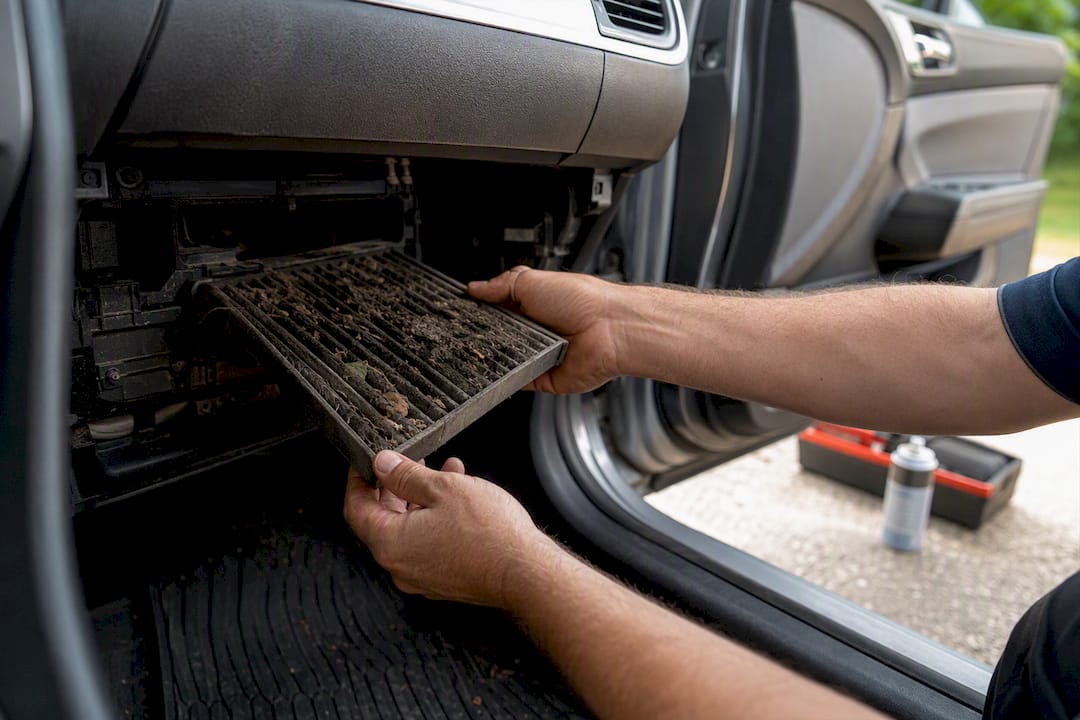
That musty blast when you start the engine almost always means moisture and microbial growth somewhere in your HVAC system, most often the evaporator core, the condensate drain, or a soaked cabin filter. It is rarely a sign of low refrigerant or a failing compressor. Do this in the next ten minutes: crack the windows, run the blower on high, and pull the cabin filter to check if it is wet, dirty, or holding a swampy smell. If you have a can of car-safe A/C disinfectant on hand, spray it into the plenum intake at the base of the windshield while the fan runs.
An HVAC expert cited by Apartment Therapy puts a clogged condensate drain line behind roughly 40% of musty A/C cases, which is why that drain tube deserves attention right after the filter. Try the quick fixes below first. If the odor comes back within a day or two, or your airflow feels weak, that is your cue to move from DIY to inspection, and shops like Tom’s B & M Auto see this exact pattern often enough to have a fast diagnostic routine for it.
Key Takeaways
A moldy car AC smell almost always comes from moisture trapped on the evaporator or in a clogged drain, and it clears up fastest when you treat the filter, plenum, and drain in that order.
| Point | Details |
|---|---|
| Start with the filter | A dirty or wet cabin filter is often the whole problem and the cheapest fix to try first. |
| Check the drain next | A clogged condensate drain line accounts for roughly 40% of musty AC cases cited by HVAC experts. |
| Dry the system after every drive | Run the fan on high for a few minutes before shutting off the engine to prevent standing moisture. |
| Escalate past 48 hours | Recurring odor, visible mold, or weak airflow means it is time for professional diagnosis, not another spray. |
| Book a proper diagnostic | Tom’s B & M Auto offers ASE-certified A/C inspection, evaporator cleaning, and drain repair with a 24 month/24,000 mile warranty. |
Table of Contents
- What Causes That Musty Car AC Smell and Where It Grows
- How Do You Get Rid of the Musty Smell in Your Car AC?
- When Should You Call a Professional for AC Mold?
- Can Mold in Your Car AC Make You Sick?
- Why a Moldy Smell Almost Never Means a Refrigerant Problem
- How Do You Confirm Mold Is Hiding Deep in the AC System?
- How Does Mold Actually Develop Inside a Car AC System?
- Do Mold Sprays and Ozone Treatments Actually Work for Cars?
- How Do You Clean Your Car’s Vents and Ductwork Yourself?
- Get Your Car’s AC Smell Diagnosed and Fixed the Right Way
- Frequently Asked Questions
- Sources
What Causes That Musty Car AC Smell and Where It Grows
Your evaporator core gets cold enough to pull moisture out of the air, the same way a cold glass of water sweats on a summer day. That condensation normally drips down through a drain tube and exits harmlessly under the car. When that drain clogs with debris or the tube kinks, water pools in the evaporator housing or drain pan instead, and standing moisture is exactly what mold, mildew, and bacteria need to take hold, according to Motor1.
A dirty or wet cabin filter makes things worse by trapping organic debris right in the airflow path. Check these spots first, in roughly this order:
- Plenum (fresh-air intake) at the base of the windshield, where leaves and debris collect
- Cabin air filter housing, usually behind or under the glove box
- Evaporator housing tucked behind the dashboard
- Condensate drain tube underneath the car, near the firewall
- Vents and accessible ductwork you can reach without tools
The smell tends to hit hardest the moment you start the A/C, especially after the car has sat parked for a few days, and it gets noticeably worse in humid climates where the whole system stays damp longer between drives.
How Do You Get Rid of the Musty Smell in Your Car AC?
Work through these steps in order. Most cars need only the first two or three to clear the smell completely.
- Replace or remove the cabin filter. If it looks gray, damp, or smells sour, swap it. This alone solves a meaningful share of cases.
- Run the fan on high with the windows down for five to ten minutes to flush stale air and start drying out the ducts.
- Inspect the plenum intake for leaves, seed pods, or debris blocking the fresh-air path, and clear it out by hand or with compressed air.
- Disinfect the plenum. Consumer Reports recommends removing the cabin filter first, then spraying an automotive A/C disinfectant into the plenum intake while the fan runs on high, so the cleaner travels through the whole HVAC path rather than just coating the entry point.
- Flush the condensate drain. Locate the drain tube under the car near the firewall and gently clear it with a soft flexible brush or a burst of compressed air. A light vinegar-and-water rinse can help break down grime if the tube is accessible and the manufacturer does not warn against it.
- Apply a foaming evaporator cleaner if the smell persists after the steps above. These products expand into the evaporator fins through the drain tube or a service port and rinse out with the condensate.
Skip household bleach in the ducts. It can damage HVAC components and its fumes are unpleasant in a sealed cabin. Ozone treatments have real antimicrobial effects, but running one unsupervised inside a closed car is a different risk profile than a professional-grade treatment with proper ventilation controls, which is one reason shops handle ozone service themselves rather than selling do-it-yourself kits for it.
Stick to nonbranded categories when shopping: an automotive-specific A/C disinfectant spray, a foaming evaporator cleaner, and a quality replacement cabin filter cover almost every DIY scenario.
Pro Tip: Park on dry pavement, run the A/C for a minute, then check underneath the car. A visible water puddle near the firewall means the drain is working. No puddle at all, especially after heavy A/C use, often points to a clog. After any cleaning, run the system for a few minutes and do a smell test with your face near the center vent, not the floor vents, since that is where odor concentrates first.
When Should You Call a Professional for AC Mold?
DIY fixes handle most cases, but a few warning signs mean it is time to book a shop visit instead of buying another can of spray. According to Trane’s troubleshooting guidance, persistent odor after filter and drain service, visible mold inside the ducts, or water pooling inside the cabin all point past the DIY stage.
Watch for:
- Odor that returns within 24 to 48 hours of cleaning
- Visible mold or black residue inside vents or ducts
- Weak airflow even with the blower on high
- Water dripping or pooling inside the footwell
- A smell that shows up alongside reduced cooling performance
A technician will run a full diagnostic, then typically clean or replace the evaporator coil, repair or replace the drain tube, clean accessible ductwork, and in stubborn cases apply a controlled antimicrobial or ozone treatment.
Costs vary by what is actually wrong. DIY supplies (filters, sprays) usually run under $50. Professional evaporator cleaning or drain repair tends to land in the low-to-mid hundreds. Full evaporator replacement or major duct remediation costs more and depends heavily on the vehicle. Always get a written estimate before authorizing repair work, and check into financing options if a bigger evaporator job is on the table.
Can Mold in Your Car AC Make You Sick?
Musty odors usually signal microbial growth, and for people with allergies, asthma, or other sensitivities, that growth can trigger irritation, coughing, or sinus discomfort during longer drives.
A closed cabin with poor airflow is exactly the kind of enclosed space where mold spores concentrate faster than they would in an open room, which is why protective steps matter even for a job that looks small.
Take basic precautions before you start cleaning:
- Wear gloves and eye protection when handling a soiled cabin filter
- Use an N95 or similar mask when spraying disinfectants or foaming cleaners
- Keep windows down or doors open for ventilation during the whole process
- Wash your hands and forearms after handling a filter that looks visibly moldy
If anyone in the car reacts noticeably to the smell, or you can see actual mold deposits rather than just detecting an odor, skip further DIY attempts and have a shop handle remediation directly.
Why a Moldy Smell Almost Never Means a Refrigerant Problem
A musty smell nearly always traces back to moisture and microbial buildup, not low refrigerant or a failing compressor. Technicians see this mix-up constantly: drivers assume the A/C is “going bad” when the real issue is biological, not mechanical, according to Motor1. If the air coming out is still cold, the refrigerant system is doing its job.
- Check the cabin filter first
- Check the condensate drain second
- Check the evaporator housing third
- Run the fan for a few minutes before shutting the car off, every time, to help the evaporator dry out between drives
If the cabin air feels warm along with the smell, that is a different problem, worth reading up on separately, rather than the moisture issue this guide covers.
Tom’s B & M Auto technicians document water puddles or their absence under the car as real diagnostic evidence, not a guess, before recommending any repair.
How Do You Confirm Mold Is Hiding Deep in the AC System?
Smell alone tells you something is wrong, but it does not tell you exactly where. For hidden areas like the evaporator housing behind the dash, a few confirmation methods help narrow it down before you commit to a repair.
A UV (black light) inspection is one of the more reliable non-invasive checks a shop can run. Certain mold and mildew strains fluoresce faintly under UV light, and combined with a UV-reactive dye sometimes added to the A/C system during service, a technician can trace exactly where moisture collects. This works especially well for checking the evaporator fins and drain pan without pulling the whole dashboard apart.
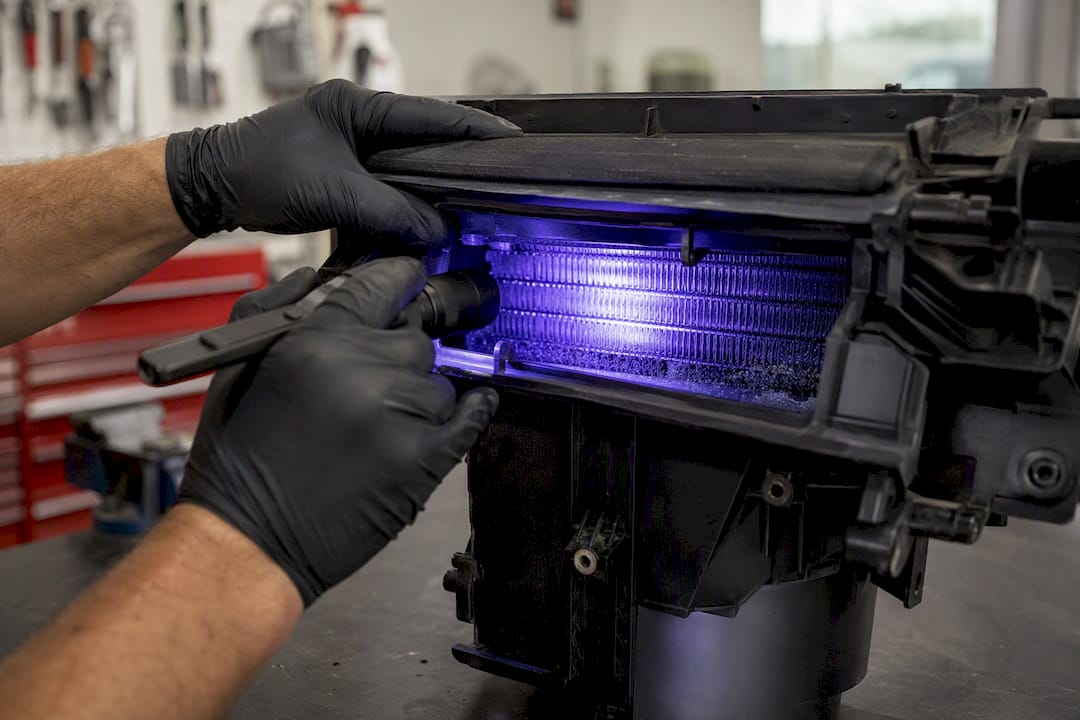
A borescope, essentially a small camera on a flexible cable, lets a technician see inside the plenum and evaporator housing directly. It is the same tool used for engine cylinder inspections, repurposed for HVAC diagnostics. This catches debris, standing water, or visible fungal growth that a flashlight and mirror simply cannot reach.
Simpler home confirmation includes the water-puddle test mentioned earlier, and a careful sniff test at each individual vent. If one vent smells noticeably worse than the others, that tells you which side of the dash the contamination favors, which is useful information to share with a technician even if you cannot fix it yourself.
How Does Mold Actually Develop Inside a Car AC System?
Mold needs three things to establish itself: moisture, an organic food source, and still air. Your car’s HVAC system supplies all three under the right conditions.
The evaporator core’s job is to condense humidity out of cabin air, the same physics behind a cold soda can sweating in summer, according to Jalopnik. That condensation should drain away within minutes. But dust, pollen, and skin cells that pass through the cabin filter settle on the wet evaporator fins, supplying the organic material mold spores feed on. Add a parked car sitting in a humid climate for several days, and you have a closed, dark, damp box, which is close to ideal for microbial growth.

Environmental conditions accelerate the problem. Coastal and humid regions see faster, more frequent regrowth than dry climates. Cars parked in shaded, poorly ventilated garages retain moisture longer than those parked in open, breezy spots. Frequent short trips make it worse too, since the evaporator gets wet from every cooling cycle but rarely gets the extended fan-on time needed to dry out fully before the engine shuts off.
That is precisely why the fan-before-shutdown habit matters more than most drivers realize. It is not about comfort. It is about denying mold the standing moisture it needs to establish a colony in the first place.
Do Mold Sprays and Ozone Treatments Actually Work for Cars?
Commercial A/C disinfectant sprays work reasonably well for surface-level contamination, particularly on the plenum intake and the front face of the evaporator where a spray can actually reach. They will not solve a problem rooted deep in a clogged drain or a soaked evaporator core buried behind the dash.
Foaming evaporator cleaners go further because the foam expands and travels through the drain tube or a service access point, coating more of the coil surface than a simple spray can reach. AutoZone notes that these DIY treatments often resolve moderate cases, but professional evaporator cleaning or duct work becomes the better move once odor persists or airflow drops.
Ozone treatments are a different category entirely. Ozone genuinely breaks down organic odor compounds and kills many microorganisms on contact, which is why professional detailers use it. The catch is safety and control. Ozone is a lung irritant at meaningful concentrations, and running an ozone generator inside a sealed cabin without professional-grade ventilation and timing controls carries real risk to anyone breathing that air afterward. This is a case where the tool works, but the setting matters more than the technology, and it is why reputable shops perform ozone service themselves rather than selling do-it-yourself kits.
Some odors return even after a thorough spray-and-filter routine. Jalopnik points out that stubborn cases like this usually mean the contamination sits deeper in the evaporator than a spray can reach, and that is the point where foaming coil cleaners or professional service stop being optional.
How Do You Clean Your Car’s Vents and Ductwork Yourself?
Most drivers can safely clean the parts of the ductwork they can actually reach: the vent louvers, the plenum intake, and the cabin filter housing. Anything deeper, meaning the evaporator core itself, is better left to a shop with the dash partially disassembled.
Start with the vent louvers. Use a soft-bristle brush, a vent-cleaning tool, or a strip of microfiber cloth wrapped around a flat tool to wipe dust and debris off each slat. A can of compressed air blown into the vent opening dislodges loose particulate that has settled just inside.
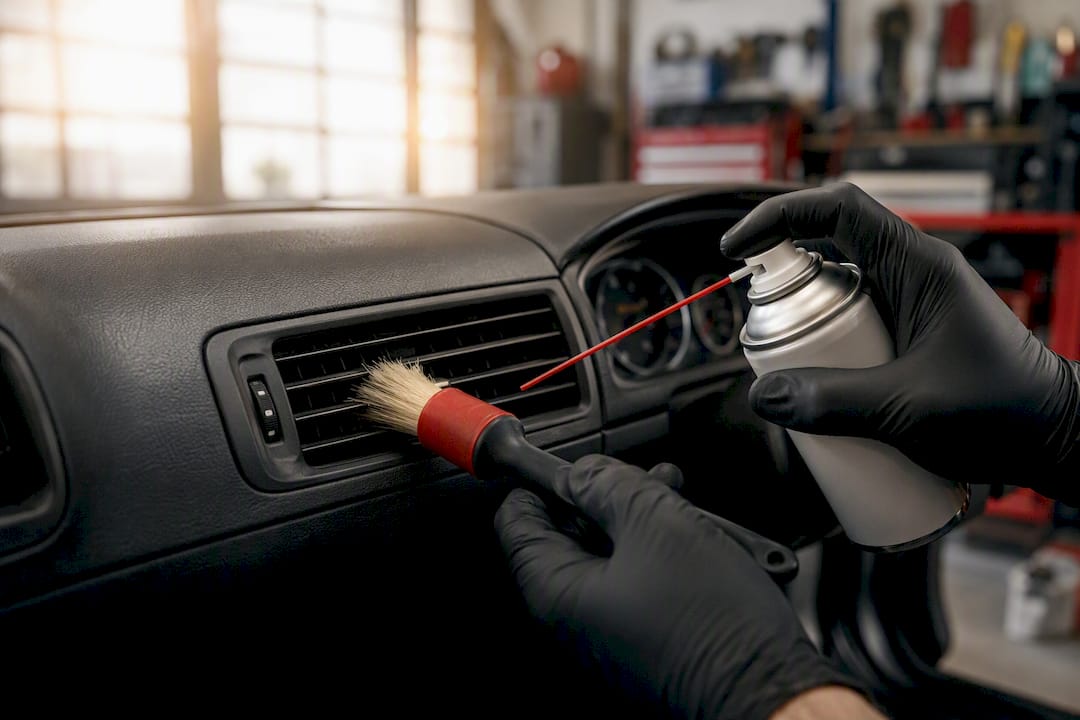
Next, pull the cabin air filter, typically located behind the glove box on most vehicles, and inspect the housing itself. Wipe down the interior of the housing with a cloth dampened in a mild disinfectant approved for automotive use, then let it air dry completely before reinstalling a new filter.
Move to the plenum intake at the base of the windshield, accessible from outside the car under the wiper cowl on many models. Clear out leaves, seed pods, and grit by hand or with compressed air, since a blocked plenum starves the whole system of fresh air and traps moisture behind it.
Finish by running the blower on high with all vents open for several minutes to push out loosened debris and any lingering disinfectant fumes. Do not attempt to remove dashboard panels or access the evaporator housing directly unless you have specific repair documentation for your vehicle. That is where DIY should stop and professional service should start.
A Shop’s-Eye View: What We See in the Bays
A dirty cabin filter turns out to be the whole problem in roughly one out of three cases we look at. A clogged condensate drain causes most of the repeat visits, where a customer swears they already fixed it. On a first visit, the routine is usually inspection, filter swap, drain flush, and evaporator cleaning only if that combination does not clear the smell.
Get Your Car’s AC Smell Diagnosed and Fixed the Right Way
DIY sprays and filter swaps solve a lot of musty-smell complaints, but a clogged drain hiding behind the dash or a soaked evaporator core will keep bringing that smell back no matter how many cans of disinfectant you go through. That is where Tom’s B & M Auto earns its keep for Lynnwood-area drivers: a proper A/C diagnostic finds the actual source in one visit instead of leaving you guessing after a weekend of trial and error.

Tom’s B & M Auto technicians run full A/C diagnostics, evaporator cleaning, drain tube repair, and cabin filter replacement, all backed by a 24 month/24,000 mile warranty on the work. Same-day appointments are often available, and ASE-certified technicians handle everything from a simple filter swap to a full evaporator job on domestic, Japanese, hybrid, and European vehicles alike. If the smell has already come back once after your own cleaning attempt, that is the signal to stop guessing and get it looked at properly.
Schedule a free digital vehicle inspection to find out exactly what is causing the odor in your car, or book an A/C repair appointment directly if you already know the drain or evaporator needs attention.
Frequently Asked Questions
Does a musty AC smell mean I need refrigerant?
No. A moldy smell almost always points to moisture and microbial growth, not refrigerant level. If the air still gets cold, refrigerant is not your problem.
How long does it take for the smell to go away after cleaning?
Most cases clear within one cleaning cycle: filter swap, plenum spray, and a few minutes of fan-on drying time. If it returns within a day or two, the drain or evaporator likely needs deeper attention.
Is it safe to use bleach in my car’s AC ducts?
No. Bleach can damage HVAC components and its fumes are harsh in a sealed cabin. Stick to automotive-specific A/C disinfectants instead.
Can I run an ozone generator in my car myself?
Ozone works against odor-causing organisms, but it is a lung irritant at effective concentrations. Professional-grade ozone treatments with proper ventilation control are safer than an unsupervised at-home attempt.
How often should I replace my cabin air filter to prevent this?
Most manufacturers recommend replacing it every 12,000 to 15,000 miles, though drivers in humid or high-pollen areas often benefit from checking it more frequently.
Sources
- Why Your Car’s AC Stinks When You Turn It On. Here’s Why — Motor1
- How to Get Rid of Musty Smell From Your Car Air Conditioner — Consumer Reports
- Why Your Car’s A/C Smells Musty (And How To Get Rid Of It) — Jalopnik
- As warmer months approach, start with these fixes if your A/C smells musty — Apartment Therapy
- AC smells musty — Trane
Recommended
- Why Car AC Blows Warm Air: Causes and Fixes – Tom’s B & M Auto Blog
- Engine Smells: What Every Driver Needs to Know – Tom’s B & M Auto Blog
- Car AC Leak Repair Cost: What Lynnwood Drivers Should Know – Tom’s B & M Auto Blog
- Car AC Heater: How They Work and When to Run Both – Tom’s B & M Auto Blog
Leave a Reply