
The Role of Regenerative Braking System Explained
Regenerative braking is defined as a technology that converts a vehicle’s kinetic energy into electrical energy during deceleration, storing it back in the battery instead of wasting it as heat. The role of regenerative braking system technology is central to how modern electric and hybrid vehicles extend their driving range and reduce operating costs. Systems like those found in Toyota hybrids and full electric platforms recover 60%–70% of kinetic energy that conventional friction brakes simply discard. That recovery rate is the difference between a vehicle that needs charging every 150 miles and one that stretches well past 200 miles in city traffic. Understanding how this system works makes you a smarter driver and a more informed vehicle owner.
How does regenerative braking work in electric and hybrid vehicles?
The electric motor is the heart of the system, and it performs two jobs. Under acceleration, it drives the wheels. During deceleration, the motor reverses its role and functions as a generator, using electromagnetic induction to convert wheel rotation into electrical current. That current flows through the power electronics, gets conditioned to the correct voltage, and charges the battery pack. The process happens in milliseconds every time you lift off the accelerator.
The energy flow path follows a clear sequence:
- Kinetic energy from the moving vehicle spins the motor’s rotor
- Electromagnetic induction creates electrical current in the stator windings
- Power electronics (the inverter) convert AC current to DC for battery storage
- The battery pack stores the recovered energy for the next acceleration event
- Friction brakes engage automatically when deceleration demand exceeds what the motor can handle alone
Control strategies blend regenerative and friction braking to maintain a consistent pedal feel and keep the vehicle safe at all speeds. Without that blending logic, hard stops would feel unpredictable and emergency braking would be compromised. Modern systems adjust the regenerative contribution hundreds of times per second based on vehicle speed, battery state of charge, and pedal input.
Pro Tip: On most hybrids and EVs, you can feel the regenerative system engaging the moment you lift off the accelerator. That slight resistance is energy going back into your battery, not brake wear.
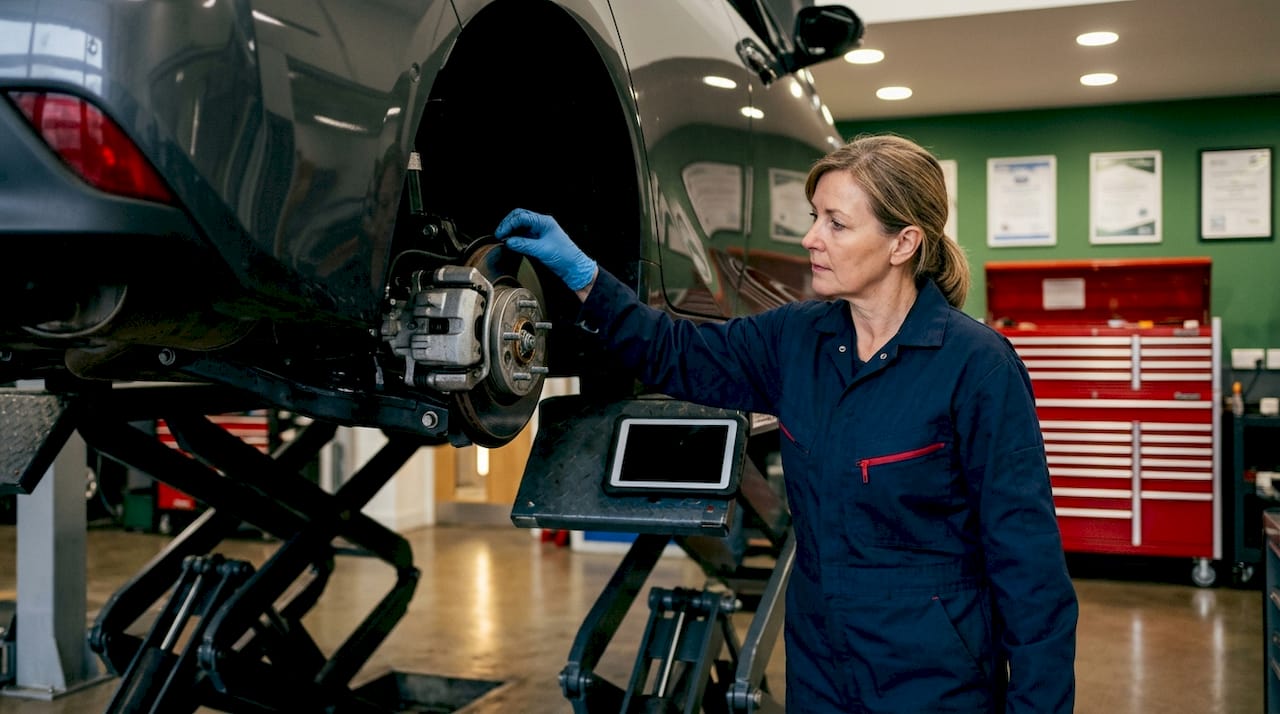
Understanding electronic brake distribution alongside regenerative braking gives you a complete picture of how modern vehicles manage stopping force across all four wheels.
What are the benefits of regenerative braking for range and maintenance?
The practical benefits of regenerative braking fall into two clear categories: more miles per charge and lower maintenance bills. Both are significant, and both are backed by measurable data.
Range extension in real driving conditions
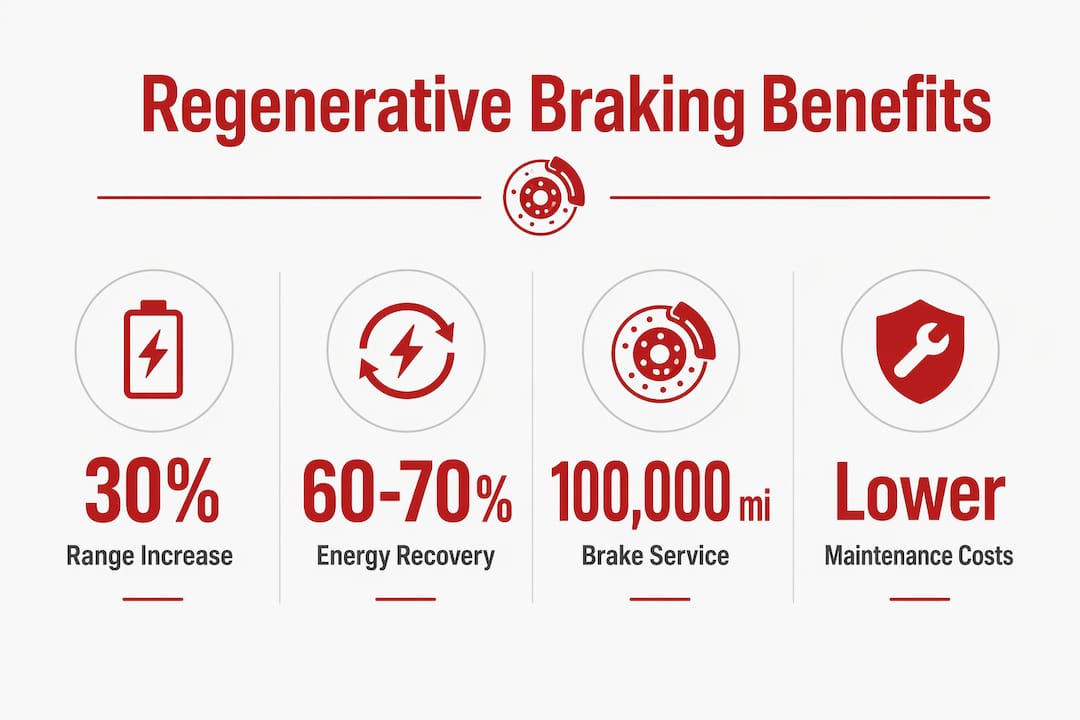
In stop-and-go city driving, regenerative braking can extend EV range by 10%–30%. That gain comes directly from the frequency of deceleration events in urban traffic. Highway driving offers fewer opportunities to recover energy, so the benefit shrinks on the open road. City commuters see the largest gains, which is exactly the use case where EVs already excel.
Brake wear and service intervals
Regenerative braking extends brake pad and rotor service intervals to around 100,000 miles under typical driving conditions. Conventional vehicles often need brake service every 25,000–50,000 miles. That difference translates directly into money saved and fewer shop visits over the life of the vehicle. The brake rotor and pads on an EV experience a fraction of the thermal stress that wears out conventional components.
Lower brake wear significantly reduces maintenance costs and total cost of ownership for EV drivers. That is not a minor footnote. Over a 10-year ownership period, the savings on brake service alone can offset a meaningful portion of the vehicle’s premium purchase price.
| Braking type | Energy outcome | Brake wear rate | Typical service interval |
|---|---|---|---|
| Conventional friction braking | Energy lost as heat | High | 25,000–50,000 miles |
| Regenerative braking | Energy recovered to battery | Low | Up to ~100,000 miles |
Environmental and efficiency advantages
Every deceleration event that recovers energy instead of burning it as heat reduces the vehicle’s net energy consumption. Fewer charging cycles mean less grid draw. Less brake dust enters the environment. The cumulative effect across millions of EVs and hybrids on the road is a measurable reduction in particulate emissions from brake material alone.
Pro Tip: If you drive a hybrid in a city with heavy traffic, use the highest available regenerative braking setting. You will recover more energy on every block and extend your brake service interval at the same time.
How does regenerative braking perform under different conditions?
Regenerative braking does not deliver the same performance in every situation. Several factors limit or alter how much energy the system can recover on any given drive.
Battery state of charge
When the battery is near full charge, the system reduces or disables regenerative braking because there is nowhere to store the recovered energy. The vehicle coasts more freely in this state, which can surprise drivers who expect consistent deceleration resistance. This is most noticeable at the start of a trip right after a full overnight charge.
Urban versus highway driving
Stop-and-go city traffic is where regenerative braking earns its keep. Frequent deceleration events give the system constant opportunities to recover energy. Highway driving at steady speeds offers almost no regenerative benefit because the vehicle rarely decelerates. Drivers who split their time between city and highway use will see a blended benefit that falls somewhere between the two extremes.
When friction brakes take over
The friction brakes engage automatically in three situations:
- Emergency stops where deceleration demand exceeds motor capacity
- Low-speed stops below the threshold where the motor can generate meaningful current
- System faults where the regenerative system is offline for any reason
The transition between regenerative and friction braking is designed to be invisible to the driver. In practice, most drivers never notice the handoff.
Brake corrosion from reduced use
Reduced brake engagement can cause corrosion on rotors and calipers, particularly in humid or salty environments like the Pacific Northwest. Rust forms on rotor surfaces when friction brakes go weeks without full engagement. The fix is straightforward: apply the friction brakes firmly at least once per week to scrub the rotor surface clean. Drivers who ignore this end up with pitted rotors and sticky calipers despite low mileage on the brake components.
What driving habits get the most from regenerative braking?
Maximizing the benefits of regenerative braking is mostly about changing how you approach deceleration. The system rewards anticipation and smooth inputs.
- Lift off the accelerator early. Give the regenerative system time to slow the vehicle before you need the friction brakes. The longer the motor generates, the more energy goes back into the battery.
- Use one-pedal driving mode when available. Many EVs offer a setting where lifting off the accelerator brings the vehicle to a near-complete stop without touching the brake pedal. Drivers frequently need adaptation time to master smooth one-pedal stops, but the energy recovery payoff is worth the learning curve.
- Modulate the accelerator, not the brake. In one-pedal mode, the accelerator pedal controls both speed and deceleration. Gentle, graduated releases produce smooth stops. Abrupt lifts create harsh deceleration that feels unnatural until you adjust.
- Apply the friction brakes firmly once a week. This clears surface rust from the rotors and keeps the brake caliper pistons moving freely. It takes one good stop at moderate speed to do the job.
- Adjust regenerative strength for conditions. Most systems offer multiple levels. Use a lighter setting on slippery roads where sudden deceleration could break traction.
Pro Tip: On a long downhill grade, regenerative braking can recover substantial energy while holding your speed steady. Treat it like engine braking in a manual transmission car. It is free range, and it protects your friction brakes at the same time.
Key Takeaways
Regenerative braking recovers 60%–70% of kinetic energy during deceleration, extending EV range by up to 30% in city driving and pushing brake service intervals to around 100,000 miles.
| Point | Details |
|---|---|
| Energy recovery rate | Systems recover 60%–70% of kinetic energy that friction brakes would waste as heat. |
| Range improvement | City driving gains 10%–30% more range from frequent deceleration events. |
| Brake service intervals | Brake pads and rotors can last up to ~100,000 miles with reduced friction braking. |
| Battery charge limits recovery | Near a full charge, regenerative braking is reduced, causing the vehicle to coast more freely. |
| Corrosion prevention | Apply friction brakes firmly at least once a week to prevent rotor rust in low-use conditions. |
Why regenerative braking matters more than most drivers realize
I have spent years watching drivers climb into EVs and hybrids without anyone explaining what the regenerative system actually does. They feel the deceleration resistance, assume something is wrong, and either disable the feature or drive around it. That is a real loss, because the system is doing exactly what it should.
The part that surprises most people is the maintenance angle. Drivers expect EVs to save money on fuel. They do not expect to go years without touching their brakes. When I explain that brake service intervals can stretch to around 100,000 miles, the reaction is almost always disbelief. But the physics are straightforward. Less friction means less wear. The system is not magic. It is engineering working as intended.
The limitation worth understanding is the battery charge effect. A fully charged battery cannot accept recovered energy, so the car coasts instead of braking regeneratively. Drivers who charge to 100% every night and then feel the car behave differently on the first few miles of their commute are experiencing this directly. Charging to 80%–90% for daily use solves the problem and also extends long-term battery health.
The future of these systems points toward more granular control, better integration with navigation data, and predictive braking that starts recovering energy before the driver even lifts off. That direction is exciting. But right now, the biggest gains come from drivers who simply understand what the system does and work with it instead of against it.
— Shingi
Brake service and hybrid support at Tom’s B & M Auto
Tom’s B & M Auto has served Lynnwood drivers since 1985, and the shop’s ASE-certified technicians work on all makes including hybrids and modern EVs with regenerative braking systems. Whether your friction brakes need attention after years of light use or you want a full inspection of your braking system, the team uses professional-grade OBD-II diagnostics to assess both conventional and electronic brake components accurately.
If repair costs are a concern, financing options are available to spread the cost of service without delaying necessary work. Tom’s B & M Auto also offers a free visual brake inspection so you know exactly where your system stands before committing to any repair. Same-day appointments are often available, and all work carries a 24-month / 24,000-mile warranty.
FAQ
What is the role of a regenerative braking system?
A regenerative braking system converts kinetic energy into electrical energy during deceleration and stores it in the battery. This reduces energy waste, extends driving range, and lowers brake wear compared to conventional friction braking.
How much energy does regenerative braking recover?
Regenerative braking systems recover approximately 60%–70% of the kinetic energy that would otherwise be lost as heat in traditional braking. In city driving with frequent stops, that recovery can extend EV range by 10%–30%.
Do regenerative brakes replace friction brakes entirely?
No. Friction brakes remain part of the system and engage automatically during emergency stops, low-speed stops, and any situation where the motor cannot handle the full deceleration demand. The two systems work together, not independently.
Why do my brakes feel different when the battery is full?
When the battery is near full charge, the system has limited capacity to store recovered energy, so regenerative braking is reduced or disabled. The vehicle coasts more freely as a result, which changes the expected deceleration feel.
How do I prevent brake corrosion on an EV or hybrid?
Apply the friction brakes firmly at least once a week to scrub surface rust off the rotors. Infrequent brake use in humid or salty conditions accelerates corrosion on rotors and calipers, even when overall brake wear remains low.
Recommended
- The Role of Brake Caliper in Vehicle Safety – Tom’s B & M Auto Blog
- What Is Electronic Brake Distribution? A Car Owner’s Guide – Tom’s B & M Auto Blog
- What Is a Brake Rotor? Function, Wear, and Care – Tom’s B & M Auto Blog
- Why Brakes Squeak: Causes, Fixes, and Warning Signs – Tom’s B & M Auto Blog
Leave a Reply