

Stop a Transmission Shudder Before a Rebuild: TCC Data and Fluid Fixes
Transmission shudder is a shaky, rumble-strip-like vibration that usually points to a torque converter lockup clutch struggling to hold a smooth grip, often triggered by worn or contaminated fluid. If the symptom is new, a professional fluid exchange is the cheapest place to start. Note the speed and RPM where it happens, then book a diagnostic that includes scan-tool data before assuming you need a rebuild.
TL;DR:
- Most transmission shudder originates from contaminated or degraded fluid affecting the torque converter lockup clutch, which can often be fixed with a full fluid exchange.
- Mechanical and electronic issues, such as worn clutch packs or faulty solenoids, can cause shudder, with software updates sometimes providing cures instead of hardware repairs.
- Accurate diagnosis involves road testing at the shudder speed, capturing scan data, checking fluid condition, and ruling out engine or driveline faults.
- Early detection and timely fluid service can prevent more costly repairs, as fluid replacement often resolves early-stage shudder before clutch glazing occurs.
- Verification details like speed and RPM where the shudder happens are critical for a fast, accurate diagnosis and should be documented before visiting a shop.
Table of Contents
- What does transmission shudder actually feel like?
- What causes transmission shudder in the first place?
- How do technicians pinpoint the source of a shudder?
- What fixes the shudder, and what will it cost?
- How can you prevent transmission shudder from developing?
- How a certified shop approaches a shudder complaint
- Get your shudder diagnosed at Tom’s B & M Auto
- Sources
- FAQ
What does transmission shudder actually feel like?
Transmission shudder tends to show up in a specific window: light, steady throttle at cruising speed, typically between moderate highway cruising speeds. It’s right around the point where the torque converter clutch locks up. It feels like driving over a rumble strip for a second or two, then it clears. That’s different from a wheel imbalance, which worsens with speed regardless of throttle position, or an engine misfire, which usually comes with a rough idle or a check engine light.
Before you call a shop, gather a few details:
- Speed and RPM when it happens
- Which gear you’re in and whether it happens under acceleration, cruise, or light braking
- Whether easing off the throttle or braking makes it stop
- Any recent towing, heavy loads, or fluid changes
Bringing this to a technician saves diagnostic time and often shortens the bill. For a side-by-side on ruling out steering or tire vibration first, see our guide on diagnosing steering wheel vibration.
What causes transmission shudder in the first place?
Most cases trace back to the torque converter’s lockup clutch, which is designed to eliminate slip at cruising speed for better fuel economy. When the clutch grabs unevenly instead of locking smoothly, you feel the shudder. SAE technical research traces this to lockup clutch friction characteristics and driveline resonances, and shows that damping strategies and correct friction properties in the clutch and fluid suppress the vibration.
A handful of mechanical and electronic issues tend to produce it:
- Degraded or contaminated fluid that has lost its friction modifiers, often carrying clutch dust or varnish
- Worn clutch packs or internal wear that lets components grab instead of gliding
- Faulty solenoids or a transmission control module command that mistimes the lockup
- Engine misfires, worn motor mounts, or driveline faults that mimic a transmission shudder without actually being one
Contaminated transmission fluid is one of the most common triggers of early-stage shudder, according to Denton Transmissions, which notes that degraded fluid affecting the lockup clutch is a frequent cause of the rumble-strip sensation. That’s good news for your wallet: fluid problems are far cheaper to fix than worn hardware. For more on how slipping and shudder overlap, see our breakdown of why transmissions slip.
Electronic causes deserve their own mention. Some manufacturers have issued Technical Service Bulletins or software recalibrations specifically to correct shudder complaints, meaning the fix is sometimes a dealer update rather than a wrench turn.
How do technicians pinpoint the source of a shudder?
A shop worth its ASE certification won’t guess. The diagnostic sequence generally runs in this order:
- Road-test the vehicle at the exact speed and load where you reported the shudder, since the symptom is often speed-specific and won’t show up otherwise
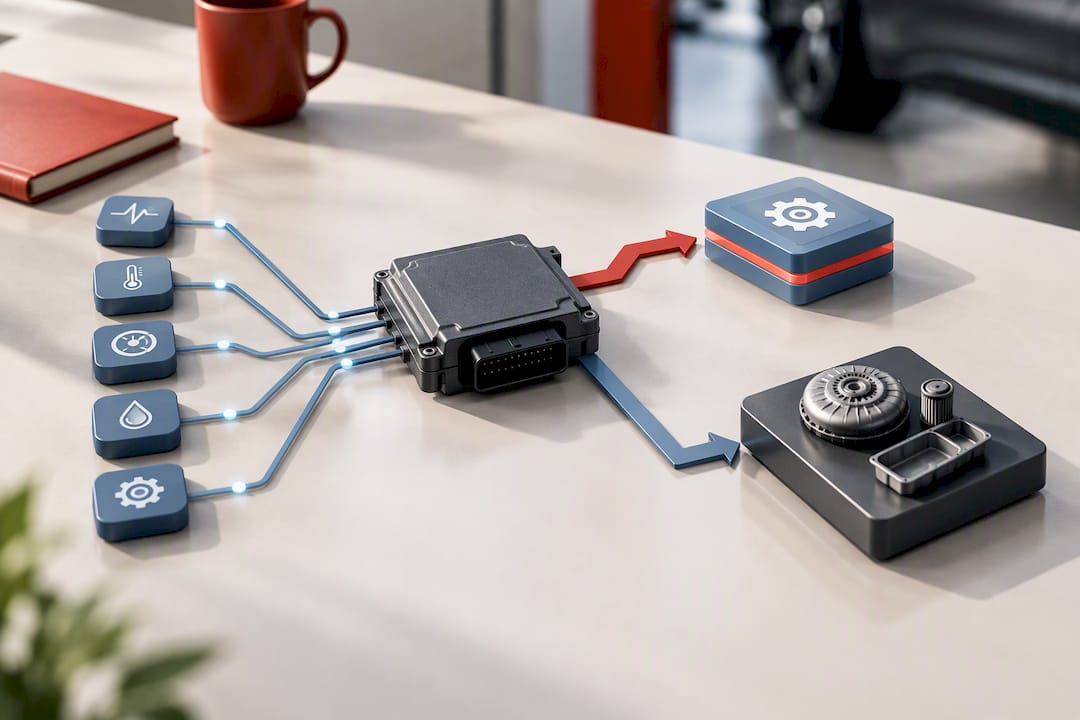
- Capture scan-tool data during that road test, focusing on TCC commanded lockup versus actual slip, solenoid current, vehicle speed sensor readings, and throttle position
- Check the transmission fluid’s color, smell, and condition, since burnt or varnished fluid is a strong clue
- Look up Technical Service Bulletins or manufacturer software updates for the specific make and model before assuming a mechanical repair is needed
- Rule out engine misfire using mode 6 data, a spark plug or coil swap, or a compression test, and check motor mounts and driveline components that can mimic the same vibration
Gears Magazine describes this as capturing a full data “movie” at the shudder speed, comparing TCC commanded lockup against actual slip alongside solenoid amperage, to confidently isolate torque converter lockup shudder from other causes. The same source notes that some cases trace to solenoid or TCM commands rather than worn parts, which can mean a calibration fix instead of removing the transmission.
Pro Tip: Write down the exact speed and RPM where the shudder occurs before your appointment. It’s the single detail that speeds up an accurate diagnosis the most.
Checking for an available software update matters here too. Consumer Reports has documented cases where automakers corrected drivability symptoms through dealer software updates rather than mechanical repairs, which is one reason a TSB check belongs early in the process, not after parts have already been replaced. Our own explainer on software updates in vehicle repair covers how this works.
What fixes the shudder, and what will it cost?
Repair options run from inexpensive to significant, and the right one depends entirely on how far the problem has progressed.
- A machine full fluid exchange, which replaces essentially all the old fluid rather than the roughly 40% a simple pan drop removes, is often enough to cure early-stage shudder
- Solenoid replacement or a TCM software update can resolve cases traced to an electronic command issue
- A transmission rebuild or torque converter replacement becomes necessary once the clutch lining is glazed or metal debris has contaminated the fluid
A professional full fluid exchange frequently resolves early torque converter shudder, according to Denton Transmissions, though the same source cautions that once the clutch lining has glazed, additives only mask the symptom temporarily and converter removal or rebuild becomes necessary. That progression is the reason timing matters: catching the shudder early, before lining wear sets in, is what keeps the repair in fluid-service territory instead of teardown territory. Read more about how fluid type and service method affect this in our piece on the role of transmission fluid.
Because outcomes vary this much by cause, a written estimate after diagnosis, not before, is the only honest way to know what you’re facing.
How can you prevent transmission shudder from developing?
Prevention mostly comes down to not skipping fluid service. Consumer Reports warns that “lifetime fluid” labeling often misleads owners, and recommends following the manufacturer’s actual service interval rather than skipping it.
- Follow your manufacturer’s fluid service interval, not the marketing claim that it never needs changing
- Use the fluid spec your manufacturer calls for, and request a full machine exchange rather than a partial drain
- Watch for rising transmission temperatures during towing or heavy loads, both of which accelerate fluid breakdown
- Check for open TSBs or software updates tied to your specific model before symptoms even appear
- If a fluid additive quiets the shudder temporarily, treat that as a diagnostic clue, not a fix, and schedule the real service
How a certified shop approaches a shudder complaint
An ASE-certified shop documents a shudder complaint the same way every time: road test at the reported speed, scan-tool capture of TCC lockup versus actual slip, and a fluid sample check before any part gets ordered. That sequence turns a vague vibration into a specific, provable cause. From there, the shop should walk you through the options in plain terms, along with a realistic timeframe and a warranty that covers the work if something was missed the first time.
— Shingi
Get your shudder diagnosed at Tom’s B & M Auto
If your car shudders on acceleration or during cruise, Tom’s B & M Auto in Lynnwood, WA runs the same diagnostic road test and OBD-II data capture described above, checking TCC lockup behavior, solenoid response, and fluid condition before recommending anything. Experienced technicians back every job with a warranty, and same-day appointments are often available. Bring your notes on the speed, RPM, and conditions where the shudder happens, plus any recent towing or heavy loads. Book a transmission service and diagnostic appointment to get a straight answer and a written estimate before any work begins.
Sources
- Torque Converter Shudder: What It Feels Like & the Fix — Denton Transmissions
- Shudder diagnosis — Gears Magazine
- A study on shudder in automatic transmission lock-up clutch systems and its countermeasures — SAE
FAQ
How do you fix transmission shudder?
Most early-stage shudder responds to a professional full fluid exchange, which replaces the fluid’s worn friction modifiers and clears debris affecting the torque converter clutch. If the shudder persists after fresh fluid, the clutch lining is likely glazed and the torque converter needs to be rebuilt or replaced.
What does a transmission shudder feel like?
It feels like a brief rumble-strip vibration, usually while cruising at a light, steady throttle. The sensation is commonly linked to the torque converter lockup clutch engaging unevenly, and it typically fades once you accelerate or brake.
What are the first signs of transmission failure?
Early warning signs include shudder or hesitation at cruising speed, delayed or rough gear shifts, and slipping between gears under acceleration. Catching these early and having them scanned often keeps the repair to a fluid service rather than a rebuild.
How much does it cost to fix a torque converter shudder?
Cost depends entirely on how far the problem has progressed: a fluid exchange is the least expensive fix, while a damaged converter or worn clutch lining requires rebuild or replacement. A shop can only give an accurate figure after running a road test and scan-tool diagnosis, which is why a written estimate always follows diagnosis rather than guesswork.
Recommended
- Why Transmission Slips: Causes, Symptoms, and Fixes
- Drivers: Use 3 Second Tests to Avoid Rebuilds for Delayed Engagement
- The Role of Transmission Fluid in Your Vehicle
- The Role of Transmission Solenoid in Automatic Gear Shifting
Leave a Reply