
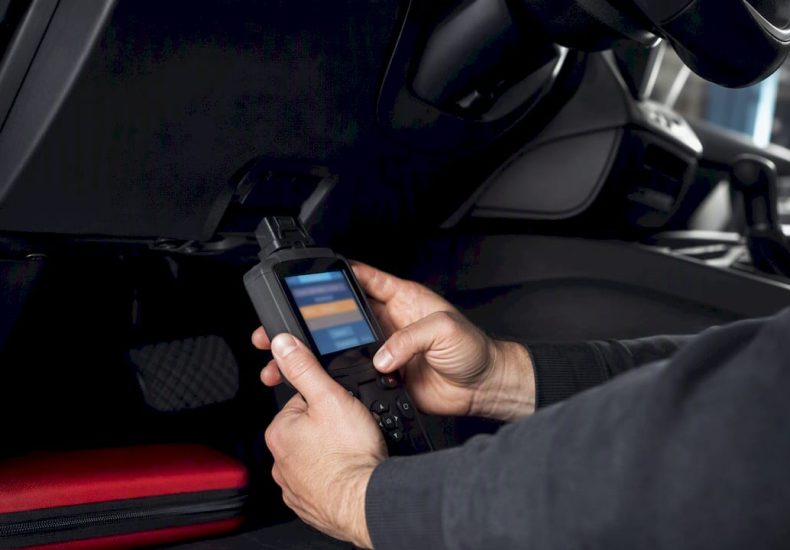
Drivers: Pending vs Stored Codes, Mode 07/03/0A Steps, Shop Advice
A pending code means your car’s computer spotted a problem once and is still watching to see if it repeats; a stored code means the fault has been confirmed and usually triggers the check engine light. Pending codes call for monitoring and a follow-up scan, while stored codes call for diagnosis and repair sooner rather than later.
TL;DR:
- Pending codes indicate a first detection and often clear automatically if the fault does not repeat within several drive cycles.
- Stored codes confirm the fault across multiple cycles and typically activate the check engine light, signaling a verified issue requiring diagnosis and repair.
- Permanent codes are resistant to clearing until the vehicle confirms the repair through normal driving, especially for emission-related faults.
- Monitoring and recording freeze-frame and live data before clearing codes help prevent unnecessary part replacements and improve diagnostic accuracy.
- A professional diagnostic scan provides deeper insights than basic tools by tracking PID trends and verifying whether sensor readings reflect actual faults or system reactions.
Table of Contents
- Comparing pending, stored, and permanent codes
- What a pending code is and how it forms
- What a stored code means for your repair priority
- How a code moves from pending to stored to permanent
- What to do before you touch the scanner’s clear button
- Clearing codes and what it does to your next emissions test
- Why a shop’s diagnostic equipment catches what a basic scanner misses
- A few habits worth building before you trust any code
- Get a professional read on your check engine light
- Sources
- FAQ
Comparing pending, stored, and permanent codes
Each code status tells you something different about how confident the computer is in the fault, and that confidence level should guide what you do next.
- Pending: a first-detection flag from one monitoring cycle; the MIL usually stays off, and the right move is to watch for a repeat.
- Stored (confirmed): verified across multiple cycles, per ANCEL’s explanation of scanner code types, and it typically lights the check engine light; the right move is to diagnose and repair.
- Permanent: locked in until the vehicle itself confirms a repair through normal driving, according to BackYardMechanic’s breakdown of OBD-II code types; the right move is to complete the repair, then let the car verify it.
Scanners often show pending and stored codes side by side. When the same code appears in both lists, it usually means the fault has been intermittent, showing up under some driving conditions but not others. That pattern is worth noting before you decide how urgent the fix is.
What a pending code is and how it forms
A pending code shows up the first time your car’s computer catches something out of range, before it has enough repeated evidence to call it a confirmed fault. In OBD service mode terms, this corresponds to Mode $07, the mode scanners use to pull pending codes specifically. Most systems use a two-trip or monitor-first logic: the fault has to be seen once, then confirmed on a following drive cycle before it graduates to stored status.
Common triggers for a pending code include:
- An intermittent misfire that shows up under load but not at idle.
- A brief oxygen sensor reading that drifts out of range and then corrects itself.
- A momentary EVAP system pressure blip that resolves on its own.
Because these conditions are transient, a pending code can clear itself without any repair at all, simply because the fault didn’t repeat on the next cycle. Steer’s explanation of pending versus confirmed codes notes that the number of clean cycles needed to auto-clear varies by monitor and fault type, and for some monitors it can take dozens of warm-up cycles before the code disappears on its own.
Pro Tip: Scan for pending codes every week or two if your check engine light hasn’t come on but you’ve noticed a rough patch in how the car drives. Catching a pattern early is cheaper than waiting for it to become a stored code.
That auto-clear behavior is exactly why pending codes shouldn’t be ignored, but also shouldn’t trigger panic. They’re an early-warning system, not a verdict.
What a stored code means for your repair priority
A stored code, sometimes called a confirmed code, is what happens when the same fault shows up across multiple monitoring cycles instead of just once. This maps to Mode $03 in OBD service mode terms, and it’s the mode most scan tools default to when you first plug in.
Stored codes typically trigger the check engine light, and ANCEL’s guide to scanner code types treats this as the marker of a verified, repeatable issue rather than a one-off glitch.
What makes stored codes more useful diagnostically is the context that comes with them:
- Freeze-frame data: a snapshot of engine conditions (RPM, load, coolant temperature, speed) captured the moment the fault was confirmed.
- Repeated events: the fault has occurred enough times to rule out a fluke.
- Pattern matching: comparing freeze-frame data against symptoms narrows down the likely cause faster than guessing.
Stored codes commonly point to real, ongoing problems: a failing oxygen sensor, a misfire that keeps recurring instead of clearing, or a catalytic converter under stress from an upstream fault it wasn’t designed to compensate for. None of that means the first suggested part is automatically the fix. Carsymp’s explanation of pending versus stored codes makes the point that a DTC describes a symptom in the system, not a part number, and pairing it with live data avoids replacing something that was never broken. A rough idle paired with a stored misfire code and a look at common check engine light causes can help you narrow down whether you’re looking at ignition, fuel, or something else entirely.
How a code moves from pending to stored to permanent
Most vehicles follow a two-trip rule: a fault detected once becomes pending, and if the same fault shows up again on a following drive cycle, it becomes stored. Severe faults can skip that waiting period, confirming on a single trip when the computer judges the risk (to the catalytic converter, for instance) is high enough to act immediately.
- First detection: the computer flags the fault and stores it as pending, without lighting the MIL in most cases.
- Confirmation: the same fault repeats on a later cycle, or is severe enough to confirm immediately, and the code becomes stored.
- Permanent status: for faults tied to emissions, the code can be written to Mode $0A, described by FoxwellDiag as a status that resists clearing by a scan tool and instead requires the vehicle to verify the repair through its own drive cycles.
- Monitor readiness: each emissions monitor (catalyst, oxygen sensor, EVAP, and others) has its own prerequisites, such as coolant temperature or vehicle speed, and Carsymp notes that a monitor with narrow operating conditions can take longer to confirm or clear a related code than one that runs constantly.
That variability is why two cars with the same symptom can show different code statuses. It’s not inconsistency in the system, it’s just different monitors running on different schedules.
What to do before you touch the scanner’s clear button
Before clearing anything, capture what the scanner already knows. Freeze-frame data and live readings taken at the moment of a fault are far more useful than the code number alone, and once you clear the code, that context is gone.
- Record every pending and stored code, along with freeze-frame data, before doing anything else.
- Note the conditions when symptoms occur (cold start, highway speed, after fill-up) since that often matches a specific monitor’s trigger.
- Check wiring and connectors near the flagged sensor or component for corrosion, looseness, or chafing.
- Listen and look for obvious symptoms: rough idle, hesitation, unusual smells, or a fuel cap that isn’t sealing.
- Do basic, safe checks like confirming the fuel cap clicks shut or a battery terminal is snug, but stop there if the fix isn’t obvious.
Pro Tip: Take a photo of your scanner’s freeze-frame screen before clearing any code. It costs nothing and saves a shop from re-diagnosing a fault that may not repeat during a test drive.
If the issue isn’t a quick visual fix, bring your scan report, a note of when symptoms happen, and a list of recent repairs to a shop. That context turns a guessing exercise into a targeted diagnosis, and it’s the same information a technician would ask for anyway. For a broader look at what a shop actually does with that information, see types of car diagnostic tests.
Clearing codes and what it does to your next emissions test
Clearing a stored code wipes it from memory, but a permanent code won’t budge that easily. Permanent codes are built to resist a simple clear specifically so a driver can’t erase evidence of an emissions fault right before an inspection; they only go away once the vehicle’s own monitors confirm the repair through normal driving.
- Clearing stored codes also resets the readiness monitors tied to them, and those monitors need to run through their own conditions again before they report ready.
- If you clear a code and drive straight to an emissions test, the state’s EPA guidance on OBD readiness notes this can cause a readiness failure even if the underlying repair was done correctly, simply because the monitors haven’t finished their cycles.
- Some monitors need very specific conditions (a cold start, a certain speed, a full tank) to run, so a quick errand around the block usually isn’t enough.
The safer sequence is to diagnose the fault first, make the repair, then drive the vehicle through the conditions needed to complete the relevant monitors before clearing anything or heading to an inspection station. That order avoids the frustrating cycle of passing the repair but failing the readiness check. More on how a confirmed code interacts with inspection requirements is covered in check engine light meaning.
Why a shop’s diagnostic equipment catches what a basic scanner misses
A basic code reader tells you the code number. Professional-grade OBD-II diagnostics go further, tracking PID trends over time, pulling in-depth live data across multiple systems at once, and generating readiness reports that show exactly which monitors have and haven’t completed their cycles.
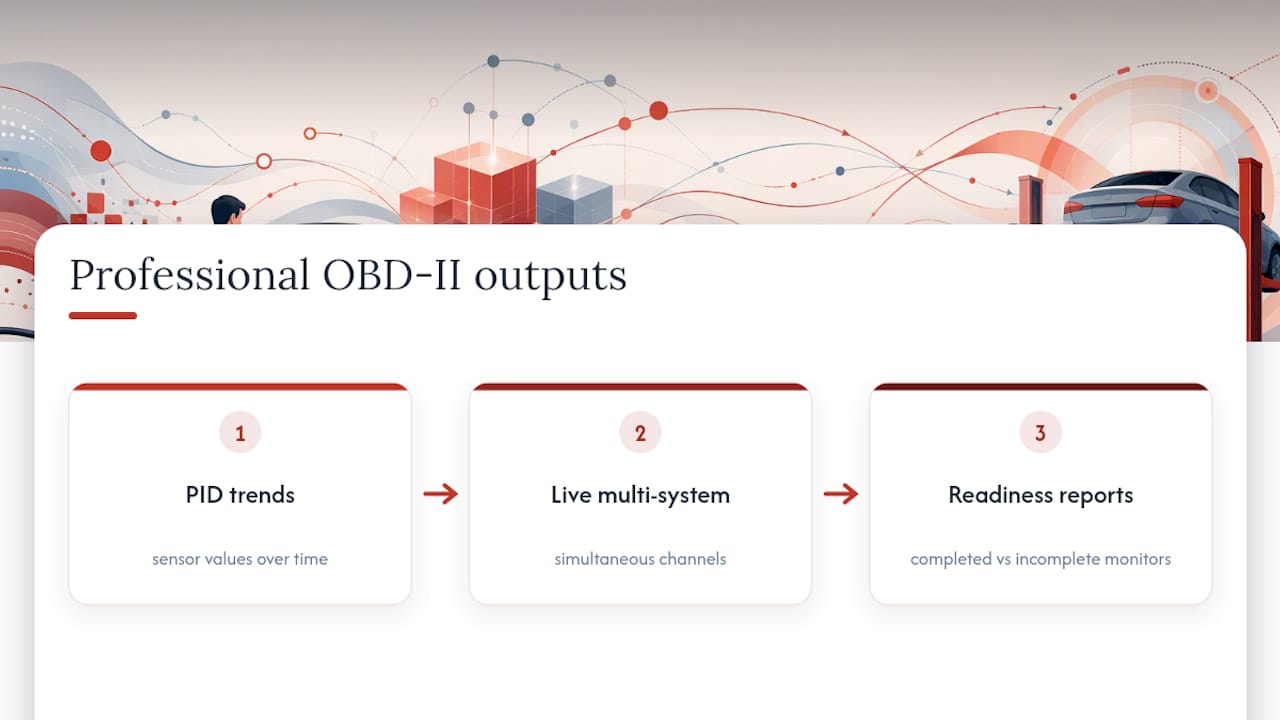
An experienced auto repair shop has been working on vehicles since 1985, with ASE-certified technicians running that level of diagnostic equipment on all makes, including hybrid and European models. That combination matters because a stored code rarely tells the whole story on its own: freeze-frame data plus live PID trends often reveal whether a sensor reading is actually failing or just reacting to a problem somewhere else in the system.
That distinction is what keeps a diagnosis from turning into a parts-replacement guessing game. Swapping an oxygen sensor because it threw a code, when the real cause was a vacuum leak upstream, wastes money and doesn’t fix anything. Reading the live data first, before ordering parts, is the difference between one repair and three.
A few habits worth building before you trust any code
The biggest mistake I see is clearing codes the moment the light goes off, then wondering why the same problem comes back a week later with no freeze-frame data left to work from. The second biggest is replacing parts based on the code’s suggested cause without checking live data first, which turns a $30 sensor issue into a $300 parts-chasing exercise. Read the data before you touch anything, and if you want more detail on specific symptoms, the common check engine light causes post is a good next stop.
— Shingi
Get a professional read on your check engine light
Reading your own scanner is a great first step, but pending and stored codes only tell part of the story without freeze-frame data, live PID trends, and a technician who knows which monitors need to run before anything gets cleared. Tom’s B & M Auto offers a free check engine light review that includes a full scan report, recommended repairs, and a cost estimate, backed by a 24-month/24,000-mile warranty on any work performed.
Bring your scan history and a note of when the symptoms happen, and the shop’s ASE-certified technicians will take it from there. Book a visit through the check engine light diagnostic page and get a clear answer instead of a guess.
Sources
- Pending, Stored, and Permanent Codes | What They Mean in Car Scanner | ANCEL
- Pending vs Confirmed OBD2 Codes: What’s the Difference? | Steer
- What Does a Pending Code Mean? Stored vs Pending vs Permanent DTCs | FoxwellDiag
FAQ
Will a pending code go away on its own?
Yes, a pending code often clears on its own if the fault doesn’t repeat on a following drive cycle, since it represents a first detection rather than a confirmed problem. How many clean cycles that takes depends on the specific monitor, and for some it can take many cycles before the code disappears, according to Steer’s guide to pending versus confirmed codes.
What does a pending code mean on an OBD-II scanner?
A pending code means the vehicle’s computer detected a fault once but hasn’t confirmed it across enough drive cycles to store it as a verified problem. It typically won’t trigger the check engine light, and scanners pull this information through Mode $07.
What does a pending DTC status mean when I pull codes?
A pending DTC status simply flags that the fault was seen but hasn’t repeated enough times to be confirmed. Combine it with freeze-frame or live data to judge whether it’s worth watching or acting on right away, since the pending flag alone doesn’t indicate severity.
What does it mean when a code is stored?
A stored code means the fault has been verified across multiple monitoring cycles and is treated as a confirmed problem, which is why it usually turns on the check engine light. ANCEL’s explanation of code types recommends pairing stored codes with live data before deciding on a repair, since the code identifies the symptom, not necessarily the exact part at fault.
Recommended
- P0420 Code Fix: 5 Minute O2 Waveform Test That Can Save You Hundreds
- Types of Car Diagnostic Tests: 2026 Owner’s Guide
- Check Engine Sign in Car: What to Do Right Now
- Service Engine Soon: What It Means and What to Do
Leave a Reply