
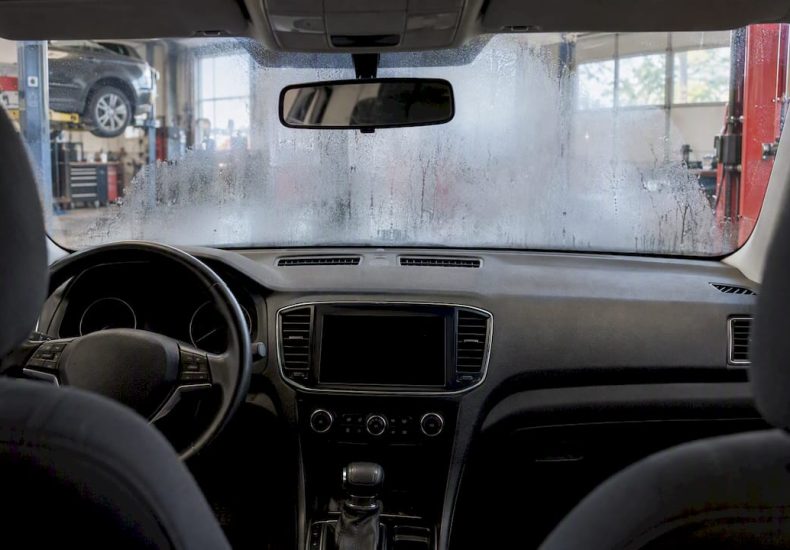
Defroster Not Working? Causes, Quick Checks and Fixes
When your defroster stops working, the cause is usually one of three things: the heat isn’t reaching the glass, the air isn’t moving or isn’t being directed at the windshield, or (on the back window) the electric grid has broken. Which one it is depends on whether the problem is in the front or the rear. This guide helps you sort that out in a few minutes, shows what is safe to check in your driveway, and tells you when it’s time to hand the car to a technician. In the Pacific Northwest, where fog and drizzle start in October, a defroster that can’t clear the glass is a safety problem, not a comfort problem.
TL;DR
- The front defroster is part of your heating and A/C system. The rear defroster is a separate electric grid. They fail for different reasons, so start by noting which glass is affected.
- Weak or cold air at the windshield points to coolant, thermostat, heater core or blend door trouble. No air at all points to the fan circuit. Air from the wrong vents points to a mode door.
- Safe checks: mode and fan settings, fresh-air setting, cabin filter, glass cleanliness, damp carpets and any sweet smell. Never open a hot cooling system.
- If you can’t keep the windshield clear, don’t drive. Get it looked at the same day.
- We diagnose front and rear defroster faults at our Lynnwood shop, with upfront pricing and a 24-month / 24,000-mile warranty on all work.
Table of Contents
- First, work out which defroster has failed
- Front defroster: what to look for
- Rear defroster: what to look for
- What you can safely check yourself
- When to stop driving
- What the repair depends on
- Our perspective
- Get it diagnosed in Lynnwood
- Prevent defroster trouble before winter
- FAQ
- Sources
First, work out which defroster has failed
Cars have two very different systems under the word “defroster.” The front one uses the HVAC system: it blows warm air through dashboard vents at the windshield and front side windows, and the A/C may engage to dehumidify that air. The rear one uses electricity to heat a grid of fine wires across the rear window, which melts frost and ice.
That split is why one can work while the other doesn’t. A dead rear grid tells you nothing about your heater, and a cold windshield defroster doesn’t mean the rear grid is bad.
Before you touch anything, write down what you notice. A short list helps a technician as much as it helps you:
- Is it the front glass, the rear glass, or both?
- Is airflow strong, weak, or nonexistent?
- Is the air warm, lukewarm or cold?
- Does it change with fan speed?
- Does it help to turn recirculation off or the A/C on?
- Does cracking a window briefly change the fogging?
A diagnostic guide from IAR recommends recording exactly these details, and they narrow the cause quickly.
Front defroster: what to look for
The front system needs three things at once: heat, airflow in the right direction, and dry air. Lose any one and the windshield stays foggy or frosted.
No airflow at all
If you turn the fan up and nothing comes out of any vent, the fault is in the fan circuit. Typical suspects are a blown fuse, a failed relay, a worn blower motor or a bad blower resistor. If the fan works only on certain speeds (often just high), the resistor is the usual culprit. This is a good problem to catch early: a failing blower often gets noisy or intermittent before it quits.
Air blows, but it’s cold
If you get strong airflow but no warmth, the heat isn’t coming through. Cars.com lists a stuck thermostat, low coolant, heater-control-valve problems, a bad fan and a malfunctioning blend door as possible causes of ineffective defrosting.
A thermostat stuck open keeps the engine from reaching normal temperature, so the heater never gets hot coolant. Low coolant can do the same thing, and low coolant has its own cause: a leak somewhere. If the temperature gauge takes forever to climb or the heater is cold in traffic and warm on the highway, mention that. It helps. Our own guide on why a heater blows cold air walks through the checks a shop runs.
Air blows and it’s warm, but not at the windshield
This is the classic “the air works but the defroster doesn’t” complaint. Cars.com notes that if warm air isn’t blowing at the windshield in defrost mode, the blend door may not be working properly. Blend doors and mode doors are small flaps inside the dash, moved by actuators. When one fails or a linkage breaks, air goes to your feet or face no matter what the dial says.
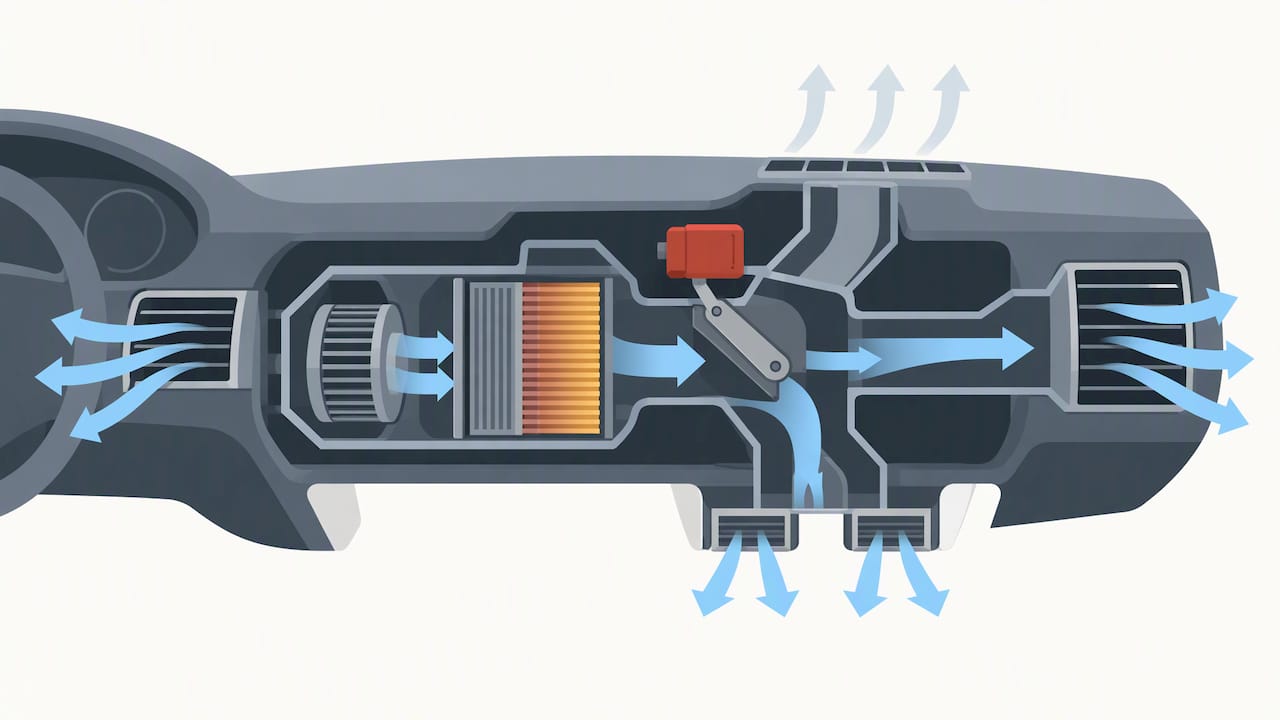
A clicking or ticking from behind the dash when you change settings is a common sign of a failing actuator. Because these parts sit deep in the dashboard, labor is often a bigger part of the repair than the part.
Warm air, but the glass still fogs
This one is about moisture, not heat. Fog forms when moisture from breath, wet clothes or melting snow meets cold glass. Recirculation can keep that moisture in the cabin, and a faulty A/C may not dry the air. Try fresh-air mode, turn the A/C on, and crack a window for a moment.
If the glass fogs even with those settings, and you notice a greasy film on the inside of the windshield, damp carpet, or a sweet smell, suspect a leaking heater core. That’s coolant vapor, and it needs a shop. We cover the full fogging problem in 5 steps to clear fogged car windows.
Rear defroster: what to look for
The rear grid is simpler. Most failures come from a blown fuse, a bad switch or relay, a broken connection at the tabs on the glass, or a scratched grid line.
Two behaviors that trip people up:
- Many rear defrosters run on a timer. Most shut off after about 10 minutes, and turning one on may also heat the outside mirrors. If it goes off by itself, that is probably normal.
- Rear defrosters work as soon as you switch them on. Unlike the front, they don’t need a warm engine. If it’s dead after several minutes, there is a real fault.
A grid that clears only in strips usually means one or more lines are broken. A dead grid with a dead mirror heater too usually points to the shared fuse or relay instead of the glass. Take care when cleaning the inside of the rear window: scrubbing across the lines with an abrasive can break them. Wipe along the lines with a soft cloth.
What you can safely check yourself
You don’t need tools for most of this, and none of it needs the hood open on a hot engine.
- Settings. Choose defrost mode, fan on medium or high, temperature on hot, and fresh air rather than recirculation. Turn on the A/C, which many cars do automatically in defrost.
- Warm up. Front defrosters take time because they need a warm engine. Give it several minutes at normal operating temperature before judging it. The AAA Oregon/Idaho fall checklist advises testing both front and rear defrosters with the engine at normal operating temperature.
- Vents and intake. Look at the cowl area at the base of the windshield. Leaves and debris can block the fresh-air intake, which is common in our wet autumns.
- Cabin filter. A clogged filter chokes airflow. Many are behind the glove box.
- Glass. A dirty inside surface fogs faster. Clean it with glass cleaner and a fresh cloth.
- Floor and smells. Feel the carpet under the dash. Note a sweet smell, or a washer-fluid or coolant odor.
- Fuse check. The owner’s manual shows the fuse for the rear defroster and the blower. A blown fuse can be a symptom: if a new one blows again, stop and have the circuit checked.
The IAR guide also cautions against opening a hot cooling system or disassembling hot or energized components. We’d add one thing: don’t keep topping off coolant without finding out where it goes.
When to stop driving
If you can’t keep the windshield clear, don’t drive the car until you can. Wiping with a towel while moving is not a plan. Use a scraper or de-icer along with the defroster to clear ice and snow, and make sure you can see before you pull out.
This matters more than most people think. Federal safety regulators have recalled vehicles over defrosting faults. One NHTSA report covers certain 2023–2025 Toyota bZ4X vehicles where a software and compressor failure mode could suspend heater operation and reduce defrosting in low temperatures, raising crash risk. Another covers 2013–2017 Nissan LEAF vehicles with incorrect defroster instructions that could reduce visibility. Jeep plug-in hybrid models had a software issue that could disable the windshield defroster, with a free dealer software update as the remedy.
The lesson: if you drive a newer or electrified vehicle, check for open recalls on your VIN before paying for a repair. A fix may be free.
What the repair depends on
The bill depends on what failed, and on how hard it is to reach. Rough order, from small to large:
| Likely cause | What it involves | Relative effort |
|---|---|---|
| Fuse or relay | Test, replace, find why it blew | Small |
| Cabin filter or blocked intake | Clean or replace | Small |
| Rear-grid tab or line | Reattach or repair conductive material | Small to moderate |
| Blower resistor or motor | Replace part, test circuit | Moderate |
| Thermostat or coolant leak | Find leak, replace, refill and bleed | Moderate |
| Blend or mode actuator | Often behind the dash | Moderate to large |
| Heater core | Dash access, coolant system service | Large |
We don’t quote a number for this without seeing the car, because the same symptom can have a $10 cause or a dash-out repair. What we promise is that the price is upfront before work starts. Where we publish pricing, such as AC repair from $150, it’s on our site.
Our perspective
We’ve been fixing cars in Lynnwood since 1985, and the defroster complaint arrives the same way every October: the first cold, damp morning. Most drivers assume a broken defroster means an expensive heater repair. Often it isn’t. A clogged cabin filter, recirculation stuck on, or a weak thermostat accounts for a lot of cases, and those are far cheaper than a heater core.
Here’s how we approach it. We start with symptoms, because the three questions (is there air, is it warm, is it going to the glass?) split the problem into separate systems. Then our ASE-certified technicians confirm with professional-grade diagnostics and a digital inspection, so you can see what we saw. We’d rather show you a failed actuator than ask you to trust us.
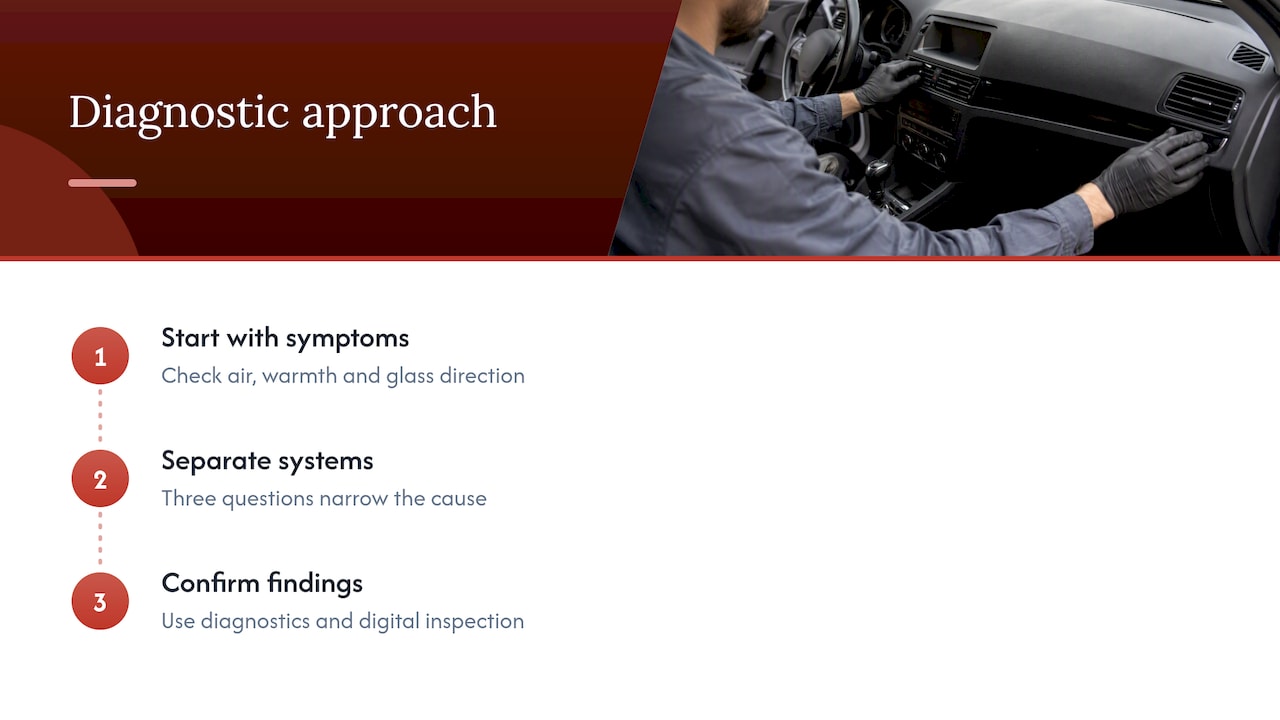
Also, the defroster and the A/C are linked. Dry air is what clears fog fast, so a weak A/C system can make a good heater look broken. If you want the background, our posts on how the heating system works and when to run the A/C and heater together explain it plainly.
Last point: don’t let a defroster fault ride through winter. It tends to get worse, not better, and a heater-core leak left alone can fog the glass and put coolant on your floor.
— Shingi
Get it diagnosed in Lynnwood
If the checks above didn’t solve it, bring the car in. We work on all makes, including Toyota, Honda, Subaru, domestic, European and hybrid vehicles, and same-day appointments are often available. Every repair carries a 24-month / 24,000-mile warranty. Military members, seniors and first responders get exclusive discounts.
If your A/C is part of the problem (warm air, fog that won’t clear, odd smells), start with our AC repair service. For heater, blower or defroster faults, contact us through our main site and describe what you noticed from the list above. For help keeping up with the season, see our seasonal maintenance checklist.
Prevent defroster trouble before winter
- Replace the cabin filter on schedule and keep leaves out of the cowl.
- Have coolant level and condition checked, and fix any leak early.
- Test both defrosters on the first cool morning, not the first frosty one.
- Keep the inside glass clean, and avoid smoking or leaving wet items in the car.
- Run the A/C briefly each week, even in winter, to keep the system working and the air dry.
- Check for open recalls using your VIN, especially on hybrids and EVs.
A few small habits like these are covered in our guide to preventive car care.
FAQ
Why is the air working in my car but the defroster isn’t?
The fan is fine, but air isn’t being sent to the windshield. A faulty blend door is a common cause, and a failed mode actuator can also send air to the wrong vents. A technician can test the actuators and linkage.
Why is my defrost not blowing hot air?
The heat isn’t reaching the cabin. Common reasons are a stuck thermostat, low coolant, a heater-control-valve problem or a blend door fault. Low coolant means a leak, so have it looked at promptly instead of just refilling.
Why does my windshield keep fogging up even with the defroster on?
Moisture is probably staying in the cabin. Turn off recirculation, run the A/C and crack a window briefly. If it persists, the A/C may not be drying the air, or a heater core may be leaking, especially if you smell something sweet or see a greasy film on the glass.
How much does it cost to fix a car defroster?
It ranges from very little for a fuse or filter to a major repair for a heater core, and it varies with the vehicle. We give you an upfront price after diagnosis, before any work begins.
Sources
- How Does A Car Defroster Work? (J.D. Power)
- How Does a Car Defroster Work? (Cars.com)
- How Window Defrosters Work (Frost Fighter)
- Windshield defrost or defogging is not effective (IAR)
- Car Defroster Not Working: Front and Rear Causes and Fixes (The Motor Guy)
- Fall Maintenance Check List (AAA Oregon/Idaho)
- NHTSA Part 573 Safety Recall Report 25V577
- NHTSA recall 23V296, Nissan LEAF
- Recall 24V111 summary, Jeep plug-in hybrids (OEMDTC)
Recommended
- Drivers: 8 Point Shop Checklist if Your Car Heater Blows Cold Air
- 5 Steps Drivers Use to Clear Fogged Car Windows and When to See a Shop
- Why Car AC Blows Warm Air: Causes and Fixes
- How Your Automotive Heating System Works: What Car Owners Need to Know
Leave a Reply