

O2 Sensor Symptoms: Scan, Live Data, and Wiring Before Replacement
The most common bad O2 sensor symptoms are an illuminated Check Engine light, worsening fuel economy, rough idle or hesitation, misfires or reduced power, a failed emissions test, and sometimes a rotten-egg smell or black exhaust smoke. None of these signs points to the oxygen sensor on its own, so a proper diagnostic scan is the only way to confirm the cause before any part gets replaced.
TL;DR:
- A proper diagnosis pairs stored trouble codes and freeze frame data with warmed engine readings, wiring checks, leak inspection, and sensor response tests.
- A steady Check Engine light with mild symptoms usually permits a short drive to a shop, but severe warning signs require stopping immediately.
- Misfires, rough idling, and rich or lean readings can also stem from worn spark plugs, clogged injectors, or intake and exhaust leaks.
- Prolonged rich running can overheat and damage the catalytic converter, while seized threads, multiple sensors, or existing converter damage can raise repair costs.
- Request a written estimate that separates diagnostic time, parts, and labor, and ask whether the repair includes a parts and labor warranty.
Table of Contents
- Common symptoms explained and why they matter
- What an O2 sensor does and why failure causes these symptoms
- Diagnosis checklist before you replace any parts
- When it’s safe to keep driving and when to stop
- What to expect from a proper repair
- Why skipping diagnosis costs drivers more in the long run
- Get a professional diagnosis instead of guessing
- FAQ
- Sources
Common symptoms explained and why they matter
A lit Check Engine light is often the first clue, and the trouble code behind it narrows things down fast. Common O2-related code families include circuit high or low voltage, slow sensor response, a heater-circuit fault, rich or lean running conditions, and catalyst-efficiency codes.
Worsening fuel economy happens when an inaccurate sensor reading tricks the engine computer into running rich, dumping extra fuel into the mix that never gets burned efficiently. Rough idle and occasional stalling follow a similar pattern: an unstable air-fuel ratio confuses the engine’s timing and fueling decisions, which can also show up as hesitation when you accelerate from a stop.
Reduced power and sluggish acceleration come from the same root cause. When the computer can’t trust its fuel-trim data, it compensates conservatively, which costs you responsiveness. A failed emissions or smog test is another frequent outcome, since a malfunctioning sensor throws off the combustion balance that emissions testing is designed to measure.
The most noticeable symptom for many drivers is smell. A sulfur or rotten-egg odor from the exhaust, sometimes paired with visible black smoke, signals an excessively rich condition where unburned fuel is reaching the catalytic converter faster than it can process it.
These symptoms overlap heavily with other issues:
- Ignition problems like worn spark plugs can cause similar misfires and rough idling.
- Fuel-system faults such as a clogged injector can mimic a rich or lean condition.
- Intake or exhaust leaks can throw off sensor readings without the sensor itself being at fault.
That overlap is exactly why trouble codes and live data matter more than guesswork.
What an O2 sensor does and why failure causes these symptoms
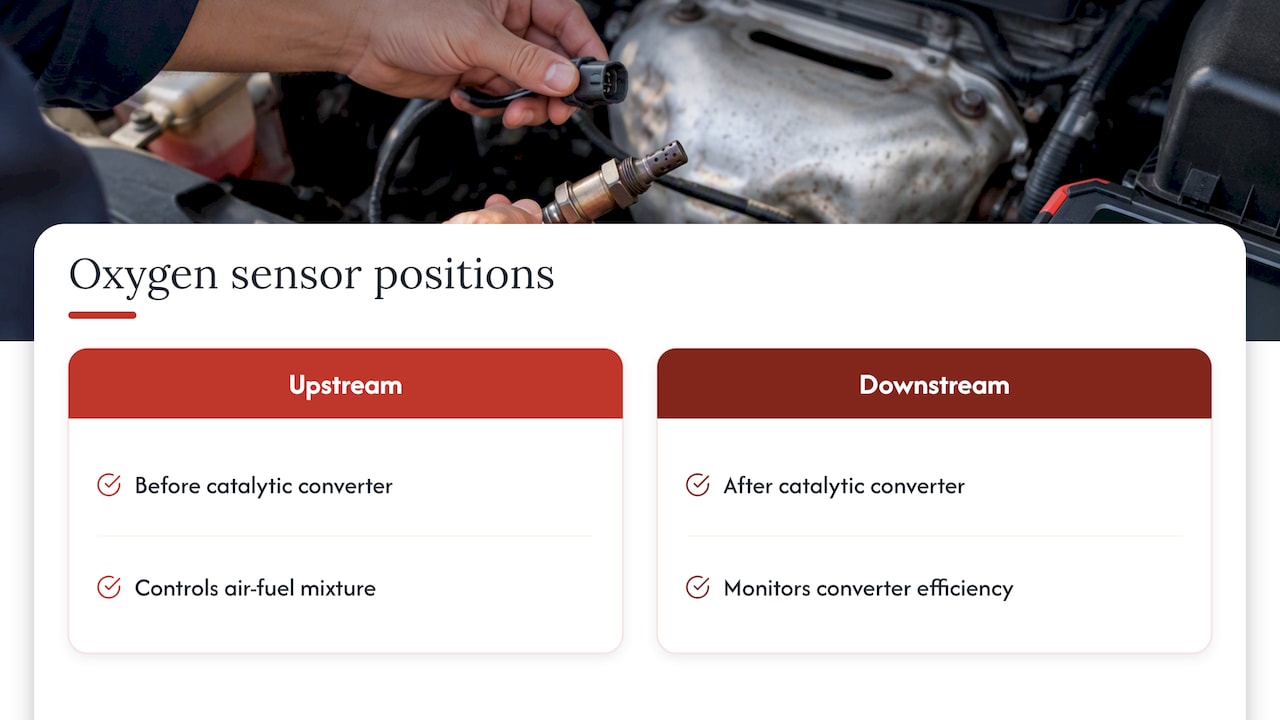
An oxygen sensor measures how much unburned oxygen remains in the exhaust stream, and the engine computer uses that reading to adjust the air-fuel mixture in real time. Upstream sensors sit before the catalytic converter and directly control that mixture, while downstream sensors sit after it and monitor how efficiently the converter is doing its job.
Heated oxygen sensors need to reach operating temperature quickly to deliver accurate readings, and a slow heat-up or sluggish response time degrades that control loop. When the signal lags or reads incorrectly, the computer either over-fuels or under-fuels the engine, producing the rough idle, power loss, and smell issues described above. Left unaddressed, prolonged rich running can damage the catalytic converter itself, since oxygen sensors and the converter work together as one emissions-control system.
Diagnosis checklist before you replace any parts
A proper diagnosis follows a sequence, not a guess. Here’s what that process should look like:
- Pull codes and freeze-frame data with an OBD-II scan tool to capture the exact conditions present when the fault triggered.
- Review live sensor data with the engine fully warmed up, watching for slow switching between rich and lean, a voltage signal stuck high or low, or fuel-trim numbers outside the normal range.
- Inspect wiring, connectors, and nearby components for corrosion, chafing, or loose connections, and check for exhaust or intake leaks that can mimic a sensor fault.
- Test the heater circuit and sensor response time, which EPA OBD-II criteria define through heat-up or activation time, rich-to-lean and lean-to-rich switching speed, and voltage threshold checks.
- Rule out related systems, since a code pointing to the oxygen sensor doesn’t automatically mean the sensor has failed.
Pro Tip: Bring any stored trouble codes or freeze-frame printouts to your appointment. It can shave real time off the diagnostic process.
Shop-level guidance on diagnosing a faulty oxygen sensor is consistent on this point: waveform and response characteristics need verification, and wiring or related system faults need ruling out, before a technician replaces the part. Codes alone are a starting point, not proof.
When it’s safe to keep driving and when to stop
Mild symptoms, like a steady Check Engine light with no other changes, usually allow for a short drive to a shop. A flashing Check Engine light, heavy exhaust smoke, a strong fuel odor inside the cabin, a severe misfire, or a sudden loss of power are different matters: stop driving and arrange service right away.
Continued rich-running conditions generate excess heat that can overheat and permanently damage the catalytic converter, turning a sensor repair into a far larger bill. Until you get a diagnosis, avoid towing heavy loads and limit driving to essential trips only.
What to expect from a proper repair
A sound repair process starts with diagnosis, not a parts swap. That means a scan, a live-data check, and a wiring inspection before anyone quotes a replacement sensor, followed by a written estimate so you know what you’re paying for.
A few factors can expand the scope of the job: limited access to the sensor, multiple sensors needing attention, seized or corroded threads, or a catalytic converter that’s already been damaged by prolonged rich running. After a correct repair, you should see restored sensor response, improved fuel economy, cleared codes, and ideally a warranty covering the parts and labor. Ask for a diagnostic report and an estimate that separates diagnostic time from parts and any additional repairs, so you can see exactly what you’re paying for and why.

Why skipping diagnosis costs drivers more in the long run
Replacing an oxygen sensor without first confirming the fault is one of the more common ways drivers waste money on a repair that doesn’t fix the actual problem. A wiring fault or a slow response time can look identical to a failed sensor on paper, and only a proper waveform and response check separates the two. Catching that distinction early is often what keeps a sensor issue from turning into a far more expensive catalytic converter replacement.
— Shingi
Get a professional diagnosis instead of guessing
A misdiagnosed oxygen sensor wastes money twice: once on an unnecessary part, and again when the real problem keeps running unchecked. Our ASE-certified technicians at Tom’s B & M Auto use professional-grade OBD-II diagnostics to check live sensor data and wiring before recommending any repair. Ask whether the job is covered by a warranty.
- We offer appointments for Check Engine light diagnostics.
- Bring any trouble codes or freeze-frame data you already have to speed up your visit.
- Our Check Engine Light diagnostic service can help check sensor and wiring issues, as well as related fuel-system issues.
Ready to find out what’s actually behind your symptoms? Schedule a diagnostic appointment with our team in Lynnwood and get a clear answer before you pay for a single part.
FAQ
What happens when an oxygen sensor goes bad?
A failing sensor sends inaccurate readings to the engine computer, which throws off the air-fuel mixture and can trigger a Check Engine light, rough idle, reduced power, or worse fuel economy. In more severe cases, you may notice a rotten-egg smell or black exhaust smoke from an overly rich condition.
Can I still drive with a bad O2 sensor?
Mild symptoms with a steady Check Engine light usually allow for a short drive to a repair shop. A flashing light, heavy smoke, a strong fuel smell, or sudden power loss means you should stop driving and get the vehicle checked immediately to avoid catalytic converter damage.
Is it expensive to fix an O2 sensor?
Cost depends on the vehicle, how many sensors need attention, and whether complications like seized threads or converter damage are involved, so an accurate figure requires a shop estimate. Our Engine Repair service can help assess the issue. Ask for an estimate that separates diagnostic work from parts and labor.
What happens if I unplug my O2 sensor?
Disconnecting an oxygen sensor removes the engine computer’s feedback loop for that circuit, which typically triggers a trouble code and forces the engine into a less efficient, preset fuel mixture. This isn’t a diagnostic shortcut since it can worsen fuel economy and trigger additional codes rather than isolate the original problem.
Sources
- Signs of a Bad Oxygen Sensor – AutoZone
- On-Board Diagnostics – Second Generation (OBD-ll) System Criteria for Alternate-Fueled Vehicles
- Diagnosing a Faulty Oxygen Sensor
- What You Should Know About Using, Installing or Buying Aftermarket Catalytic Converters
Recommended
- P0420 Code Fix: 5 Minute O2 Waveform Test That Can Save You Hundreds
- Converter Failure Symptoms: P0420 Alone Isn’t Proof for Drivers
- Types of Car Diagnostic Tests: 2026 Owner’s Guide
- Drivers: Pending vs Stored Codes, Mode 07/03/0A Steps, Shop Advice
Leave a Reply