
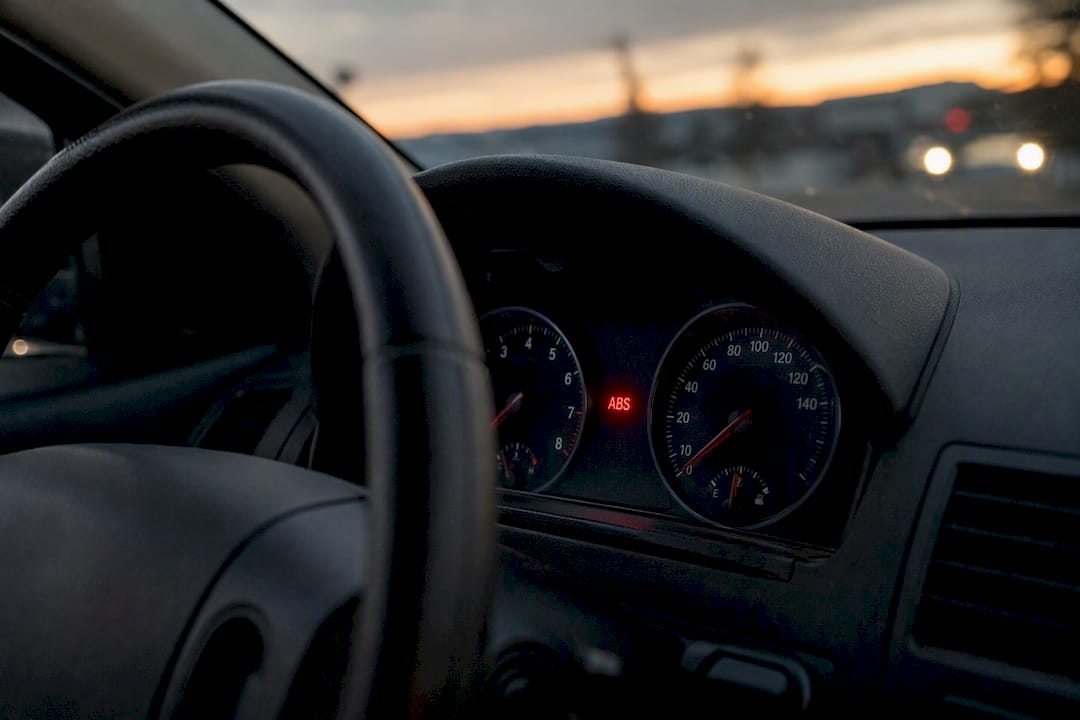
What Does the ABS Light On Your Dashboard Actually Mean?
A steady ABS light means your anti-lock braking system has found a fault and shut off ABS assistance until it’s fixed. Your normal hydraulic brakes will almost always still work, unless the red brake warning light is also lit. If the light stays on after a basic check or comes back after a reset, get an ABS-capable diagnostic scan before it turns into a bigger repair.
TL;DR:
- Most ABS lights are caused by wheel speed sensor issues, such as corrosion or damaged wiring, which are relatively inexpensive to fix.
- An ABS light alone indicates the system is disabled but usually does not affect normal braking, unless paired with a red brake warning light or soft brake pedal.
- The most common repair costs range from 50 to 200 dollars for sensors or fuses, while hydraulic module replacements can cost thousands.
- Diagnosing the problem with an ABS-specific scanner before repairs ensures the correct part is fixed and prevents unnecessary expenses.
- When the ABS light and brake warning light appear together or the pedal feels soft, immediate inspection or towing is recommended to avoid safety risks.
Table of Contents
- What Is ABS and How Does It Work?
- Steady Light or Flashing? Here’s How to Read It
- What Usually Triggers the ABS Light
- Is It Safe to Drive With the ABS Light On?
- Safe DIY Checks Before You Head to a Shop
- What a Shop Actually Does to Diagnose an ABS Fault
- What Repairs Typically Cost
- How to Clear the ABS Light After a Repair
- Does ABS Light Behavior Vary by Make or Model?
- Why This Advice Holds Up and How Tom’s B & M Auto Fits In
- Get Your ABS Light Diagnosed the Right Way
- Sources
What Is ABS and How Does It Work?
ABS keeps your wheels from locking up and skidding when you brake hard, especially on wet or icy pavement. A wheel speed sensor at each wheel reads how fast that wheel is spinning and sends the data to a control module. If one wheel starts decelerating faster than the others, the module pulses hydraulic pressure to that brake dozens of times per second, which lets the tire keep some grip instead of sliding.
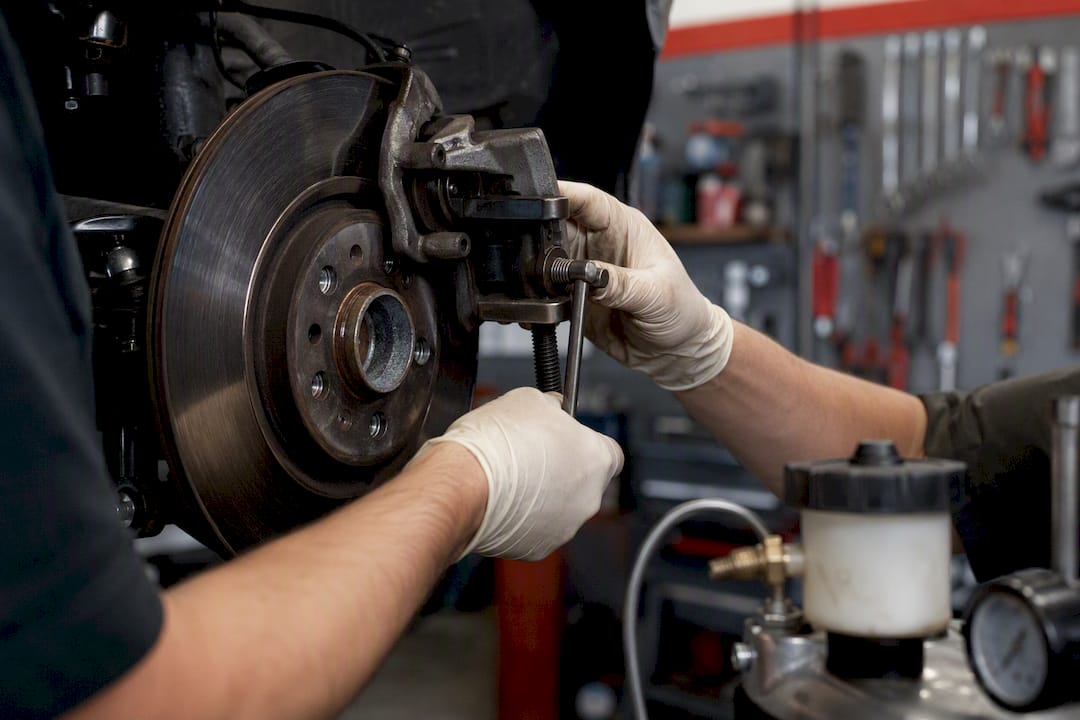
The system checks itself every time you turn the key. The ABS light should come on briefly, then go off within a second or two, that’s normal. A light that stays on, or comes on while driving, means the module didn’t get the data it expected.
A few components do most of the work:
- Wheel speed sensors at each hub, reading rotational speed
- Tone rings (also called reluctor rings), the toothed rings the sensors read
- Hydraulic valves and a pump, which modulate brake pressure on command
Corrosion, a cracked tone ring, or a bad connector anywhere in that chain is enough to trip the light.
Steady Light or Flashing? Here’s How to Read It
A steady ABS light almost always means one thing: the ABS system has detected a fault and disabled anti-lock assistance until it’s addressed. Some vehicles flash the light in a pattern instead, which is the system trying to tell you a diagnostic code through blinks, a holdover from older onboard diagnostics before scan tools were common.
The light you actually need to worry about is the combination, not the ABS light alone.
- ABS light only: anti-lock function is disabled, regular brakes typically still work
- ABS light + red brake warning light: often signals low brake fluid, a hydraulic problem, or an issue affecting the base braking system, not just ABS
- Flashing ABS light: on some older or specific models, this encodes a fault pattern technicians can read without a scanner
If you see both lights together, that’s not a “get to it this week” situation. Pull over when it’s safe and have the car looked at before you drive much further.
What Usually Triggers the ABS Light
Wheel speed sensor problems cause the ABS light more often than anything else. Dirt, brake dust, corrosion, or a nicked wire near the sensor can confuse the signal enough for the module to flag a fault, even when nothing is mechanically broken.
Common causes, roughly in order of how often they show up:
- Wheel speed sensor issues (corrosion, debris, a failed sensor, or damaged wiring at the connector)
- Damaged or worn tone ring, which throws off the signal the sensor is trying to read
- Worn wheel bearings, which can shift the sensor’s air gap enough to distort readings
- Low or contaminated brake fluid
- Blown fuse or failed relay in the ABS circuit
- Wiring harness damage, usually at the wheel or a connector exposed to road salt and moisture
- ABS hydraulic module or pump failure, less common, but the most expensive
A note on sensor faults: common causes documented by AutoZone include faulty wheel speed sensors, low brake fluid, blown fuses, damaged wiring, worn bearings, and hydraulic component failures, with sensors and tone rings among the cheapest and most frequent fixes.
The pattern worth remembering: the cheap fixes (sensors, fuses, a dirty connector) are common, and the expensive fix (the hydraulic module itself) is rare. You won’t know which one you’ve got without pulling the code, though.
Is It Safe to Drive With the ABS Light On?
Yes, in most cases, but drive differently than you normally would. With ABS disabled, your brakes still stop the car the way they did before anti-lock systems existed, ABS assistance may simply be unavailable while the fault persists. What you lose is the system’s ability to prevent wheel lockup on a hard stop or a slick surface.
That matters most in an emergency stop or bad weather. Without ABS, slamming the brakes on wet pavement can lock a wheel and send you into a skid instead of a controlled stop.
Until you get it checked, adjust how you drive:
- Slow down earlier and brake more gradually
- Add extra following distance, more than you think you need
- Avoid hard, sudden braking whenever possible
- Be extra cautious on rain, ice, or gravel
Pro Tip: If the red brake warning light comes on at the same time as the ABS light, or you notice the pedal feels soft, spongy, or sinks toward the floor, stop driving and have the vehicle towed or inspected immediately. That combination points to a hydraulic issue in your base braking system, not just the ABS add-on.
A single ABS light with no other symptoms is a “schedule a diagnostic soon” situation. Two lights together, or any change in how the pedal feels, is a “don’t keep driving on this” situation.
Safe DIY Checks Before You Head to a Shop
A few checks take five minutes and sometimes clear a false alarm, or at least give a technician useful information before you pay for diagnostic time.
- Check tire pressure on all four tires. Uneven pressure changes rolling speed just enough to confuse a wheel speed sensor into thinking something’s wrong.
- Check the brake fluid level in the reservoir under the hood. Low or visibly dirty fluid is a common, inexpensive trigger worth ruling out early.
- Look at the wiring near each wheel for anything obviously frayed, chewed, or corroded, especially if you park near road salt in winter.
- Check ABS-related fuses using the diagram in your owner’s manual, and note if the light flashes a pattern when you reconnect the battery.
A couple of things not to try:
- Don’t keep driving on leaking brake fluid or a soft pedal
- Don’t attempt wiring repairs inside the ABS harness without experience, a bad splice can create a worse fault than the one you started with
Our guide on brake system components walks through fluid checks and fuse locations in more detail if you want a fuller checklist before you pop the hood.
What a Shop Actually Does to Diagnose an ABS Fault
A technician’s first move is plugging in an ABS-capable OBD-II scanner to pull the actual trouble code, not guess from symptoms. Guessing without a code risks replacing a $60 sensor when the real problem is a $40 connector, or vice versa.
From there, the process usually looks like:
- Reading stored ABS diagnostic trouble codes (DTCs) and checking live sensor data while a wheel spins
- Physically inspecting sensors, tone rings, wheel bearings, and wiring for damage or corrosion
- Testing fuses and relays in the ABS circuit
- Checking hydraulic module and pump operation if sensor and wiring checks come back clean
Module or pump work only gets considered after everything cheaper has been ruled out, because that repair costs the most and isn’t usually the actual problem. Before authorizing anything, ask your shop to show you the code, explain what it means in plain terms, and give you an itemized quote. A shop that can’t do that isn’t giving you a real diagnosis.
What Repairs Typically Cost
Costs vary by make, model, and local labor rates, but the pattern holds across most vehicles: the common fixes are cheap, and the rare fix is expensive.
- Low cost: a blown fuse, a brake fluid top-up, or a wheel speed sensor replacement, often in the $50–$200 range for parts and labor combined on many vehicles
- Mid cost: wheel bearing replacement or wiring harness repair, generally several hundred dollars depending on how much disassembly is required
- High cost: ABS hydraulic control module or pump assembly replacement, which can run into the low thousands once you factor in the part, labor, and any reprogramming the module needs
Why the range is so wide: Popular Mechanics notes that ABS modules are electronic-hydraulic assemblies, and replacing one isn’t a simple bolt-in job the way a sensor swap is.
OEM parts, warranty coverage, and whether your shop needs to reprogram a replacement module all move the final number. A shop that reads the code before quoting anything can usually tell you within the first visit whether you’re looking at a $75 fix or a four-figure one, which is exactly why skipping the code and guessing rarely saves money.
How to Clear the ABS Light After a Repair
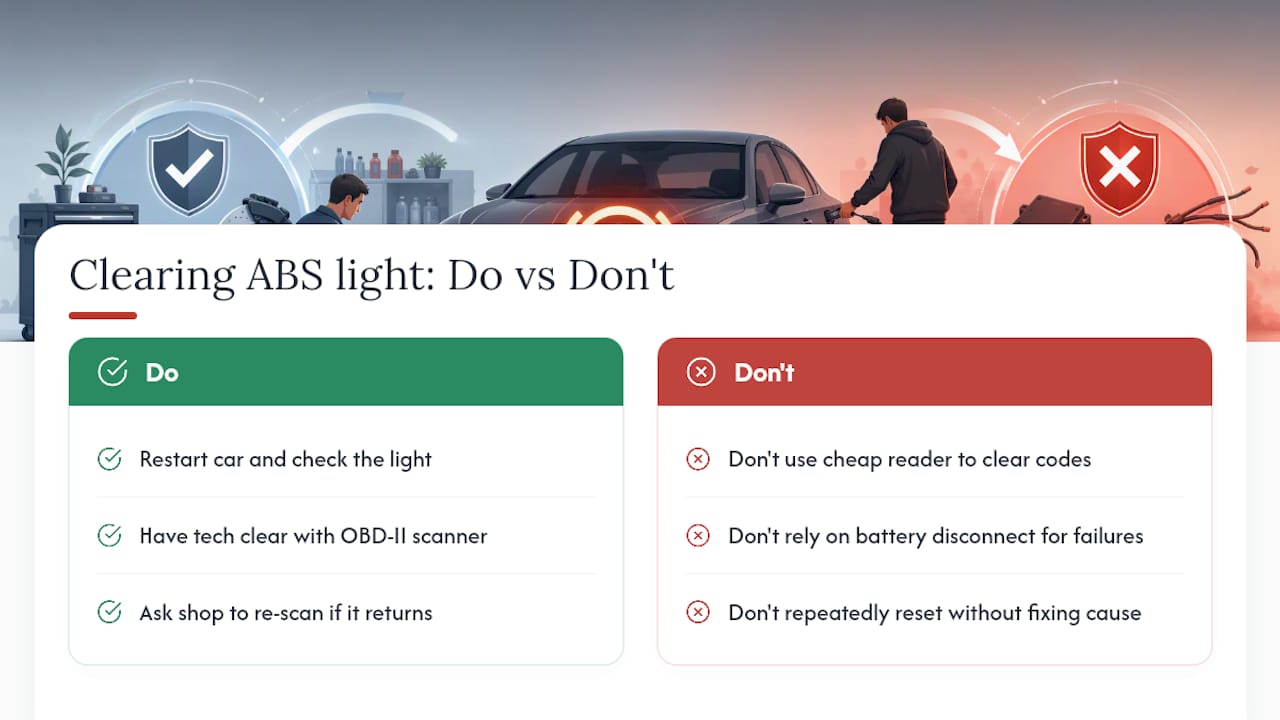
Once the actual cause is fixed, whether that’s a new sensor, a fluid top-up, or a repaired connector, the ABS light usually clears itself the next time you start the car, since the module reruns its self-test at ignition and finds no fault.
If it doesn’t clear on its own, a technician will use the same OBD-II scanner used to read the code to clear it from the module’s memory. This isn’t something you should rely on doing yourself with a cheap code reader if the underlying repair wasn’t the actual fix. Clearing a code without fixing the cause just turns the light off temporarily, the fault will usually resurface within a few drive cycles, sometimes worse than before.
A trick some owners try is disconnecting the battery for a few minutes to force a module reset. That sometimes works for very minor glitches, like a sensor that was reading oddly due to a loose connector that’s since been reseated. It will not clear a code tied to an actual failed component, and repeatedly resetting the light without addressing the root problem lets a minor electrical issue turn into a bigger one over time.
If your light returns within a day or two of a repair, that’s a sign the fix didn’t address the actual code, not a sign to reset it again and hope. Ask the shop that did the work to re-scan it and confirm the code cleared for good, not just that the light went dark.
Does ABS Light Behavior Vary by Make or Model?
The core idea is universal. Every vehicle with ABS runs a self-test at startup and illuminates a fault light when something doesn’t check out. The details of how that light behaves, though, differ more than most owners expect.
Some vehicles use a single light for the entire brake system, so an ABS fault and a parking brake issue trigger the same icon. Others, especially European makes, separate ABS, traction control, and stability control into distinct icons that can all illuminate from the same root sensor fault, which is one reason drivers sometimes see the abs and traction control light on at the same time and assume three separate problems when there’s really one. Certain older domestic and import models use a flashing pattern that encodes an actual diagnostic code, a holdover feature increasingly rare on vehicles built in the last decade since scan tools became standard equipment in every shop.
Manufacturer guidance is consistent on one point regardless of brand: the ABS light performs a self-test at ignition and persistent illumination during driving means an error was found. Your owner’s manual is the only reliable source for how your specific model displays codes, whether it separates warning lights, and what a blinking pattern (if your car has one) actually means.
Why This Advice Holds Up and How Tom’s B & M Auto Fits In
An ABS light isn’t a mystery you should be solving by trial and error. The most reliable path is reading the actual code with an ABS-capable scanner and confirming it against live sensor data, which is exactly the standard our ASE-certified technicians follow on every vehicle that comes through the door, whether it’s a Toyota, a Subaru, or a European import.
A visit typically starts with a diagnostic scan to pull the stored code, followed by a straightforward, itemized estimate before any work begins. Ask about our free digital vehicle inspection option if you want a broader look at your brakes and suspension while you’re already in the bay. All repair work carries a 24 month, 24,000 mile warranty, and same-day appointments are often available if the light just came on and you don’t want to wait a week wondering what it means.
— Shingi
Get Your ABS Light Diagnosed the Right Way
Guessing at parts online or hoping the light resets itself only delays a fix that gets more expensive the longer it sits, especially if the underlying cause is wearing down a wheel bearing or corroding a connector in the meantime. Tom’s B & M Auto in Lynnwood runs an ABS-capable diagnostic scan first, so you’re paying for the actual fix instead of a parts-swapping guessing game.
Our ASE-certified technicians have worked on Toyota, Honda, Subaru, and domestic vehicles out of the same Lynnwood shop for over 40 years, and that experience now covers hybrid and European models too. Every repair carries a 24-month, 24,000-mile warranty, and same-day appointments are often available if that ABS light just came on and you’d rather not drive on it another week.
Start with our free digital vehicle inspection to get a clear picture of what’s actually triggering the light before you spend a dime on repairs.
Sources
- Why Is My ABS Light On? (AutoZone)
- Cars
- How to fix anti-lock brakes: Expert guide (Popular Mechanics)
- Instrument cluster – warning lamps and indicators (Ford owner manual)
Recommended
- Check Engine Light Meaning: What Drivers Need to Know – Tom’s B & M Auto Blog
- Check Engine Sign in Car: What to Do Right Now – Tom’s B & M Auto Blog
- Service Engine Soon: What It Means and What to Do – Tom’s B & M Auto Blog
- What’s Causing Your Check Engine Light to Come On? – Tom’s B & M Auto Blog
Leave a Reply