
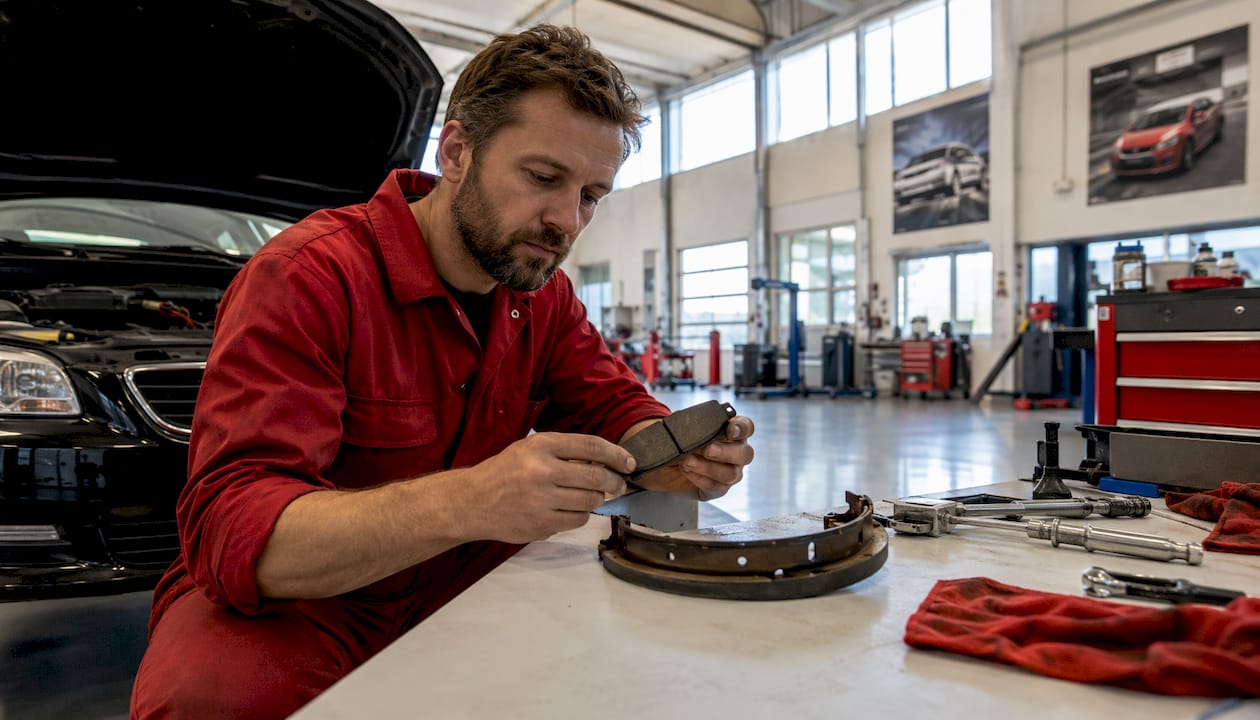
Brake Pads vs Brake Shoes: What Drivers Need to Know
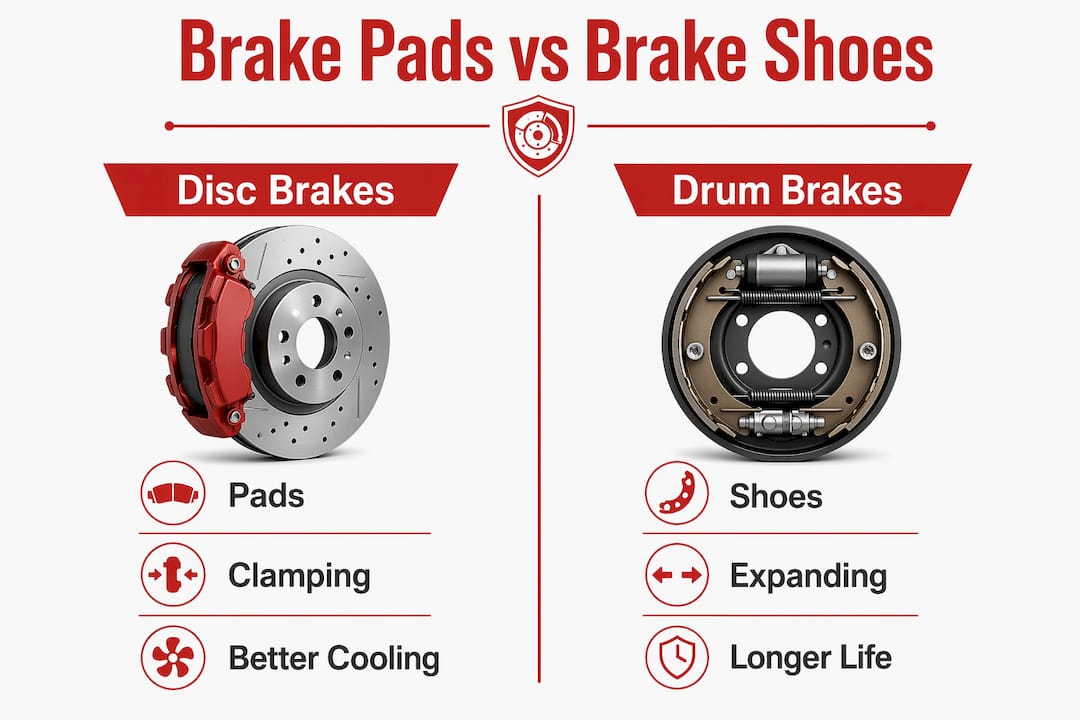
Brake pads and brake shoes are defined as the two primary friction components in modern vehicle braking systems, and choosing the right one starts with understanding how each works. Brake pads operate in disc brake systems by clamping against a rotor. Brake shoes work inside drum brakes by pressing outward against a drum’s inner surface. Most cars built after the 1990s use disc brakes on the front axle with drum brakes on the rear, meaning your vehicle likely uses both. Knowing the difference between brake pads vs brake shoes directly affects how you inspect, maintain, and budget for brake service.
How do brake pads and brake shoes work differently?
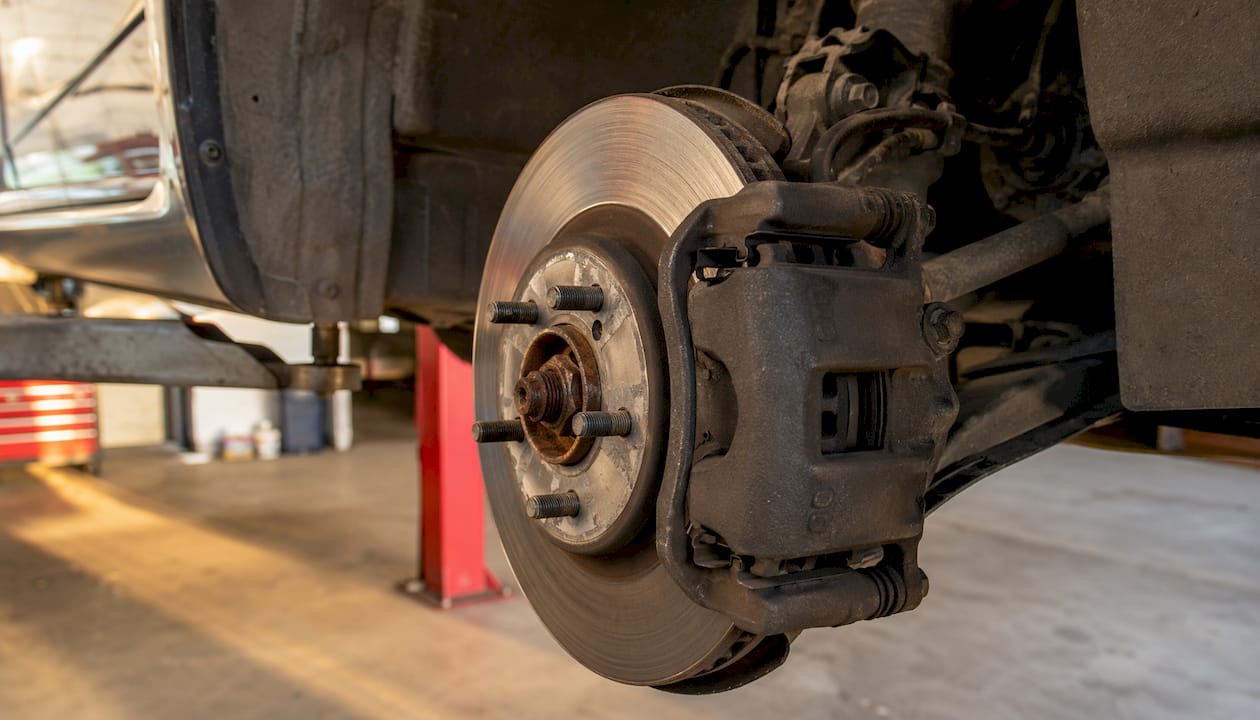
Disc brakes and drum brakes use completely different mechanical actions to stop a vehicle. In a disc brake system, a hydraulic caliper squeezes two brake pads against a spinning rotor. The friction slows the wheel. In a drum brake system, a wheel cylinder pushes brake shoes outward against the inside of a spinning drum. Both methods create friction, but the geometry and heat management are very different.
Disc brakes’ open design allows heat to escape quickly into the surrounding air. That matters because heat is the enemy of braking performance. Drum brakes trap heat inside the enclosed drum, which can reduce stopping power during repeated hard stops. This is why drum brakes are rarely used on front wheels, where braking demand is highest.
| Feature | Disc brakes (pads) | Drum brakes (shoes) |
|---|---|---|
| Friction method | Caliper clamps pad onto rotor | Cylinder pushes shoe against drum interior |
| Heat dissipation | Open design, cools quickly | Enclosed design, retains heat |
| Typical placement | Front axle (most vehicles) | Rear axle (many vehicles) |
| Self-cleaning | Yes, open to road air | Limited, debris can accumulate |
| Parking brake integration | Requires separate mechanism | Shoes often double as parking brake |
Pro Tip: If your car pulls to one side during braking, the issue is often a seized caliper rather than worn pads. A seized caliper creates uneven clamping force across the axle.
What materials are used in brake pads and brake shoes?
Brake pad materials fall into three main categories, and each involves real performance tradeoffs. Organic pads are quiet and gentle on rotors but wear faster. Semi-metallic pads handle high heat well and suit towing or mountain driving, typically running $80–$120 per set. Ceramic pads last 50,000+ miles, run quieter than semi-metallic, and produce less dust. However, ceramic pads can underperform in extreme cold because they need more warm-up time before reaching full friction efficiency.
Brake shoes use a simpler construction. A curved metal plate carries a bonded friction lining, usually made from semi-metallic or organic compounds. The lining is the actual wear surface. This distinction matters at the parts counter: brake linings are the friction material bonded to the mounting structure, whether that structure is a pad or a shoe. Not every lining is a pad, but every pad and every shoe has a lining.
Key material differences to know:
- Ceramic pads work best for daily commuting on passenger cars. They run quiet and last long but are not ideal for heavy towing.
- Semi-metallic pads are the better choice for trucks, SUVs, or drivers in hilly terrain like the Pacific Northwest. They handle heat better than ceramic.
- Organic pads suit light-duty use and older vehicles. They are the softest and least expensive option.
- Brake shoe linings are typically semi-metallic or organic. Rear drum applications see lower heat loads, so the material demands are less extreme than front disc applications.
How do you know when to replace brake pads or brake shoes?
Replace brake pads when the friction material thickness drops to 3mm. At that point, a mechanical wear indicator produces a high-pitched squeal to alert you. That squeal is a built-in metal tab designed to scrape the rotor at exactly the right wear point. Ignoring it gives you roughly 1,000–2,000 miles before the pad material is fully gone and metal-on-metal grinding begins.
Brake shoes are harder to inspect because the drum encloses them. You typically need to remove the wheel and drum to check lining thickness. That extra step is why many drivers skip shoe inspections until symptoms appear.
Watch for these warning signs on both pads and shoes:
- Squealing or squeaking during normal braking. This is the wear indicator doing its job. Address it within two weeks.
- Grinding or metal-on-metal sound. The pad or shoe lining is gone. Stop driving and get the vehicle inspected immediately.
- Brake pedal vibration or pulsation. Pedal pulsation usually signals warped rotors from overheating, not just worn pads. The diagnosis matters because the fix is different.
- Vehicle pulling to one side during braking. This often points to uneven pad wear caused by a caliper problem or tire pressure issue, not just worn friction material. Read more about why cars pull during braking.
- Soft or spongy brake pedal. This signals a more urgent hydraulic issue. Do not drive the vehicle until it is inspected.
Pro Tip: You can inspect brake pads at home through the wheel spokes on most vehicles without removing the tire. Look for the pad thickness against the rotor. If it looks thinner than a quarter-inch, schedule service.
Delayed replacement costs more than the pads themselves. Replacing brake pads runs $150–$300 per axle, but waiting until metal contacts the rotor can double that cost by requiring rotor replacement as well.
What are the cost and longevity differences between pads and shoes?
Brake shoes last significantly longer than brake pads in most applications. Brake shoe life can reach 200,000 kilometers in low-demand rear axle use, while disc brake pads typically last 40,000–120,000 km depending on driving style and material. That longevity gap is the main reason drum brakes remain on rear axles of many budget-friendly vehicles.
The cost picture is also different. Brake shoe sets generally cost less than premium pad sets, and labor for rear drum service can be comparable to or slightly higher than front disc work because the drum assembly is more complex to disassemble. One hidden benefit of drum brakes: the shoes often serve double duty as the parking brake mechanism. That eliminates the need for a separate parking brake caliper, which saves hardware cost on the overall vehicle.
Driving habits and climate both affect how long either component lasts. Stop-and-go city driving wears pads faster than highway driving. Wet climates like western Washington accelerate surface rust on rotors, which can cause uneven pad wear over time. Drivers who frequently tow or haul heavy loads should choose semi-metallic pads and expect shorter service intervals regardless of the manufacturer’s stated lifespan.
What misconceptions do car owners have about brake pads and shoes?
The most common misconception is that a squealing brake always means worn pads. Squealing can also come from glazed rotors, morning moisture on the rotor surface, or even a small stone caught between the pad and rotor. The wear indicator squeal is consistent and occurs every time you apply the brakes. Occasional squealing that disappears after the first stop is usually harmless.
A second misconception: more expensive pads always stop better. Ceramic pads cost more than semi-metallic, but they are not the superior choice for every driver. Ceramic pads underperform in extreme cold and are a poor fit for heavy towing. Matching the pad material to your actual driving conditions matters more than price.
A third area of confusion involves terminology. Brake linings, brake pads, and brake shoes are not interchangeable terms. The lining is the friction material. The pad or shoe is the metal backing plate that carries the lining. Knowing this distinction prevents ordering the wrong part at the counter. When a parts associate asks for your lining type, they mean the friction compound, not the whole assembly.
Uneven pad wear across an axle almost always signals a caliper or alignment issue. Replacing only the pads without fixing the root cause means the new pads will wear unevenly too.
Key Takeaways
Brake pads and brake shoes both stop your vehicle through friction, but matching the right component to your brake system type, driving habits, and budget determines both safety and long-term cost.
| Point | Details |
|---|---|
| System determines component | Disc brakes use pads; drum brakes use shoes. Most cars use both across front and rear axles. |
| Replace pads at 3mm | A wear indicator squeals at 3mm. Waiting past that risks rotor damage and doubles repair costs. |
| Material matters for your use | Ceramic pads suit daily commuting; semi-metallic pads are better for towing, hills, or cold climates. |
| Shoes outlast pads | Brake shoes can last up to 200,000 km in rear axle use. Pads typically last 40,000–120,000 km. |
| Squeal is not always wear | Consistent squeal at every brake application signals wear. Occasional squeal often has other causes. |
What I’ve learned after years of brake service calls
The drivers who spend the most on brake repairs are almost never the ones who ignored a single squeal. They are the ones who confused symptoms. A soft pedal is not the same problem as a squealing pad. Pedal pulsation is not the same as metal-on-metal grinding. Each symptom points to a different component, and treating them all as “brake wear” leads to misdiagnosis and wasted money.
The other pattern I see constantly: drivers who buy the most expensive ceramic pads for a truck they use to tow a boat every weekend. Ceramic is the wrong material for that application. Semi-metallic pads handle sustained heat far better, and the price difference is modest. Matching the friction material to actual use is a more important decision than brand or price tier.
For DIY drivers, the front disc brakes are genuinely accessible. You can inspect pad thickness through the wheel spokes, and a basic pad swap on most Toyota, Honda, or Subaru models is a manageable weekend job with the right tools. Rear drum brakes are a different story. The spring tension in drum assemblies is unforgiving, and an incorrectly reassembled drum brake can fail silently. If you are not confident with drum hardware, that is the job to hand to a professional.
The best maintenance habit is simple: look at your pads every time you rotate your tires. That interval lines up well with typical wear rates and catches problems before they become expensive.
— Shingi
Brake service at Tom’s B & M Auto
Tom’s B & M Auto has served Lynnwood drivers since 1985, and brake inspections are one of the most common services the shop handles. ASE-certified technicians check pad thickness, shoe condition, rotor wear, and caliper function as part of every brake visit.
If cost is a concern, financing options are available to spread brake repair costs across manageable payments. Tom’s B & M Auto also offers a free digital vehicle inspection that covers brake system components alongside the rest of your vehicle. Same-day appointments are often available, and all brake work carries a 24-month / 24,000-mile warranty. Call or schedule online to get your brakes checked before the next squeal turns into a grind.
FAQ
What is the main difference between brake pads and brake shoes?
Brake pads work in disc brake systems by clamping against a rotor. Brake shoes work in drum brake systems by pressing outward against the inside of a drum. Both create friction to slow the vehicle, but through different mechanical actions.
When should I replace my brake pads?
Replace brake pads when the friction material reaches 3mm thickness. A built-in wear indicator produces a consistent squeal at that point, and ignoring it for 1,000–2,000 miles risks metal-on-metal contact and rotor damage.
Do brake shoes last longer than brake pads?
Brake shoes typically outlast brake pads. In low-demand rear axle applications, shoes can last up to 200,000 km, while brake pads generally last 40,000–120,000 km depending on driving style and material type.
Are ceramic brake pads always the best choice?
Ceramic pads are the best choice for most daily commuters because they run quiet and last over 50,000 miles. However, semi-metallic pads outperform ceramic in cold climates, heavy towing, and mountain driving because they handle sustained heat better.
What does it mean if my brake pedal vibrates?
Brake pedal vibration or pulsation usually signals warped rotors caused by overheating, not just worn pads. The correct fix is rotor resurfacing or replacement, not simply swapping the pads.
Recommended
- What Is Brake Bleeding? A Car Owner’s Guide – Tom’s B & M Auto Blog
- How to Inspect Brake Pads at Home: A Safe Guide – Tom’s B & M Auto Blog
- The Role of Brake Caliper in Vehicle Safety – Tom’s B & M Auto Blog
- The Role of Regenerative Braking System Explained – Tom’s B & M Auto Blog
Leave a Reply