
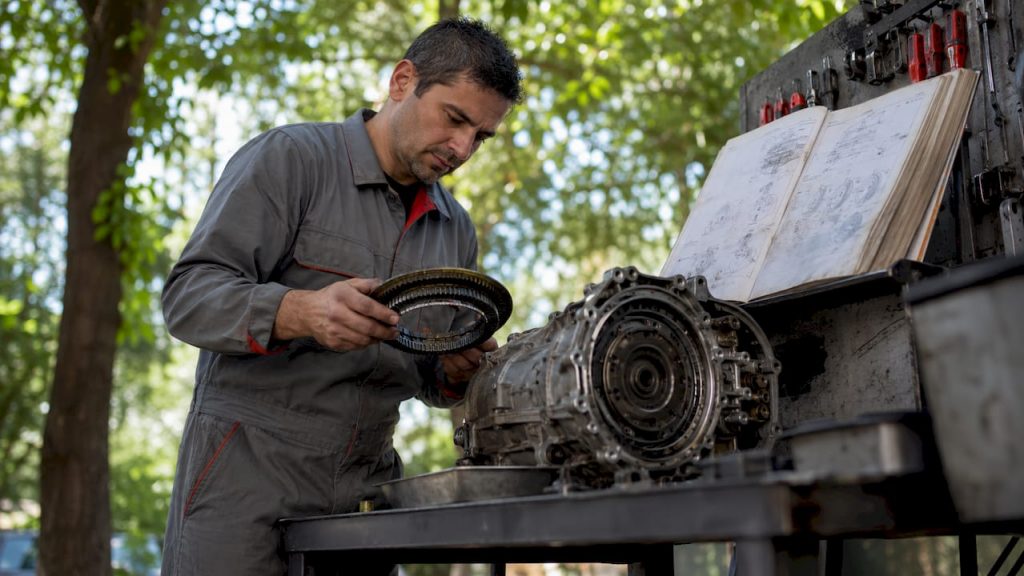
Transmission slipping is defined as the condition where your vehicle’s clutch packs lose grip on the gear, causing engine RPMs to rise without a matching increase in vehicle speed. The industry term is “clutch slip,” and it signals a breakdown in the hydraulic pressure system that controls gear engagement. Low or degraded fluid is the most common and easily corrected cause, but worn clutch packs, failed shift solenoids, and valve body damage can all trigger the same symptoms. Catching it early is the difference between a $150 fluid service and a $4,500 rebuild.
Why transmission slips: the primary causes
Slipping results from a loss of hydraulic pressure that prevents clutch packs from gripping the gear firmly. When fluid levels drop, the transmission pump pulls in air, a process called aeration, which collapses pressure and lets clutches slip under load. That is the core mechanical failure behind nearly every case of transmission slipping.
Beyond fluid, four other causes account for most automatic transmission issues:
Worn clutch packs and bands. Clutch material wears down over time, just like brake pads. Once the friction surface thins past a threshold, the pack cannot hold torque even with perfect fluid pressure. This type of wear is gradual and often goes unnoticed until the vehicle is under heavy load, such as merging onto a highway or towing.
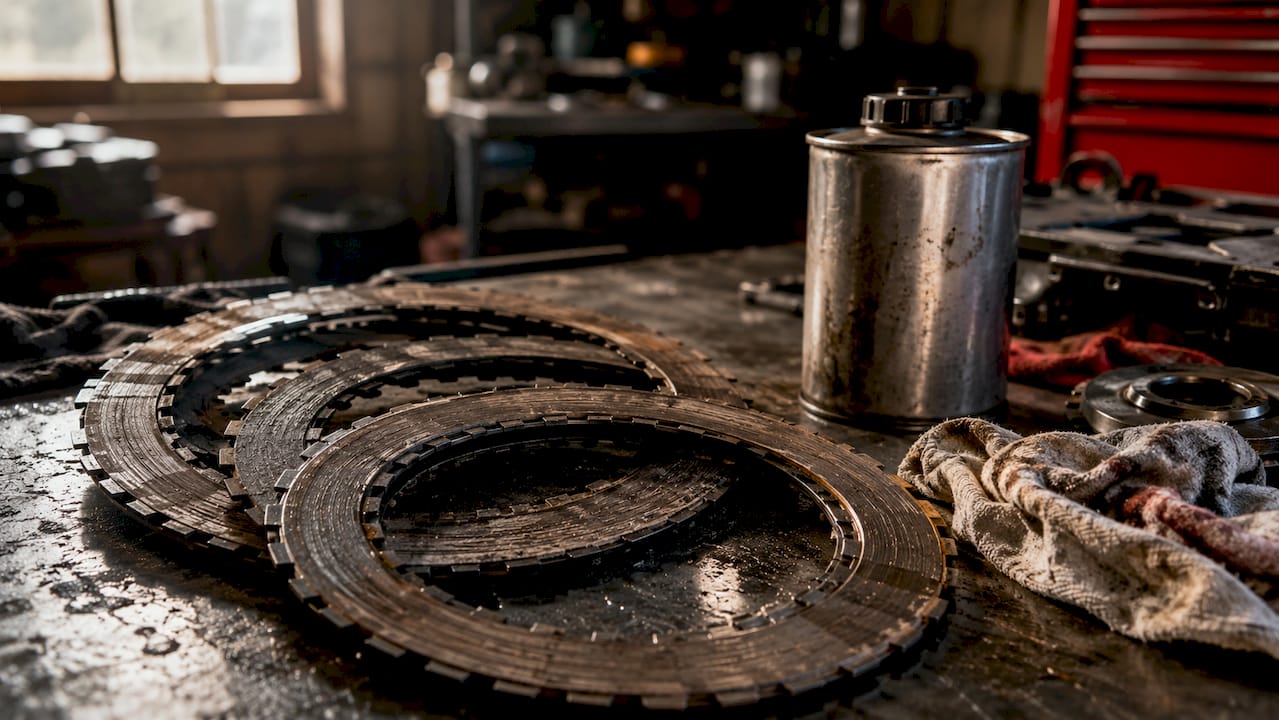
Failed shift solenoids. Solenoids are small electro-hydraulic valves that direct fluid to the right clutch pack at the right moment. When one fails, the hydraulic signal either never arrives or arrives at the wrong time. Solenoid replacement costs $200–$450 professionally, which is a fraction of a full rebuild.
Worn valve body. The valve body is the transmission’s control center, routing fluid through a network of passages. Wear or varnish buildup in those passages creates erratic pressure, causing gear hunting and delayed shifts.
Torque converter problems. A failing torque converter clutch can mimic gear slippage because it connects the engine to the transmission. When its lock-up clutch wears out, you get RPM surges at highway speeds that feel identical to a slipping gear.
| Cause | Primary Symptom | Typical Repair Cost |
|---|---|---|
| Low or degraded fluid | Delayed engagement, RPM surge | $40–$350 (service) |
| Worn clutch packs | Slip under load, burning smell | $800–$2,500 |
| Failed shift solenoid | Erratic shifts, specific gear slip | $200–$450 |
| Valve body wear | Hunting, hesitation between gears | $400–$900 |
| Torque converter failure | RPM surge at highway speed | $600–$1,200 |
Pro Tip: Schedule a fluid check at the first sign of any hesitation. Catching low or dirty fluid before clutch wear sets in keeps the repair in the $40–$350 range instead of the thousands.
How does transmission fluid affect slipping?
Transmission fluid does two jobs at once: it creates the hydraulic pressure that engages clutches, and it lubricates and cools every moving part inside the transmission. When fluid quality drops, both functions degrade simultaneously.
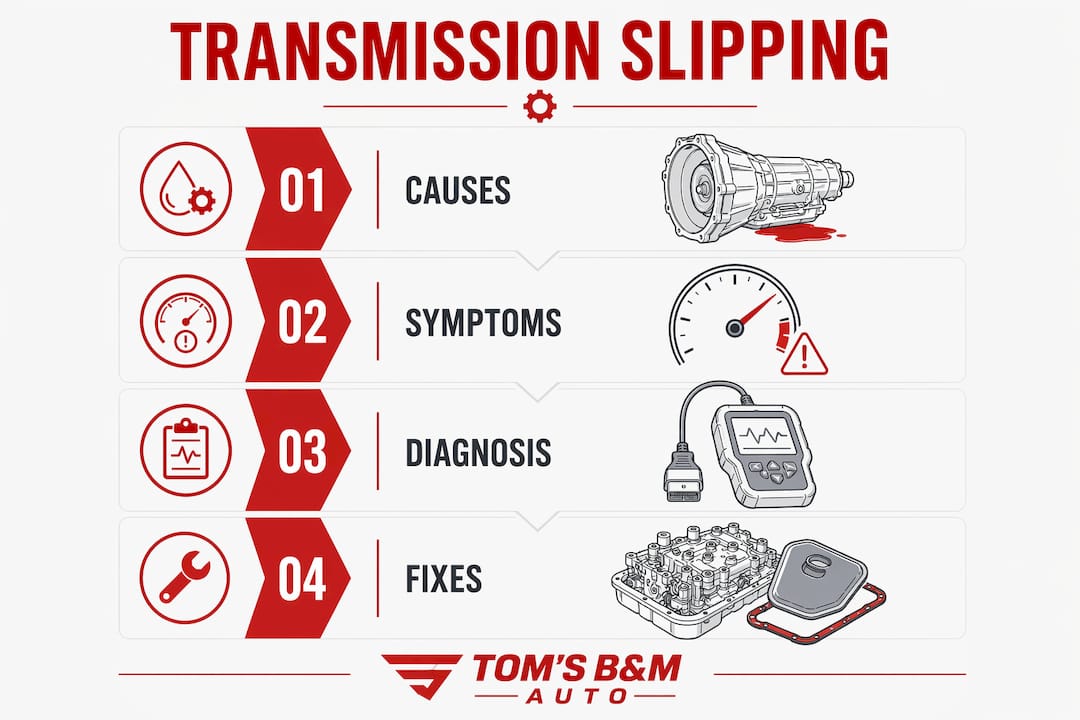
Sealed transmissions still require fluid changes despite the widespread belief that they are maintenance-free. Heat and oxidation break down fluid chemistry over time, leaving behind varnish deposits that clog solenoid screens and valve body passages. That buildup is a direct path to the solenoid failures and valve body wear described above.
Using incorrect fluid specification for modern CVT and DCT transmissions can cause immediate and severe slipping. A CVT requires a specific low-viscosity fluid to maintain belt-and-pulley clamping force. Put in a conventional automatic transmission fluid and the belt slips within miles. Always verify the exact fluid specification in your owner’s manual or on the transmission dipstick tube before adding any fluid.
Fluid aeration from overheating thins the fluid and reduces friction, often exposing underlying wear that was previously masked. Towing, stop-and-go traffic in summer heat, and aggressive driving all accelerate this process.
Here is how to keep your transmission fluid healthy:
- Check fluid level and color monthly if your vehicle has a dipstick. Healthy fluid is red or pink and smells slightly sweet.
- Change fluid every 30,000–60,000 miles for most automatic transmissions, or per your manufacturer’s schedule.
- Never overfill. Too much fluid causes aeration just like too little does.
- Use only the fluid specification listed in your owner’s manual. This matters especially for Toyota, Honda, and Subaru CVT and DCT models.
- Watch for early leak signs such as pink or red puddles under the vehicle after parking.
Pro Tip: A fluid change with benefits goes beyond just topping off. A full drain and refill removes metallic debris and varnish that a simple top-off leaves behind.
What symptoms indicate your transmission is slipping?
Transmission slipping symptoms follow a recognizable pattern once you know what to look for. Healthy transmissions engage gears within 0.5 seconds. Slipping causes delays of 1–3 seconds, which you feel as a pause between pressing the gas and the car actually moving forward.
The most common transmission slipping symptoms include RPM surges where the engine revs climb sharply but the car accelerates slowly, a burning smell from overheated fluid or clutch material, and dark or black fluid on the dipstick. You may also notice the transmission “hunting,” which means it shifts up and then immediately back down without reason.
Symptoms that mimic transmission slip include engine misfires, throttle body issues, and traction control interventions. A misfiring engine loses power in bursts that feel like a slipping gear. Traction control cutting power on a slick road feels identical to a transmission hesitation. Misdiagnosis here leads to unnecessary repairs.
Follow these steps to confirm slipping before calling a shop:
- Check the transmission fluid level and color with the engine warm and running (for vehicles with a dipstick).
- Note whether the slip happens in a specific gear or all gears. Solenoid failures often affect one gear range; fluid issues affect all of them.
- Check for warning lights. A check engine light with transmission-related codes (P0700 series) points directly at the transmission.
- Test on a flat road with no traction control interference. Accelerate moderately and watch whether RPMs climb faster than vehicle speed.
- Smell the fluid. A burnt odor confirms overheated or degraded fluid and indicates the problem has been developing for some time.
How can transmission slipping be fixed?
The right fix depends entirely on what is causing the slip. Start with the least invasive and least expensive option first, then escalate only if the problem persists.
Fluid service and leak repair are the first line of treatment. Fluid service costs $40–$350 depending on whether you go DIY or professional. If the fluid is low due to a leak, fixing the leak is mandatory. A refill without sealing the leak is a temporary measure at best.
Solenoid replacement is the right call when the slip is isolated to specific gear ranges and fluid condition is acceptable. At $200–$450 professionally, it is a targeted fix that avoids opening the transmission for a full rebuild. DIY solenoid replacement runs $30–$150 in parts, but requires dropping the transmission pan and knowing which solenoid to replace based on OBD-II codes.
Clutch pack or torque converter replacement becomes necessary when fluid service does not resolve the slip. Burned or dirty fluid with heavy metallic debris signals advanced internal wear. At that stage, a fluid change may provide temporary relief but will not stop the progression. A clutch pack replacement typically runs $800–$2,500 depending on the vehicle.
Full rebuild or replacement is the last resort, costing $1,800–$4,500. Ignoring slipping symptoms long enough almost always leads here. The transmission overheats, debris circulates through the valve body, and multiple components fail in sequence.
| Repair Type | When It Applies | Cost Range |
|---|---|---|
| Fluid service | Low, dirty, or wrong fluid | $40–$350 |
| Leak repair | Fluid loss from seals or pan gasket | $150–$400 |
| Solenoid replacement | Gear-specific slip, good fluid | $200–$450 |
| Clutch pack replacement | Slip under load, burnt fluid | $800–$2,500 |
| Full rebuild | Multiple failures, advanced wear | $1,800–$4,500 |
Pro Tip: Get an OBD-II scan before authorizing any repair. Transmission fault codes narrow the diagnosis significantly and prevent shops from guessing at your expense.
Key takeaways
Transmission slipping is a hydraulic pressure failure, and the repair cost scales directly with how long the underlying cause goes unaddressed.
| Point | Details |
|---|---|
| Root cause is pressure loss | Slipping begins when clutch packs lose hydraulic grip, often from low or degraded fluid. |
| Fluid type matters | Using the wrong fluid in a CVT or DCT causes immediate severe slipping regardless of fluid level. |
| Symptoms have mimics | Engine misfires and traction control can feel identical to slipping; confirm with OBD-II codes first. |
| Early repair saves money | A $40–$350 fluid service can prevent a $1,800–$4,500 rebuild if caught before clutch wear sets in. |
| Sealed does not mean permanent | Even sealed transmissions need fluid changes; neglect leads to solenoid and valve body failure. |
What i’ve learned after years of watching owners wait too long
The pattern I see most often is this: an owner notices a slight hesitation when pulling out of a parking lot, assumes it is normal, and waits six months to bring it in. By then, the fluid is black, the solenoid screens are clogged, and the clutch packs have been slipping under heat stress for thousands of miles. What started as a $150 fluid service is now a $2,000 repair.
The other mistake I see constantly is owners who get a fluid change and expect it to cure everything. It sometimes does. But fluid changes are often a temporary fix when heavy debris or a burnt smell is already present. That debris tells you the clutch material has been breaking down. Fresh fluid circulates that debris through the valve body and can actually accelerate the damage. A professional needs to evaluate what the fluid condition means before deciding whether a service alone is sufficient.
The misconception about sealed transmissions frustrates me the most. Toyota, Honda, and Subaru all sell vehicles with transmissions labeled “sealed for life.” That phrase refers to the factory fill lasting the design life of the transmission under ideal conditions. Real-world heat cycles, towing, and stop-and-go traffic degrade fluid faster than any lab test predicts. Sealed transmissions still need fluid changes, and skipping them is one of the most expensive maintenance mistakes a car owner can make.
My honest recommendation: if you feel any hesitation, RPM surge, or delayed engagement, get the fluid checked that week. Do not wait for a warning light. The transmission does not always throw a code until the damage is already significant.
— Shingi
Get your transmission checked at tom’s b & m auto
If your vehicle is showing any of the symptoms described above, the team at Tom’s B & M Auto in Lynnwood, WA is ready to help. ASE-certified technicians use professional-grade OBD-II diagnostics to pinpoint the exact cause before recommending any repair. Tom’s B & M Auto has served Toyota, Honda, Subaru, and domestic vehicle owners since 1985, with same-day appointments often available and a 24-month / 24,000-mile warranty on all work.
Transmission repairs can be expensive, but they do not have to be a financial emergency. Tom’s B & M Auto offers flexible financing options to make even major repairs manageable. You can also take advantage of a free digital vehicle inspection to get a clear picture of your transmission’s condition before committing to any work. Serving Lynnwood, Edmonds, and Kenmore, Tom’s B & M Auto makes professional transmission service in Lynnwood straightforward and accessible.
FAQ
What is the most common reason a transmission slips?
Low or degraded transmission fluid is the most common cause of transmission slipping. It reduces hydraulic pressure, which prevents clutch packs from gripping the gear properly.
Can i drive with a slipping transmission?
Driving with a slipping transmission accelerates internal wear and can turn a minor repair into a full rebuild. Stop-and-go driving and highway loads both worsen the damage quickly.
How do i know if it is the transmission or the engine slipping?
Engine misfires and traction control can mimic transmission slip. An OBD-II scan will show whether the fault codes point to the transmission (P0700 series) or the engine.
Does a transmission fluid change fix slipping?
A fluid change fixes slipping when low or degraded fluid is the only cause. If the fluid contains heavy metallic debris or smells burnt, the underlying mechanical wear requires further diagnosis and repair.
How much does it cost to fix a slipping transmission?
Repair costs range from $40–$350 for a fluid service to $1,800–$4,500 for a full rebuild. Solenoid replacement at $200–$450 is a common mid-range fix when fluid condition is acceptable.