
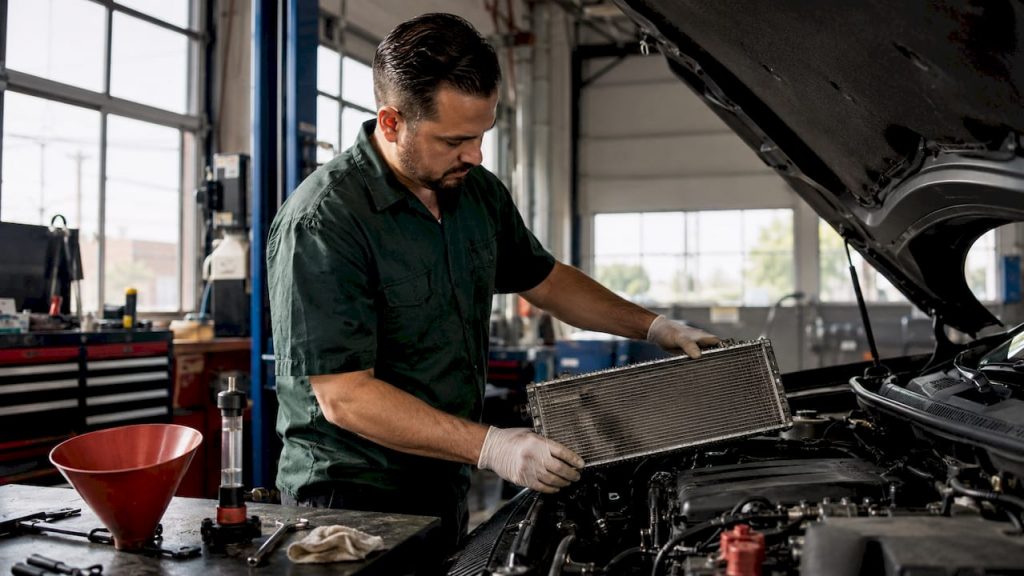
A car radiator is defined as a heat exchanger that removes excess thermal energy from engine coolant and releases it into the surrounding air, keeping engine temperatures within the safe operating range of 195°F to 220°F. Without this process, a gasoline or diesel engine would destroy itself within minutes. The radiator sits at the center of your vehicle’s entire cooling system, working alongside the thermostat, water pump, and cooling fan to prevent catastrophic overheating. Understanding what radiator function actually means gives you the knowledge to catch problems early, maintain your vehicle correctly, and avoid repair bills that can run into thousands of dollars.
What is radiator function in a car’s cooling system?
The radiator’s core function is heat exchange. The engine generates enormous heat as fuel combusts, and that heat must leave the system continuously or the metal components warp, seize, and fail. The radiator solves this by circulating coolant, a mixture of water and antifreeze, through a dense network of tubes and fins that shed heat into the air passing through them.
This process is called convective heat transfer, and it is the dominant mechanism at work. Radiators transfer heat primarily through convection rather than direct radiation, despite the name. That distinction matters for maintenance: the surface condition and airflow around the radiator determine its effectiveness far more than any other factor.
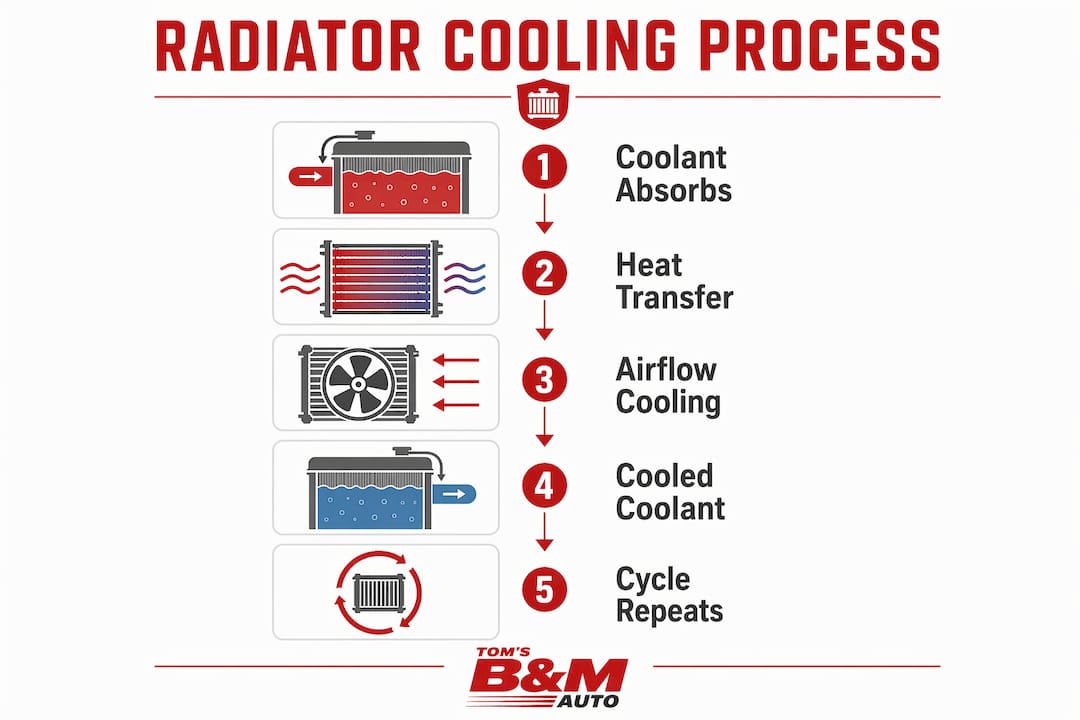
The coolant itself is the transport medium. It absorbs heat from the engine block and cylinder head, carries that heat to the radiator, releases it through the fins, and returns to the engine cooler and ready to absorb more heat. This cycle repeats hundreds of times per hour at highway speeds. The radiator does not generate cold air or refrigerate anything. It simply provides a large, thermally conductive surface where heat can escape.
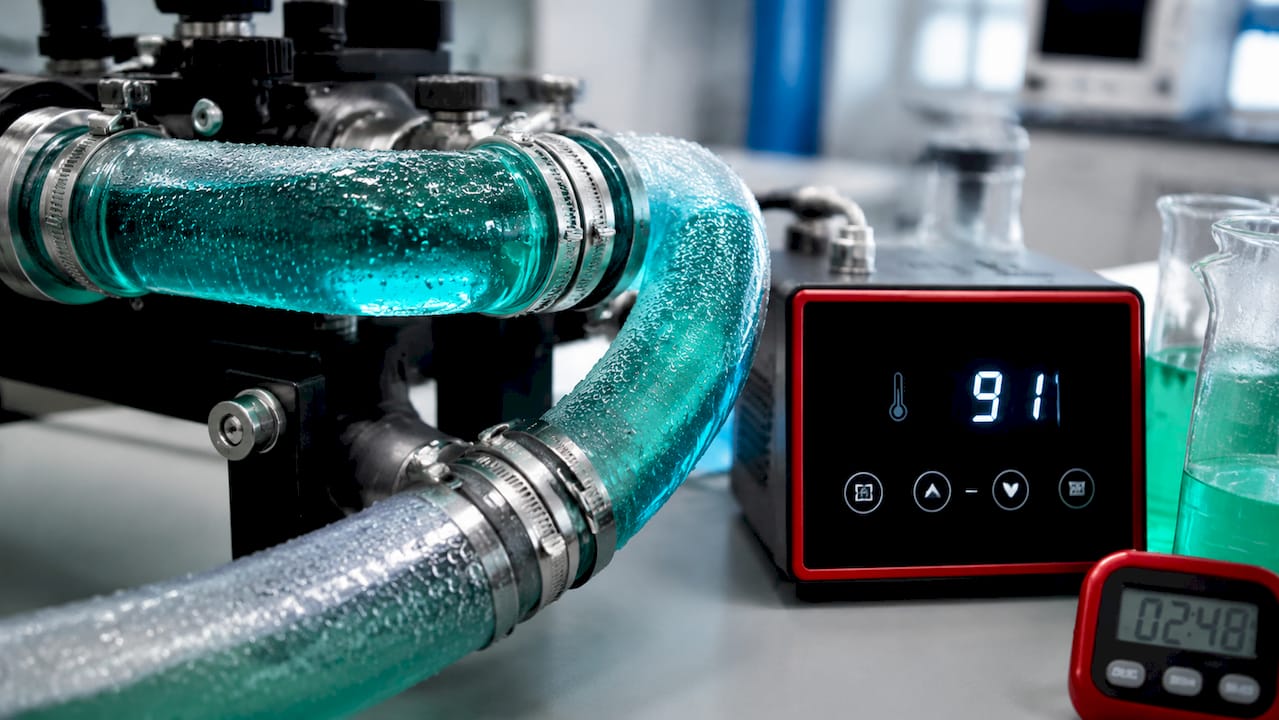
How does a car radiator work step by step?
The cooling cycle follows a precise sequence every time your engine runs:
- Engine heats up. Combustion raises the temperature of the engine block and cylinder head rapidly after startup.
- Thermostat opens. The thermostat triggers coolant flow once the engine reaches its target temperature, typically around 195°F. Before that point, coolant circulates in a short loop to help the engine warm up faster.
- Coolant absorbs heat. The water pump pushes coolant through passages in the engine block, where it picks up thermal energy directly from the metal.
- Hot coolant reaches the radiator. The coolant enters the radiator through the inlet tank at the top or side, then flows through dozens of narrow tubes running across the core.
- Fins dissipate heat. Thin metal fins bonded to the tubes dramatically increase the surface area exposed to air. As air moves through the fins, it carries heat away from the coolant.
- Cooling fan assists airflow. At low speeds or when idling, an electric or mechanical cooling fan pulls air through the radiator core to maintain airflow when forward motion alone is insufficient.
- Cooled coolant returns. The now-cooler coolant exits through the outlet tank and flows back to the engine to repeat the cycle.
Pro Tip: Never remove the radiator cap when the engine is hot. The system runs under pressure, and releasing that pressure suddenly can cause scalding coolant to spray. Wait at least 30 minutes after shutting off the engine before opening the cap.
One misconception worth clearing up: radiators do not create cold air. They are passive components that rely entirely on airflow and surface area to shed heat. Keeping the front grille and radiator fins free of debris, bugs, and road grime is one of the most effective maintenance steps you can take.
What are the main components of a car radiator?
Understanding the individual parts helps you diagnose problems and communicate clearly with a technician. The key components are:
- Radiator core. The core tubes and fins form the heat-exchange surface. Aluminum is the dominant material in modern vehicles because it is lightweight and conducts heat efficiently. The fins are thin and closely spaced to maximize surface area.
- Inlet and outlet tanks. These plastic or metal reservoirs sit on opposite sides of the core. The inlet tank receives hot coolant from the engine; the outlet tank collects cooled coolant before it returns.
- Radiator pressure cap. This small component carries significant responsibility. It maintains system pressure at 12 to 16 PSI, which raises the boiling point of the coolant well above 212°F. A failed cap causes the coolant to boil prematurely, leading to overheating even when everything else is working correctly.
- Radiator hoses. Upper and lower hoses connect the radiator to the engine. High-quality silicone options, such as performance hose kits designed for specific platforms, resist heat degradation better than standard rubber hoses over time.
- Cooling fan. Mounted directly behind the radiator, the fan pulls air through the core when the vehicle is stationary or moving slowly.
- Overflow reservoir. This plastic tank catches coolant that expands as it heats and returns it to the system as the engine cools.
Pro Tip: Test your radiator pressure cap every two to three years with an inexpensive cap tester available at any auto parts store. A cap that fails to hold pressure is a common and overlooked cause of unexplained overheating.
Common component failures include cracked hoses, clogged cores, and leaking tanks. Each one compromises the entire cooling cycle, so catching them early through regular inspection saves significant repair costs.
How does a car radiator compare to a home radiator?
Both types of radiators transfer heat using the same fundamental physics, but they serve opposite goals. The comparison clarifies why the term “radiator” applies to both and where the similarities end.
| Feature | Car radiator | Home radiator |
|---|---|---|
| Primary purpose | Removes heat from the engine | Adds heat to a living space |
| Heat transfer fluid | Coolant (water and antifreeze) | Hot water or steam from a boiler |
| Dominant heat transfer method | Convection via airflow through fins | Convection with some radiant output |
| Heat direction | Heat exits the system | Heat enters the room |
| Operating pressure | 12 to 16 PSI | Varies by system, typically lower |
| Consequence of failure | Engine overheating and damage | Loss of room heating |
Convection accounts for approximately 75% of a home radiator’s heat output, with direct infrared radiation making up the remaining 25%. Car radiators follow a similar pattern. Both types work primarily as convectors, using metal surface area and airflow to move thermal energy. The name “radiator” is technically a misnomer for both, but it has stuck for over a century.
The structural difference is significant. A car radiator is engineered to shed heat as fast as possible, so it uses tightly packed aluminum fins and high-velocity airflow. A home radiator is designed to release heat slowly and evenly into a room, so it uses larger, smoother surfaces. Both depend on the condition of their heat-transfer surfaces to function correctly. Blocked fins on a car radiator and painted-over fins on a home unit both reduce efficiency by the same mechanism: reduced surface area in contact with moving air.
What are common radiator problems and how do you prevent them?
Radiator problems rarely announce themselves dramatically until the engine is already overheating. Knowing the warning signs and maintenance schedule prevents most failures.
Signs your radiator needs attention:
- Temperature gauge climbing above the normal range or into the red
- Coolant puddles under the vehicle after parking
- Discolored coolant, brown or rusty rather than green, orange, or pink
- Sweet smell from the engine bay, which indicates coolant burning off
- Visible signs of engine overheating, which can also signal deeper issues worth reviewing with a resource on engine damage symptoms
The most common radiator problems and their fixes:
Internal sediment buildup from degraded coolant is the leading cause of reduced cooling efficiency. Over three to five years, coolant breaks down and deposits rust, scale, and sludge inside the narrow core passages. A complete cooling system flush clears these deposits and restores flow. Skipping this service is one of the most common mistakes Toyota, Honda, and Subaru owners make, particularly in the Pacific Northwest where vehicles often run year-round without seasonal breaks.
Bent or damaged fins from road debris reduce airflow through the core. A radiator comb, a simple plastic or metal tool available for under $20, straightens bent fins and restores cooling capacity without requiring a radiator replacement. This is a five-minute job that most owners never think to do.
The pressure cap failure described earlier deserves emphasis. A cap that no longer holds 12 to 16 PSI allows the coolant to boil at lower temperatures, creating vapor pockets that block coolant flow. The engine overheats even though the radiator itself is undamaged. Replacing the cap costs less than $20 and takes two minutes.
Pro Tip: Schedule a cooling system flush every three to five years regardless of whether you notice symptoms. Degraded coolant causes damage long before the temperature gauge moves.
A seasonal maintenance checklist that includes cooling system inspection catches hose cracks, low coolant levels, and fin damage before they become roadside emergencies.
Key takeaways
The radiator’s function is to continuously remove heat from engine coolant through convective heat transfer across metal fins, and neglecting this system leads directly to engine damage.
| Point | Details |
|---|---|
| Core radiator function | Acts as a heat exchanger, moving thermal energy from coolant into the air to maintain 195°F to 220°F engine temps. |
| Convection drives the process | Airflow across metal fins does the work; keeping fins clean and undamaged is the single most impactful maintenance step. |
| Pressure cap matters | A failed cap causes overheating independent of other components; test or replace it every two to three years. |
| Flush on schedule | Coolant degrades and deposits sediment in core passages over three to five years; a system flush restores full flow. |
| Car vs. home radiators | Both transfer heat by convection, but car radiators remove heat while home radiators add it to a space. |
Why most drivers underestimate their radiator
After seeing hundreds of overheated engines come through the shop at Tom’s B & M Auto since 1985, I can tell you the pattern is almost always the same. The driver noticed the temperature gauge creeping up weeks earlier, dismissed it as a quirk, and then ended up stranded with a warped head gasket or cracked block. The radiator itself was often fine. A $15 pressure cap or a $120 flush would have prevented a $2,000 repair.
The other mistake I see constantly is owners topping off coolant with plain water when they notice the reservoir is low. Water dilutes the antifreeze mixture and raises the freezing point while lowering the boiling point. In Lynnwood winters, that combination is a recipe for a cracked block. Always use the correct premixed coolant for your vehicle.
What I find genuinely interesting is how many people assume a modern car with a dashboard warning system will always alert them before damage occurs. Temperature sensors and warning lights are a last line of defense, not a monitoring system. By the time the light comes on, the engine has already been running hot long enough to cause stress on gaskets and seals. Regular physical inspection of hoses, the overflow reservoir level, and the condition of the radiator fins gives you information the dashboard never will.
The radiator is not a glamorous component, but it is one of the few parts where basic owner attention directly translates into engine longevity. A 10-minute inspection twice a year and a flush every few years is genuinely all it takes for most vehicles.
— Shingi
Keep your engine cool with professional radiator service
Tom’s B & M Auto has served Lynnwood, Shoreline, and the surrounding communities since 1985, and cooling system work is among the most common services our ASE-certified technicians handle. Whether your temperature gauge is climbing, you have spotted a coolant leak, or you simply want to stay ahead of the maintenance schedule, we provide honest diagnostics and upfront pricing on every job.
Our radiator repair service in Shoreline covers everything from pressure cap replacement and fin repair to full radiator replacement for all makes including Toyota, Honda, Subaru, European vehicles, and hybrids. Same-day appointments are often available, and all work carries our 24-month / 24,000-mile warranty. Call us or book online to schedule your cooling system inspection today.
FAQ
What does a radiator do in a car?
A car radiator removes excess heat from engine coolant by passing it through a core of metal tubes and fins, where airflow carries the heat away. This keeps the engine within its safe operating temperature range of 195°F to 220°F.
How often should a radiator be serviced?
A cooling system flush is recommended every three to five years to remove sediment buildup from degraded coolant. The radiator pressure cap should be tested or replaced every two to three years.
What are the signs of a failing radiator?
Common signs include a rising temperature gauge, coolant leaks under the vehicle, discolored or rusty coolant, and a sweet smell from the engine bay. Any of these symptoms warrant immediate inspection.
Does a car radiator work the same way as a home radiator?
Both transfer heat primarily through convection, but they serve opposite purposes. A car radiator removes heat from the engine to prevent damage, while a home radiator releases heat into a room for warmth.
Can I drive with a bad radiator?
Driving with a malfunctioning radiator risks severe engine damage, including warped cylinder heads and blown head gaskets. If the temperature gauge rises above normal, stop the vehicle and have it inspected before driving further.