
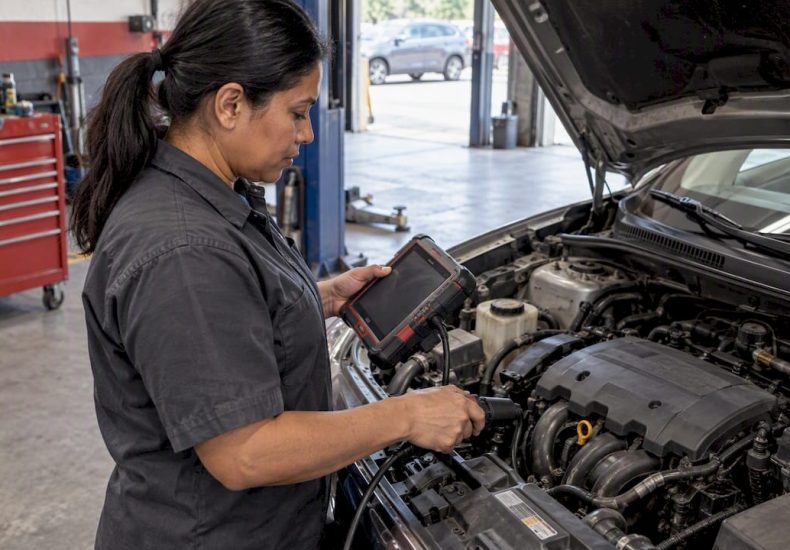
Fuel Economy Dropped Suddenly? Causes and What to Check
When your fuel economy drops suddenly, the cause is usually one of a short list: low tire pressure, extra weight or cold-weather driving, a bad fuel fill, or a worn or failing part such as a sensor, spark plug, injector or dragging brake. Start by confirming the drop is real, then rule out the cheap, easy causes. If the number stays low, have the car scanned and inspected before it costs you more at the pump or damages something else.
This guide walks through that order. It covers what you can check in your driveway, what a shop checks with scan tools and gauges, and which symptoms mean you should not wait.
TL;DR
- Measure MPG over two or three tanks, at the same station, before you decide something is wrong. One bad tank proves little.
- Check tire pressure, remove extra cargo and consider the weather and trip length. These explain a lot of sudden drops.
- A real, lasting drop with a check engine light, rough idle, hesitation or a burning smell points to a mechanical fault: sensors, ignition, fuel delivery or brakes.
- The longer you drive on a fault that wastes fuel, the more it can cost. A scan and inspection is cheaper than guessing at parts.
- If you are in the Lynnwood area, we can scan and inspect the car, often the same day.
Table of Contents
- First, confirm the drop is real
- Quick checks you can do yourself
- When it is mechanical: the usual suspects
- Symptom guide: what points to what
- Our perspective: scan first, then inspect
- What a diagnosis visit looks like with us
- Fix it before it costs more
- Book a scan and inspection in Lynnwood
- FAQ
- Sources
First, confirm the drop is real
A dashboard MPG readout is an estimate. It resets, it averages over different windows, and it swings with a single long idle or a week of short trips. Before you pay for any repair, get a real number.
The EPA’s advice is simple: measure your MPG over two or three tanks, refilling at the same station and, if you can, the same pump and nozzle. Pumps shut off at slightly different points, and that alone can move a one-tank calculation by a surprising amount.
Here is the method:
- Fill the tank until the pump clicks off. Note the odometer or reset a trip meter.
- Drive as you normally do.
- Fill up again at the same pump. Write down the gallons added.
- Divide miles driven by gallons. That is your real MPG for that tank.
- Repeat once or twice and compare with what you got before the drop.
The EPA also points out that fuel economy ratings come from standardized tests, so real-world mileage varies a lot with driver behavior, vehicle condition and environment. Do not compare your result with the sticker. Compare it with your own history. A 10 percent dip after a cold snap is a different story from a 30 percent drop with a rough idle.
Quick checks you can do yourself
These cost little or nothing and explain more sudden drops than most people expect.
Tire pressure
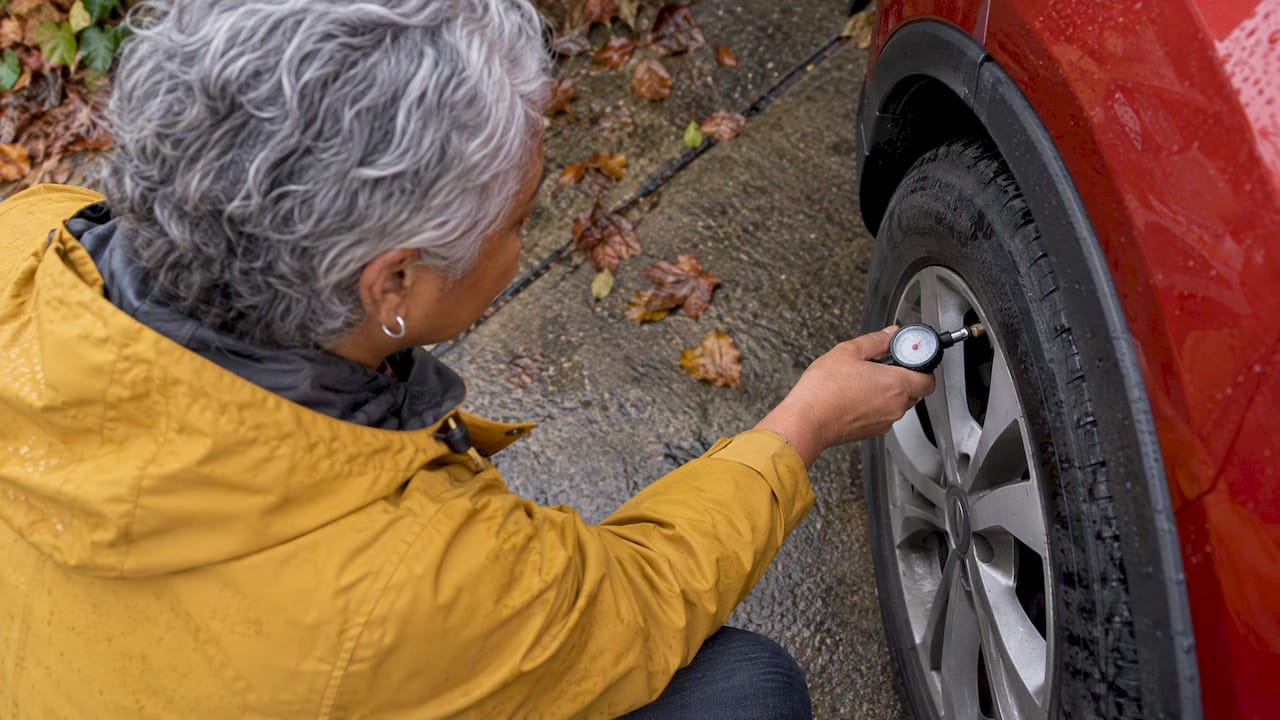
Low or uneven pressure makes the engine work harder to move the car. Fueleconomy.gov, the government’s fuel economy site, lists improperly inflated or aligned tires among the things that lower mileage. Check all four tires cold, using the pressure on the sticker in the driver’s door jamb, not the number printed on the tire sidewall. Pressure drops as temperatures fall, so the first cool, wet weeks of fall often trigger this exact complaint in the Pacific Northwest.
Weight, racks and towing
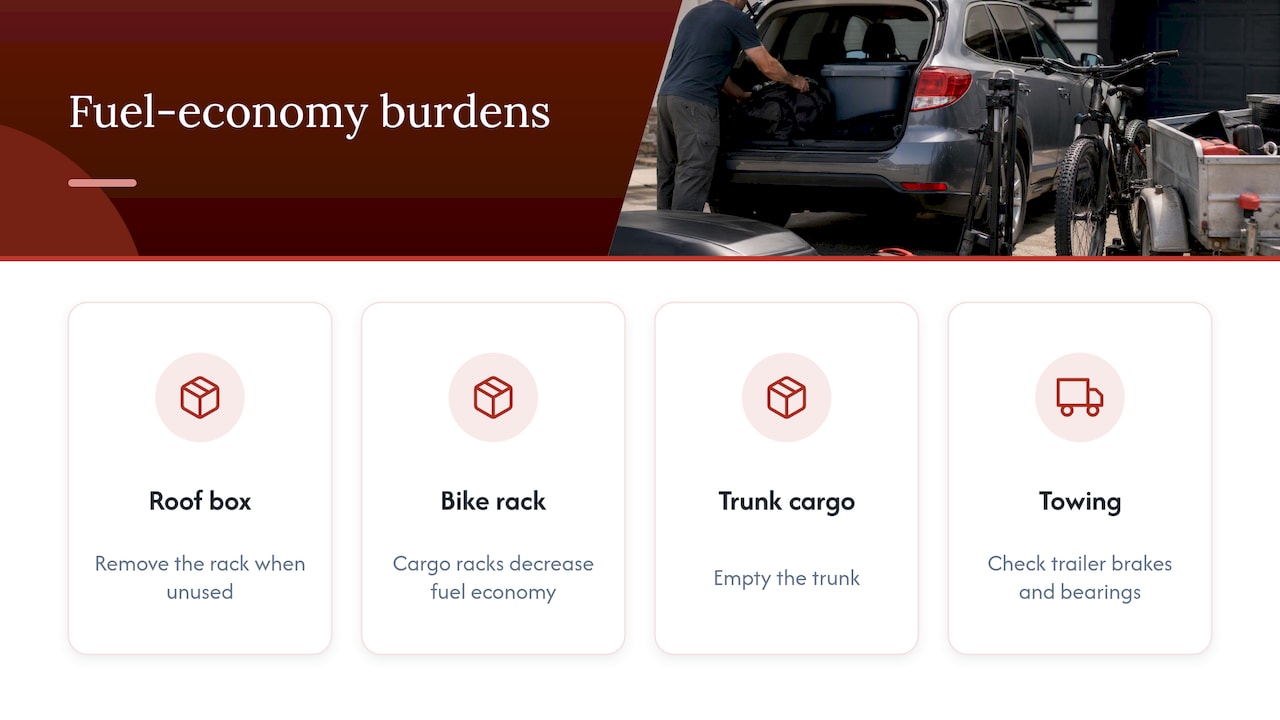
Roof boxes, bike racks, a trunk full of tools and towing all hurt mileage. According to the same fueleconomy.gov page, cargo racks, towing and excess weight decrease fuel economy. Take the roof rack off if you are not using it. Empty the trunk. If the drop only shows up when you tow, look at the trailer and its brakes and bearings too, not only the truck.
Cold weather and short trips
Engines are least efficient until they warm up. Fueleconomy.gov notes that cold weather and frequent short trips reduce MPG because the engine does not run efficiently until fully warmed. If your commute changed, or you started making many five-minute runs, the number can fall without anything being broken. Winter-blend fuel, heater and defroster use, and idling to warm up add to it. If the car also struggles to start on cold mornings, our post on why a car won’t start in cold weather covers the battery and fuel side of that.
Driving style and the display
Hard acceleration, high highway speeds and long idling all cost fuel. A field study called EcoDrive I-80 found that feedback displays can change driving behavior and cut fuel use by an average of two to three percent, which tells you how much habits matter, though not enough to explain a sudden large drop.
The last fill-up
If the drop began right after one fill-up, a bad tank is possible. Gasoline that is contaminated or low in deposit control additives can build up on intake valves and injectors. A NHTSA technical service bulletin describes excessive deposits from such fuel causing rough idle, hesitation and poor MPG. If you suspect it, note which station you used, and avoid it next time. If symptoms persist after a tank or two of fuel from a different station, get the car checked.
When it is mechanical: the usual suspects
If your numbers are still down after the easy checks, something in the car is wasting fuel. The EPA says a sudden drop not explained by the usual factors may mean your car needs maintenance. These are the problems we see most often.
Failing oxygen sensors
The engine computer uses oxygen sensor readings to set the air-fuel mixture. A lazy or failed sensor can push the mixture rich, burning extra fuel without much drama. Often the first sign is a check engine light, sometimes nothing at all. Do not just replace the sensor because a code mentions it: wiring, exhaust leaks and fuel trims can set the same code. Our guide to O2 sensor symptoms, scan data and wiring checks explains how to tell.
Worn spark plugs and misfires
When a cylinder does not burn its fuel cleanly, you lose power and mileage. You may feel a shake at idle or a stumble under load, or the check engine light may flash. A flashing light means stop driving hard, because unburned fuel can damage the catalytic converter. Our step-by-step misfire guide lists the causes in the order we check them: plugs, coils, injectors, compression and vacuum leaks.
Fuel injector deposits and fuel pressure
Dirty or leaking injectors spray poorly, and weak or excessive fuel pressure upsets the mixture. Symptoms include hesitation, rough idle and hard starts. Power that drops when you accelerate is a classic pressure symptom, covered in our post on starting with live fuel pressure and our fuel pump failure symptoms page.
Dragging brakes and bad wheel bearings
A stuck caliper or slide pin keeps a pad lightly pressed on the rotor. The car feels a bit sluggish, one wheel may run hot, and you may smell something burning after a drive. Mileage falls because the engine fights friction all the time. A failing wheel bearing does something similar and usually adds a hum that changes with speed. These problems also wear brakes quickly, so fixing them early saves money twice.
Dirty air filter, vacuum leaks and idle problems
A clogged air filter is cheap to check. Vacuum leaks and a dirty throttle body can make idle speed hunt up and down, which burns fuel and feels odd. If your engine surges at idle, see our post on engine surging at idle before buying parts.
Thermostat and cooling problems
A thermostat stuck open keeps the engine cooler than it should be. The computer then adds fuel as if the engine were cold. The temperature gauge may sit lower than usual, and the heater may blow weakly in winter. It is an inexpensive part with an outsized effect on mileage.
Software and recall work
Sometimes behavior changes after a software update or recall repair. Consumer Reports covered owners of certain diesel pickups and SUVs who reported that emissions-related repairs hurt performance and fuel economy. That is not typical for every vehicle, but if the drop began right after dealer work, mention it to your mechanic. Our post on software updates in vehicle repair explains why the computer side matters.
Symptom guide: what points to what
| What you notice | Likely cause | Urgency |
|---|---|---|
| MPG dipped when it got cold, trips are short | Weather, warm-up, tire pressure | Low: check tires, watch two or three tanks |
| Drop started after one fill-up | Poor fuel, deposits | Medium: switch stations, get a scan if it persists |
| Check engine light is on, steady | Sensor, emissions or ignition fault | Medium: scan soon |
| Check engine light is flashing | Active misfire | High: reduce load and get it checked right away |
| Burning smell, one wheel hot, pulling | Dragging brake | High: brake inspection |
| Rough idle, surging or hesitation | Ignition, injectors, vacuum leak, fuel pressure | Medium to high |
| Heater weak, temp gauge low | Thermostat stuck open | Medium |
| Drop after dealer software or recall work | Calibration or related fault | Medium: tell your shop |
Our perspective: scan first, then inspect
We have worked on Lynnwood cars since 1985, and the pattern is consistent: when someone calls about a sudden MPG drop, the most expensive thing they can do is start replacing parts from a forum list. A cheap part like a spark plug or a sensor may fix it, or it may not, and the real fault stays hidden behind it.
Our approach is to read the trouble codes and live data first, then confirm with physical checks. The EPA describes the same ground a mechanic covers for poor mileage: trouble codes, dragging brakes, ignition timing, vacuum hoses, tire pressure, fuel pressure and leaks, and the ignition system. We follow that sequence because it finds the cause on the first visit more often than guesswork does.
A few things we tell customers every week:
- A code is a starting point, not a diagnosis. It tells us which circuit or system is misbehaving, not which part has failed.
- No check engine light does not mean no problem. Dragging brakes, low tire pressure, a sticking thermostat and early injector deposits can all cost you mileage without lighting anything up.
- Newer cars, hybrids and European models depend heavily on software and sensor data. A shop that can read live data on those makes saves you from replacing parts that were never bad.
- Maintenance prevents most of this. Spark plugs, air filters, fluids and brake service done on the schedule in your owner’s manual keep fuel economy where it should be. Our guide to high-mileage maintenance covers what to do as a car ages.
— Shingi
What a diagnosis visit looks like with us
We are an ASE-certified, family-owned shop, and we work on domestic, Asian and European vehicles, including hybrids. For a fuel economy complaint, here is what you can expect:
- Interview. When did the drop start? Did anything change: fuel station, trip pattern, recent repair, weather?
- Scan and live data. We pull codes and look at fuel trims, sensor behavior and engine temperature with professional-grade OBD-II diagnostics.
- Physical inspection. Tire pressure and wear, brake drag, wheel bearings, filters, hoses, leaks and ignition components.
- Pressure and function tests where the data points to fuel delivery or ignition.
- A clear explanation and upfront pricing before any repair begins, with digital inspection results you can see.
If the cause is something you can fix yourself, like tire pressure or a roof rack, we will say so.
Fix it before it costs more
A fuel-wasting fault rarely stays the same. A misfire can overheat a catalytic converter, a dragging caliper can ruin a rotor and pads, and a rich mixture can foul plugs and wash oil off cylinder walls. Waiting a few weeks to see whether it “fixes itself” usually means paying for the gas and the repair.
If your car is due for scheduled maintenance, a 30k, 60k or 90k service or an auto tune-up can address plugs, filters and fluids in one visit. If the cause looks like an engine problem, see our engine repair page. For brake drag, our brake repair starts from $280 per axle. An oil change starts from $100, and low or dirty oil is worth ruling out too.
Book a scan and inspection in Lynnwood
If your gas mileage fell and the easy checks did not explain it, bring the car in. We scan it, inspect it and tell you what we find, with upfront pricing and same-day appointments often available. Every repair carries a 24-month / 24,000-mile warranty. We also offer discounts for military, seniors and first responders.
Start with our check engine light and diagnostic services and book online or call the shop.
FAQ
Why did my fuel economy drop drastically all of a sudden?
Often it is something simple: low tire pressure, extra cargo, colder weather, shorter trips or a bad tank of fuel. If none of those fit, the EPA says an unexplained drop may mean the car needs maintenance. Sensors, spark plugs, injectors and dragging brakes are the usual suspects.
How do I know if my MPG drop is real?
Calculate it by hand over two or three tanks, filling at the same station and pump each time. Divide the miles driven by the gallons you added. Compare that with your own earlier results, not with the dashboard estimate or the window sticker.
Can a check engine light be the reason my gas mileage fell?
Yes. A sensor, ignition or emissions fault can make the engine run richer or misfire, and both waste fuel. But the light is not required: tire pressure, brake drag and a stuck-open thermostat can cut mileage without any warning light. A scan plus an inspection covers both cases.
Is it safe to keep driving with a sudden drop in fuel economy?
Usually for a short time, if nothing else is wrong. Do not keep driving if the check engine light is flashing, you smell burning, the car pulls or one wheel is very hot, or the engine runs rough. Those point to a misfire or dragging brake that can damage other parts, so get it inspected promptly.
Sources
- EPA: Frequent Questions related to Transportation, Air Pollution and Climate Change
- FuelEconomy.gov: Many Factors Affect MPG
- NHTSA Technical Service Bulletin on fuel deposits
- EcoDrive I-80: A Large Sample Fuel Economy Feedback Field Test
- Consumer Reports: Fiat Chrysler EcoDiesel emissions repairs
Recommended
- Drivers: Start With Live Fuel Pressure If Power Drops Accelerating
- Ten Minute Pressure Test: Fuel Pump Failure Symptoms to Check First
- Check Engine Light Meaning: What Drivers Need to Know
- Why Your Car Hesitates During Acceleration: 2026 Guide
Leave a Reply