
Engine Surging at Idle in Lynnwood? Diagnose Before Buying Parts
Engine surging at idle most often traces back to a vacuum leak, a dirty throttle body or MAF sensor, a fuel delivery problem, an ignition misfire, or a bad sensor reading. Start with an OBD-II scan to pull stored codes. If the surge is violent or comes with stalling, skip the highway. Diagnosis, not guessing, is the right next step.
TL;DR:
- Scan stored and pending codes, then compare fuel trims at idle and higher RPM; high idle trims that normalize later point toward a vacuum leak.
- Inspect intake hoses and test for leaks before cleaning the throttle body or MAF sensor; check fuel pressure and ignition only if earlier tests fail.
- Mild surging may allow a short local trip if power and steering remain normal, but stalling, hard misfires, or power loss call for a tow.
- If mechanical tests find no cause, check live sensor readings and manufacturer bulletins before replacing parts; some idle fluctuations stem from control unit software.
- Before visiting a shop, record a tachometer video and note when surging occurs, recent repairs, and any warning lights or codes.
Table of Contents
- Which quick checks can you do before opening the hood further?
- What order should you troubleshoot in?
- How do you diagnose each common cause?
- What do repairs cost and how long do they take?
- Is it safe to keep driving with a surging idle?
- How will a shop diagnose it, and what should you bring?
- What does a technician’s eye say about surging idle?
- Where can you get your idle fixed in Lynnwood?
- FAQ
- Sources
Which quick checks can you do before opening the hood further?
Run through this list first. It rules out the obvious and points you toward the likely system.
- Vacuum leak clues: a hissing sound, an uneven idle, or a lean code. Look over the intake hoses, the PCV hose, and the area around the intake manifold gasket for cracks or loose clamps.
- Throttle body or MAF clues: the idle smooths out after cleaning, or RPM jumps when you touch the throttle. Check for heavy carbon around the throttle plate.
- Fuel delivery clues: stumbling under load or lean codes that keep returning.
- Ignition clues: misfire codes, a shaky feel at a stop, or a flashing check engine light.
- Sensor or ECU clues: odd, inconsistent RPM swings with no mechanical fault in sight.
- Safety: never touch the exhaust manifold, radiator, or cooling components on a hot engine. Keep the engine off if you smell fuel or see fluid leaking.
What order should you troubleshoot in?
Work from cheap and likely to costly and rare. This sequence saves money and keeps you from replacing parts that were never bad.
- Scan for codes. Pull stored and pending codes, then watch live data: RPM, short and long fuel trims, and misfire counters. The SAE J1979 OBD-II standard defines how scan tools read these codes and real-time values, which is why a scan is the first-line step.
- Hunt for intake leaks. Inspect hoses visually, listen for hissing, and use a smoke test if you have access to one.
- Check the throttle body and MAF sensor. Cleaning often cures a hunting idle.
- Test fuel pressure and delivery. If air and sensors look fine, confirm the pump and injectors are feeding the engine properly.
- Inspect ignition parts. Plugs and coils that fail only now and then cause intermittent misfires.
- Consider sensor or ECU adaptation. Check for software updates or manufacturer bulletins last.
Pro Tip: Write down the fuel trim numbers at idle and at a higher RPM. A trim that is high at idle but normal at higher RPM points strongly toward a vacuum leak.
How do you diagnose each common cause?
Vacuum leaks are common and cheap to fix once found. Check vacuum hoses, the intake manifold, and the brake booster line. A smoke machine is the cleanest test. Some techs spray carb cleaner near suspect joints and listen for an RPM change, but that carries a fire risk and should be done carefully.
Throttle body and MAF problems distort the air reading. Carbon buildup or a failing MAF sensor gives the ECU bad airflow data, so it keeps correcting and the RPM hunts. Cleaning with the right spray usually settles things down when contamination is the culprit.
Fuel delivery faults create a lean mix that makes RPM wander. Clogged injectors or weak fuel pressure are the usual suspects, which is why a fuel-pressure gauge and an injector check matter. Our guide on starting with live fuel pressure walks through that test.
Ignition and misfire issues show up as idle instability when a coil or plug fails intermittently. Match the misfire code to the cylinder, then use a compression check to rule out a mechanical problem. If you want the full process, see our step-by-step misfire guide and our explainer on what engine misfiring is.
Sensors and ECU software can feed bad data. A weak O2 or throttle position sensor is one example. Some manufacturers also document idle fluctuation as a software matter.
- Check O2 and TPS readings in live data for values that jump or freeze.
- Look up manufacturer bulletins before buying parts for a symptom that no mechanical test explains.
- Diesel owners should also consider fuel quality, since the EPA diesel fuel standards set the specifications that inconsistent fuel can fall short of.
Worth knowing: one OEM bulletin on idle fluctuation describes a control-unit signal mismatch that can clear after several trips and notes that replacing mechanical parts will not fix that specific symptom.
What do repairs cost and how long do they take?
Costs depend on your vehicle and what the diagnosis finds, so treat these as categories rather than quotes.
- Lower-cost fixes: throttle body or MAF cleaning, resealing a vacuum hose, or replacing a clamp. These are usually a short shop visit with little in parts.
- Medium-cost repairs: ignition coils, spark plugs, injector cleaning or service, and a fuel filter. Repair time varies with the vehicle and the work involved.
- Higher-cost items: a fuel pump, injector replacement, or an intake manifold gasket. These become likely when earlier tests point there, and added diagnostic time raises the bill.
- Pay for a real diagnosis. A live-data scan, a smoke test, and a fuel pressure check cost far less than swapping parts on a hunch.
For a wider view on repair versus replacement decisions, this diagnostics-first article on engine rebuild vs replacement is a useful read.
Is it safe to keep driving with a surging idle?
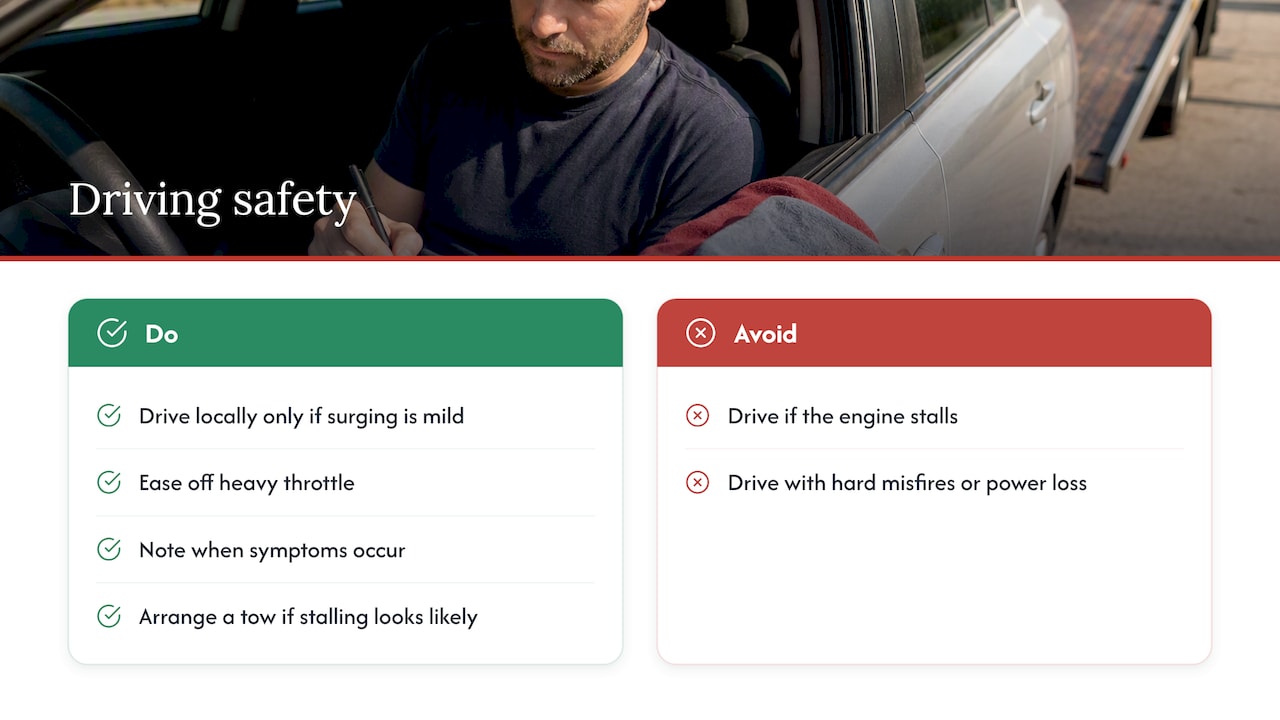
Mild surging, where RPM drifts a little but power and steering feel normal, usually allows a short local drive to a shop. Severe surging is different. If the engine stalls, misfires hard, or loses power, do not drive it. Ease off heavy throttle, note when the symptom happens, and arrange a tow if stalling looks likely. A stall in traffic can take away power steering and braking assist.
How will a shop diagnose it, and what should you bring?
A good visit starts with good notes. Before you come in:
- Record a short video of the tach during the surge.
- Note when it happens: cold start, warm idle, or after driving.
- List recent repairs or maintenance.
- Mention any warning lights or codes you have already seen.
Expect the shop to run an OBD-II scan with live data, a vacuum or smoke test, a fuel-pressure test, and component checks. Many shops charge a diagnosis fee. Our ASE-certified technicians use professional-grade OBD-II diagnostics. Ask us about warranty coverage for repairs.
What does a technician’s eye say about surging idle?
Surging idle can start with something simple: a cracked hose, a dirty throttle body, a tired plug. The costly parts get blamed first because they sound serious, and that is how people end up replacing perfectly good ones. Test the cheap, likely things first and let the data decide. The best habit you can build is recording the tach during the surge and noting the weather and engine temperature. It gives a technician a head start that no guess can match.
— Shingi
Where can you get your idle fixed in Lynnwood?
We diagnose and repair surging idle at our shop, and we want you to arrive prepared.
- We run OBD-II scans, live data review, vacuum and smoke testing, and fuel pressure checks.
- We handle throttle service, fuel system work, ignition repairs, and full engine repair, all backed by our warranty.
- Bring your symptom notes or a short idle video.
Book your diagnostic with our engine repair team to discuss the cause before any parts are replaced.
FAQ
Why does my car feel like it’s pulsing at idle?
A pulsing feel usually means the idle speed is rising and falling as the ECU corrects for a bad reading. Vacuum leaks, a dirty throttle body, and weak ignition parts are common triggers. A scan with live data shows which system is responsible.
Can you drive a car with a surging idle?
Mild surging may allow a short trip to a shop if power and steering feel normal. If the engine stalls or misfires hard, do not drive it and arrange a tow instead.
Can a bad spark plug cause surging?
Yes. A worn plug or failing coil can misfire now and then, which makes idle speed unstable. Misfire codes and counters in live data help confirm which cylinder is at fault.
How do I fix a small engine surging?
On small engines, start with a clean air filter and fresh fuel. Then check for air leaks and a dirty carburetor or throttle. If the surging continues, a shop can test fuel delivery and ignition.
Sources
Recommended
- Car Stalls at Idle: Causes, Diagnosis, and Fixes
- Diagnose P0300 in 1–3 Hours: Lynnwood Mechanics’ Data First Fix
- Free to $200: ASE Certified Lynnwood Shop on Check Engine Diagnosis Costs
Leave a Reply