
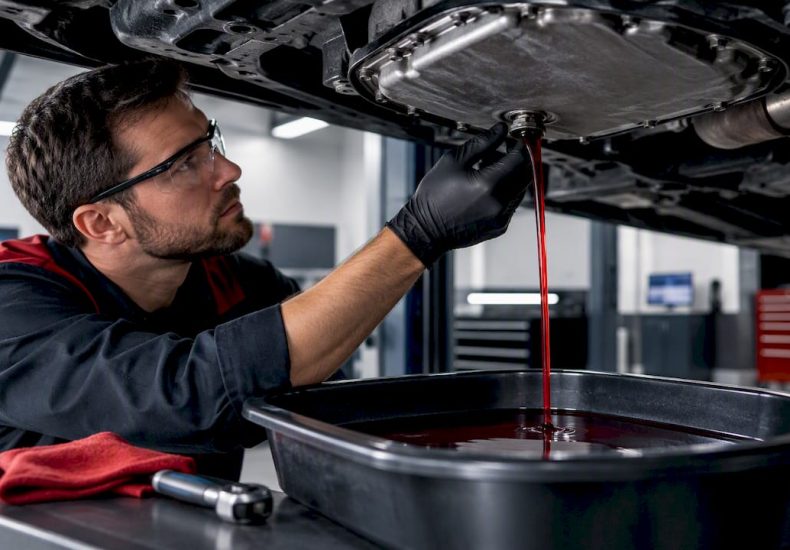
30,000–100,000 Miles: Transmission Fluid Change Interval for Drivers
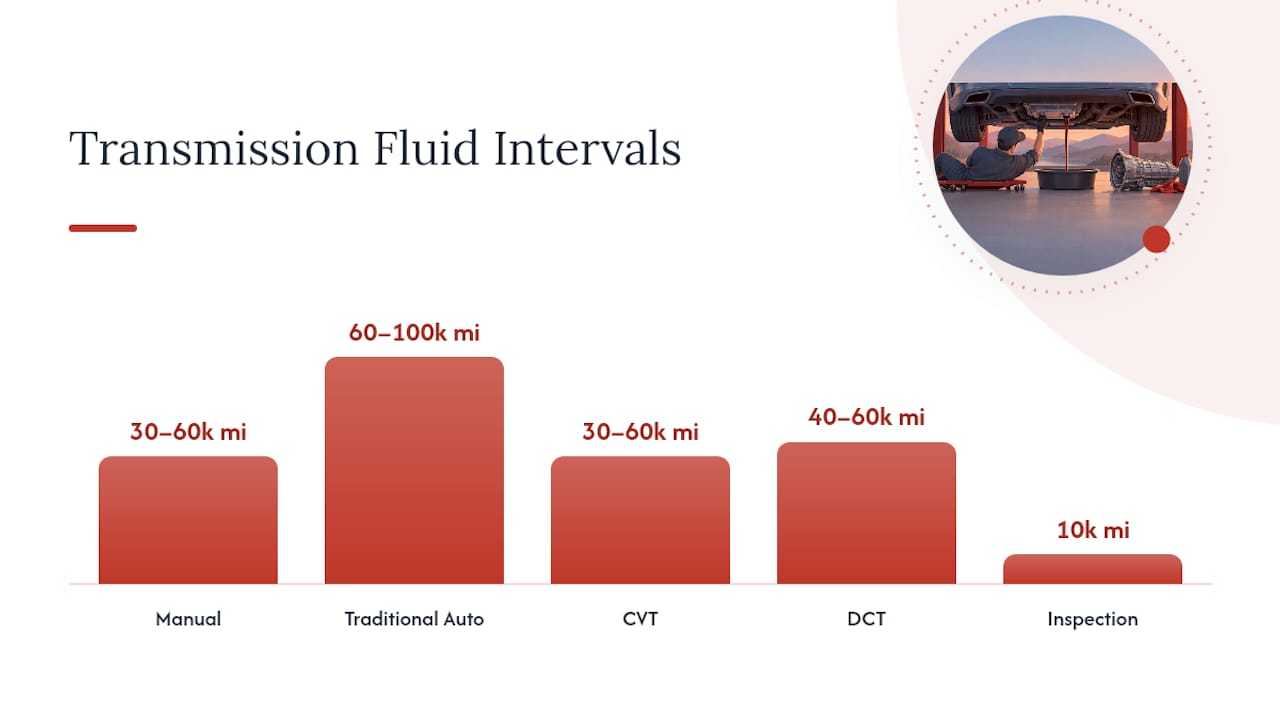
Change intervals depend on transmission type: manual gearboxes run about 30,000 to 60,000 miles, traditional automatics stretch to 60,000 to 100,000, CVTs sit at 30,000 to 60,000, and dual-clutch transmissions land at 40,000 to 60,000. If you tow, sit in stop-and-go traffic, or drive in extreme heat, cut those numbers roughly in half. When a manual claims “lifetime” fluid, plan on a service around 40,000 miles anyway.
TL;DR:
- Transmission fluid change intervals vary significantly by type, with manual, CVT, and dual-clutch transmissions generally needing service every 30,000 to 60,000 miles, while traditional automatics can go up to 100,000 miles.
- Severe duty driving, such as towing, stop-and-go traffic, or hot weather, roughly halves recommended service intervals to prevent accelerated wear or failure.
- Checking fluid condition through visual inspection and smell, especially in vehicles without a dipstick, helps assess when real service is needed rather than relying solely on mileage.
- A drain and fill replaces 30% to 40% of fluid and is safer for high-mileage transmissions, while full flushes are better suited for newer units on a regular schedule.
- Manufacturers’ “lifetime” fluid claims are generally untrustworthy for vehicles over 100,000 miles, making proactive checks and services essential for long-term transmission health.
Table of Contents
- How Often to Change Transmission Fluid by Transmission Type
- What Counts as Severe Duty, and When Should You Cut the Interval in Half?
- How to Check Transmission Fluid Level and Spot Trouble Early
- Drain and Fill or Full Flush: Which Transmission Service Is Right?
- What Does a Transmission Fluid Change Cost, and How Long Does It Take?
- How ASE-Certified Technicians Decide on Transmission Fluid Service
- What the Research Actually Supports (and What It Doesn’t)
- Book a Transmission Service With Tom’s B & M Auto in Lynnwood
- Where to Verify These Intervals Yourself
- Sources
- FAQ
How Often to Change Transmission Fluid by Transmission Type
The right transmission fluid maintenance schedule starts with knowing what’s under the car, not just what’s on the odometer. A manual gearbox, a torque-converter automatic, a CVT, and a dual-clutch transmission all wear fluid differently, and mechanic consensus has settled into fairly consistent ranges for each:
- Manual transmissions: every 30,000 to 60,000 miles. Gear oil breaks down from metal-on-metal contact between synchronizers and gear teeth.
- Traditional automatics: every 60,000 to 100,000 miles under normal driving. This is the widest range you’ll see quoted, which is exactly why owner’s manual guidance matters here.
- CVTs: every 30,000 to 60,000 miles. CVT fluid handles belt or chain friction differently than a geared automatic, and it degrades faster in most designs.
- Dual-clutch transmissions (DCT): every 40,000 to 60,000 miles. The wet-clutch packs run hot and shed friction material into the fluid faster than a conventional automatic.
These ranges come from independent mechanic consensus on transmission fluid intervals, and they matter more than a single blanket number because “transmission” covers four genuinely different mechanical systems.
Here’s where it gets complicated: plenty of automakers list transmission fluid as “lifetime,” meaning no scheduled change at all. Toyota’s own guidance recommends following the specific maintenance schedule for your model rather than trusting a blanket lifetime claim, and notes that a standard fluid change replaces only 30% to 40% of the total fluid, which is different from a full flush. Independent mechanics tend to be skeptical of “lifetime” language and often recommend a change around 40,000 miles for CVTs and many modern automatics anyway, since fluid breaks down chemically whether or not a manufacturer wants to schedule a service for it.
Some OEMs get specific. Nissan’s maintenance schedule for CVT-equipped models calls for inspection every 10,000 miles and replacement somewhere between 20,000 and 60,000 depending on the model, which is a far cry from “never.” If your Subaru or Nissan CVT is creeping past 60,000 miles with no service history, don’t lean on a lifetime label to skip it.
If your car has passed 70,000 to 100,000 miles with no known fluid service, a drain and fill is usually the safer starting point than a full flush, since disturbing years of settled debris can do more harm than good. When in doubt, follow the owner’s manual for warranty compliance, but treat mechanic consensus as the backup plan when that manual is vague or silent.
What Counts as Severe Duty, and When Should You Cut the Interval in Half?
Severe duty isn’t a vague warning label. It has a specific definition, and it applies to more daily drivers than most owners realize:
- Towing or hauling a trailer, boat, or heavy cargo regularly.
- Stop-and-go commuting in heavy traffic, especially in cities.
- Extreme heat, either from climate or from towing in hot weather, which pushes transmission fluid temperatures well past normal operating range.
- Commercial or fleet use, including delivery routes, ride-share driving, or repeated short trips that never let the transmission fully warm up and cool down.
If any of that describes your driving, cut your baseline interval roughly in half. An automatic rated for 60,000 to 100,000 miles under normal use should be serviced closer to 30,000 to 50,000 miles under severe duty.
Fleet testing backs this up more dramatically than most owners expect. A multi-fluid evaluation in city-bus automatic transmissions found that some fluids failed in under 10,000 miles under heavy-duty stop-and-go operation, while properly formulated fluids reached about 40,000 miles in the same conditions. The gap between a bad fluid choice and a good one, under real severe duty, isn’t marginal. It’s the difference between replacing fluid four times as often or not.
How to Check Transmission Fluid Level and Spot Trouble Early
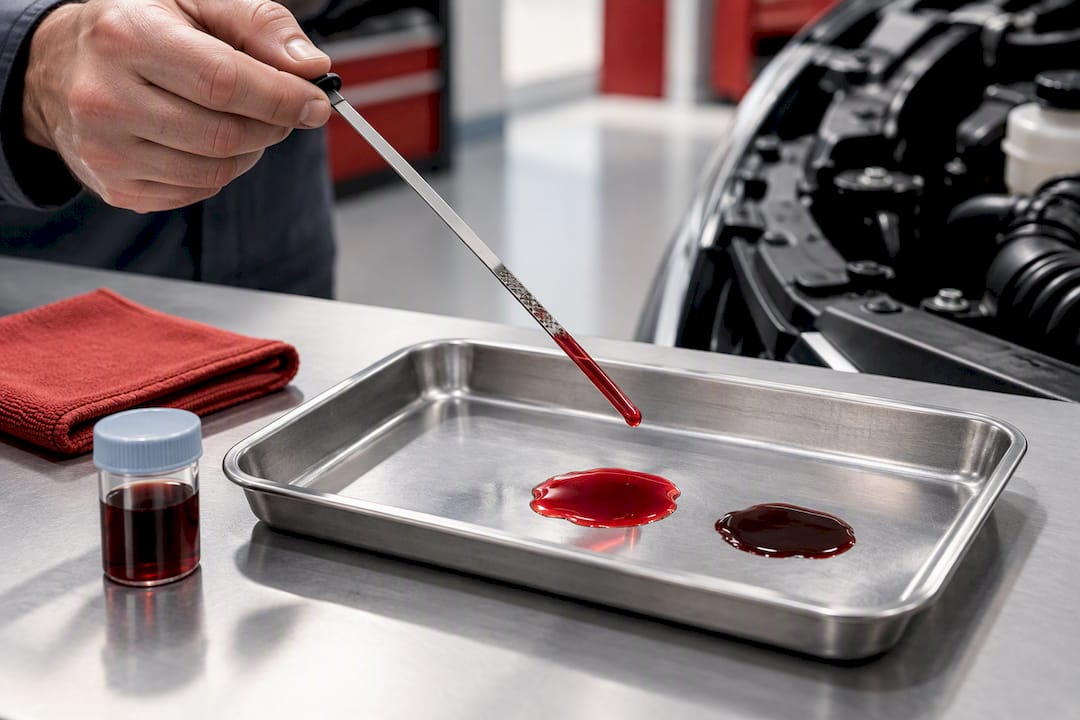
Most manual and older automatic transmissions have a dipstick, usually a different color from the engine oil dipstick, often orange or red. Pull it, wipe it clean, reinsert it, and pull it again to read the level and color. Healthy fluid is translucent red or pink. Dark brown, black, or cloudy fluid signals oxidation or contamination. A burnt smell, similar to scorched toast, means the fluid has overheated and likely needs replacing along with an inspection for underlying causes.
Many newer vehicles, especially sealed CVTs and some modern automatics, skip the dipstick entirely. Checking those requires a lift and a fill-plug procedure, which is a job for a shop, not a driveway.
Watch for these driving symptoms between scheduled checks:
- Slipping between gears or a delayed response when you shift from park to drive
- Hard or harsh shifts that feel like a jolt instead of a smooth transition
- Grinding or shuddering, especially at low speeds
- Dashboard warnings tied to transmission temperature or overheating
Pro Tip: If you’re not sure whether fluid looks “dark” or just normally amber, take a photo next to a paper towel every time you check it. Comparing photos over a few months shows you the trend line, which tells you more than any single look.
Symptoms like grinding or repeated slipping call for an OBD-II diagnostic scan and possibly a pressure test, not just a fluid top-off.
Drain and Fill or Full Flush: Which Transmission Service Is Right?
A drain and fill replaces roughly 30% to 40% of the fluid in the pan while leaving the torque converter and cooler lines untouched. It’s the lower-risk option, and it’s generally the better call for transmissions past 70,000 miles, since it won’t dislodge sediment that’s settled around worn components.
A full flush pushes nearly all the old fluid out and replaces it with fresh fluid throughout the entire system, including the torque converter. That’s ideal for a newer transmission on a regular schedule, or after confirmed contamination, but it carries real risk on an older, higher-mileage unit: loosened debris can clog narrow passages that had adapted to a slightly dirty operating state.
- Under 70,000 miles with no symptoms: full flush is reasonable on a normal schedule.
- Over 70,000 miles, especially with unknown service history: drain and fill, ideally with a filter replacement if the transmission has a serviceable filter.
- Filter and pan service: worth doing anytime the pan is already off, or when drained fluid shows visible metal flakes or heavy debris.
Follow manufacturer-specific guidance where it exists. Some models specify one method over the other for warranty reasons, and that instruction overrides general shop practice.
What Does a Transmission Fluid Change Cost, and How Long Does It Take?
A basic drain and fill typically runs less than a full flush, since it uses less fluid and less labor. A full flush costs more because it uses significantly more fluid, and specialty ATF for certain CVTs or European models raises the price further. Filter replacement adds to either job when the transmission uses a serviceable filter.
Shop time runs anywhere from 30 minutes for a straightforward drain and fill up to two hours for a full flush with filter and pan service, longer if the pan gasket needs replacing or access is tight.
Compare that to the alternative: a transmission rebuild or replacement after fluid neglect leads to failure, which runs into thousands of dollars and days without your vehicle. Kelley Blue Book’s guidance on transmission fluid timing makes the same point: skipping scheduled service to save a small amount now routinely costs far more later.
How ASE-Certified Technicians Decide on Transmission Fluid Service
Mileage guidelines are a starting point, not the final word. At Tom’s B & M Auto, ASE-certified technicians evaluate fluid color, smell, and particulate content alongside mileage before recommending drain and fill versus a full flush. OBD-II diagnostics catch shift-quality issues that don’t show up in a visual fluid check, which matters when a customer’s symptoms don’t match their odometer.
Every transmission service comes with a warranty, built on decades of experience working with various vehicle makes. When fluid analysis shows heavy metal content or a burnt smell regardless of mileage, technicians will recommend immediate service over waiting for the next scheduled interval. Mileage charts are a guide. What’s actually in the pan is the deciding evidence.
What the Research Actually Supports (and What It Doesn’t)
The conventional advice on transmission fluid splits into two unhelpful camps: manufacturers who lean on “lifetime fluid” language to simplify marketing, and independent forums that treat every automatic as needing a change every 30,000 miles regardless of design or duty cycle. Neither holds up well against the actual mechanic consensus and fleet data.
The uncomfortable truth is that “lifetime” fluid claims are really “lifetime of typical ownership” claims, built around an assumption that most people sell the car before the fluid becomes a problem. If you keep a vehicle past 100,000 miles, which more owners do now than a decade ago, that assumption stops protecting you.
What matters most isn’t memorizing an exact number. It’s matching your driving pattern (normal versus severe duty) to the right range for your transmission type, then paying attention to what the fluid itself is telling you between services. A dipstick check that takes two minutes beats trusting a marketing claim you can’t verify. Owners who split the difference, treating mileage guidance as the baseline and severe-duty adjustments as the override, avoid both extremes: needless early services and expensive, avoidable rebuilds.
— Shingi
Book a Transmission Service With Tom’s B & M Auto in Lynnwood
This shop offers an alternative to guessing at your own interval or gambling on a “lifetime fluid” label. Experienced ASE-certified technicians service transmissions on multiple makes, checking fluid condition rather than defaulting to a generic mileage number.
A standard visit includes a fluid and filter check, a drain and fill or full flush depending on mileage and condition, and OBD-II diagnostics if you’re seeing shift symptoms. Appointments may be available same-day, and warranty coverage is provided on services. Before you book, ask what ATF spec your vehicle requires, whether filter replacement is included, and how the warranty applies to transmission work specifically. Head to the transmission service page for Lynnwood to check current availability and get your fluid inspected before a small maintenance item turns into a rebuild.
Where to Verify These Intervals Yourself
Check your owner’s manual and OEM maintenance schedule first, since warranty compliance depends on it. Useful references include Toyota’s transmission fluid guidance, Nissan’s CVT maintenance schedule, and Ford’s owner manual maintenance content.
Sources
- Toyota
- Transmissionfluidchangecost
- When do I need to change my transmission fluid? – Kelley Blue Book
FAQ
How Often Do I Really Need to Change Transmission Fluid?
It depends on transmission type: manual and CVT units run 30,000 to 60,000 miles, traditional automatics run 60,000 to 100,000, and dual-clutch transmissions run 40,000 to 60,000, per mechanic consensus data. Cut those numbers roughly in half if you tow, commute in heavy traffic, or drive in extreme heat.
Can Transmission Fluid Last 10 Years?
Fluid can physically remain in the pan that long, but that doesn’t mean it’s still doing its job. Fleet testing has shown certain fluids failing in under 10,000 miles under severe duty, so age and mileage matter more than calendar years alone.
Why Do Mechanics Say Don’t Change Transmission Fluid at High Mileage?
Some mechanics avoid a full flush on very high-mileage transmissions because it can dislodge sediment that’s settled around worn seals, triggering leaks or slipping that wasn’t there before. A drain and fill is usually the safer choice past 70,000 miles for that reason, since it disturbs far less of the system.
Is 150,000 Miles Too Late to Change Transmission Fluid?
It’s not too late, but the approach changes. At that mileage, a drain and fill is generally recommended over a full flush, and a technician should check fluid condition first rather than flushing automatically. Technicians assess fluid color, smell, and debris before recommending either service on higher-mileage vehicles.
Recommended
- Start at 60,000 Miles: Subaru CVT Service, Not Lifetime Fluid
- The Role of Transmission Fluid in Your Vehicle
- Why Transmission Slips: Causes, Symptoms, and Fixes
Leave a Reply