
Power Steering Fluid Leak: EPS vs Hydraulic Checks and $15–$200 Costs
A power steering fluid leak is not usually an emergency, but it can become one fast if you keep driving on a low reservoir. Park the car, pop the hood, and check the fluid level before you go anywhere else. If the reservoir is low or you see a reddish puddle under the front of the car, avoid highway speeds and hard turns until you know what’s going on. Some leaks are a $15 clamp fix. Others mean a shop visit.
TL;DR:
- Most power steering leaks show warning signs like steering difficulty, whines, or fluid spots, but some can only be confirmed with professional pressure testing.
- Common leak sources include high-pressure hoses, seals within the pump or rack, loose fittings, or a cracked reservoir, especially as components age and are exposed to road salt and heat.
- DIY fixes like tightening clamps or replacing simple hoses are quick and inexpensive, but complex repairs on the pump or rack require professional diagnosis and can be costly.
- Regular inspection of fluid level, color, and system components can prevent leaks from escalating into roadside breakdowns or environmental hazards.
- Proper disposal of leaked or old power steering fluid is critical, as it is toxic and can contaminate waterways if not cleaned up and discarded correctly.
Table of Contents
- What Are the Symptoms of a Power Steering Fluid Leak?
- What Causes a Power Steering Fluid Leak?
- How to Find a Power Steering Fluid Leak Yourself
- DIY Fix or Shop Repair? Comparing Your Options and Costs
- Preventing Future Leaks and Knowing When to Flush
- What Happens to Leaked Power Steering Fluid, and How to Clean It Up
- Why We Push for Professional Diagnosis on Steering Leaks
- Get a Free Inspection Before Your Steering Leak Gets Worse
- Sources
What Are the Symptoms of a Power Steering Fluid Leak?
The most obvious sign is a puddle. Power steering fluid is usually reddish or light brown and slightly oily, which sets it apart from the green or orange of coolant, or the black of engine oil. But plenty of leaks never make it to the driveway floor. They show up in how the car handles and sounds instead.
Watch for these signals:
- A whine or groan when you turn the wheel, especially at low speeds or while parked, which often points to air getting pulled into the pump as fluid drops.
- Steering that suddenly feels heavy or requires more muscle than usual, particularly on turns you used to make without thinking.
- Effort that changes with engine RPM. If steering gets easier as you rev the engine and harder at idle, that’s a pump or fluid-level issue, not your imagination.
- A faint burning smell, which can mean fluid is dripping onto a hot exhaust component.
- Grease or grime buildup near hoses, fittings, or the base of the steering rack. Dust sticks to leaking fluid and forms a visible tracking pattern.
- A reservoir that’s low again every few weeks, even after you top it off.
Any one of these on its own is worth a look. Two or three together mean you’re dealing with an active leak, not a fluke.
What Causes a Power Steering Fluid Leak?
Power steering systems run at high pressure, and pressure finds weak spots. The usual suspects are rubber, seals, and metal fittings that age differently under heat and vibration.
- High-pressure hoses and return lines. These carry fluid from the pump to the rack and back. Rubber hardens and cracks with age, and the high-pressure side takes the most punishment.
- Pump shaft seal wear. The seal where the pump’s shaft spins can wear thin over tens of thousands of miles, letting fluid seep out slowly at first, then faster.
- Rack-and-pinion or steering gear seals. Internal seals here fail less often but cost more to fix, since rack repairs are complex and labor-intensive compared with a hose swap.
- Loose fittings and corroded clamps. Vibration works fasteners loose over time, and road salt eats through clamps faster in colder climates.
- A cracked or damaged reservoir. Plastic reservoirs get brittle with age and can crack at the seams or where hose barbs attach.
- Wrong or contaminated fluid. Using the wrong fluid type or letting old fluid go acidic can swell or shrink seals that were never designed for it, turning a healthy system into a leaking one within months.
How to Find a Power Steering Fluid Leak Yourself
Before you touch anything, confirm what kind of steering system you actually have. A growing share of newer vehicles use electric power steering (EPS), which runs on an electric motor with no hydraulic fluid at all. If your owner’s manual or under-hood layout shows no power steering reservoir, you’re driving an EPS car, and a “leak” complaint is really an electrical or sensor issue, not a fluid problem.
If you do have a hydraulic system, work through this checklist:
- Park on level ground and let the engine cool. A hot, slanted driveway gives you a false read on both fluid level and drip location.
- Clean the suspect area. Wipe down the reservoir, hoses, pump, and rack with a rag so old grime doesn’t fool you into thinking a new leak is worse than it is.
- Slide a clean sheet of cardboard under the car overnight. Fresh drops the next morning tell you roughly where fluid is coming from, front, middle, or back of the engine bay.
- Check the reservoir with the engine off. Look at the fluid level against the markings on the cap or side of the tank, and check color and smell. Clear to light amber is healthy; dark brown, black, or burnt-smelling fluid means the fluid itself needs attention regardless of the leak.
- Start the engine and turn the wheel lock-to-lock. Have someone watch under the hood while you do this; active drips often only show up under the pressure of a hard turn.
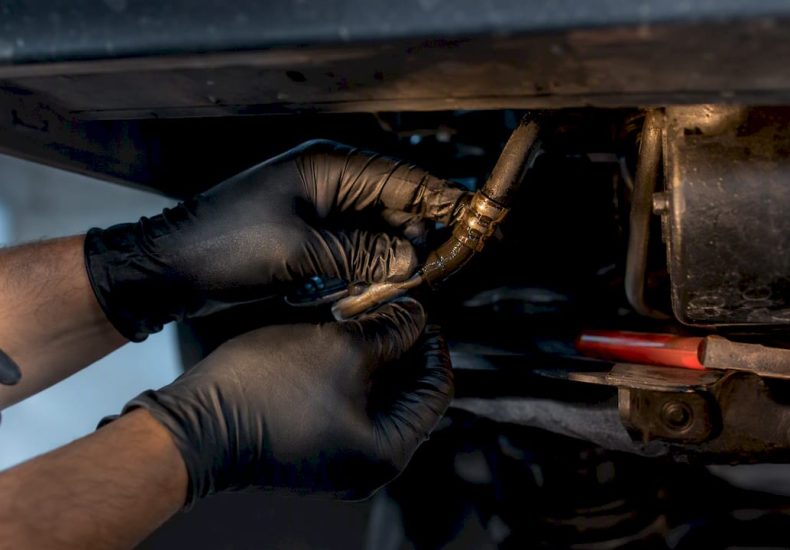
- Inspect hoses, clamps, fittings, the pump, and the rack bellows. Wet spots, dried crust, or a grime trail are your best clues to the exact source.
For leaks that don’t show themselves easily, a shop can add UV dye to the fluid and use a black light to trace it, or run a pressure test to isolate the failing component. High-pressure line work involves fluid under real force, so this step is best left to a shop with the right equipment.
Pro Tip: Don’t rely on smell or eyeballing alone on the high-pressure side. If a line is under pressure and it lets go while you’re working near it, hot fluid can spray and cause a burn, so keep hands clear until a professional has checked the line’s integrity.
DIY Fix or Shop Repair? Comparing Your Options and Costs
The right fix depends entirely on where the leak is. A loose clamp is a ten-minute job. A failing rack is not.
DIY-friendly repairs include tightening a loose hose clamp, replacing a short, easily accessible hose section, or swapping a cracked reservoir cap. These take basic hand tools, a new part in the $10 to $40 range, and maybe an hour of your Saturday.
Stop-leak additives are the tempting shortcut. They work by swelling rubber seals or thickening the fluid slightly, and they can buy you a few weeks on a small seep. They’re not a real repair, though, and on some systems they can gum up narrow passages inside the pump or valve body, turning a cheap fix into an expensive one.
Professional repairs cover pump replacement, full hose or line replacement, and rack-and-pinion repair or replacement. These jobs involve disconnecting pressurized lines, bleeding air from the system, and sometimes an alignment afterward.
Rough cost ranges to set expectations:
- A standalone fluid flush typically runs $100 to $200, depending on labor rates and fluid type.
- Hose or clamp replacement generally lands in the low hundreds, parts and labor combined.
- Pump replacement climbs higher, since labor time and part cost both increase.
- Rack-and-pinion replacement is the most expensive repair on this list, often requiring an alignment on top of the parts and labor.
A pressure test or UV dye diagnostic is generally less costly than making incorrect repairs. Replacing a hose that wasn’t actually leaking, only to find the real leak is at the pump, costs you twice. That’s also where an ASE-certified shop earns its fee: proper diagnosis the first time, plus a warranty on the repair that a bottle of stop-leak will never give you.
Preventing Future Leaks and Knowing When to Flush
Most power steering leaks give you warning signs weeks before they become a real problem, if you’re checking. Build the habit of looking at the reservoir every time you get an oil change, or at minimum twice a year.
- Match the fluid type to what your owner’s manual or reservoir cap specifies. Power steering fluids are not interchangeable across brands the way people assume, and the wrong one can degrade seals faster than normal wear ever would.
- Some automakers, including Toyota, recommend inspection-based fluid changes rather than a fixed mileage interval, so check your specific manual instead of guessing at a number.
- Dark, cloudy, or burnt-smelling fluid is your cue for a flush, generally in that same $100 to $200 range mentioned earlier.
- While you’re under the hood, run your fingers along hoses and clamps and check the rubber boot at each end of the steering rack for cracks or wetness. Note anything unusual so you can compare it at the next check.
Pro Tip: Keep a small notebook entry, even a phone note, of your fluid level and color at every oil change. A slow leak is easy to miss month to month but obvious once you compare three or four data points side by side.
What Happens to Leaked Power Steering Fluid, and How to Clean It Up
Power steering fluid is a petroleum-based hydraulic fluid, and it doesn’t belong on your driveway, in your gutter, or anywhere near a storm drain. Once it soaks into pavement or soil, it can carry into groundwater or local waterways, where it’s toxic to aquatic life even in small amounts. A driveway stain isn’t just cosmetic. It’s a sign that fluid has already started its path toward runoff the next time it rains.
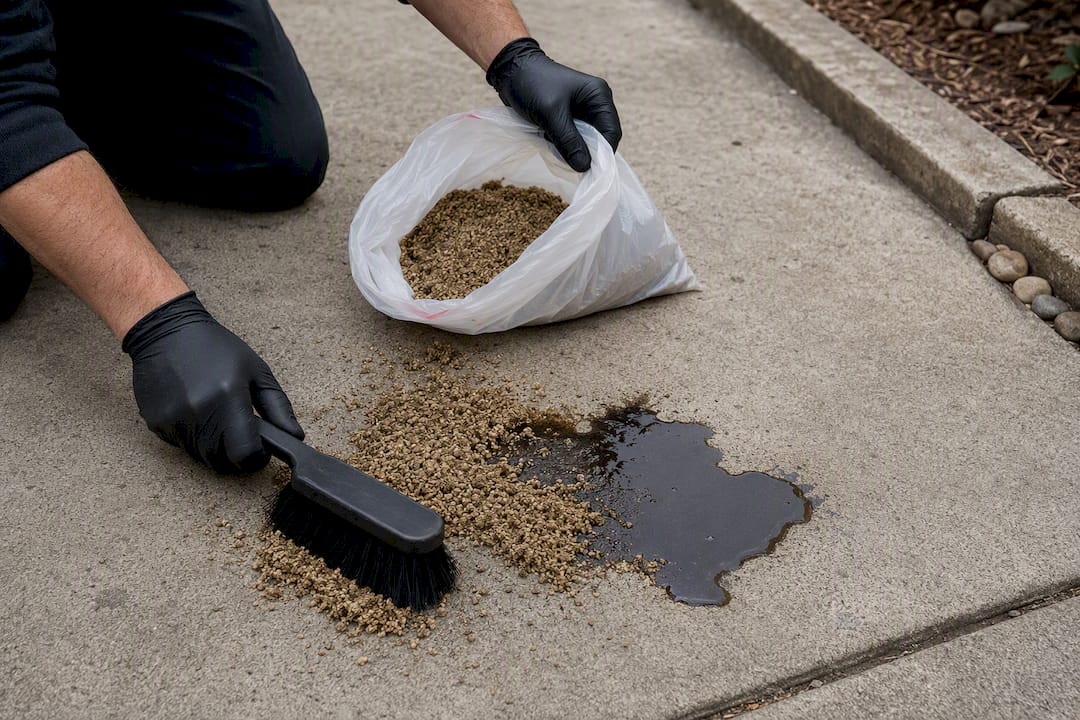
If you find a puddle, absorb it right away with cat litter, sand, or a commercial oil-absorbent product rather than hosing it toward the street. Sweep up the saturated material and bag it for proper disposal, since it’s classified as hazardous waste in most areas, the same category as used motor oil.
Never pour old or leaked power steering fluid down a household drain or into the trash in liquid form. Most auto parts stores and municipal household hazardous waste facilities accept used automotive fluids free of charge, and many repair shops, including full-service shops that already handle fluid changes, will take small amounts of used fluid off your hands during a routine visit. If you’re doing your own top-off or flush at home, keep the old fluid in a sealed, labeled container until you can drop it off. A quart of power steering fluid seems minor next to a car’s other fluids, but it carries the same disposal responsibility as anything else with a petroleum base.
Why We Push for Professional Diagnosis on Steering Leaks
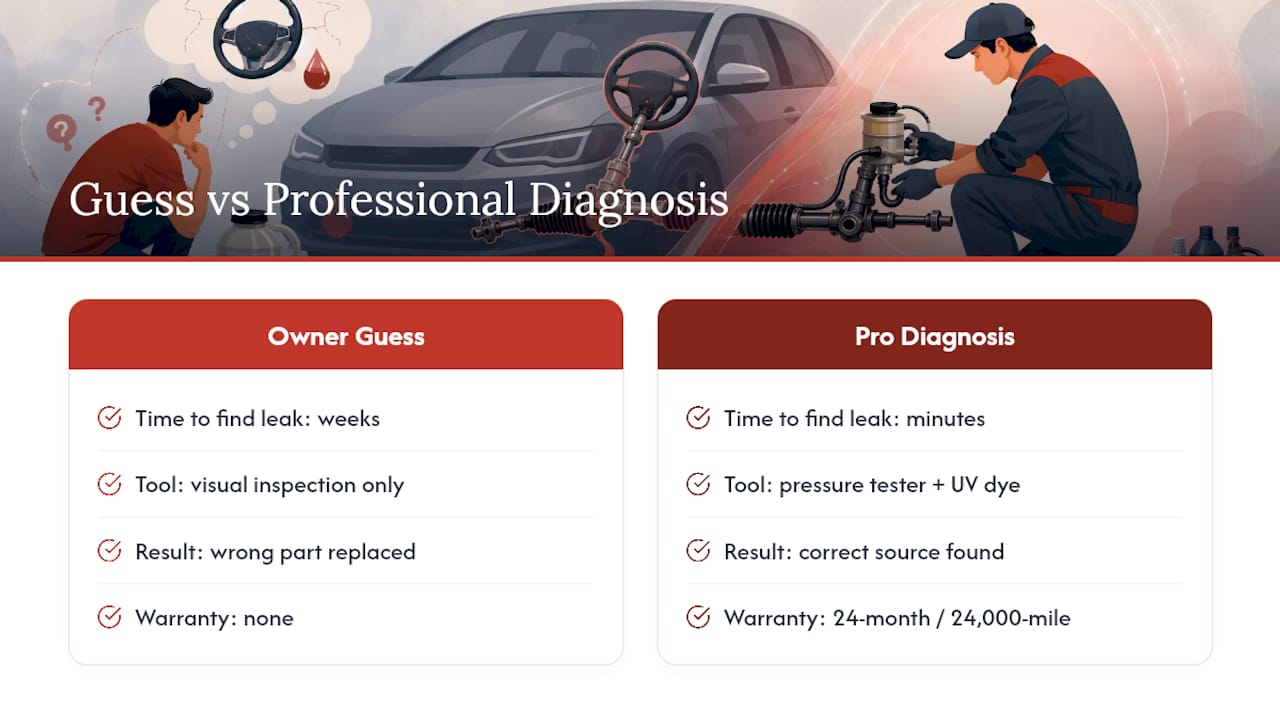
Steering leaks look simple until you’re staring at a wet engine bay with three possible sources and one afternoon to fix it. That’s the gap we see most: owners replace the part that’s easiest to reach, not the part that’s actually failing, and end up back at square one with fluid on the garage floor again.
At Tom’s B & M Auto, our ASE-certified technicians have served Lynnwood vehicle owners for decades, on everything from domestic trucks to European and hybrid models. A pressure tester and UV dye tell us in minutes what a visual inspection alone might miss for weeks, and every repair carries a 24-month/24,000-mile warranty, so a diagnosis backed by real equipment beats a guess every time.
— Shingi
Get a Free Inspection Before Your Steering Leak Gets Worse
A slow drip today is a stranded car on I-5 next month if it’s left alone. Tom’s B & M Auto is the straightforward alternative to guessing your way through a repair or gambling on a bottle of stop-leak: our free digital vehicle inspection checks your power steering system along with the rest of your car’s fluids, hoses, and belts, so you get a full picture instead of a single answer.
We handle the full range of steering repairs, leak location with UV dye and pressure testing, hose and pump replacement, rack repair, and fluid flushes, all backed by our 24-month/24,000-mile warranty. Higher-cost repairs like pump or rack work can also be spread out through our financing options if the timing is tight.
To book, call the shop or request an appointment online, and have your vehicle’s make, model, year, and a description of when the noise or heavy steering shows up ready to go. Same-day appointments are often available, so you’re not stuck driving on a leak longer than you have to.
Sources
Recommended
- Scan First: VW EPC Light Causes and $15–$50 Fixes
- Why Your Car Leaks Oil: Causes, Risks, and Fixes
- Free to $200: ASE Certified Lynnwood Shop on Check Engine Diagnosis Costs
Leave a Reply