
Scan First: VW EPC Light Causes and $15–$50 Fixes
The EPC light means your Volkswagen’s electronic power control system has flagged a fault somewhere in the throttle, sensor, or drive-by-wire network. If the engine is running rough or the check-engine light is flashing, stop driving and get it scanned. If not, limit your driving and have it scanned the same day before you assume anything expensive is wrong.
TL;DR:
- Most common causes of an EPC light include a faulty brake light switch, loose intake hoses, and carbon buildup in the throttle body, all inexpensive to address.
- Diagnosing an EPC fault requires a detailed scan with VW-specific tools that can read live data, not just stored codes, to identify the exact issue.
- DIY checks, such as inspecting the brake lights, testing battery voltage, and reseating intake clamps, can often identify simple, low-cost problems before a professional visit.
- The cost to fix an EPC light varies widely, with replacement parts like throttle bodies costing up to $700, making proper diagnosis essential to avoid unnecessary expenses.
- Preventive measures include routine throttle cleaning every 20,000 to 30,000 miles and inspecting sensors and connectors during regular maintenance to avoid frequent warnings.
Table of Contents
- What Does the VW EPC Light Actually Mean?
- What Are the Most Common Causes of an EPC Light?
- When Is It Safe to Keep Driving With the EPC Light On?
- How Do Shops Actually Diagnose an EPC Fault?
- Which DIY Checks Can You Safely Try First?
- How Much Does It Cost to Fix an EPC Light?
- How Can You Prevent Future EPC Warnings?
- Why “Scan First” Beats Guessing Every Time
- Get Your EPC Light Diagnosed the Right Way
- Sources
What Does the VW EPC Light Actually Mean?
EPC stands for Electronic Power Control, and it’s tied to the electronic throttle system that replaced the old mechanical gas pedal cable on nearly every Volkswagen built in the last two decades. Instead of a cable pulling the throttle plate open, a sensor reads your pedal position and an electric motor moves the throttle accordingly. Cruise control, traction control, and stability inputs all feed into that same system.
That’s why the EPC light covers so much ground. It’s not a single-part warning like a “low tire pressure” icon. It can trip because of a sensor reading, a wiring issue, a mechanical restriction in the throttle body, or a voltage problem that has nothing to do with the throttle at all.
Don’t confuse it with the check-engine light (MIL), which is primarily an emissions-system watchdog. The two overlap often, since a throttle or sensor fault frequently affects emissions too, but they’re not identical, and coverage varies by model year. Whatever the case, resist the urge to clear the code before it’s read and saved. Once it’s erased, the technician loses the exact trail that points to the failure.
What Are the Most Common Causes of an EPC Light?
Most EPC triggers are cheap and boring, not catastrophic. Run through these before anyone touches the throttle body.
- Brake light switch. Have someone check your brake lights while you press the pedal. A failing switch is one of the most common and least expensive causes of an EPC light on VWs, and it directly confuses the traction and cruise control logic.
- Loose or cracked intake hose. Pop the hood and look for a disconnected clamp or a split in the air intake boot between the filter box and throttle body.
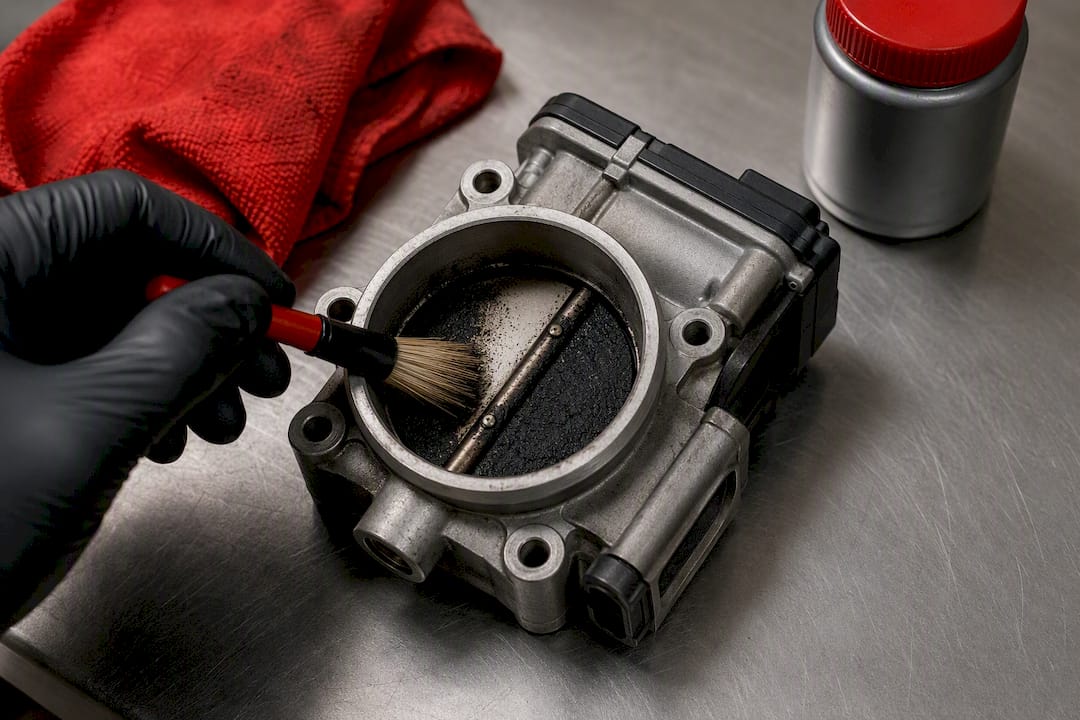
- Throttle body carbon buildup. If idle feels rough or acceleration feels delayed, carbon accumulation on the throttle plate is a frequent culprit on direct-injection VW engines.
- MAF, crank, or camshaft position sensor faults. These usually surface as stored codes and often pair with rough idle or hesitation under load.
- Weak battery or unstable voltage. A tired battery or failing alternator can starve sensors of clean voltage, producing what technicians call a “ghost” EPC light.
Order matters here. Check the brake light switch and battery voltage first, since both take minutes and cost little to nothing. Resist buying a throttle body or sensor until a scan confirms it’s actually the problem.
When Is It Safe to Keep Driving With the EPC Light On?
Some EPC events are a nuisance. Others are a warning to pull over. The difference comes down to how the car behaves, not just whether the light is on.
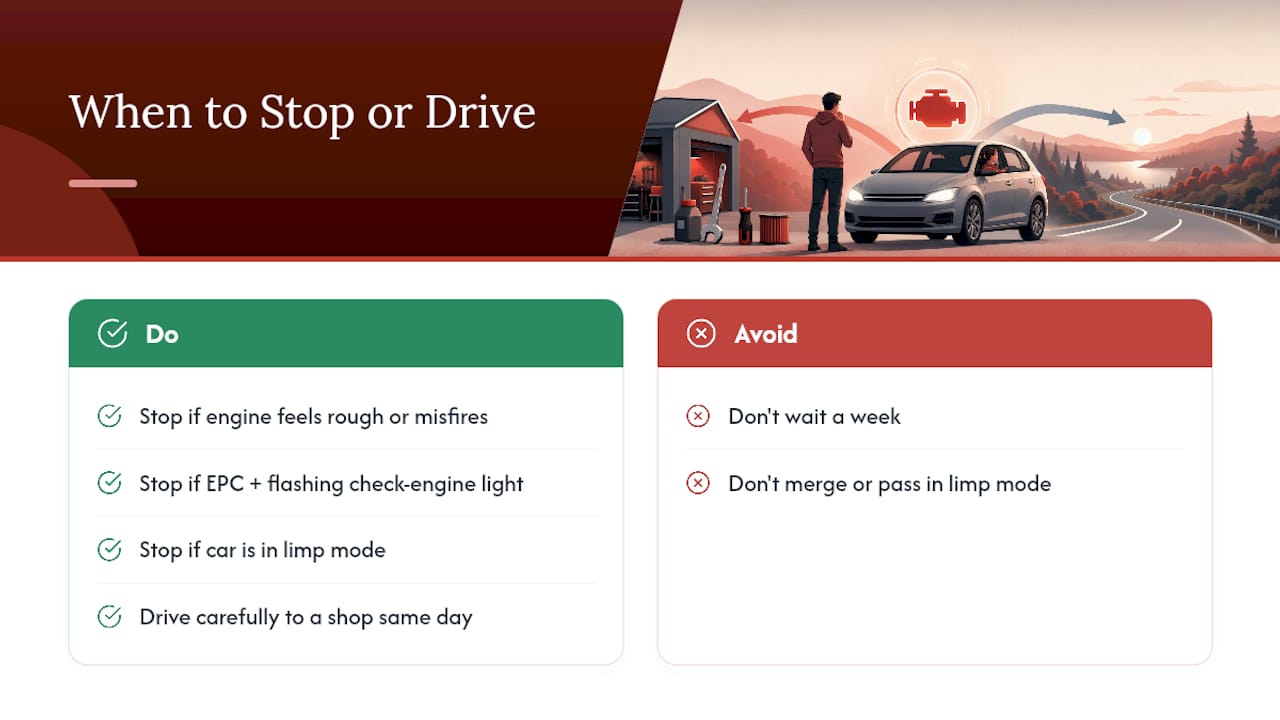
Stop driving if the EPC light comes on alongside a flashing check-engine light and the engine feels rough, jerky, or is clearly misfiring. That combination often points to an active misfire, and continuing to drive on it can damage the catalytic converter or cause a no-start situation. Also stop if you’re in “limp mode,” where the car caps engine speed and refuses to accelerate past a crawl. Trying to merge onto a highway or pass another car in that state is a real hazard.
If the light is steady, the engine idles normally, and acceleration feels only slightly softer than usual, you can drive carefully to a shop the same day. Don’t wait a week. An intermittent EPC light that clears on its own still deserves a scan, since the module has likely logged a soft code pointing to a sensor or connector that’s failing on its own schedule.
How Do Shops Actually Diagnose an EPC Fault?
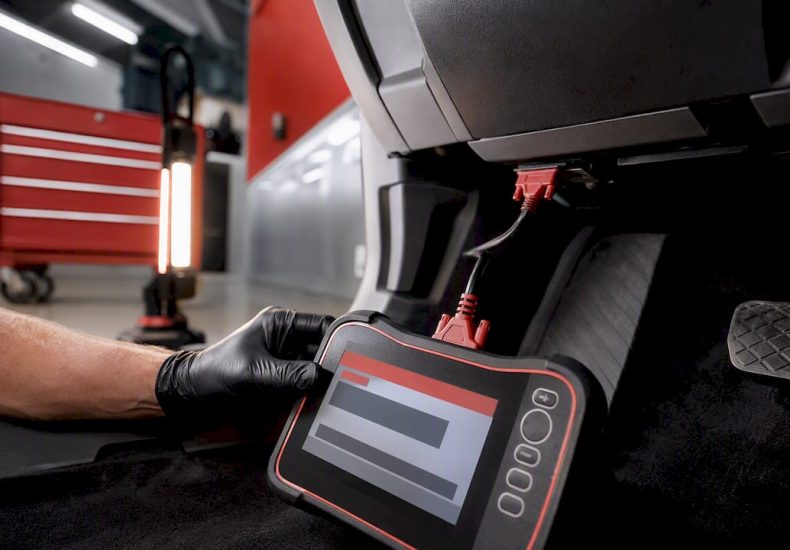
A generic OBD-II scanner reads the stored fault code and tells a technician roughly where to look. That’s step one, and it’s often enough to point toward the brake light switch, a sensor, or a wiring fault. But Volkswagen’s electronic systems store more detail than a generic tool can read.
That’s where VW-specific tools like VCDS, ODIS, and OBDeleven come in. They pull live data streams (actual sensor readings in real time, not just stored codes) and let a technician watch throttle position, pedal input, and voltage behave as the fault happens. They can also run throttle adaptation and basic settings resets, procedures a generic scanner simply can’t perform.
A thorough diagnostic sequence usually looks like this:
- Scan and save the codes before touching anything.
- Visually inspect connectors, intake hoses, and the brake light switch.
- Test battery and charging voltage.
- Reproduce the symptom while watching live data to confirm which input is misbehaving.
Pro Tip: Ask whoever scans your car to give you the actual code numbers and a printout, even if they clear them afterward. That record follows the car and saves time if the light returns.
Which DIY Checks Can You Safely Try First?
Before booking a shop visit, a few checks take fifteen minutes and no special tools.
- Check your brake lights. Have a second person watch while you press the brake pedal from the driver’s seat. Both lights should come on instantly and evenly.
- Test the battery voltage. A basic multimeter should read around 12.4 to 12.6 volts with the engine off, and above 13.5 volts running. Anything noticeably lower deserves attention.
- Reseat the intake ducting. Check the clamps on the air intake hose between the filter housing and throttle body, and look for cracks in the rubber.
- Inspect connectors for corrosion. Look at any exposed sensor plugs near the throttle body and engine bay for green corrosion or moisture intrusion.
Throttle-body cleaning is a common next step, but here’s the catch: after cleaning, the throttle usually needs an adaptation reset performed with VW-specific software, or the idle and throttle response can actually get worse. Never force the throttle plate open by hand to clean behind it. That can bend the shaft.
Pro Tip: If the light is flashing, the car is in limp mode, or it won’t start, stop the DIY checklist and call a shop. Those aren’t sensor-cleaning problems.
How Much Does It Cost to Fix an EPC Light?
Costs vary enormously depending on what’s actually wrong, which is exactly why a scan should come before any parts purchase.
- Brake light switch: $15 to $50
- Throttle body cleaning (plus adaptation): $50 to $120
- Throttle body replacement: $300 to $700
- Sensor replacement (MAF, crank, position sensors): $80 to $250
- ECM replacement (rare): $500 to $2,000
A one-hour diagnostic scan typically costs far less than the difference between the cheapest and most expensive items on that list. Guessing your way to a throttle body replacement when the real problem was a $30 switch is the single most avoidable expense tied to this warning light.
How Can You Prevent Future EPC Warnings?
Throttle carbon buildup accumulates gradually on most direct-injection VW engines, so periodic cleaning during routine service (roughly every 20,000 to 30,000 miles, depending on driving conditions) heads off a lot of EPC complaints before they start. Use a throttle-body-safe cleaner, never a general degreaser, and never force the plate open manually.
Stick to VW-spec oils and filters, since off-spec fluids can affect sensor readings over time. Ask your technician to inspect connectors near the throttle body and intake tract whenever the car is up for other work, since corrosion and loose clamps are cheap to catch early and annoying to diagnose later. If your brake light switch is original and the car has a high mileage, replacing it proactively is inexpensive insurance. Building a periodic VW-specific scan into routine maintenance also catches soft codes before they become dashboard warnings.
Why “Scan First” Beats Guessing Every Time
The advice that gets repeated most about the EPC light, replace the throttle body, is usually wrong as a first move. It’s the most expensive single fix on the list and, in a lot of real-world cases, not the actual problem. The brake light switch and a shaky battery connection cause a disproportionate share of these lights, and both cost less than a tank of gas to fix.
What conventional advice underrates is how much value there is in saving the code before clearing it. Owners clear the light thinking they’ve fixed something, then come back weeks later with the same fault and no trail to follow. That’s lost diagnostic time nobody needed to lose.
If you take one thing from this, prioritize the scan over the parts store. Check the cheap stuff (brake switch, connectors, battery voltage) before you let anyone quote you for a throttle body. The scan tells you which one you actually need, and it usually costs less than the part you were about to buy anyway.
— Shingi
Get Your EPC Light Diagnosed the Right Way
Tom’s B & M Auto runs the scan-first approach this whole article is built around, using professional-grade OBD-II and VW-specific tools to read live data instead of guessing at parts. Our ASE-certified technicians save your codes before clearing anything, check the cheap stuff first (brake light switch, connectors, battery voltage), and only recommend a throttle body or sensor replacement once the scan actually points there.
Every repair carries a 24-month, 24,000-mile warranty, and we handle VW-specific work regularly alongside Toyota, Honda, Subaru, and domestic vehicles here in the Lynnwood area. If your EPC light just came on, take advantage of our free check engine light review before you spend a dollar on parts. You can also book directly through our Volkswagen repair page or check our check engine light diagnostic service in Lynnwood to get a same-day scan on the calendar.
Sources
For deeper background, see Volkswagen EPC light causes, VCDS/ODIS diagnostic tools, and Tom’s B & M Auto’s guide on check engine light meaning.
- VW EPC Light, Shaking, and Loss of Power: What It Usually Means – Drivers Advice
- EPC Light Volkswagen: What It Means & How to Fix It – Steer
- VW EPC Light: What It Means & How to Fix It (2026)
Recommended
- What’s Causing Your Check Engine Light to Come On?
- Service Engine Soon: What It Means and What to Do
- Check Engine Sign in Car: What to Do Right Now
- Volkswagen Timing Chain Issues: Causes, Symptoms, Fixes
Leave a Reply