
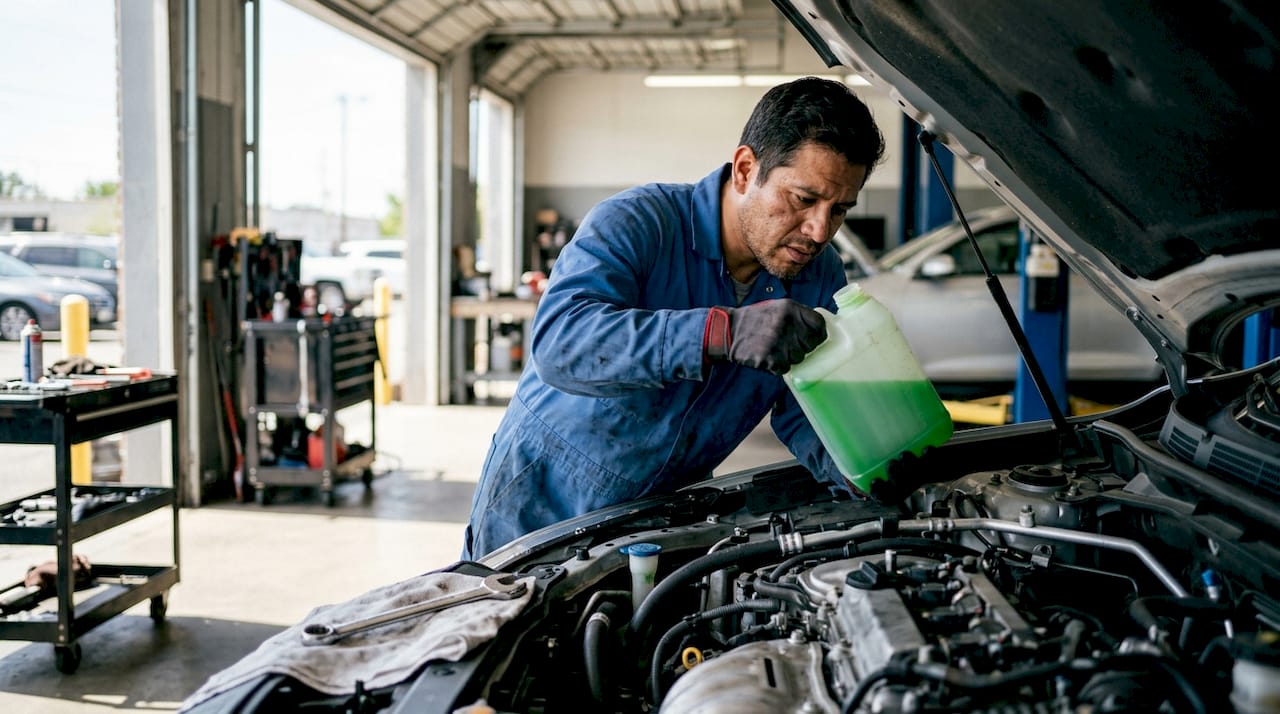
What Is Engine Coolant and Why Your Car Needs It
Engine coolant is a carefully formulated liquid that manages engine temperature, prevents freezing and boiling, inhibits corrosion, and lubricates key components inside your vehicle’s cooling system. Most drivers know to check their oil, but coolant does just as much work to keep an engine alive. A standard 50/50 mixture of water and antifreeze forms the base of every modern coolant formula, and the additives packed into that mixture protect metals like aluminum, steel, and copper from the inside out. Understanding what engine coolant is and how it works gives you a real edge in preventing expensive repairs before they happen.
What is engine coolant made of and how does it work?
Engine coolant is not the same thing as antifreeze, even though the two terms get used interchangeably. Pure antifreeze is rarely used alone. It is typically mixed with water to form coolant, giving it freeze and boil protection plus corrosion resistance and lubrication. The base compound is either ethylene glycol or propylene glycol. Ethylene glycol is the most common choice in passenger vehicles because it transfers heat efficiently and costs less to produce.
The water in the mixture does the actual heat absorption. Glycol lowers the freezing point and raises the boiling point of that water so it stays liquid across a wide temperature range. A 50/50 mixture of water and ethylene glycol produces a freezing point of approximately -35°F and a boiling point of 223°F. That range covers everything from a Minnesota winter to a Phoenix summer without a single problem.
Coolant circulates through channels in the engine block and cylinder head, absorbing combustion heat as it flows. The hot fluid then travels to the radiator, where airflow strips that heat away before the cooled fluid cycles back through the engine. This loop runs continuously while the engine operates. Understanding the radiator’s role in this process helps explain why a clogged or damaged radiator causes overheating so quickly.
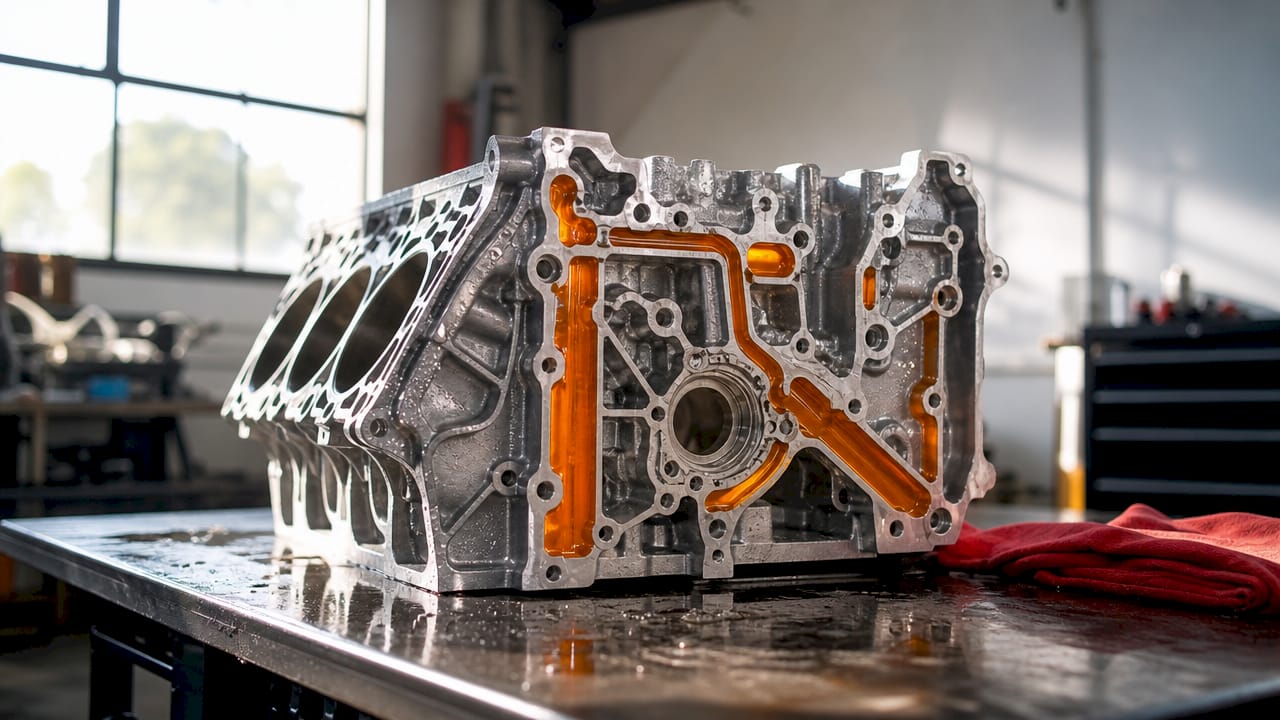
The additives in coolant do work that water and glycol cannot. Additive packages inhibit corrosion on aluminum, steel, and copper surfaces and lubricate water pump seals to prevent wear and failure. Without those additives, the cooling system would corrode from the inside within a few years. The additives form protective films on metal surfaces, and those films need to be refreshed periodically through coolant replacement.
| Mixture Ratio | Freezing Point | Boiling Point |
|---|---|---|
| 70% antifreeze / 30% water | -84°F | 235°F |
| 50% antifreeze / 50% water | -35°F | 223°F |
| 30% antifreeze / 70% water | -5°F | 214°F |
Pro Tip: Always mix coolant concentrate with distilled water, not tap water. Tap water minerals accelerate corrosion and leave scale deposits inside the radiator and water pump passages.
What are the main types of coolant and how do you choose?
Three main coolant technologies exist: Inorganic Additive Technology (IAT), Organic Acid Technology (OAT), and Hybrid Organic Acid Technology (HOAT). Each uses a different additive chemistry, which affects service life, metal compatibility, and the vehicles it suits best.
IAT (Inorganic Additive Technology) uses silicates and phosphates as corrosion inhibitors. It works well in older domestic vehicles but depletes its inhibitors quickly, typically requiring replacement every two years or 30,000 miles. Most vehicles built before the mid-1990s used IAT.
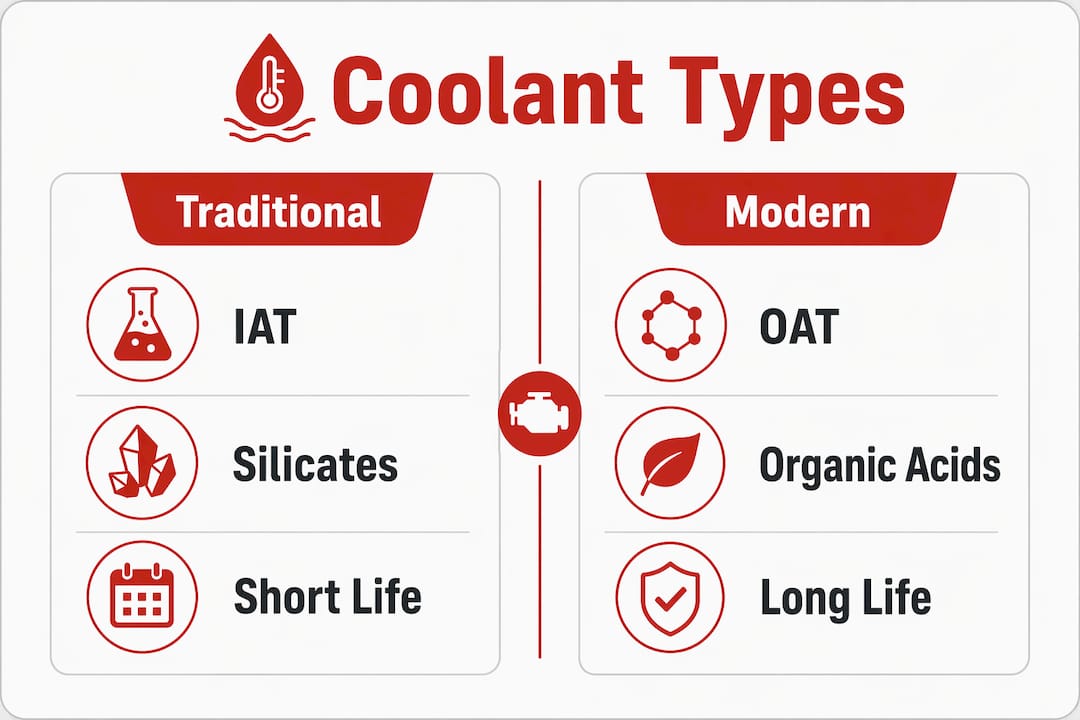
OAT (Organic Acid Technology) relies on organic acids that form a thinner, more durable protective film. OAT coolants last significantly longer, with many rated for five years or 150,000 miles. General Motors’ Dex-Cool is the most recognized OAT product, and many Asian and European manufacturers specify OAT formulas.
HOAT (Hybrid Organic Acid Technology) blends silicates with organic acids to cover a broader range of metals. Many Toyota, Honda, Subaru, and European vehicles specify HOAT because modern engines combine aluminum heads with steel blocks and copper radiators. HOAT offers a middle ground between IAT’s fast-acting protection and OAT’s long service life.
Choosing the wrong type causes real damage. Manufacturer manuals specify coolant by chemical specification, not by color. Mixing coolants by color is unreliable and dangerous. Incompatible coolant chemistries react with each other, forming gels or precipitates that block coolant flow and cause localized overheating.
- Match coolant to your vehicle’s OEM specification, found in the owner’s manual or on the coolant reservoir cap.
- Never top off with a different coolant type without flushing the system first.
- Ignore color as a selection guide. Two products can share the same color and use completely different chemistry.
- When in doubt, use a universal HOAT formula rated for your vehicle type.
Pro Tip: If you are unsure which coolant your vehicle requires, the ASE-certified technicians at Tom’s B & M Auto can identify the correct specification and perform a proper flush before refilling.
Why does coolant maintenance matter for engine health?
Coolant does not last forever. Over time, the additive package breaks down and the fluid becomes acidic. Degraded coolant loses its corrosion inhibitors and can cause internal damage including localized overheating and head gasket failures. A head gasket replacement on a modern engine routinely costs over $1,500. Staying ahead of coolant degradation costs a fraction of that.
The water pump is the first component to suffer when coolant ages. Coolant lubricates the water pump seal, and when the fluid turns acidic, it loses that lubricating ability. The result is premature seal failure and coolant leaks. A leaking water pump can quickly lead to overheating, which compounds into far more serious engine damage.
Coolant degradation also restricts flow. Corrosion byproducts and scale deposits narrow the passages in the radiator and engine block. Restricted flow from corrosion causes overheating just as effectively as a low coolant level. Coolant maintenance is as critical as motor oil care, and skipping it carries the same category of risk.
Watch for these warning signs that your coolant needs attention:
- The temperature gauge climbs higher than normal during regular driving.
- You notice a sweet smell from the engine bay, which signals a coolant leak.
- The coolant in the reservoir looks brown, rusty, or oily rather than its original color.
- White smoke comes from the exhaust, which can indicate coolant entering the combustion chamber.
- The coolant level drops repeatedly without an obvious external leak.
Pro Tip: Check your coolant condition with an inexpensive test strip. These strips measure pH and freeze protection in seconds and tell you whether the additive package is still active.
If you notice any of these signs, read more about engine overheating causes before the problem escalates.
How to check and top off engine coolant safely
Checking coolant is one of the easiest maintenance tasks you can do. The most important rule is to never open the radiator cap or coolant reservoir cap on a hot engine. Pressurized coolant at operating temperature can spray out and cause serious burns. Wait at least 30 minutes after shutting off the engine before touching anything.
Once the engine is cool, locate the translucent plastic coolant reservoir. Most modern vehicles have a reservoir with MIN and MAX markings on the side. Check the level visually without opening the cap. If the level sits below the MIN line, the system needs a top-off.
When adding coolant, use the correct type for your vehicle and mix concentrate with distilled water at a 50/50 ratio, or use a premixed formula. Add slowly and stop at the MAX line. Do not overfill, as the system needs room for thermal expansion.
- Never add plain water as a long-term fix. It dilutes the additive package and lowers freeze protection.
- Do not mix coolant brands or types without flushing the system first.
- If the level drops again within a week, schedule a professional inspection for a leak.
Pro Tip: A professional cooling system flush removes old fluid, scale deposits, and corrosion products that a simple top-off cannot address. Most vehicles benefit from a flush every two to five years depending on coolant type.
Key Takeaways
Engine coolant is a multifunctional fluid that regulates temperature, prevents freeze and boil damage, inhibits corrosion, and lubricates the water pump. Neglecting it risks head gasket failures, water pump leaks, and full engine overheating.
| Point | Details |
|---|---|
| Coolant composition | A 50/50 mix of ethylene glycol and distilled water protects from -35°F to 223°F. |
| Three coolant types | IAT, OAT, and HOAT each suit different vehicles; always match OEM specification. |
| Never mix by color | Color is unreliable; incompatible chemistries form gels that block coolant flow. |
| Maintenance interval | Degraded coolant turns acidic and destroys water pump seals and head gaskets. |
| Safe top-off practice | Use distilled water with the correct coolant type; never use tap water or plain water alone. |
The part of coolant care most drivers get wrong
Drivers treat coolant like a set-and-forget fluid, and that mindset costs them. In my experience working around automotive repair, the vehicles that show up with blown head gaskets and failed water pumps almost always have one thing in common: coolant that was never changed and never tested.
The part that surprises most people is that coolant does not fail dramatically. It does not turn black like old oil or smell burnt. It quietly loses its additive protection while still looking like coolant. By the time the temperature gauge spikes or the sweet smell appears, the damage is already in progress. The pH has been eating at aluminum surfaces for months.
The other mistake I see constantly is mixing coolant types during a top-off because the correct type was not available at the store. Drivers figure a little bit of the wrong type will not hurt. It does. The chemical reaction between incompatible additive packages starts immediately and creates deposits that no flush can fully clear.
My recommendation is simple: pull out your owner’s manual, find the coolant specification, and buy exactly that. If you are not sure what is already in the system, have it flushed before adding anything new. Proactive coolant care is the cheapest engine insurance available.
— Shingi
Coolant service at Tom’s B & M Auto
Tom’s B & M Auto has served Lynnwood and the surrounding area since 1985, and cooling system maintenance is one of the most common services the shop handles. ASE-certified technicians inspect coolant condition, test freeze protection, check for leaks, and perform full system flushes using the correct OEM-specified fluid for your vehicle.
Whether your temperature gauge is acting up or you just want a routine coolant check, the team at Tom’s B & M Auto provides upfront pricing and same-day appointments when available. For drivers facing larger cooling system or engine repair needs, financing options are available to keep repairs affordable. All work comes backed by a 24-month / 24,000-mile warranty.
FAQ
What is the purpose of engine coolant?
Engine coolant regulates engine temperature, prevents the fluid from freezing or boiling, inhibits internal corrosion, and lubricates the water pump seal. Without it, an engine would overheat within minutes of operation.
How often should engine coolant be replaced?
Replacement intervals depend on coolant type. IAT coolant typically needs replacement every two years or 30,000 miles, while OAT and HOAT formulas can last five years or more. Check your owner’s manual for the exact specification.
Can you mix different types of coolant?
Mixing incompatible coolant types causes chemical reactions that form gels and deposits, blocking coolant flow and causing overheating. Always flush the system before switching to a different coolant chemistry.
What are the signs of bad or low coolant?
Key signs include a rising temperature gauge, a sweet smell from the engine bay, brown or rusty fluid in the reservoir, white exhaust smoke, and a coolant level that keeps dropping without a visible external leak.
Is antifreeze the same as engine coolant?
Antifreeze is a component of coolant, not the complete fluid. Antifreeze concentrate is mixed with distilled water to create coolant, which then provides freeze protection, boil protection, corrosion resistance, and lubrication.
Recommended
- Why Your Engine Overheats and How to Stop It – Tom’s B & M Auto Blog
- What Is Brake Bleeding? A Car Owner’s Guide – Tom’s B & M Auto Blog
- Engine Compression Test: What Car Owners Need to Know – Tom’s B & M Auto Blog
- What Is Radiator Function in Your Car’s Cooling System – Tom’s B & M Auto Blog
Leave a Reply