
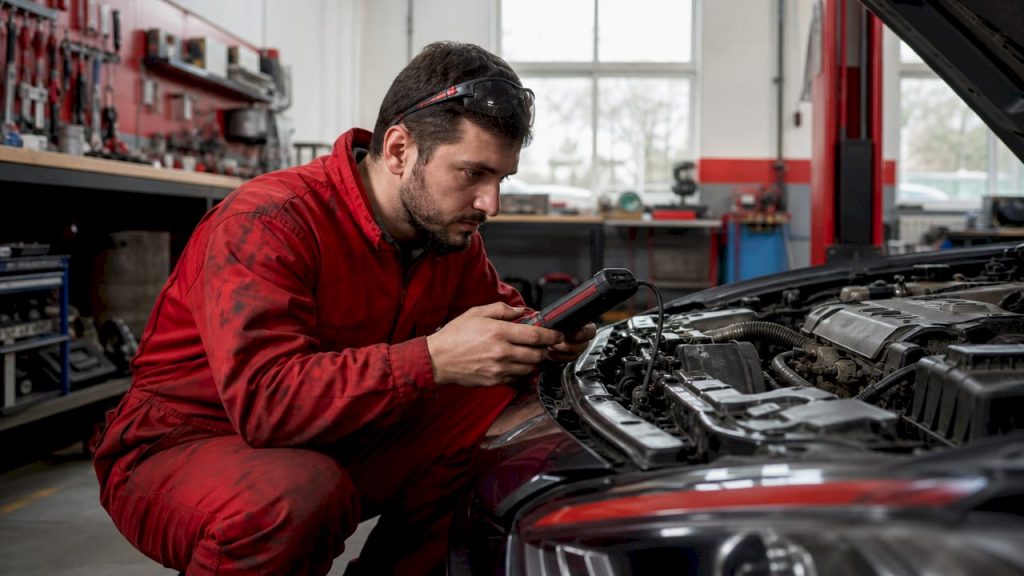
Engine knock is defined as abnormal combustion inside a gasoline engine’s cylinder, where the air-fuel mixture ignites unevenly or prematurely instead of burning in a controlled wave from the spark plug outward. Also called detonation, this produces a sharp metallic pinging or knocking sound that most drivers first notice under hard acceleration. The causes range from something as simple as the wrong fuel octane to worn spark plugs or carbon buildup inside the combustion chamber. Catching it early is the difference between a cheap fix and a major engine repair.
What causes engine knock inside the cylinders?
Normal combustion is a controlled burn. The spark plug fires, a flame front travels across the compressed air-fuel mixture, and the piston is pushed down smoothly. Engine knock happens when that process breaks down. Unburnt end-gas at the far edge of the combustion chamber reaches a critical temperature and pressure and ignites on its own before the flame front arrives. Two separate flame fronts collide, creating a sharp pressure spike that rattles the engine’s internals and produces that distinctive knock.
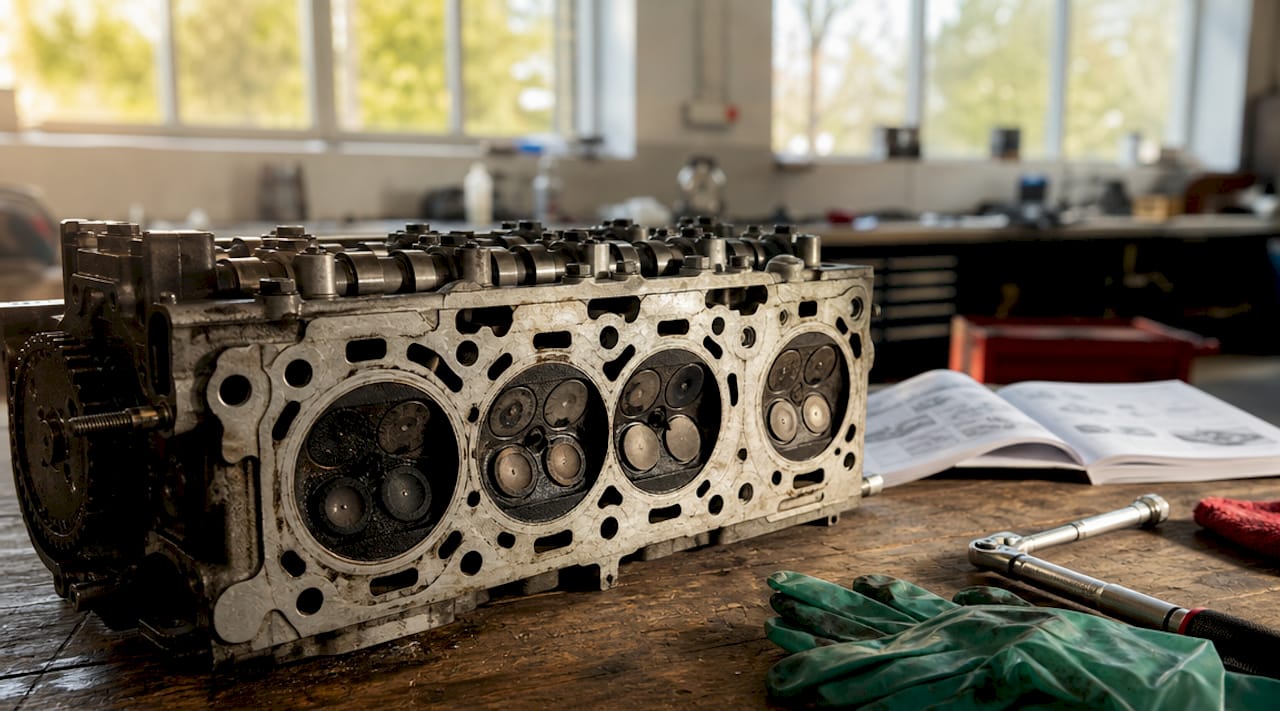
Detonation vs. pre-ignition
These two terms get used interchangeably, but they describe different problems. Detonation occurs after the spark fires, when end-gas auto-ignites under extreme cylinder pressure. Pre-ignition happens before the spark, triggered by a hot spot inside the combustion chamber such as a glowing carbon deposit or an overheated spark plug tip. Pre-ignition is the more destructive of the two because the mixture ignites while the piston is still rising, creating enormous opposing forces inside the engine.
The most common causes of engine knocking
- Low-octane fuel. Using fuel below your engine’s octane requirement is the single most frequent cause of knock in everyday driving. Lower-octane gasoline resists auto-ignition less effectively, making it prone to detonating before the spark event. If your owner’s manual specifies 91 octane and you fill up with 87, knock is a predictable result.
- Worn spark plugs. Faulty spark plugs cause misfires or delayed ignition that leaves unburnt fuel in the cylinder, setting up conditions for detonation. Rough idling and sluggish acceleration often accompany this type of knock.
- Carbon deposits. Buildup on piston crowns and cylinder head surfaces creates hot spots that act as secondary ignition sources, triggering pre-ignition even when fuel grade and timing are correct.
- Ignition timing errors. If the ECU or a faulty sensor advances timing too aggressively, the mixture fires too early and the resulting pressure spike registers as knock.
Pro Tip: Check your owner’s manual for the minimum recommended octane before your next fill-up. Many Toyota, Honda, and Subaru engines specify 87 octane, but turbocharged and high-compression engines often require 91 or higher. Using the right fuel costs almost nothing compared to the repair bill it prevents.
How to recognize engine knock: sounds and symptoms
The sound itself is your first diagnostic clue. Combustion knock produces a sharp pinging that intensifies under acceleration or load, such as when you step on the gas to merge onto a highway or climb a steep grade. It tends to quiet down at idle or light throttle. Mechanical knock, by contrast, is a deeper, more rhythmic thud that persists regardless of load and often gets louder as engine temperature rises.
Comparing combustion knock vs. mechanical knock
| Characteristic | Combustion knock | Mechanical knock |
|---|---|---|
| Sound quality | Sharp, metallic pinging | Deep, hollow thudding |
| When it occurs | Under acceleration or load | Consistent, including at idle |
| Changes with throttle | Yes, gets louder under load | Minimal change |
| Common causes | Low octane fuel, timing, deposits | Rod bearings, piston slap |
| Urgency | High | Critical |
Distinguishing combustion knock from mechanical knock is critical because the repairs and prognosis differ significantly. A combustion knock often has a straightforward fix. A mechanical knock usually means internal engine damage is already present.
Beyond the sound, watch for these accompanying engine knock symptoms:
- Reduced power under acceleration, especially at highway speeds
- Noticeably worse fuel economy over several fill-ups
- Rough or uneven idling that was not present before
- A check engine light, which may indicate the knock sensor has flagged an event
The check engine light meaning varies widely, but a knock-related code combined with any of the symptoms above points directly to a combustion problem worth diagnosing immediately.
Is engine knock dangerous? What damage it causes
Yes, engine knock is dangerous to your engine’s long-term health, and the severity scales with how long you ignore it. Repeated detonation causes wear, rod bending, piston breakage, valve melting, and cylinder head erosion. Each knock event sends a destructive pressure spike through the combustion chamber, and those spikes accumulate damage over thousands of cycles.
Here is how the damage typically progresses if knock goes unaddressed:
- Piston crown erosion. The pressure spikes from detonation pit and erode the top of the piston over time, reducing compression and engine efficiency.
- Connecting rod bearing wear. Abnormal combustion forces stress the rod bearings, accelerating wear and eventually causing the deep knocking sound associated with a spun bearing.
- Valve and cylinder head damage. Sustained detonation can warp or crack cylinder heads and burn exhaust valves, leading to compression loss.
- Head gasket failure. The repeated thermal and mechanical stress from knock weakens head gasket integrity, often resulting in coolant or oil leaks.
Pre-ignition damage is even more severe. Because pre-ignition fires the mixture before spark, the piston is still moving upward when combustion pressure peaks. This can destroy a piston in a single event under the right conditions. Turbocharged engines are especially vulnerable because boost pressure amplifies cylinder temperatures and pressures.
Modern vehicles use knock sensors to limit damage. Knock sensors detect abnormal combustion vibrations and signal the ECU to retard ignition timing, reducing the knock event’s intensity. This protection is real but incomplete. The ECU’s timing retardation reduces power and fuel efficiency while the knock condition persists, and the sensor cannot fix the root cause. Think of it as a circuit breaker, not a repair.
How to fix engine knock: practical steps
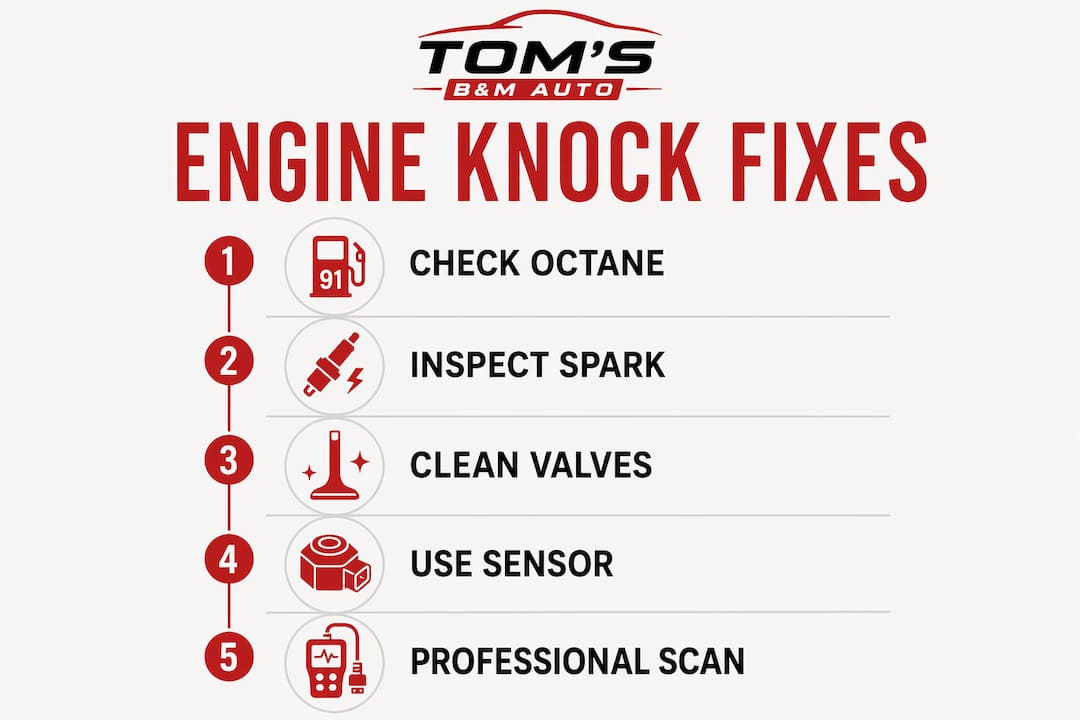
Fixing engine knock starts with identifying which category of knock you are dealing with. Most combustion knock responds to one or more of the following steps.
- Switch to the correct octane fuel. Higher-octane fuel prevents premature ignition and is the fastest fix when low-grade gasoline is the cause. If your engine requires premium, use it consistently. Running 87 in a 91-octane engine to save a few dollars per fill-up is a false economy.
- Replace worn spark plugs. Plugs have a service interval for a reason. On most Toyota, Honda, and Subaru engines, iridium plugs last 60,000 to 100,000 miles, but a plug that is fouled or worn before that interval can still trigger knock. Inspect them if knock appears alongside rough idling.
- Clean carbon deposits. A fuel system cleaner added to the gas tank addresses mild deposit buildup. Severe deposits on piston crowns and intake valves, common on direct-injection engines like those in many modern Subaru FA20 and Honda K-series applications, require a professional induction cleaning service.
- Check and service the knock sensor. A faulty knock sensor cannot accurately report combustion events to the ECU, which may allow knock to continue unchecked. If your OBD-II scanner returns a P0325 or P0330 code, the sensor itself needs testing or replacement.
- Address ignition timing. Timing that is too advanced for your fuel grade or engine condition is a direct knock trigger. On modern vehicles, the ECU handles this automatically, but a malfunctioning sensor or a tune that was not calibrated for pump gas can push timing into knock territory.
Pro Tip: Direct-injection engines like those in many modern Subaru and Honda models accumulate intake valve deposits faster than port-injection engines because fuel never washes the valves. If you own a GDI engine and have never had an induction cleaning, it is worth scheduling one at around 60,000 miles as part of your preventive car care routine.
For persistent knock that does not respond to fuel changes and basic maintenance, a professional diagnosis using OBD-II data, a compression test, and a cylinder leak-down test will identify whether internal mechanical damage is already present.
Key takeaways
Engine knock is a combustion failure that causes real mechanical damage, and the root cause determines both the fix and the urgency.
| Point | Details |
|---|---|
| Definition of knock | Engine knock is abnormal combustion where end-gas auto-ignites, creating damaging pressure spikes. |
| Most common cause | Using fuel with an octane rating below your engine’s requirement is the leading trigger. |
| Combustion vs. mechanical | Sharp pinging under load points to combustion knock; deep rhythmic thudding suggests internal damage. |
| Damage risk | Untreated knock erodes pistons, wears rod bearings, and can crack cylinder heads over time. |
| First fix to try | Switch to the correct octane fuel and inspect spark plugs before pursuing more involved repairs. |
What I’ve learned diagnosing knock after 40 years of engine work
The most common mistake I see is drivers assuming any knocking sound means catastrophic engine failure. That panic leads to either ignoring the noise entirely out of dread or immediately authorizing a full engine rebuild that was not necessary. The reality is more nuanced.
Most of the combustion knock cases I have seen in Toyota Camrys, Honda Accords, and Subaru Outbacks over the years traced back to one of two things: the wrong fuel grade or spark plugs that were 20,000 miles past due. Both are inexpensive fixes. The key is acting on the sound quickly rather than waiting to see if it goes away.
Where I see people get into real trouble is misreading a mechanical knock as combustion knock and treating it with a fuel upgrade. A rod knock does not care what octane you use. If the sound is deep, rhythmic, and present at idle, stop driving and get a professional diagnosis. Continuing to drive on a spun bearing turns a $1,500 repair into a $5,000 engine replacement.
Knock sensors help, but they are not a substitute for diagnosis. Knock sensors are tuned for specific vibration frequencies and can miss mechanical failures that produce similar sounds. An OBD-II scan showing no knock codes does not mean your engine is fine if you can hear the noise clearly. Trust your ears as much as your scanner.
My practical advice: if you hear pinging under acceleration, try a tank of premium fuel first. If the knock disappears, you have your answer. If it persists or worsens, bring it in before the damage compounds.
— Shingi
Get your engine knock diagnosed at Tom’s B & M Auto
If you are hearing an unusual knock and are not sure whether it is a combustion issue or something more serious, Tom’s B & M Auto in Lynnwood, WA has been diagnosing and repairing engine problems for over 40 years. The ASE-certified technicians use professional-grade OBD-II diagnostics to pinpoint the exact cause, whether it is a fuel system issue, worn ignition components, or internal engine damage. For drivers in the greater Seattle area, engine repair in Kenmore and engine repair in Mountlake Terrace are available with same-day appointments often on offer. If the repair turns out to be more involved, financing options are available to keep you on the road without the financial stress. All work comes backed by a 24-month / 24,000-mile warranty.
FAQ
What is engine knock in simple terms?
Engine knock is an abnormal combustion event where the air-fuel mixture inside a cylinder ignites unevenly or prematurely, producing a sharp metallic pinging sound. It is also called detonation and is most noticeable under acceleration or heavy engine load.
What does engine knock sound like?
Combustion knock sounds like a sharp, metallic pinging that gets louder when you accelerate or put the engine under load. Mechanical knock, which indicates internal damage, is a deeper and more rhythmic thudding that is present even at idle.
Can I drive with engine knock?
Driving with combustion knock for a short time while you address the cause is possible, but continuing to drive with persistent knock risks serious damage to pistons, rod bearings, and cylinder heads. Mechanical knock is a reason to stop driving immediately.
Does using premium fuel fix engine knock?
Switching to the correct octane fuel eliminates knock caused by low-grade gasoline, often within one full tank. If the knock continues after upgrading fuel, the cause is something other than octane, such as worn spark plugs, carbon deposits, or internal engine damage.
How does a knock sensor protect my engine?
A knock sensor detects abnormal combustion vibrations and signals the ECU to retard ignition timing, reducing the intensity of each knock event. It limits damage but cannot fix the underlying cause, so a persistent knock still requires diagnosis and repair.