
High Mileage Vehicle Maintenance Tips That Work
High mileage vehicle maintenance tips are the specific practices that keep engines with 75,000+ miles running reliably and prevent the kind of failures that turn a paid-off car into a money pit. The industry term for this discipline is “preventive maintenance,” and it becomes more targeted, not less, as your odometer climbs. Brands like Mobil 1 and Castrol now formulate dedicated high mileage oils with seal conditioners and detergents built for aging engines. Vehicles that reach 200,000 miles do so because their owners follow a disciplined, proactive schedule. The ones that don’t make it usually fail for the same reason: deferred maintenance on small problems that compound into expensive ones.
1. What are the essential oil and fluid maintenance tips for high mileage cars?
Switching to a high mileage oil formulation is the single most impactful change you can make once your engine crosses 75,000 miles. High mileage oils contain seal conditioners and added detergents that restore gasket pliability and manage accumulated deposits. That matters because aging engines develop small gaps at seals and gaskets that standard oil does nothing to address.
Oil consumption also increases with age. Consuming about 1 quart every 3,000–5,000 miles is considered normal for many high mileage engines. Check your oil level every other fill-up, not just at scheduled service intervals.
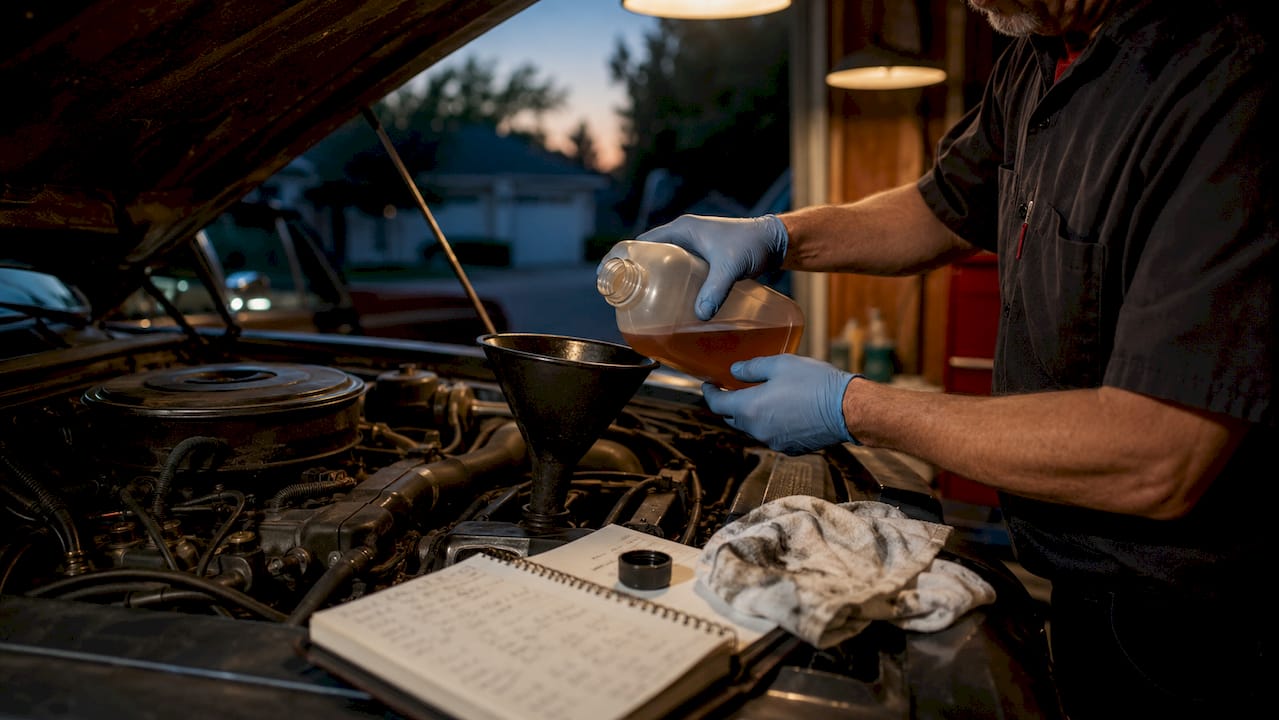
Transmission fluid is the most neglected fluid on older vehicles. Automatic transmissions can last 150,000–200,000+ miles with regular fluid service, but dark or burnt-smelling fluid signals overdue maintenance and a repair bill that can reach $2,900. Pull the dipstick and look at the color. Healthy transmission fluid is pink or red. Brown or black fluid with a burnt smell means you are overdue.
Coolant and power steering fluid follow the same logic. Degraded power steering fluid indicated by dark color or burnt smell signals the need for timely service to avoid pump failure. Coolant breaks down chemically over time and loses its ability to prevent corrosion inside your radiator and heater core.
- Check oil level every 1,000–1,500 miles on engines over 100,000 miles
- Inspect transmission fluid color and smell every 30,000 miles
- Flush coolant every 50,000 miles or per your manufacturer’s schedule
- Check power steering fluid at every oil change
- Look for milky or foamy oil, which signals coolant contamination
Pro Tip: If you are unsure which high mileage oil weight is right for your engine, check the best oil for high mileage cars guide before your next oil change. The wrong viscosity in a worn engine can accelerate wear rather than reduce it.
2. Which rubber and mechanical components need special attention?
Rubber components age independently of mileage. Heat, ozone, and time make belts and hoses brittle, soft, or swollen regardless of how carefully you drive. Inspect every rubber component under the hood at least once a year.
Timing belt failure is the repair you cannot afford to skip. Timing belt failure causes catastrophic engine damage, often costing over $2,000 to fix. Most manufacturers recommend replacement between 60,000 and 100,000 miles. Check your owner’s manual for the exact interval and treat that deadline as non-negotiable.
Inspect thermostat and radiator hoses for softness, swelling, or cracks regularly to prevent overheating. A hose that feels spongy or shows surface cracking is weeks away from failure, not years. Replacing a hose costs under $50. Replacing an overheated engine costs thousands.
Suspension components also wear faster on high mileage vehicles. Ball joints, tie rod ends, and struts develop play that shows up as wandering steering or a clunking sound over bumps. These are safety items, not comfort items.
| Component | Inspect for | Typical replacement interval |
|---|---|---|
| Timing belt | Cracks, fraying, glazing | 60,000–100,000 miles |
| Radiator hoses | Softness, swelling, cracks | Every 4 years or 60,000 miles |
| Serpentine belt | Glazing, cracking, fraying | 60,000–100,000 miles |
| Thermostat | Overheating, slow warm-up | Every 50,000 miles |
| Struts and shocks | Bouncing, nose dive, leaking | 50,000–100,000 miles |
Pro Tip: Schedule your timing belt replacement at the same time as your water pump service. Replacing the water pump alongside timing belt service saves labor costs because both jobs share the same access point. Doing them separately doubles your labor bill.
3. How do filters, brakes, and tires impact reliability in older cars?
Filters are cheap insurance that most owners replace too late. A clogged air filter forces your engine to work harder, reducing fuel economy and increasing wear. A dirty fuel filter starves injectors of clean fuel and can trigger misfires. Replace your air filter every 15,000–30,000 miles and your fuel filter every 30,000 miles on vehicles over 100,000 miles.
Brake maintenance on a high mileage vehicle requires a quality-first mindset. Replacing brake rotors along with pads using quality parts saves money long term and improves safety. Cheap rotors warp faster and corrode faster. Brands like Bosch and Wagner offer mid-tier options that outperform budget parts without the price of OEM.
Tire condition directly affects both safety and fuel economy. Rotate your tires every 5,000–7,500 miles to even out wear. Check tire pressure monthly. Underinflated tires wear faster on the edges and reduce fuel economy by a measurable amount. Inspect tread depth with a quarter: if you can see the top of Washington’s head, you need new tires.
Smooth driving habits extend both brake and tire life significantly. Hard braking and aggressive acceleration are the fastest ways to shorten the life of consumables on any vehicle.
Watch for these signs that components need immediate attention:
- Squealing or grinding when braking
- Pulling to one side under braking
- Vibration in the steering wheel at highway speeds
- Uneven tread wear across a tire’s width
- Cabin air filter so dirty it restricts airflow visibly
4. What proactive strategies catch warning signs before they cause breakdowns?
Minor warning signs like faint noises, slight ride changes, or vibrations often precede major failures. Acting on them early is what separates cars that reach 200,000 miles from ones that don’t. Most owners wait until a symptom becomes undeniable. By then, the repair is almost always more expensive.
Proactively addressing minor vehicle symptoms significantly improves your chances of reaching 200,000 miles and beyond. That is not a vague claim. It reflects the consistent pattern seen in long-lived vehicles: owners who investigate small problems early avoid the compounding failures that end a car’s life prematurely.
Here is a practical process for catching problems before they escalate:
- Listen during cold starts. Ticking or knocking sounds that disappear after warm-up often signal low oil pressure or worn lifters. Note them and mention them at your next service.
- Feel the steering wheel. Vibration at highway speeds points to wheel balance or suspension wear. Pulling to one side suggests alignment or brake issues.
- Watch the temperature gauge. A gauge that climbs higher than normal or fluctuates is an early cooling system warning. Do not ignore it.
- Smell inside and outside the car. A sweet smell under the hood means coolant is leaking. A burning smell from the wheels means brake pads are overheating.
- Check for rough shifting. Ignoring rough shifting or faint noises often leads to premature transmission failure. Smooth shifts are a sign of a healthy transmission. Hesitation or hard shifts are not.
Schedule a free digital vehicle inspection if you notice any of these symptoms. A professional OBD-II scan can surface fault codes that have not yet triggered your check engine light.
5. How to build a high mileage maintenance checklist and schedule
Vehicles over 100,000 miles need a severe duty maintenance schedule involving more frequent fluid changes and thorough inspections of suspension, cooling, and sensors. The standard maintenance schedule in your owner’s manual was written for average driving conditions. High mileage vehicles have already exceeded average conditions. They need more.
A car maintenance schedule by mileage gives you a clear framework for tracking what is due and when. The table below compares routine and severe duty intervals for the most critical services.
| Service | Routine interval | Severe duty interval (100,000+ miles) |
|---|---|---|
| Oil and filter change | Every 5,000–7,500 miles | Every 3,000–5,000 miles |
| Transmission fluid | Every 60,000 miles | Every 30,000–45,000 miles |
| Coolant flush | Every 50,000 miles | Every 30,000 miles |
| Air filter | Every 20,000–30,000 miles | Every 15,000 miles |
| Brake inspection | Every 12,000 miles | Every 6,000 miles |
| Tire rotation | Every 7,500 miles | Every 5,000 miles |
| Full suspension check | Every 50,000 miles | Every 25,000 miles |
Build your checklist around these intervals and track them in a simple notebook or a free app like Fuelly. The goal is to never let a service slip past its window. A seasonal car maintenance checklist can also help you layer in weather-related checks on top of your mileage-based schedule.
Maintenance does not end with age. High mileage vehicles need more disciplined oil and fluid care due to increasing internal clearances and brittle seals. That means the checklist gets longer as the miles add up, not shorter.
Key takeaways
High mileage vehicles last longer when owners follow a proactive, mileage-based maintenance schedule that addresses oil, fluids, rubber components, and warning signs before they become failures.
| Point | Details |
|---|---|
| Switch to high mileage oil | Use formulas with seal conditioners once your engine passes 75,000 miles. |
| Watch fluid color and smell | Dark or burnt transmission and power steering fluid signals overdue service. |
| Replace timing belt on schedule | Failure causes engine damage often exceeding $2,000; follow your manufacturer’s interval. |
| Act on minor warning signs | Faint noises and vibrations precede major failures; investigate them early. |
| Move to severe duty intervals | Vehicles over 100,000 miles need more frequent fluid changes and inspections than the standard schedule. |
What I’ve learned from watching high mileage cars thrive and fail
The biggest misconception I see is that a high mileage car is automatically an unreliable car. That is simply not true. The vehicles that fail early are almost never the ones with the most miles. They are the ones with the most deferred maintenance.
The owners who get 200,000 miles out of a Toyota Camry or a Honda Accord are not doing anything exotic. They change their oil on time, they investigate strange noises within a week instead of a month, and they do not skip the timing belt because it feels expensive. Discipline is the differentiator, not luck.
What I find most underrated in the long-lasting vehicle maintenance conversation is transmission fluid. Most people know to change their oil. Almost nobody checks their transmission fluid until the transmission starts slipping. By then, you are looking at a repair that costs more than many people paid for the car. Check it. It takes two minutes.
I also think owners underestimate the value of a trusted mechanic who knows their specific car. A shop that has serviced your vehicle for years can spot a pattern in how it wears. That institutional knowledge is worth more than any single repair.
The examples of preventive car care that actually extend vehicle life are rarely dramatic. They are consistent, unglamorous, and cheap relative to the repairs they prevent. That is the honest truth about keeping a high mileage car on the road.
— Shingi
Keep your high mileage car running with Tom’s B & M Auto
Tom’s B & M Auto has been serving Lynnwood, WA drivers since 1985, and high mileage vehicles make up a significant part of what rolls through the shop every week. ASE-certified technicians handle everything from timing belt replacements and full fluid flushes to engine repair in Kenmore and complete suspension work. Every job comes with a 24-month / 24,000-mile warranty.
If a major repair is standing between you and a reliable car, financing options are available to help spread the cost. Same-day appointments are often available. Start with a free check engine light review if your dashboard is lit up, or book a full inspection to get a clear picture of where your vehicle stands before the next problem finds you.
FAQ
What qualifies as a high mileage vehicle?
A vehicle is generally considered high mileage once it crosses 75,000 miles, though many manufacturers and oil brands use 100,000 miles as the threshold for specialized maintenance recommendations.
How often should I change oil in a high mileage engine?
High mileage engines benefit from oil changes every 3,000–5,000 miles when using a high mileage formulation, compared to the standard 5,000–7,500-mile interval for newer engines.
What is the most common cause of high mileage vehicle failure?
Deferred maintenance on fluids and rubber components causes most premature failures. Transmission neglect and missed timing belt replacements are the two most expensive and preventable failures in high mileage vehicles.
Can a high mileage car really reach 200,000 miles?
Yes. Proactively addressing minor symptoms and following a severe duty maintenance schedule significantly improves the odds of reaching 200,000 miles, according to Consumer Reports.
Should I use synthetic or conventional oil in a high mileage engine?
Synthetic high mileage oil from brands like Mobil 1 or Castrol is the better choice for most engines over 75,000 miles. It flows better at cold starts, resists breakdown at high temperatures, and contains the seal conditioners aging engines need.
Recommended
- How to Reset Service Maintenance Light: Car Owner Guide – Tom’s B & M Auto Blog
- Seasonal Car Maintenance Checklist for Every Season – Tom’s B & M Auto Blog
- How to Avoid Unnecessary Upsells at Your Auto Shop – Tom’s B & M Auto Blog
- Examples of Preventive Car Care to Protect Your Vehicle – Tom’s B & M Auto Blog
Leave a Reply