
Coolant Loss With No Leak? Pressure Tests and Safe Home Checks
Coolant loss with no puddle usually means one of several things: a small external leak that evaporates before it drips, an internal engine leak such as a head gasket or crack, or a cap, overflow or fill problem. Some leaks only open at operating temperature or under system pressure. Check the reservoir only when the engine is cold, and stop driving if the temperature gauge climbs.
TL;DR:
- On a cold engine, inspect hose ends, radiator seams, and the water pump for dried coolant; damp carpet can point to a heater core leak.
- After the engine cools completely, check the cap seal and overflow hose; replace a worn cap only with the pressure rating specified for your vehicle.
- Record the cold reservoir level, date, mileage, and amount added, then recheck every few days; repeated drops call for diagnosis rather than continual topping off.
- If the temperature gauge climbs, stop driving; persistent white smoke, milky oil, or reservoir bubbles warrant professional pressure and combustion gas testing.
Table of Contents
- Why is my coolant disappearing without a puddle?
- How do small external leaks hide?
- Can an internal leak or head gasket explain the loss?
- Could the radiator cap or a bad fill be the culprit?
- What tests do professionals use to find hidden coolant loss?
- What can I safely check at home first?
- When should I stop DIY and see a professional?
- Why does early testing save money?
- Book a cooling-system diagnosis with our shop
- FAQ
- Sources
Why is my coolant disappearing without a puddle?
Think of the causes as several possibilities. Many cars losing coolant with a dry driveway have one of these issues.
- Small external leaks: a seep onto a hot engine surface boils off before a drop ever reaches the ground.
- Internal engine leaks: a head gasket or cracked head can pull coolant into the combustion chamber or oil passages, so it leaves through the tailpipe instead of the driveway.
- Radiator cap and overflow failures: a weak cap vents coolant to the overflow hose, where it evaporates.
- Water-pump weep holes: a failing pump seal bleeds a little coolant out of a small hole near the pump shaft, often just a crusty trace.
- Heater core leaks: coolant escapes inside the cabin, so you find damp carpet or a sweet smell, not a puddle.
- Improper fill or trapped air: the reservoir level falls as the system pulls coolant in to replace air.
Age and mileage shift the odds. Older cars with original hoses and caps lean toward external seeps and cap failures. A car that has overheated before is more likely to have a head gasket problem. A recent coolant service that skipped bleeding the system points to trapped air. Our guide to what engine coolant does is a useful refresher if you want the background first.
How do small external leaks hide?
A pinhole in the radiator or a weeping hose end can spray a fine mist onto hot metal. The water evaporates and leaves only a faint residue behind. Your level drops, yet the pavement stays clean.
Look closely at these spots:
- Radiator end tanks and core seams: cracks here weep under pressure and dry quickly. Our post on how the radiator works explains why pressure matters.
- Hose ends, clamps and flex points: How a Car Works recommends inspecting hose connections, radiator seams, the thermostat housing and the water pump for traces of leakage.
- Water-pump weep hole: a small stain or crust below the pump pulley is a common early sign.
- Heater core: a damp passenger-side footwell or a sweet smell with fogging windows points here.
Dried coolant often looks like white, green, orange or pink crust, depending on the type you run. Shine a flashlight along hose ends and the underside of the pump.
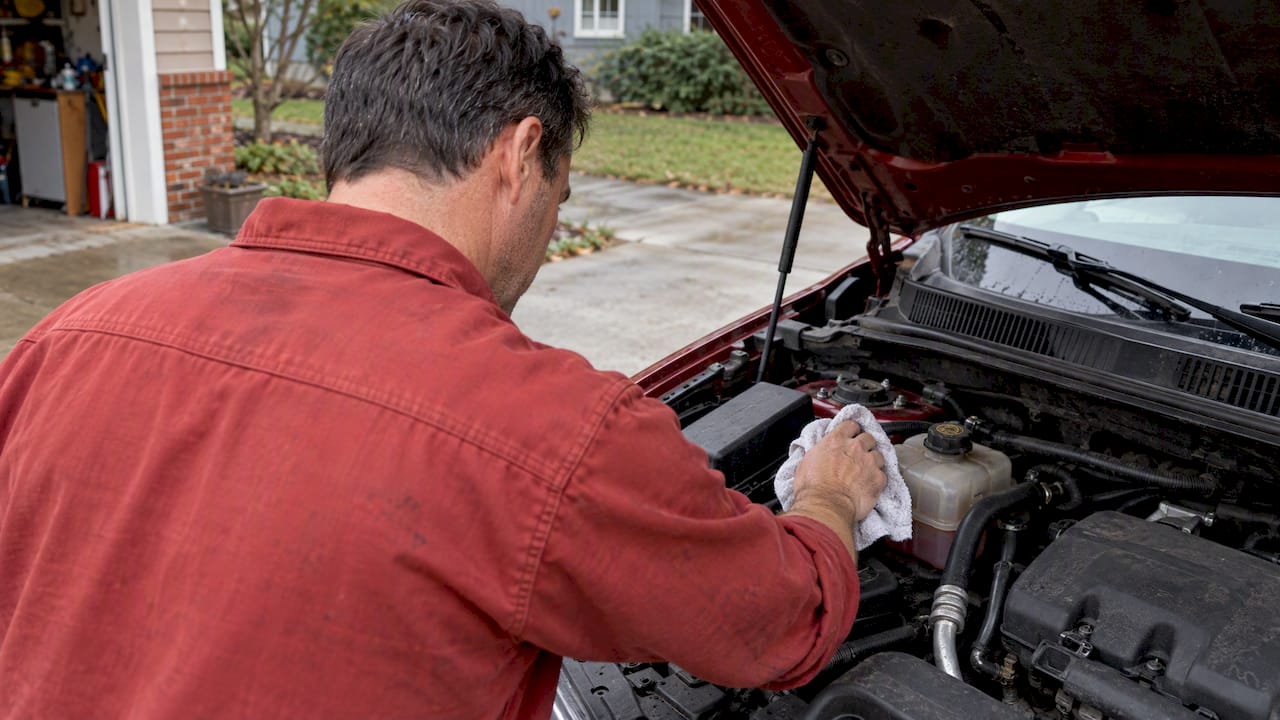
Pro Tip: Wipe suspect areas clean with a rag when the engine is cold, drive for a day, then look again. Fresh residue on a clean spot tells you exactly where to focus.
Can an internal leak or head gasket explain the loss?
Yes, and it is the one most owners fear. A failed head gasket or a cracked head can let coolant slip into a combustion chamber, where it burns off, or into the oil. No coolant ever touches the ground, which is why internal leaks fool people who only watch the driveway.
Watch for these signs:
- Persistent white exhaust smoke with a sweet smell, even after the engine is fully warm
- Milky or frothy oil on the dipstick or under the filler cap
- Bubbles rising in the coolant reservoir while the engine runs
- Misfires, a rough idle or overheating that has no other explanation
Repeated overheating makes the damage worse. RAC Drive notes that repairs range from simple hose replacement up to head-gasket work, and that continued overheating accelerates the damage.
If you find no external leak at all, How a Car Works points to a damaged head gasket or cracked head or block as the next suspect, and suggests pressure testing. You cannot confirm an internal leak by eye, so it needs shop-level testing. Our post on the engine compression test covers one related check.
Could the radiator cap or a bad fill be the culprit?
Often, and these are the cheapest fixes. A cap that opens below its rated pressure lets coolant escape to the overflow hose, where it evaporates. A mechanics forum thread on a vanishing reservoir describes exactly this, along with trapped air that drains the reservoir as the thermostat opens and the system fills.
- Let the engine cool completely, then inspect the cap seal for cracks or a flattened gasket.
- Replace the cap with the exact rating for your vehicle if it looks worn.
- Trace the overflow hose from the cap neck to the reservoir and check for kinks, splits or blockages.
- Refill with the correct coolant mix and bleed trapped air using the procedure for your model.
Pro Tip: Keep the cap’s pressure rating, usually stamped on top, in your phone notes so you never buy the wrong one.
What tests do professionals use to find hidden coolant loss?
Shops work through a sequence so nobody guesses. Safety comes first: do not open the cap or reservoir while the system is hot or pressurized, because hot coolant can cause severe burns. If you are unsure whether it is safe, have a professional handle it.
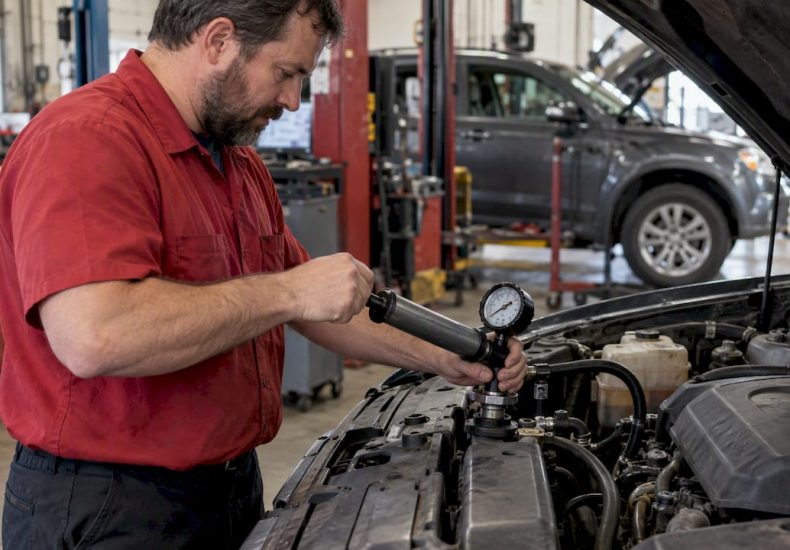
- Cooling-system pressure test: a hand pump pressurizes the system so leaks that only open under pressure or heat show themselves. AutoZone calls the pressure tester a key tool for locating hidden leaks.
- Combustion-gas analysis: a chemical or electronic check of the coolant vapor for exhaust gas, which confirms a head-gasket breach.
- Visual inspection: technicians look for dried residue, water-pump weep hole stains and heater-core clues.
- Oil and exhaust checks: milky oil or constant white smoke often point to an internal leak.
| Finding | What it commonly suggests |
|---|---|
| Pressure drops, wet spot appears | External leak at hose, radiator, pump or housing |
| Pressure holds, exhaust gas in coolant | Head gasket or cracked head |
| Cap fails to hold rated pressure | Replace the radiator cap |
| Milky oil on dipstick | Coolant entering the oil passages |
| Damp carpet, sweet cabin smell | Heater core leak |
Our Check Engine Light diagnostics use professional-grade OBD-II scanning as part of this workflow, since misfire codes can support what the physical tests find.
What can I safely check at home first?
You can gather good evidence before booking. Keep it low risk and only work on a cold engine.
- Check the reservoir when the engine is cold and note the level against the MIN and MAX marks.
- Top it off with the correct 50/50 mix, write down the amount, and record the date and mileage.
- Recheck every few days and note how fast the level drops.
- Look under the hood for dried residue, and sniff for a sweet smell inside the cabin.
- Pull the dipstick and the oil filler cap and look for a creamy or milky film.
- Inspect the radiator cap and overflow hose for cracks or blockages.
Other drivers have also written up practical step-by-step leak checks that add a few useful inspection points. AAA says repeated low readings mean there is a leak or fill problem that needs diagnosing, not endless topping off.
Pro Tip: A simple log of how much you add and how often turns a vague worry into a number a technician can use immediately.
Radiator sealant or a hose strap can buy a little time, but treat them as short-term measures only. If the temperature gauge climbs, stop driving.
When should I stop DIY and see a professional?
Stop when your own checks stop producing answers, or when any of these red flags appear:
- The level keeps falling after you replaced the cap and checked the hoses
- White exhaust smoke that does not clear when the engine is warm
- Milky or contaminated oil
- Repeated overheating or a temperature gauge that spikes
- Bubbles in the reservoir while the engine runs
AutoZone advises that if coolant stays low despite topping up, a professional should diagnose the problem. A shop will typically run a pressure test, a combustion-gas test, a dye check and a focused look at weep holes and heater-core paths.
Repairs depend on the finding. They run from a new cap or hoses, to water-pump repair or heater-core replacement, to head-gasket and engine work. Urgency rises as you move down that list, and waiting makes the bigger repairs more likely. Our guide to replacing a water pump shows what that repair involves.
Why does early testing save money?
We would rather test than guess. A methodical sequence of checks can help identify the fault and avoid replacing parts you do not need. When you call, tell us how much coolant you have been adding and how often, and bring your notes. Ask us about the warranty terms for your repair, so you know what coverage applies.
— Shingi
Book a cooling-system diagnosis with our shop
If you would rather hand this to a trained technician, we provide diagnostics and repair services in Lynnwood, including radiator and engine repair. Our ASE-certified technicians work on all makes, including European and hybrid vehicles, and appointments may be available soon.

Call or book a cooling-system diagnosis with us and bring your coolant log so we can investigate the coolant loss. We also offer a cooling system flush and engine repair in Lynnwood when the diagnosis calls for it.
FAQ
Why is my coolant level dropping without a leak?
The coolant is usually evaporating from a small external leak, burning inside the engine through a head gasket problem, or being pushed out by a weak cap. Trapped air after a refill can also make the reservoir fall. Because the cause is rarely visible, a pressure test is the fastest way to find it.
Can coolant drain without a leak?
It can disappear without a puddle, yes. Many leaks only open when the system is hot and pressurized, and the coolant evaporates off hot engine parts before it drips. Look for dried residue, a sweet smell or crusty traces around hoses and the water pump.
Does losing coolant mean head gasket?
Not necessarily. A head gasket is one possibility, but a bad cap, a hose seep or a weeping water pump are more common and cheaper to fix. White exhaust smoke, milky oil and bubbles in the reservoir make a head gasket more likely.
Is it safe to keep topping off the coolant?
Only briefly, and only on a cold engine. AAA advises identifying the cause before topping off repeatedly. If the level keeps falling, get it diagnosed before it leads to overheating.
Sources
Recommended
- What Is Engine Coolant and Why Your Car Needs It
- 6 Checks to Document a Steering Rack Leak Before You Visit a Shop – Tom’s B & M Auto Blog
- Drivers: Document an Oil Leak in 10 Minutes After an Oil Change – Tom’s B & M Auto Blog
- Power Steering Fluid Leak: EPS vs Hydraulic Checks and $15–$200 Costs – Tom’s B & M Auto Blog
Leave a Reply