
2–3 Years? OEM Schedules and Tests Set Brake Fluid Change for Drivers
Most automakers call for a brake fluid change every 2 to 3 years, though the exact number depends on your vehicle’s specific maintenance schedule. That said, the calendar isn’t the whole story. A soft brake pedal, an illuminated ABS light, or a visible leak means you inspect the system now, regardless of when the fluid was last changed. Fluid testing for water content and boiling point can also tell you to flush sooner than the schedule suggests.
TL;DR:
- Brake fluid should be tested for water content and boiling point before the scheduled change, especially in severe driving conditions or high-humidity climates.
- Manufacturer recommendations vary, with Honda advocating replacement every 2 to 3 years, Nissan suggesting 12 to 24 months under severe use, and Toyota relying on inspection-based decisions.
- Warning signs like a soft or spongy pedal, dashboard warning lights, or dark, contaminated fluid indicate an urgent need for inspection and possible fluid replacement.
- Flushing replaces all hydraulic fluid and is based on test results, while bleeding only removes trapped air after repairs, making it crucial to distinguish between the two.
- For high-mileage or used vehicles with no history, testing the fluid’s condition is essential before deciding whether a flush is necessary.
Table of Contents
- What Manufacturers Actually Say About Brake Fluid Change Intervals
- Signs Your Brake Fluid Needs Changing Right Now
- Brake Fluid Flush vs. Bleed: What’s the Difference
- Special Cases: Hybrids, Towing, and Severe Driving Conditions
- How We Decide When a Brake Fluid Flush Is Actually Needed
- Get Your Brake Fluid Checked at Tom’s B & M Auto in Lynnwood
- Sources
- FAQ
What Manufacturers Actually Say About Brake Fluid Change Intervals
Owner’s manuals don’t agree with each other on this, and that’s by design. Each automaker tests its own brake components, fluid formulation, and climate assumptions, then builds a schedule around that specific hardware.
Honda’s service literature is among the most straightforward in the industry. Several Honda manuals instruct owners to replace brake fluid every 2 to 3 years, with some documents citing a flat 3 year rule tied to mileage. Nissan takes a more conditional approach. Its published maintenance schedules range from 24 months or 30,000 miles under normal use down to 12 months or 15,000 miles for vehicles driven under severe conditions. Toyota leans toward inspection over a fixed calendar date. Its dealer maintenance guides call for checking fluid condition at regular service visits and letting that inspection, not just elapsed time, drive the replacement decision.
None of these examples override your specific vehicle. Whatever your Maintenance Minder system or printed owner’s manual says for your exact year, make, and model is the number that matters.
| Manufacturer | Typical Interval | Source Document |
|---|---|---|
| Honda | 2 to 3 years (or 30,000 miles in some models) | Honda owner manual |
| Nissan | 12 to 24 months, 15,000 to 30,000 miles depending on use | Nissan maintenance schedule |
| Toyota | Inspection-based, replace as dealer service recommends | Toyota maintenance guide |
If your car isn’t listed here, the logic still applies: check the document written for your specific vehicle before defaulting to a generic rule you saw online.
Signs Your Brake Fluid Needs Changing Right Now
A scheduled interval is a planning tool. A warning sign on the dashboard or under your foot is a different kind of message, and it overrides the calendar every time.
Watch for these signals:
- A soft or spongy pedal that sinks farther than usual before the brakes engage.
- A sudden change in how the brakes feel, especially after driving through deep water or a long downhill grade.
- An illuminated ABS or brake warning light on the dashboard.
- Visible fluid drips near the wheels or under the master cylinder.
- Fluid that looks dark brown or black instead of its normal light amber or clear color.
Each of these points to a real mechanical issue. A soft pedal usually means air has entered the lines or the fluid has absorbed enough water to compress under heat, both of which reduce how much stopping force reaches the wheels. Dark, contaminated fluid corrodes internal components over time and lowers the temperature at which it starts to boil, according to HowStuffWorks. A leak means fluid volume is dropping, which can lead to brake failure if ignored.
If you notice any of these, stop treating brake performance as routine. Get the system inspected before your next drive, and bring whatever service records you have. A shop with your prior invoices can tell in minutes whether you’re looking at a scheduled flush or something more urgent, like a failing caliper or worn line.
Brake Fluid Flush vs. Bleed: What’s the Difference
These two terms get used interchangeably, and that mix-up leads to a lot of confused customers at the service counter.
A flush, sometimes called a fluid change, replaces essentially all of the fluid in the hydraulic system. It’s the service that addresses aged, water-contaminated fluid on a time or condition based schedule. Bleeding, by contrast, removes trapped air from the lines after brake work like a caliper replacement or pad job. You bleed brakes after a repair; you flush fluid because it’s old or tested poorly, as HowStuffWorks explains. For a closer look at the mechanics, our guide to what brake bleeding actually does breaks down the process step by step.
What actually determines whether a flush is due isn’t guesswork. Three measurable factors matter:
- Water content. Brake fluid is hygroscopic, meaning it absorbs moisture from the air over time, which lowers its boiling point.
- Wet boiling point. HELLA’s technical guidance treats this as the clearest sign of degraded fluid, since a lower boiling point means brake fade risk under hard stops.
- Visual discoloration. Fluid that’s turned brown or cloudy has usually picked up contamination or degraded additives.
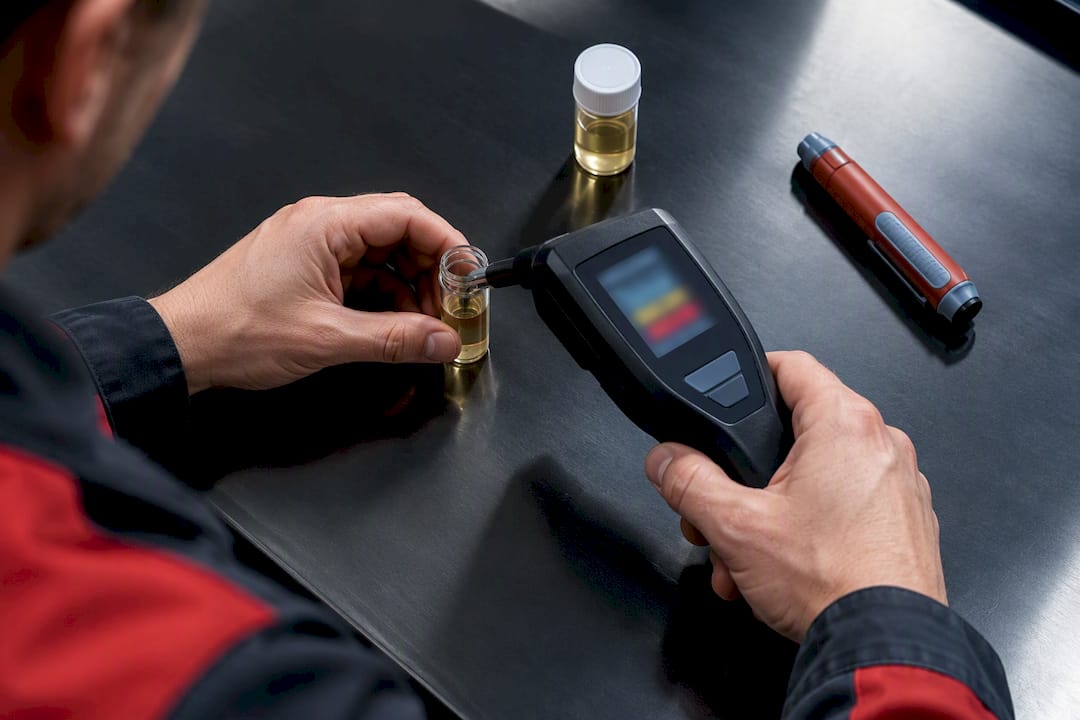
Shops test these with handheld moisture meters or boiling point testers rather than relying on the odometer alone. Gravity bleeding, pressure bleeding, and machine flushing all push fluid through differently, but the decision to do it should rest on test results, not just a date on a sticker.
Pro Tip: If you suspect your fluid is contaminated, specifically ask for a wet boiling point or moisture content test before agreeing to a flush. It takes a few minutes and gives you an actual number instead of a guess.
Special Cases: Hybrids, Towing, and Severe Driving Conditions
Regenerative braking on hybrids reduces how often your friction brakes physically engage, but it doesn’t stop moisture from creeping into the fluid over time. Honda’s own Maintenance Minder guidance for hybrid models still includes scheduled brake-fluid inspection, because the fluid degrades from age and humidity exposure regardless of how often the pads actually touch the rotors.
Several driving patterns shorten the safe interval below the standard OEM number:
- Frequent towing or hauling heavy loads, which raises brake system temperatures.
- Regular mountain or steep-grade driving, where sustained braking heats fluid repeatedly.
- Track days or aggressive driving, which pushes fluid toward its boiling point more often.
- High humidity or coastal, salty climates, which accelerate moisture absorption and corrosion.
If you’ve bought a used car with no service history, don’t guess. Test the fluid’s condition and follow the maintenance approach for high-mileage or unknown-history vehicles rather than assuming it was ever changed at all.
How We Decide When a Brake Fluid Flush Is Actually Needed
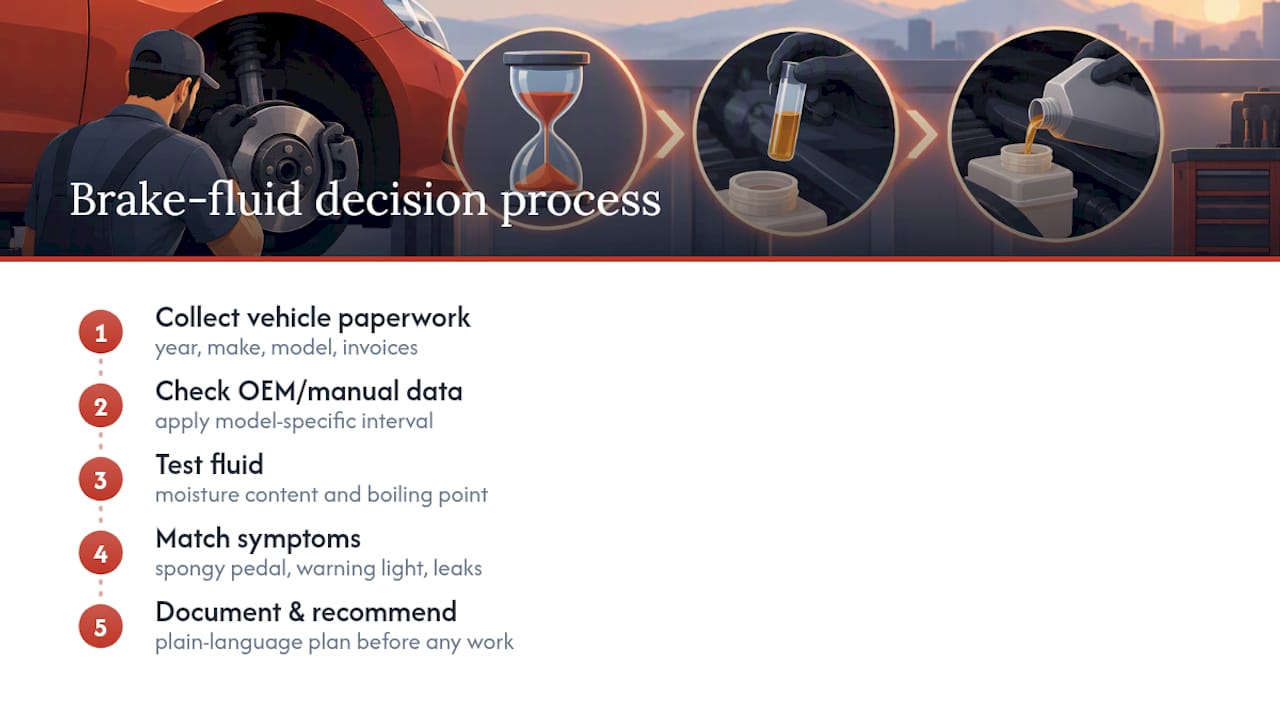
Our approach starts with your vehicle’s own paperwork, not a generic rule of thumb. We pull the owner’s manual or Maintenance Minder data for your exact model, then test the fluid for moisture content and boiling point. From there we match what we find against any symptoms you’ve described, spongy pedal, warning light, leak, and document the recommendation in plain language before any work begins.
Bring your vehicle’s year, make, and model along with any prior service invoices. That paperwork lets us apply the right interval instead of a one-size-fits-all number. This family-owned and operated repair shop in Lynnwood is staffed by ASE-certified technicians, with a warranty on many repairs.
— Shingi
Get Your Brake Fluid Checked at Tom’s B & M Auto in Lynnwood
This shop provides actual fluid condition testing before recommending a flush, checks warning signs like a soft pedal or dashboard light, and handles bleeding after repairs, with same-day service often available.
During a typical appointment, our technicians pull your vehicle-specific schedule, test the fluid for moisture and boiling point, and walk you through what the numbers mean before recommending anything. You leave with a written summary of what was checked and what, if anything, needs attention.
| What You Get | Detail |
|---|---|
| Diagnostic testing | Fluid condition check before any flush is recommended |
| Warranty | 24 months on all completed work |
| Documentation | Written summary of findings and service performed |
| Scheduling | Same-day appointments often available |
If your pedal feels off or it’s simply been a few years since your last check, book a brake repair appointment with Tom’s B & M Auto in Lynnwood and get a straight answer instead of a guess.
Sources
FAQ
How Often Does Brake Fluid Really Need to Be Changed?
Most owner’s manuals call for a change every 2 to 3 years, though Nissan’s condition-based schedules show it can be as short as 12 months under severe driving. Your specific owner’s manual always takes priority over a general rule.
Is It Necessary to Change Brake Fluid Every 2 Years?
Two years is a common reference point, not a universal law that applies to every vehicle. Check your owner’s manual first, and consider a moisture or boiling point test if the fluid looks discolored or the pedal feels different, since HELLA’s guidance treats those measurements as more reliable than time alone.
What Happens if I Don’t Change Brake Fluid?
Old fluid absorbs moisture, which lowers its boiling point and can cause the brakes to feel soft or fade under hard stops. It also corrodes internal components over time, and in the worst cases contributes to brake failure, according to HowStuffWorks.
Can Brake Fluid Last 5 Years?
It’s possible in low-humidity climates with light driving, but it’s not something to count on without testing. If you suspect your fluid has gone that long without service, have it tested for water content and boiling point at a shop like Tom’s B & M Auto rather than assuming it’s still fine.
Recommended
- How to Service a European Vehicle Brake System
- Brake System Components Checklist: Your Safety Guide
- How Long Does a Brake Job Take? Real Time Ranges
- What Is Brake Bleeding? A Car Owner’s Guide
Leave a Reply