
What Is a Tune-Up? A Car Owner’s Clear Guide
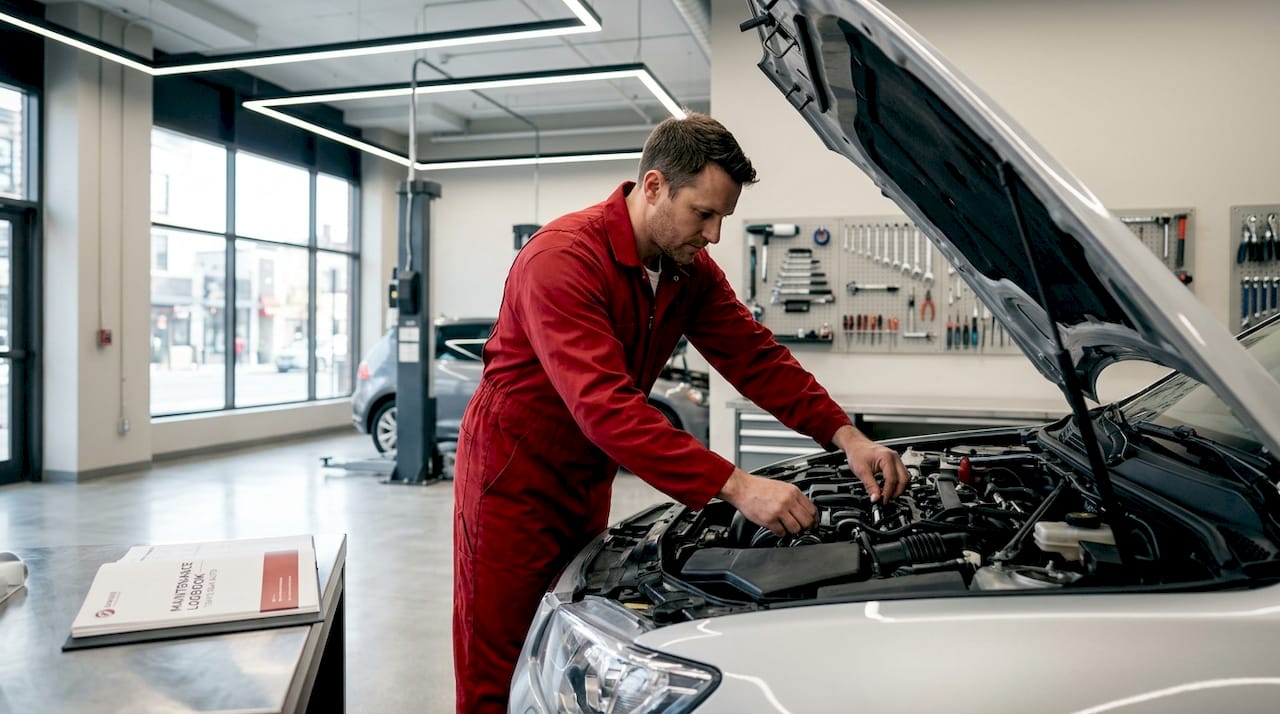
A tune-up is a preventive maintenance service designed to restore a vehicle’s peak operating efficiency by inspecting, adjusting, and replacing worn components before they cause bigger problems. Merriam-Webster defines “tune-up” as a general adjustment to ensure operation at peak efficiency, which maps directly to what a modern shop visit actually involves. The term itself is a legacy label, carried over from an era when carbureted engines needed frequent ignition timing corrections. Today, a tune-up at a shop like Tom’s B & M Auto means something far broader: a diagnostics-driven maintenance visit tailored to your specific vehicle’s mileage, condition, and symptoms.
What does a modern car tune-up include?
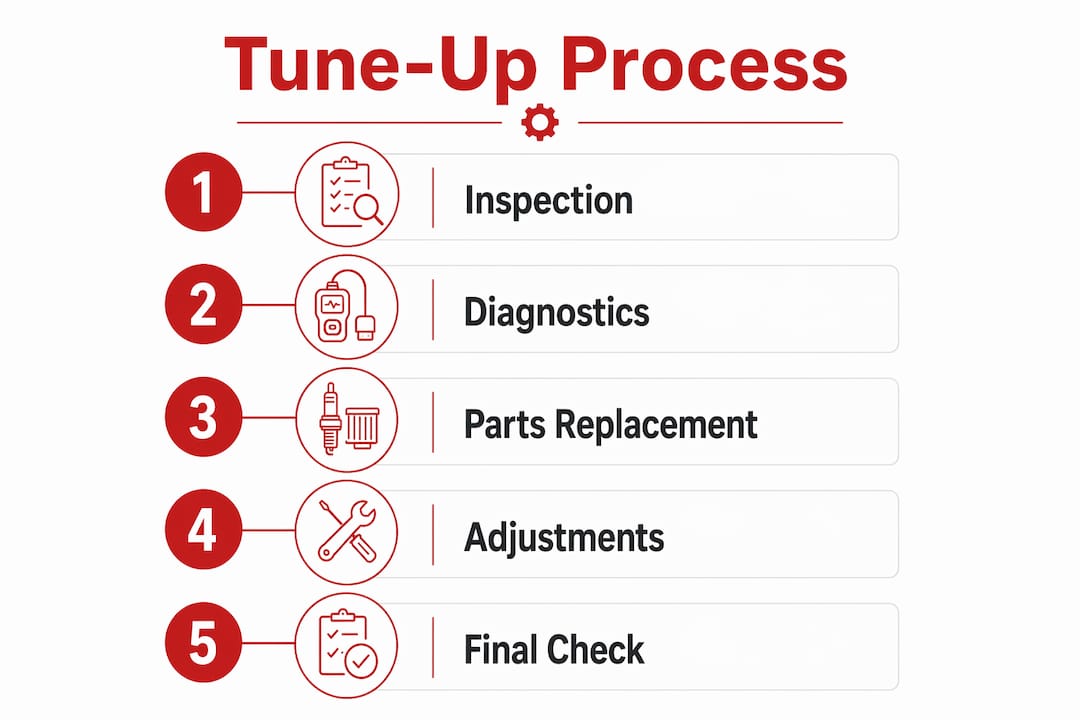
The short answer is that no two tune-ups are identical. A tune-up-style service is customized to what your vehicle actually needs, not a fixed checklist applied to every car that rolls through the door. That said, most shops work through a core set of items during a standard visit.
Here is what a typical car tune-up service covers:
- Spark plug inspection or replacement. Worn spark plugs cause misfires, rough idling, and poor fuel economy. Most modern iridium or platinum plugs last 60,000 to 100,000 miles, but they still need to be checked.
- Air filter replacement. A clogged air filter starves the engine of oxygen, reducing combustion efficiency and increasing fuel consumption.
- Fuel filter service. Dirty fuel filters restrict flow to the injectors, which shows up as hesitation or hard starting.
- Oil and oil filter change. Fresh oil reduces friction and removes contaminants. A full oil change service goes well beyond what a basic tune-up used to cover.
- Belts and hoses inspection. Cracked serpentine belts or swollen coolant hoses are failure points that a tune-up catches before they strand you.
- Battery and charging system check. A weak battery or failing alternator will not always trigger a warning light until it is too late.
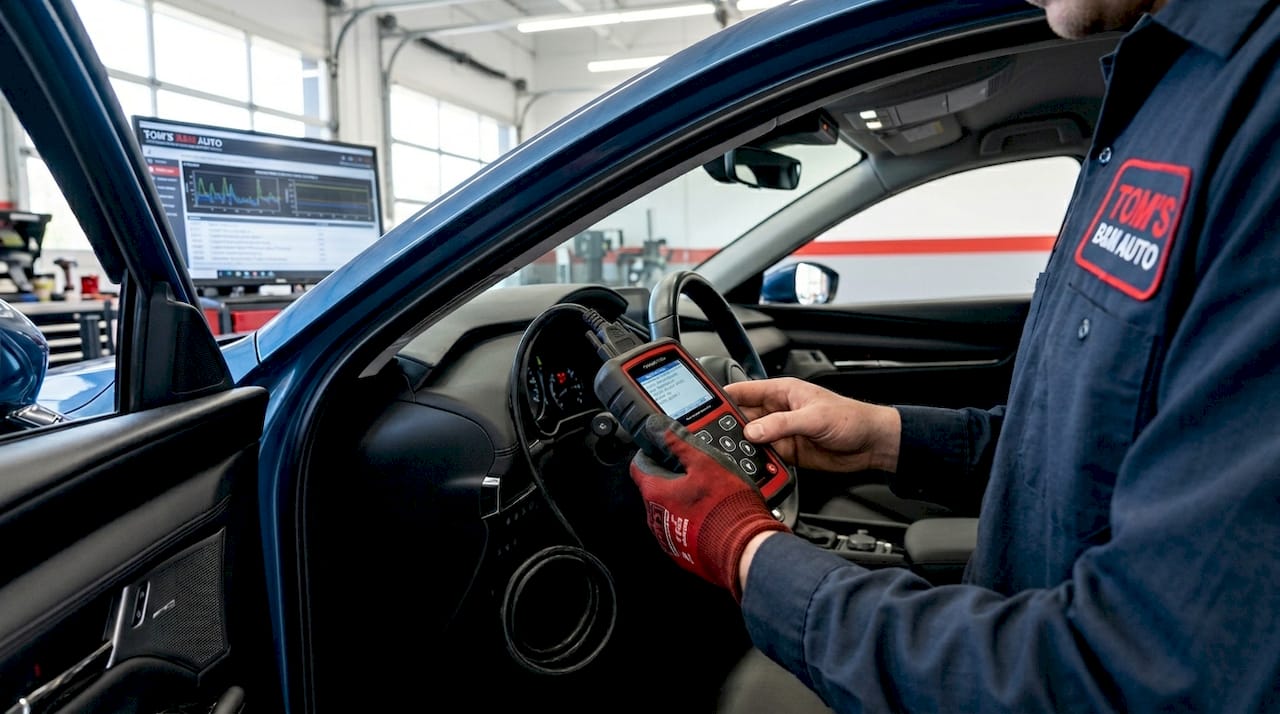
- OBD-II diagnostic scan. Modern shops plug into the vehicle’s onboard computer to read fault codes and pending issues invisible to the naked eye.
- Fluid level checks. Coolant, brake fluid, power steering fluid, and transmission fluid are all reviewed.
- Tire pressure and tread inspection. Often included as part of a safety review during the visit.
The scope varies by vehicle type, mileage, and what symptoms you report. Recommended work changes based on the car’s age, how it has been driven, and what the diagnostic scan reveals.
Pro Tip: Before your appointment, write down any symptoms you have noticed, such as rough idling, hesitation on acceleration, or a drop in fuel economy. Sharing that list with your technician helps them focus the inspection and avoid recommending parts you do not need.
How has the tune-up meaning changed with modern vehicles?
The traditional tune-up, as practiced through the 1970s and into the 1980s, was a specific procedure. Technicians adjusted ignition timing manually, set the carburetor’s air-to-fuel mixture, replaced points and condensers in the distributor, and installed new spark plugs every 12,000 to 15,000 miles. It was hands-on, frequent, and necessary because the technology demanded it.
Three developments made that version of the tune-up obsolete:
- Electronic ignition systems replaced mechanical distributors, eliminating the need for timing adjustments and point replacements entirely.
- Fuel injection replaced carburetors, removing the need for manual mixture tuning. The engine control module handles that automatically.
- Long-life spark plugs extended replacement intervals from 15,000 miles to 60,000 or even 100,000 miles, reducing one of the most frequent tune-up tasks.
The result is that electronic ignition and onboard diagnostics have automated most of what a traditional tune-up corrected manually. Today’s tune-up is better described as a scheduled preventive maintenance visit with a diagnostic component. The word “tune-up” persists because it is familiar, not because it accurately describes the service.
“Tune-up is a legacy term now generally used to describe a bundle of routine maintenance tasks. Owners should ask what their vehicle specifically requires.” — AutoZone Tune-Up Guide
This distinction matters for you as a car owner. If a shop quotes you a “tune-up” without specifying what is included, ask for an itemized list. A legitimate shop starts with a diagnostic scan and inspection, then recommends only what the vehicle actually needs. Shops interpret “tune-up” as preventive maintenance plus diagnostics, customized per vehicle condition, not a fixed package.
Pro Tip: Pull out your owner’s manual and look at the manufacturer’s maintenance schedule before calling a shop. It tells you exactly which services are due at your current mileage, giving you a baseline to compare against any quote you receive.
Why are tune-ups important for vehicle performance and longevity?
Skipping scheduled maintenance does not save money. It defers costs while allowing small problems to compound into expensive repairs. A tune-up catches those problems at the inspection stage, when fixing them is still cheap.
The concrete benefits of a tune-up include:
- Better fuel economy. Fresh spark plugs, a clean air filter, and properly inflated tires can measurably improve miles per gallon. A misfiring cylinder alone can drop fuel efficiency by several percentage points.
- Reduced emissions. A well-tuned engine burns fuel more completely, producing fewer hydrocarbons and carbon monoxide. This matters for emissions testing in states like Washington.
- Early detection of costly failures. A belt inspection during a tune-up that catches a cracked serpentine belt costs a fraction of the tow and repair bill if that belt snaps on the highway.
- Improved safety. Brake fluid checks, tire inspections, and battery tests directly affect your ability to stop and start reliably.
- Extended engine life. Clean oil, properly gapped spark plugs, and unobstructed air flow reduce wear on internal engine components over time.
- Maintained resale value. A documented service history, including regular tune-up visits, supports a higher resale price and builds buyer confidence.
Following manufacturer-specific service schedules rather than generic checklists produces better outcomes because the intervals are engineered for your specific engine, not averaged across all vehicles. A Toyota Camry with a 2.5-liter four-cylinder has different maintenance needs than a Subaru Outback with a 2.5-liter boxer engine, even though both are common vehicles in the Lynnwood area.
How often should you get a tune-up?
The honest answer is that there is no single correct interval. The right schedule depends on your vehicle’s age, mileage, driving conditions, and what your manufacturer recommends.
| Approach | Trigger | Best for |
|---|---|---|
| Manufacturer schedule | Specific mileage or time intervals in the owner’s manual | All vehicles, especially under warranty |
| Condition-based | OBD-II fault codes, warning lights, or noticeable symptoms | Older vehicles or those with irregular use |
| Annual inspection | Once per year regardless of mileage | Low-mileage drivers or vehicles sitting for long periods |
| High-mileage interval | Every 30,000 miles for comprehensive review | Vehicles over 100,000 miles |
Most modern vehicles with iridium spark plugs and synthetic oil can go 30,000 miles or more between major tune-up visits. However, annual inspections still make sense because time degrades rubber hoses, belts, and battery terminals even when mileage is low. Tune-up costs vary widely, from under $100 for a basic inspection to $800 or more for a comprehensive service with multiple parts replacements. Knowing what is due before you walk in prevents overpaying.
Driving conditions also shift the schedule. Stop-and-go city driving, towing, extreme cold, or frequent short trips all accelerate wear on filters, spark plugs, and fluids. If your daily commute in Lynnwood involves a lot of idling or cold starts, your maintenance intervals should be shorter than the manual’s “normal conditions” recommendation.
Pro Tip: Describe your driving habits to your technician, not just your mileage. Short trips under five miles, frequent towing, or driving in dusty conditions all qualify as “severe service” in most owner’s manuals, which calls for shorter maintenance intervals.
A free digital vehicle inspection is the most practical way to establish a baseline if you are unsure where your vehicle stands. It gives you a documented starting point without committing to any specific service.
Key takeaways
A tune-up is a diagnostics-driven preventive maintenance visit that replaces only what your vehicle actually needs, not a fixed checklist applied to every car.
| Point | Details |
|---|---|
| Modern tune-up definition | A tune-up is a customized maintenance visit covering diagnostics, inspections, and targeted part replacements. |
| What it includes | Spark plugs, filters, belts, battery, fluids, and an OBD-II scan are standard review items. |
| How often to schedule | Follow your manufacturer’s schedule, but inspect annually regardless of mileage. |
| Tune-up vs. oil change | An oil change is one component of a tune-up, not a substitute for the full service. |
| Communication matters | Sharing symptoms and maintenance history with your technician prevents unnecessary parts replacements. |
Why I think most drivers misread what a tune-up actually is
After years of watching car owners walk into shops confused about what they are actually paying for, the pattern is clear. Most people either expect a tune-up to fix everything or assume it is just a glorified oil change. Both assumptions cost them money.
The shops that serve drivers well are the ones that start with a diagnostic scan and an honest conversation, not a laminated menu of packages. When a technician at Tom’s B & M Auto pulls fault codes before touching a single part, that is not extra work. That is the correct sequence. It means you pay for what your car needs, not what a package assumes every car needs.
The other mistake I see regularly is drivers waiting for a warning light before scheduling service. Warning lights are late signals. By the time your check engine light triggers, the condition causing it has often been building for weeks. A check engine light review is a starting point, not a replacement for proactive maintenance.
My practical advice: treat your owner’s manual as the authority on intervals, use your technician’s diagnostic results as the guide for what to replace, and describe every symptom you have noticed, no matter how minor. A rough idle at cold start, a slight hesitation at highway speeds, or a battery that seems slow to crank are all useful data points. The more context you provide, the more targeted and cost-effective your service will be.
Drivers who follow manufacturer-backed maintenance tips and communicate clearly with their technicians consistently get more miles out of their vehicles at lower total cost. That is not a coincidence.
— Shingi
Get a tune-up you can trust at Tom’s B & M Auto
Tom’s B & M Auto has served Lynnwood, Kenmore, Shoreline, and Mountlake Terrace drivers since 1985. ASE-certified technicians use professional-grade OBD-II diagnostics to identify exactly what your vehicle needs before recommending any service. There are no broad packages applied blindly. Every visit starts with an inspection and ends with upfront pricing. If your vehicle is due for a tune-up or you have noticed a drop in performance, schedule with a team that has been doing this for over 40 years. Tom’s B & M Auto offers engine repair in Kenmore, engine service in Mountlake Terrace, and engine repair in Shoreline, with a 24-month/24,000-mile warranty on all work. Same-day appointments are often available.
FAQ
What is a tune-up in simple terms?
A tune-up is a preventive maintenance visit where a technician inspects, adjusts, and replaces worn components to restore your vehicle’s performance and efficiency. The term covers a range of services rather than one specific procedure.
What does a tune-up include for a modern car?
A modern tune-up typically includes an OBD-II diagnostic scan, spark plug service, air and fuel filter replacement, belt and hose inspection, battery check, and fluid level review. The exact services depend on your vehicle’s mileage, age, and any symptoms you report.
How often should you get a tune-up?
Most modern vehicles need a comprehensive tune-up review every 30,000 miles, with an annual inspection recommended regardless of mileage. Your owner’s manual’s maintenance schedule is the most reliable guide for your specific vehicle.
Is a tune-up the same as an oil change?
No. An oil change is one item that may be included in a tune-up, but a tune-up covers diagnostics, filters, spark plugs, belts, battery, and more. A tune-up is more comprehensive than a single-fluid service.
How much does a tune-up cost?
Tune-up costs range from under $100 for a basic inspection to $800 or more for a full service with multiple parts replacements. Costs vary based on vehicle make, model, and the specific services performed, so always request an itemized quote.
Recommended
- Transmission Service in Kenmore, WA | Tom’s B&M Auto
- Oil Change in Mountlake Terrace, WA | Tom’s B&M Auto
Leave a Reply