
What Is Brake Bleeding? A Car Owner’s Guide
Your brake pedal shouldn’t feel like a sponge. If it sinks further than usual before the car slows down, trapped air in your brake lines is almost certainly the cause. Brake bleeding, known formally as hydraulic brake system purging, is the process of removing air bubbles and old fluid from your brake lines to restore firm, reliable pedal feel. Understanding what is brake bleeding, why it matters, and when to do it can be the difference between confident stopping power and a genuinely dangerous situation on the road.
Table of Contents
- Key Takeaways
- What brake bleeding does and why it matters
- Brake bleeding methods and the tools you need
- How to bleed brakes at home, step by step
- ABS vehicles and master cylinder bench bleeding
- My honest take on brake bleeding mistakes
- Get your brakes professionally serviced at Bandmautocare
- FAQ
Key Takeaways
| Point | Details |
|---|---|
| Air ruins brake feel | Even a small air bubble in brake lines causes a spongy pedal and reduces stopping power. |
| Bleeding also flushes old fluid | The process removes moisture-contaminated fluid that degrades braking performance over time. |
| Method depends on your vehicle | Manual, vacuum, and scan-tool-assisted bleeding each suit different vehicles and skill levels. |
| ABS vehicles need special care | Modern ABS-equipped cars often require a scan tool to fully purge air from the pump and valves. |
| Every two years is the standard | Most manufacturers recommend bleeding brake fluid every two years to maintain safe, responsive brakes. |
What brake bleeding does and why it matters
Your brake system is hydraulic. When you press the pedal, brake fluid transmits that force through lines to the calipers at each wheel, which then clamp the rotors and slow the car. The whole system depends on one physical fact: brake fluid is incompressible, meaning it transfers force without any give. Air is not incompressible. It compresses under pressure, so when air enters the lines, some of your pedal force goes into squeezing that air bubble instead of clamping the brakes. The result is a soft, spongy pedal that travels too far before anything happens.
That is the most visible symptom, but it is not the only problem. Brake fluid absorbs moisture from the atmosphere over time, which lowers its boiling point. Under hard braking, that moisture can vaporize and create gas bubbles inside the lines, causing a sudden, dramatic loss of braking force. This is called brake fade, and it can happen without any warning.
Brake bleeding is not just about removing air. It also flushes out contaminated fluid that silently degrades your brake system, even when the pedal still feels normal.
There is a third issue that gets overlooked. Old brake fluid carries dissolved corrosion byproducts that attack the metal components inside your calipers, master cylinder, and ABS unit. Flushing old fluid removes those contaminants and extends the life of expensive brake hardware. So the brake bleeding process is really doing three jobs at once: removing air, removing moisture, and removing debris.
Brake bleeding methods and the tools you need
Not every method works for every situation. Here is a comparison of the three most common approaches:
| Method | Best for | Tools needed | Skill level |
|---|---|---|---|
| Manual two-person | Most vehicles, any budget | Wrench, clear hose, catch bottle | Beginner |
| Vacuum bleeding | One-person jobs, tight schedules | Vacuum pump kit | Intermediate |
| Scan-tool assisted | ABS-equipped vehicles | OBD-II scan tool, vacuum pump | Professional |
Manual two-person bleeding
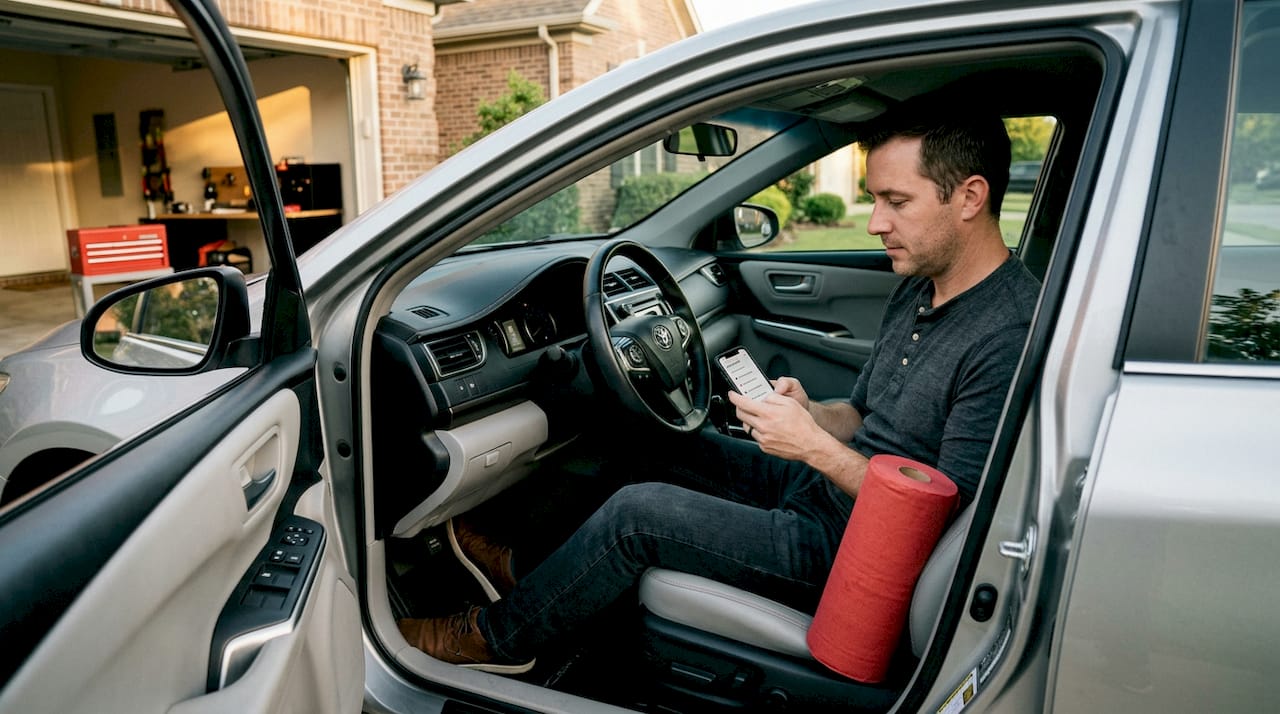
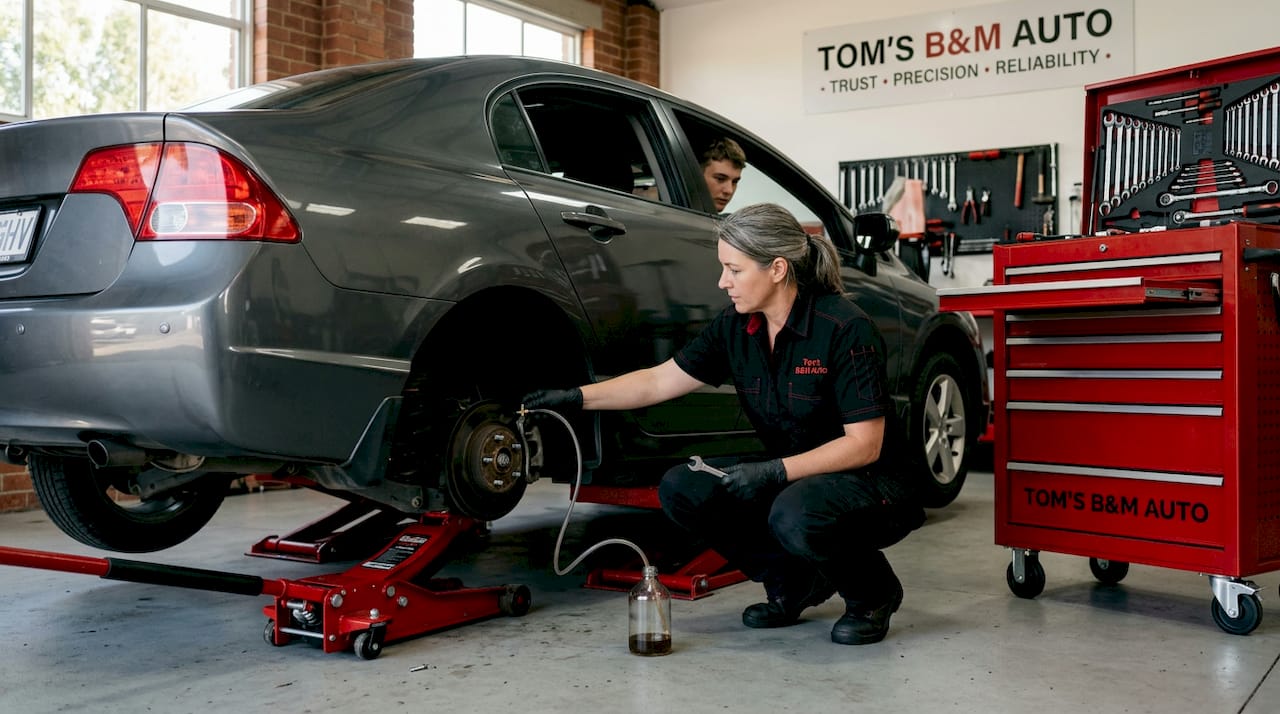
This is the most reliable method for most car owners. One person sits in the driver’s seat pumping the pedal, while the other operates the bleeder valves at each wheel. The pumper presses the pedal three to four times and holds it down, the second person cracks open the bleeder valve to let fluid and air escape, then closes it before the pedal is released. Repeat until clean, bubble-free fluid flows out. The tools are simple: a box-end wrench sized for your bleeder screws, clear vinyl tubing, and a catch bottle.
Vacuum bleeding
A vacuum pump attaches to the bleeder valve and pulls fluid through the system without anyone pumping the pedal. It sounds ideal for solo work, and it often is. The catch is that vacuum bleeding can pull air through bleeder screw threads if they are not perfectly sealed, creating bubbles in the catch bottle that have nothing to do with air inside your brake lines. You can chase those false readings for an hour thinking the system is still contaminated when it is actually fine.
Pro Tip: When vacuum bleeding, apply a small amount of thread sealant or Teflon tape around the bleeder screw threads before attaching the hose. This eliminates false air bubble readings and gives you an accurate picture of what is actually inside the lines.
Scan-tool assisted bleeding
If your car has ABS, the hydraulic pump and solenoid valves inside the ABS unit can trap air that gravity and pedal pressure alone cannot reach. ABS systems require a scan tool to cycle the pump and valves electronically, which forces fluid through every passage and pushes out trapped air. Skipping this step on an ABS vehicle often leaves a slightly soft pedal even after a thorough manual bleed. This is where professional service pays for itself.
How to bleed brakes at home, step by step
Before you start, confirm you have the right brake fluid type for your vehicle. It is printed on the master cylinder reservoir cap. Using the wrong type can damage seals and contaminate the system.
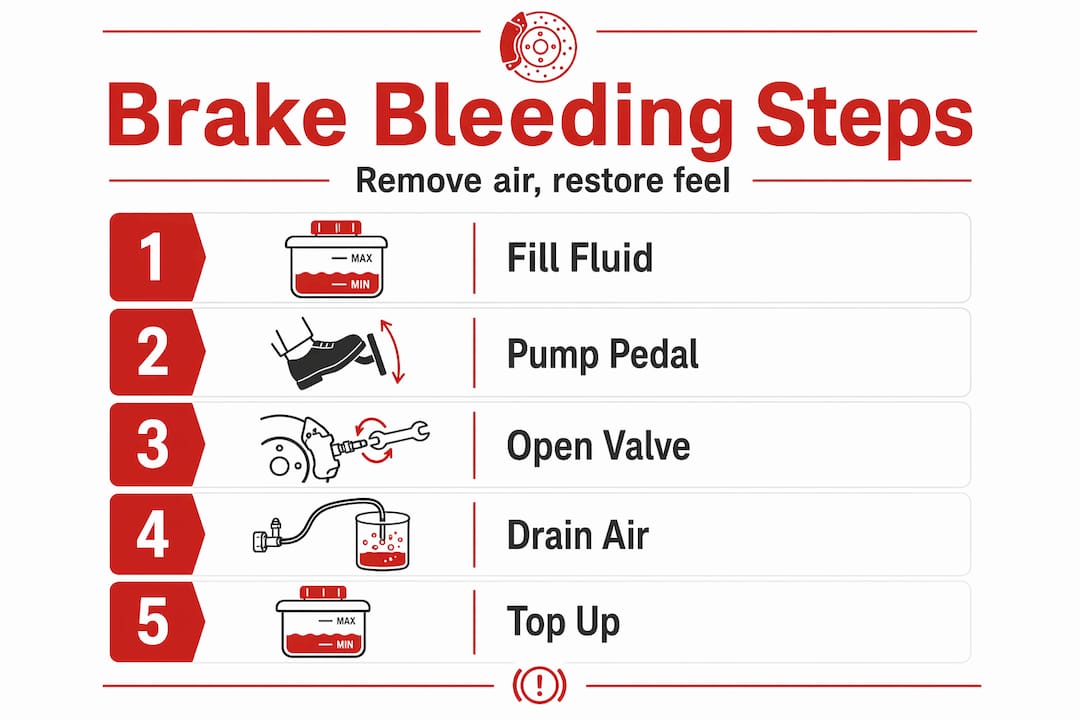
- Park on a level surface and chock the wheels. Remove the master cylinder reservoir cap and top off the fluid to the maximum line.
- Start at the wheel farthest from the master cylinder. On most front-wheel-drive cars, that is the rear passenger wheel. The correct sequence is: rear passenger, rear driver, front passenger, front driver.
- Attach clear tubing to the bleeder screw and place the other end in a catch bottle with a small amount of clean brake fluid in it. This prevents air from being sucked back in when the valve closes.
- Have your partner pump the pedal three to four times and hold it down firmly. Crack the bleeder screw open about a half turn. Watch fluid and any bubbles exit through the tubing. Close the screw before your partner releases the pedal.
- Repeat at each wheel until the fluid running out is clean and free of bubbles.
- Check the reservoir every two to three bleeder cycles. If it runs dry, air enters the master cylinder and you have to start over. Keep it topped off throughout the entire process.
- Test the pedal before driving. It should feel firm and stop well before the floor. If it still feels soft, repeat the process or check for a leak.
Pro Tip: After finishing, pump the pedal several times with the car parked and check for fluid leaks at every bleeder screw. A weeping bleeder is easy to miss but will slowly introduce air back into the system.
ABS vehicles and master cylinder bench bleeding
Modern vehicles add two layers of complexity that catch a lot of DIYers off guard.
ABS complications:
- The ABS hydraulic control unit contains small solenoid valves and a motorized pump that operate at very high pressure
- Air trapped inside the unit can foam and damage those valves if not properly purged
- ABS-equipped cars need a scan tool to activate the pump during bleeding so fluid can cycle through every internal passage
- Signs you need professional help: pedal remains soft after two full bleeds, ABS warning light stays on, or the pedal pulses abnormally at low speeds
Master cylinder bench bleeding:
When you replace a master cylinder, the new unit comes packed with air in its bore. Factory new master cylinders require bench bleeding before installation, using a small kit that loops fluid from the outlet ports back into the reservoir while you slowly push the piston by hand. This purges the bore completely before the unit ever touches the car.
Skip this step and you will have a spongy pedal that no amount of on-car bleeding can fix. The air is trapped in a location that normal bleeding simply cannot reach. Manufacturers recommend bleeding brake fluid every two years, and any master cylinder replacement should include bench bleeding as a non-negotiable first step.
My honest take on brake bleeding mistakes
I have watched a lot of car owners spend two hours bleeding brakes and still drive away with a soft pedal. Almost every time, one of three things went wrong.
The first is skipping the sequence. Bleeding in the wrong order means you are pushing air toward the master cylinder instead of away from it. The sequence exists for a reason and it is not optional.
The second is running the reservoir dry. It happens fast, especially on older vehicles with small reservoirs. The moment air enters the master cylinder, you have created more work for yourself than you started with.
The third is trusting vacuum bleeding without sealing the threads. I have seen technicians chase phantom air bubbles for an hour because vacuum bleeding pulled air through loose threads, not from inside the system. The fix takes thirty seconds and saves enormous frustration.
My broader point is this: brake bleeding is not a complicated job, but it rewards patience and precision. Rushing it is how you end up with a brake system that feels worse than when you started. And for ABS vehicles, there is genuinely no substitute for a scan tool. Trying to fully bleed a modern ABS system without one is like trying to flush a radiator without removing the thermostat. You will get some of it, but not all of it.
— Shingi
Get your brakes professionally serviced at Tom’s B & M Auto
If your pedal feels soft, your brake warning light is on, or you just replaced a master cylinder and cannot get a firm pedal, Tom’s B &M Auto in Lynnwood, WA has the tools and experience to sort it out properly. Our ASE-certified technicians handle everything from a straightforward brake fluid flush to full ABS-assisted bleeding on Toyota, Honda, Subaru, and European vehicles. We have been doing this since 1985, and we back every job with a 24-month / 24,000-mile warranty. Take advantage of our free visual brake inspection and let us confirm your system is fully air-free before you need to stop hard. Same-day appointments are often available.
FAQ
What does brake bleeding actually do?
Brake bleeding removes air bubbles and old, moisture-contaminated fluid from your brake lines. This restores firm pedal feel and full hydraulic braking force.
How often should you bleed your brakes?
Most manufacturers recommend bleeding brake fluid every two years or whenever the fluid appears dark and discolored. Regular bleeding prevents moisture buildup and corrosion inside the system.
Can you bleed brakes by yourself?
Yes, using a vacuum pump kit or a one-person pressure bleeder. The manual two-person method is more reliable, but vacuum bleeding works well if you seal the bleeder screw threads to prevent false air readings.
Do ABS vehicles need special brake bleeding?
Yes. ABS hydraulic control units can trap air that standard bleeding cannot reach. A scan tool is needed to cycle the ABS pump and valves electronically and fully purge the system.
What happens if you don’t bleed your brakes?
Old, moisture-laden fluid lowers the boiling point of the brake system. Under hard braking, that moisture vaporizes and creates gas bubbles that cause sudden, severe brake fade and reduced stopping power.
Recommended
- Brake Repair in Kenmore, WA | Tom’s B&M Auto
- Brake Repair in Edmonds, WA | Tom’s B&M Auto
- Brake Repair in Lynnwood, WA | Tom’s B&M Auto
- Free Visual Brake Inspection | Tom’s B&M Auto — Lynnwood WA
Article generated by BabyLoveGrowth
Leave a Reply